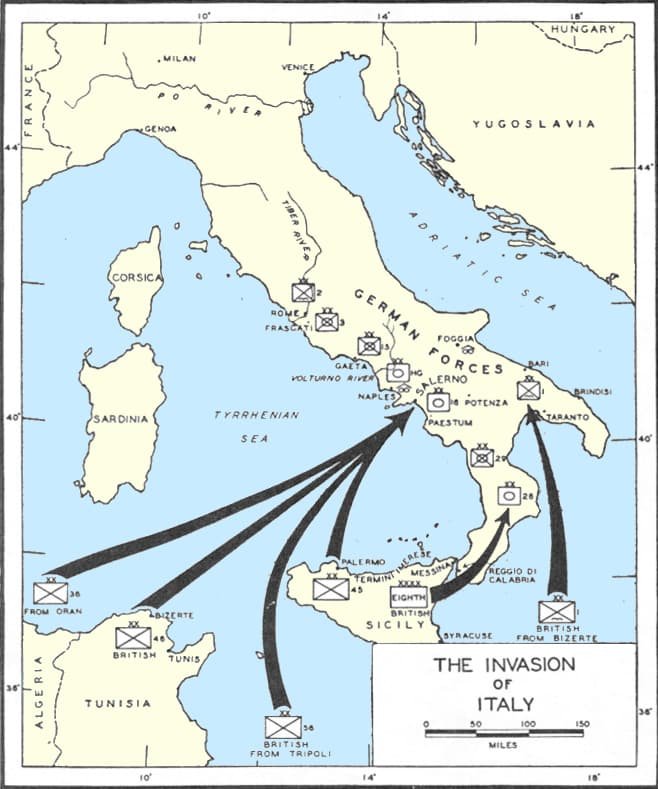
After a quick campaign that resulted in allied forces reaching the toe of Italy and pursuing in swarms onto the mainland, Italian King Victor Emmanuel ordered Mussolini be deposed and arrested.
The Armistice of Cassibile was signed in Sicily a few months later in September, bringing an end to the war between the Kingdom of Italy and the Allies. It was approved by King Victor Emmanuel himself and Marshal Peitro Badoglio, the new Prime Minister of Italy. The country remained a battlefield for the rest WWII as German troops rapidly moved in from the north to free Mussolini and fight alongside whatever Italian fascists were left in defeating the forces of the Kingdom of Italy, which had declared war on Nazi Germany on 13 October 1943. It was this declaration of war and fighting alongside Allied forces that the delegations at Potsdam looked to recognize.
Secretary of State Jimmy Byrnes was very adamant to achieve the goal of speeding Italy’s entry into the United Nations for not only helping to defeat Nazi Germany, but also to recognize its recent declaration of war on Japan. As a matter of fact, drafting Italy’s peace treaty became one of the first orders of business for the Council of Foreign Ministers after the Big Three approved its formation at the first plenary session.
It was now four days later. And the foreign ministers were ready to put the topic of Italy on today’s agenda.
Unfortunately, it became quickly apparent that this topic was more complex than anyone could have imagined.
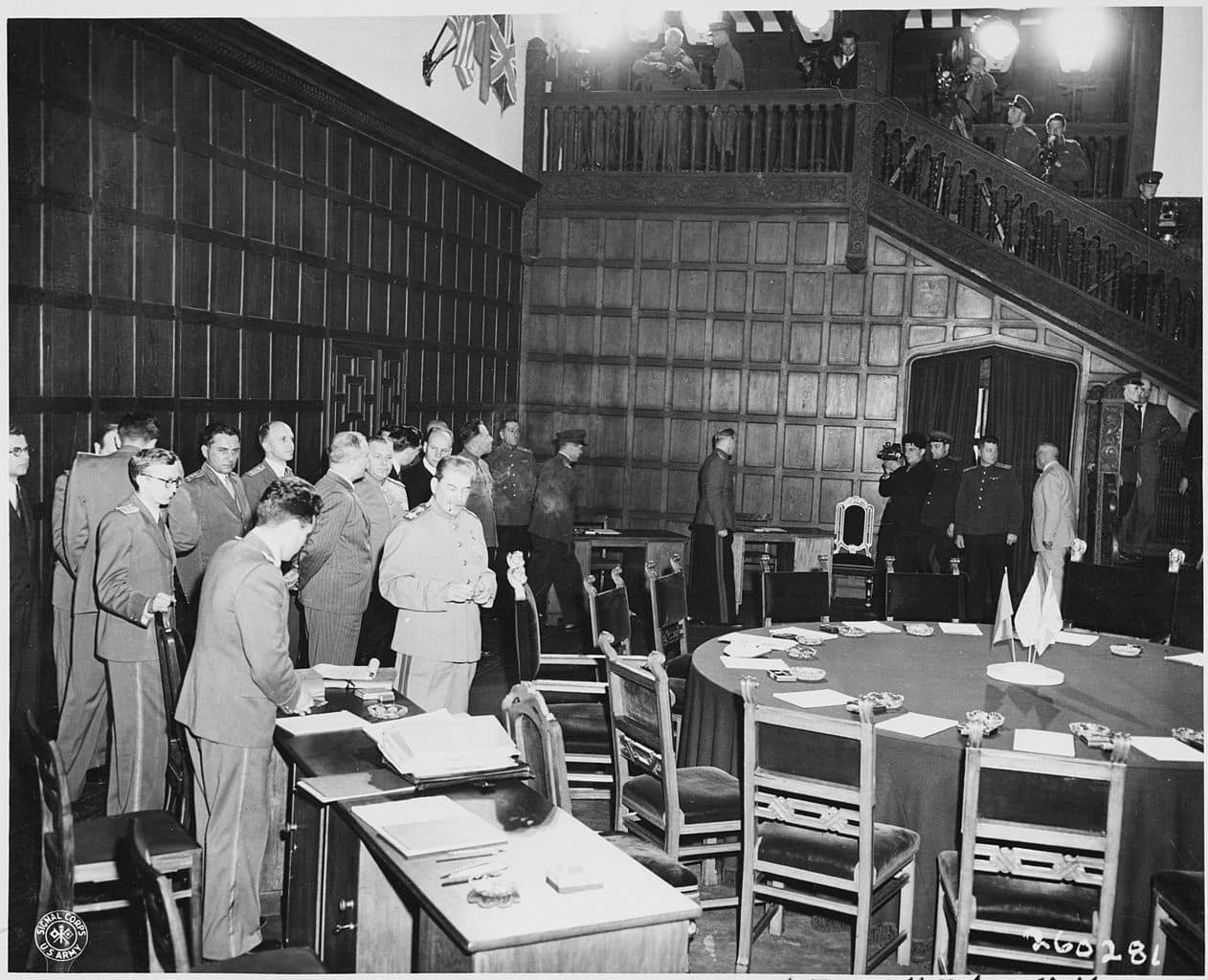
After Truman echoed Secretary Byrnes’s adamance at the roundtable that a peace treaty should be quickly drawn up and admission into the United Nations be granted, Stalin fired back by essentially saying that it would not be that easy. He felt that the foreign ministers should further discuss the matter and not exclusively deal with Italy, but rather deal with it at the same time when they deal with the other satellites like Romania, Bulgaria, and Hungary:
“We have no right to single out Italy. Italy helped Germany. Bulgaria and Rumania moved their troops against Germany. I am bound to say that their armies fought well. Finland did not give support in the war against Germany, but her position is all right and should be facilitated. The same applies to Hungary. It would be well in facilitating the position of Italy to facilitate the positions of the other satellite countries.”
Truman reiterated his position on recognizing the satellites of which Stalin spoke, but wanted to be certain that free and fair elections would take place in these countries, so that they can become self-supporting in the future.
Churchill fell somewhere in the middle. On the one hand he sympathized with Italy and made it clear that he supported peace and was anxious to send a message to the Italian people informing them of this, but he also pointed out that Italy’s hostile actions against the United Kingdom caused a great deal of suffering – on so many levels during the war – that he could not just simply acquit the country of its culpable behavior. He stated:
“I think we agree that preparations of the peace should be referred to the Council of Foreign Ministers. I merely point out we can not give up the surrender terms while we prepare peace terms. There is no objection to announcing peace treaties with Italy will be prepared—and also with the satellite countries.”
So it was agreed that the issue of peace with Italy would go back to the foreign ministers for more steps to be considered before a decision could be reached on peace with Italy.