FEATURED EXPERIENCE NO. 34

Explore The Otto Weidt Workshop

Uncover the horrific treatment of disabled people in Nazi Germany

Berlin. The name itself resonates with history, a city layered with imperial ambition, artistic explosion, devastating conflict, stark division, and triumphant reunification. Tourists flock to the Brandenburg Gate, trace the path of the Berlin Wall, stand humbled at the Memorial to the Murdered Jews of Europe, and explore the grandeur of Museum Island. These are essential experiences, telling powerful, large-scale stories of Germany’s tumultuous past.

But Berlin’s history also whispers from hidden corners, tucked away in unassuming courtyards, revealing intimate tales of individual lives caught in the maelstrom. These are stories not of grand political manoeuvres or vast military campaigns, but of quiet defiance, moral courage, and extraordinary humanity flourishing against the darkest odds. One such vital, profoundly moving experience awaits you behind a modest doorway in the bustling Hackesche Höfe: the Museum Blindenwerkstatt Otto Weidt, the Workshop for the Blind.

This isn’t a museum in the conventional sense, filled with curated artefacts removed from their context. This is the context. You step into the actual rooms where Otto Weidt, a small-time brush and broom manufacturer, risked everything to save the lives of his predominantly Jewish, blind, and deaf employees during the horrors of the Third Reich.

It’s a place where the air still seems thick with the tension of its past, offering a perspective on the Holocaust often overlooked – the reality of rescue, resistance, and the unwavering moral compass of an ordinary man who refused to be a bystander. Prepare to discover a side of wartime Berlin you likely never knew existed, a story that will stay with you long after you leave.
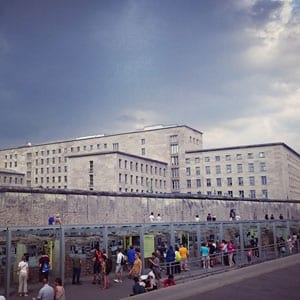
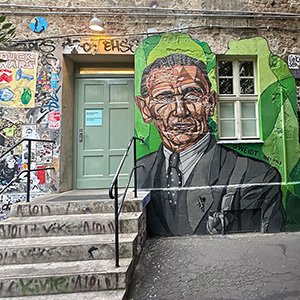
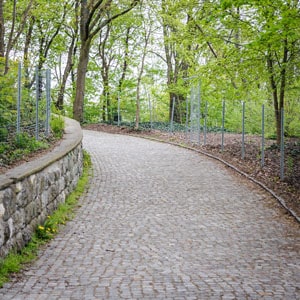
The steet outside the Otto Weidt Workshop Museum in Berlin - Jörg Zägel
Brushes on display in the Otto Weidt Museum - Thomas Quine
To understand the significance of the workshop museum, one must first understand Otto Weidt. He was, by many accounts, an unlikely hero. Born in 1883 into modest circumstances, Weidt was a small business owner, not a political figure or a man of significant influence. He held pacifist and somewhat anarchist beliefs early in life, cultivating a worldview that valued individual dignity and opposed authoritarianism.

Crucially, Weidt himself was visually impaired, suffering from a condition that worsened over his life. This personal experience likely fostered a deep empathy for others facing physical challenges and societal marginalisation.

In 1936, Weidt established his workshop at Rosenthaler Straße 39, manufacturing brooms and brushes. As Nazi persecution intensified, Jewish people faced increasing restrictions on employment. Weidt, however, began deliberately hiring Jewish workers, many of whom were blind or deaf. Initially, this might have had a pragmatic element – these workers were less likely to be conscripted for war labour. However, it soon evolved into a conscious act of protection. By 1940, his workshop was officially classified as ‘important for the war effort’ (wehrwichtig) because it supplied brooms and brushes to the Wehrmacht (the German army).

This designation would provide a thin, precarious shield for his employees.

Weidt’s workforce was almost entirely Jewish, and predominantly blind or deaf. He treated them not merely as employees, but as a community to be sheltered. He wasn’t just providing jobs; he was providing a lifeline. As conditions worsened and the deportations began in earnest, Weidt’s efforts escalated from employment to active, perilous rescue.
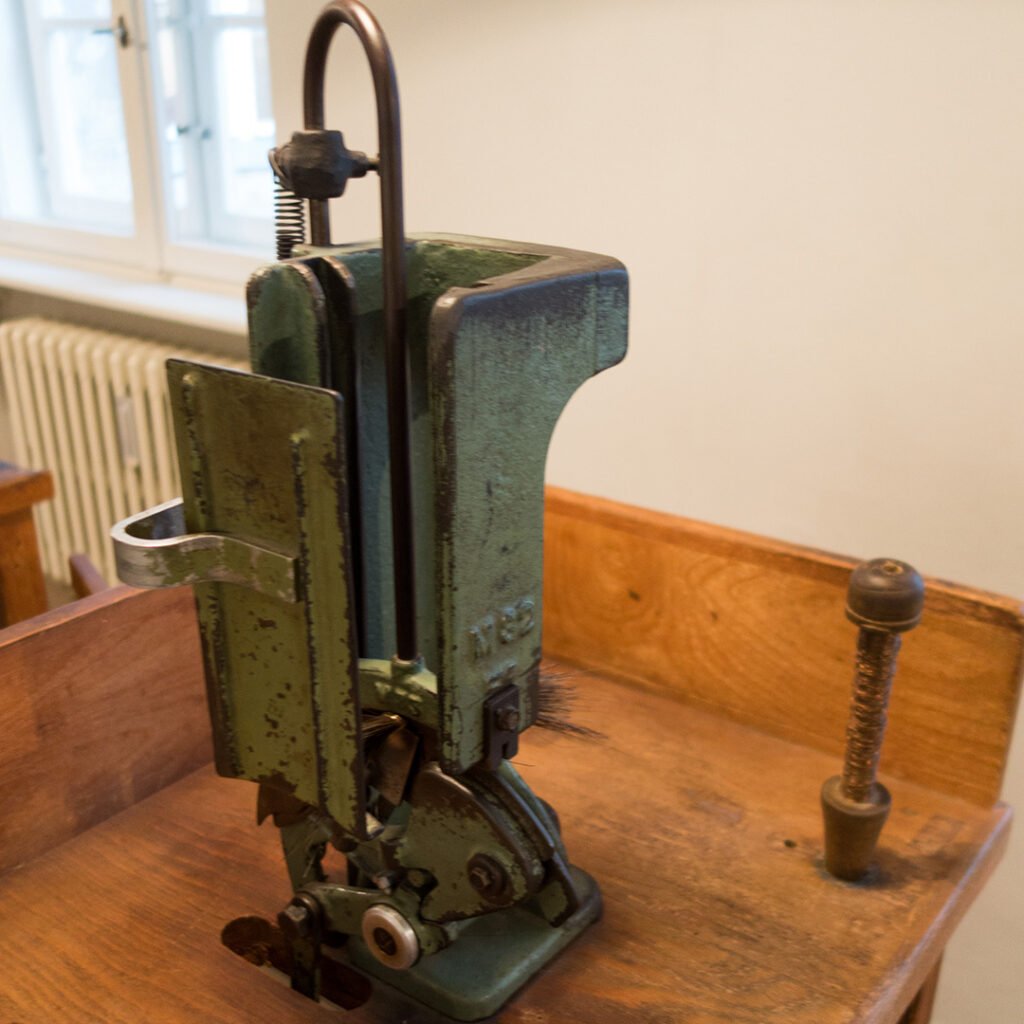
Brushmaking machines on display in the Otto Weidt Museum - Thomas Quine

Did you know...

Otto Weidt was posthumously awarded the title of Righteous Among The Nations in 1971. An honorific used by the State of Israel to describe non-Jews who, for altruistic reasons, risked their lives during the Holocaust to save Jews from extermination by the Nazis.

His methods were a mixture of cunning, bribery, and sheer audacity. He learned how to navigate the corrupt Nazi bureaucracy. He regularly bribed Gestapo officials, not with large sums of money he didn’t have, but with the products of his workshop – brushes, brooms – and sometimes with scarce goods like perfume or cigars he managed to procure. He would charm, cajole, and sometimes bluff his way through inspections. He forged documents, procured food on the black market for his starving workers (often sharing his own rations), and crucially, tried to warn them of impending raids or ‘actions’.
One of the most chilling moments came during the infamous ‘Fabrikaktion’ (Factory Action) in February 1943, when the Nazis rounded up the last remaining Jewish forced labourers in Berlin for deportation. Despite Weidt’s efforts to hide some workers, many were caught. In a display of incredible courage, Weidt went directly to the Große Hamburger Straße collection camp. He reportedly bluffed his way in, claiming he needed his indispensable blind workers back immediately to fulfill urgent Wehrmacht contracts. Astonishingly, playing on the bureaucratic obsession with procedure and the perceived importance of his war production, he managed to secure the release of several of his employees, snatching them back from the very threshold of Auschwitz.

But Weidt couldn’t save everyone. As the net tightened, he needed more drastic measures. This led to the creation of the most poignant feature of the museum today: a tiny, windowless room concealed behind a movable wardrobe in the back of the workshop. Here, he managed to hide a small number of people, most notably the Horn family (father, mother, and teenage son) and later, Alice Licht. Living in near-total silence and darkness, their survival depended entirely on Weidt’s resourcefulness and the secrecy of the workshop.

One story that encapsulates Weidt’s dedication, and perhaps the most revelatory for many visitors, concerns Alice Licht. After a period hidden in the back room, she was discovered and deported to Auschwitz in 1944. Upon hearing the news, the aging and increasingly frail Otto Weidt did something almost unbelievable: he scraped together supplies and money and travelled towards Auschwitz himself. He managed to make contact with Alice near the camp, passing her packages of food and clothing, and even concocting a plan for her escape during a death march as the Soviet army advanced in early 1945. While the escape plan ultimately failed in the chaos, Alice Licht survived the Holocaust, later emigrating to the United States. His willingness to journey into the heart of the Nazi death machine speaks volumes about his profound commitment.
Brushmaking machines on display in the Otto Weidt Museum - Thomas Quine
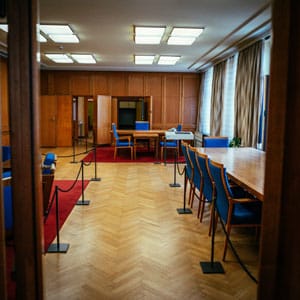
The Otto Weidt Workshop Museum in Berlin - Yasminkaa
Otto Weidt survived the war but died relatively young in 1947, exhausted and impoverished by his wartime efforts. His former workshop would remain neglected throughout the Cold War, situated as it was in East Berlin, and it wasn’t until after German Reunification that his actions in Berlin were rediscovered.

In a city saturated with memorials and historical sites related to the Third Reich and the Holocaust, why make a special point of visiting the Otto Weidt Workshop Museum? Because it offers something unique and vitally important: a story focused not solely on persecution and victimhood, but on active resistance, compassion, and rescue, driven by an ordinary individual.

Finding the Museum Blindenwerkstatt Otto Weidt is part of the experience. It’s located within the Hackesche Höfe, a beautifully restored complex of interconnected Art Nouveau courtyards off Rosenthaler Straße, now filled with trendy boutiques, cafes, and cinemas. Amidst this lively, modern scene, you need to look for Staircase C (Aufgang C). Ascend the stairs, and you leave the 21st-century bustle behind, stepping directly into the 1940s.

The museum occupies the original rooms of Weidt’s workshop. This authenticity is its power. There are no grand displays or high-tech installations. Instead, you encounter worn floorboards, simple workbenches, original tools for brush-making, and the faint smell of wood and dust. The atmosphere is intimate, almost claustrophobic, yet profoundly resonant.

It feels less like a museum and more like a preserved moment in time.

The exhibition unfolds through these rooms, telling the story chronologically and thematically. Informative panels (in German and English) detail Weidt’s life, the history of the workshop, the persecution of Jews in Berlin, and the specific experiences of the people he helped. You’ll see photographs of Weidt and his employees – faces that transform from historical statistics into real individuals whose fates hung in the balance within these very walls. You’ll read copies of letters and documents – bureaucratic forms that held the power of life and death, clandestine notes planning escapes, desperate pleas for help.

Audio stations allow you to hear the voices of survivors recounting their experiences in their own words. These personal testimonies are incredibly powerful, bridging the decades and bringing the history to life with immediacy and emotion. You learn about the constant fear, the hunger, the moments of camaraderie, and the immense gratitude towards the man they called “Papa Weidt.”

Otto Weidt Workshop

Some useful links:

FEATURED EXPERIENCES