FEATURED EXPERIENCE NO. 50

Explore The Spandau Citadel

The Oldest Building In Berlin & The Former German Fort Knox

To those who are familiar with the name – Spandau – it most likely conjures images of Cold War intrigue, notorious prisoners, or even 1980s synth-pop. But cast those thoughts aside, for we are heading to a far older, more foundational piece of Berlin’s – and indeed Germany’s – history: the formidable Spandau Citadel (Zitadelle Spandau).

Before Berlin was Berlin, there was Spandau. Perched strategically at the confluence of the Havel and Spree rivers, this area was settled long before the twin towns of Cölln and Berlin began to emerge further east. Archaeological evidence points to Slavic tribes establishing a stronghold here as early as the 7th or 8th century. By the 12th century, Albert the Bear, the first Margrave of Brandenburg, recognised the site’s strategic importance and likely fortified it further. Spandau received its town charter around 1232, significantly predating Berlin’s own documented city rights.

For centuries, Spandau existed as a distinct and important town, often rivalling its eastern neighbour in significance within the Margraviate of Brandenburg.

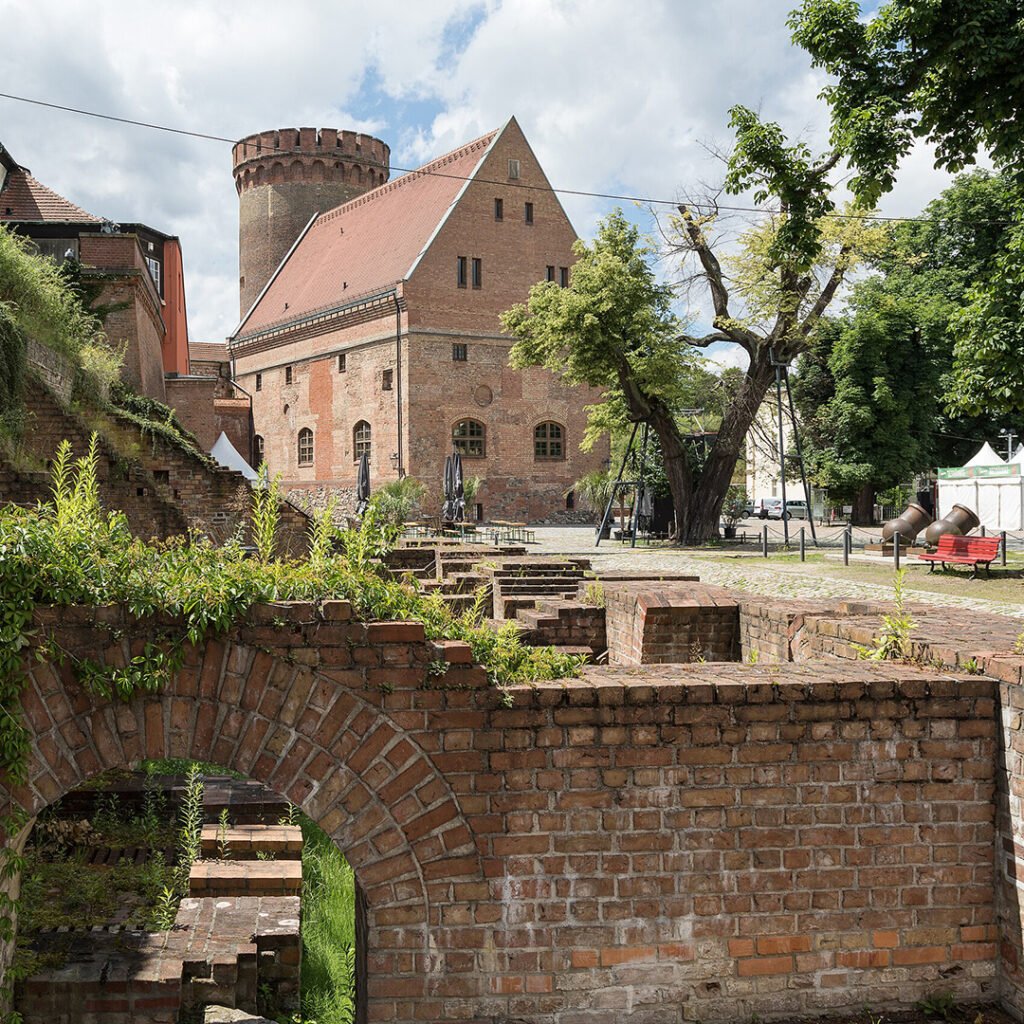
At the heart of Spandau’s story stands the Citadel. While the structure we see today largely dates from the Renaissance, its roots dig deep into the medieval past. The imposing Julius Tower (Juliusturm), the Citadel’s keep and most famous landmark, contains masonry dating back to the 13th century, making it a contender for the oldest surviving structure within Berlin’s modern city limits. This tower was part of an earlier medieval castle that guarded the Havel crossing.

So, while many visitors might associate Spandau primarily with the infamous Spandau Prison (demolished in 1987) which held Rudolf Hess, or perhaps tap their feet to the memory of the band Spandau Ballet (who reportedly took their name from graffiti spotted in a Berlin club toilet), the true historical heavyweight of the district is the Citadel. It’s a place far more resonant with the deep currents of German history, a treasure trove of architecture, military strategy, and national narrative waiting to be discovered.
Spandau Citadel interior - JoachimKohlerBremen
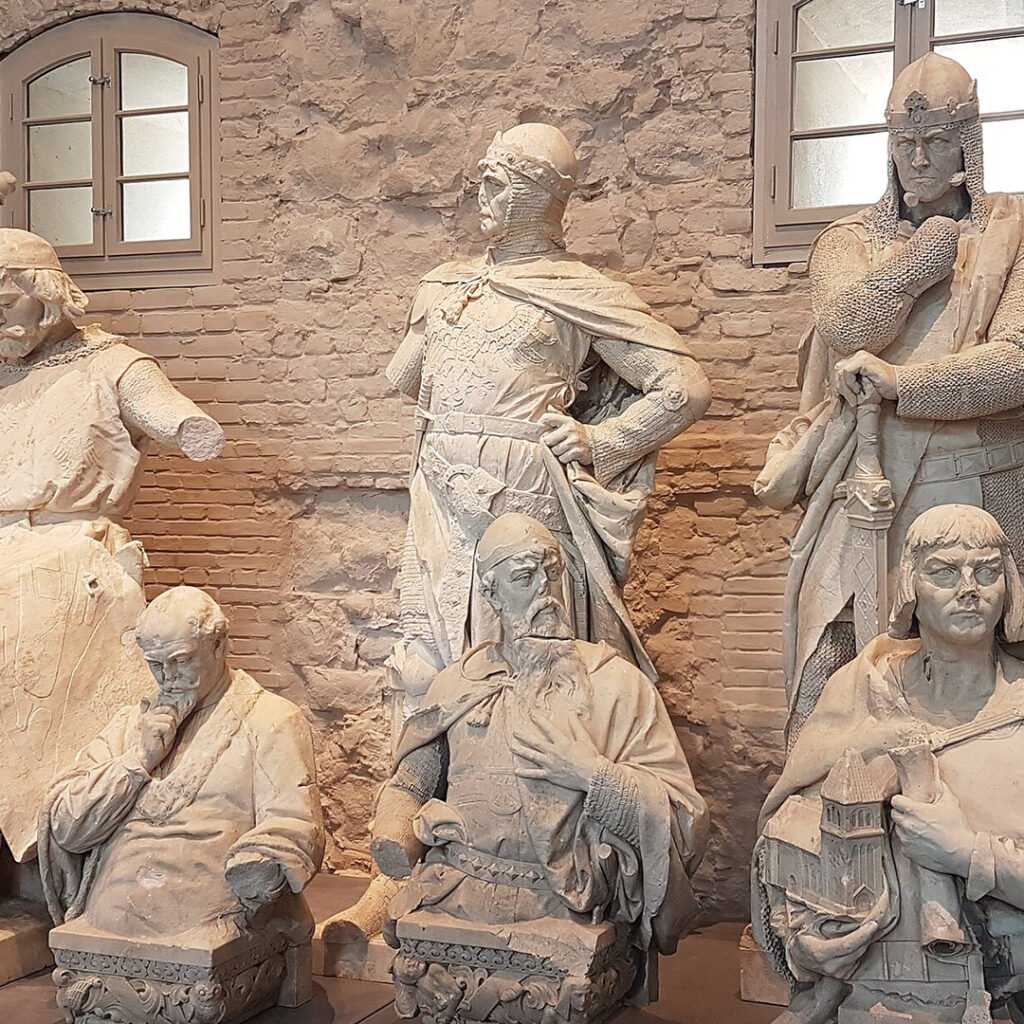
The statue collection at the Spandau Citadel - Dirk1981
The Spandau Citadel as we largely see it today is a remarkable example of Renaissance military architecture, specifically the ‘trace italienne’ or star fort design. You can see similar principles at play in fortifications like the Citadel of Lille in France or the fortifications of Palmanova in Italy. Spandau Citadel, however, is considered one of the best-preserved examples of this type in Northern Europe.

Its construction represents a pivotal moment in the history of Brandenburg-Prussia, reflecting a shift towards more sophisticated defensive strategies capable of withstanding the growing power of artillery. The driving force behind this transformation was Elector Joachim II Hector of Brandenburg (ruler from 1535 to 1571). Ambitious and with an eye for the latest European trends, Joachim II decided to replace the aging medieval castle with a state-of-the-art fortress.

Construction began in earnest around 1560 and continued until about 1594, spanning the reigns of both Joachim II and his successor, Johann Georg. Crucially, Joachim II employed Italian architects, masters of the new fortification style that had proven effective during the Italian Wars. Francesco Chiaramella de Gandino initially oversaw the project, followed later by Rochus Graf zu Lynar, another renowned fortress architect. They brought the cutting-edge principles of bastion defence to the marshy confluence of the Havel and Spree.

The design is geometrically precise: a near-perfect square surrounded by water, with four arrowhead-shaped bastions jutting out from the corners.

Named König (King), Königin (Queen), Kronprinz (Crown Prince), and Brandenburg, these bastions were engineered to provide interlocking fields of fire, eliminating the dead zones where attackers could previously shelter beneath high medieval walls. Low, thick, brick-faced walls, angled to deflect cannonballs, replaced the tall, vulnerable stone walls of earlier castles. A wide moat, fed by the Havel, provided an additional formidable obstacle. Inside the main walls, various buildings were erected, including barracks, administrative offices, an armoury, and the Commander’s House (Kommandantenhaus).

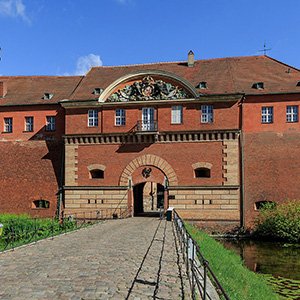
The Citadel integrated the older Julius Tower into its design, retaining it as the central keep or redoubt. This thick-walled medieval survivor stands in contrast to the lower, sleeker lines of the Renaissance ramparts, a visual reminder of the site’s layered history. The main entrance, the Gatehouse (Torhaus), built around 1560, is itself an impressive structure, adorned with the coat of arms of Joachim II.
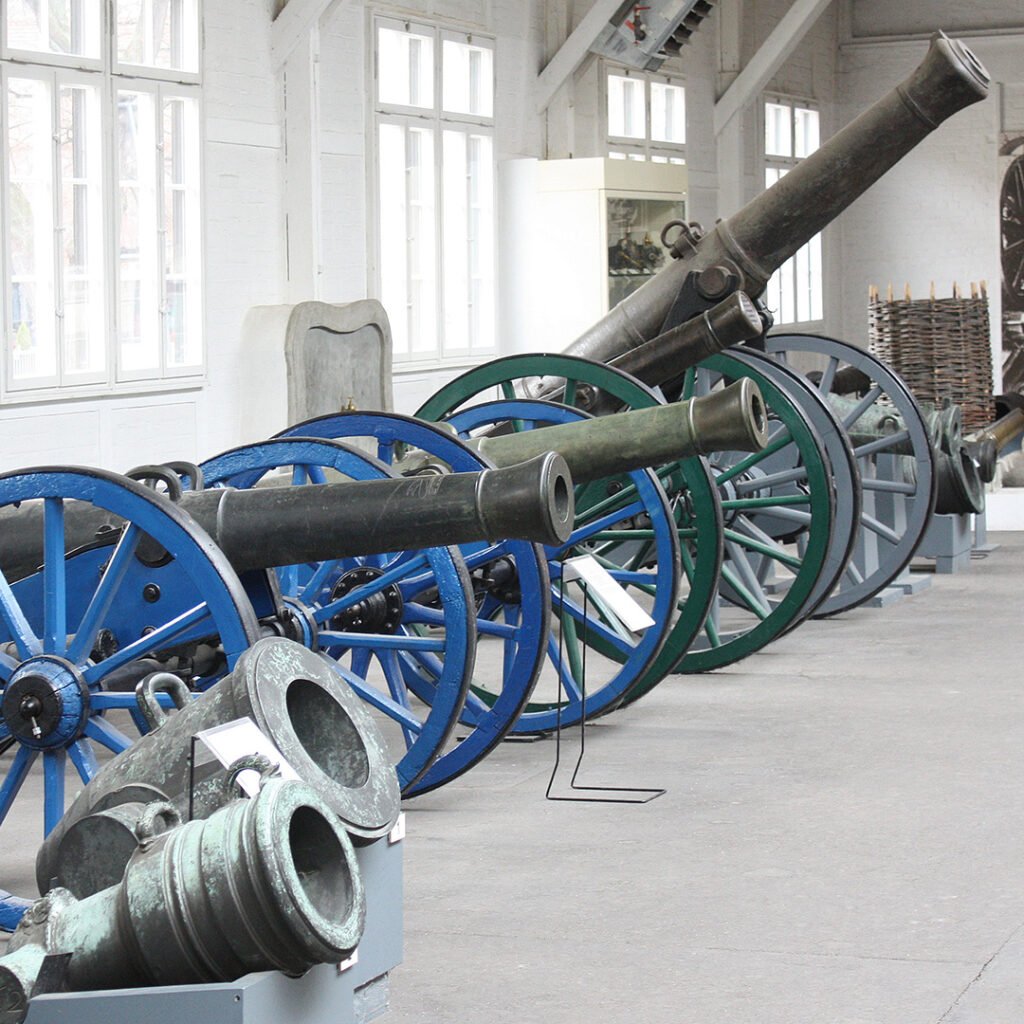
The artillery collection at the Spandau Citadel - Dguendel

Did you know...

Spandau Citadel provides a winter home for one of Europe's largest colonies of hibernating bats? Each year, tens of thousands of these protected creatures find refuge in the dark, quiet vaults and cellars beneath the fortress, adding a surprising natural dimension to this historic military site.
For decades, the Citadel also served a purpose akin to a German Fort Knox, safeguarding the nascent empire’s war chest, while later, hidden within its seemingly impregnable walls during the period of Adolf Hitler’s rule over Germany, sinister scientific research took place.
Following Prussia’s decisive victory over France in the Franco-Prussian War (1870-1871), the newly proclaimed German Empire imposed a massive indemnity payment on the defeated French – five billion gold francs. A significant portion of this treasure, known as the Reichskriegsschatz (Imperial War Treasure), amounting to 120 million gold marks, was transported to Spandau Citadel for safekeeping. Where better to store the financial bedrock of the new empire than within the securest fortress available?
The gold coins were meticulously stored in chests within the ancient, thick-walled Julius Tower, lending it the nickname ‘Julius Tower Treasure’. This hoard was intended as a reserve, untouched in peacetime, to finance the initial stages of any future conflict without immediately resorting to taxation or loans. It remained there, a symbol of German imperial power and financial security, until the demands of World War I forced its gradual depletion. The presence of this vast gold reserve cemented the Citadel’s importance not just militarily, but as a cornerstone of national finance and prestige.

The 20th century brought a darker chapter. During the Nazi regime, the Citadel’s secluded and secure nature made it an ideal location for clandestine military research.

From 1935 onwards, parts of the fortress housed the Heeresgasschutzlaboratorium (Army Gas Protection Laboratory). Here, under conditions of utmost secrecy, scientists worked on chemical warfare agents. Research focused particularly on the development and testing of new nerve agents, including Tabun and Sarin, substances horrifically effective and central to Nazi Germany’s chemical weapons programme. While large-scale production happened elsewhere, the vital research and development groundwork occurred within these historic walls, a chilling juxtaposition of medieval defence and modern, industrialised killing potential. This secret facility operated until the final days of the Second World War.

As the Battle of Berlin raged in April 1945, the Citadel played one final military role. It became a refuge for some remaining Wehrmacht units, Nazi officials, and even civilians seeking shelter from the devastating Soviet onslaught engulfing the city. Unlike much of central Berlin, the Citadel remained relatively intact. However, its defensive capabilities were no match for the overwhelming power of the Red Army. After some negotiation and facing the inevitable, the remaining garrison surrendered the Citadel to Soviet forces on May 1st 1945.
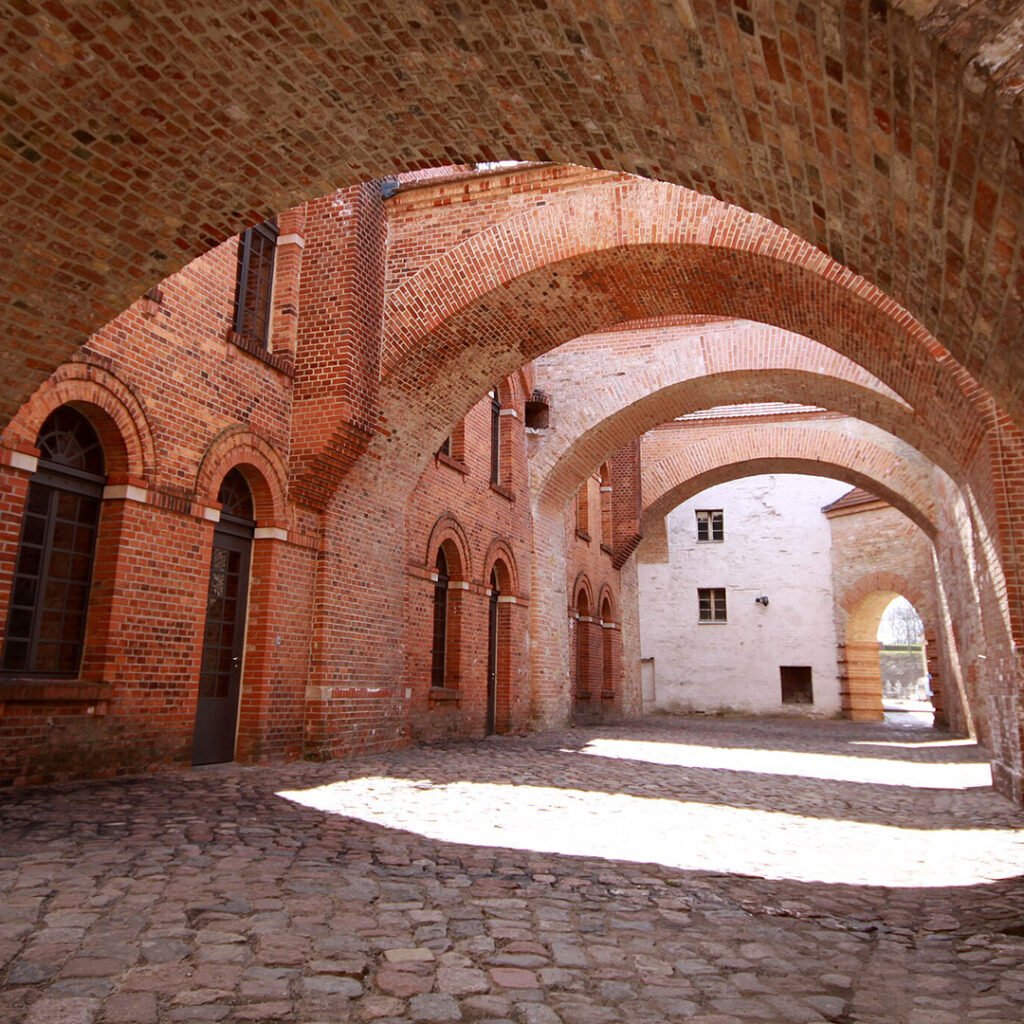
The Italienische Höfe at the Spandau Citadel - Rolf Dietrich Brecher
Spandau Citadel - A.Savin
Step through the imposing Gatehouse of the Spandau Citadel today, and you enter a space where history breathes alongside vibrant contemporary life.

No longer echoing with the tramp of soldiers’ boots or the clink of imperial gold, the Citadel has transformed into one of Berlin’s most unique and atmospheric cultural venues, a cherished landmark for both Spandau locals and visitors from around the globe. Its massive brick ramparts and historic buildings now host a fascinating array of museums, exhibitions, workshops, and lively events.

The Citadel is essentially a museum complex. The main attraction for history buffs is undoubtedly the Stadtgeschichtliches Museum Spandau (Spandau History Museum), located in the Armoury (Zeughaus). Here, you can trace the long and often independent history of Spandau, from its Slavic origins through its medieval development, its time as a Prussian garrison town, and its incorporation into Greater Berlin. Exhibits showcase archaeological finds, historical documents, and artefacts that bring Spandau’s unique story to life.

Don’t miss the opportunity to climb the 153 steps of the Julius Tower. The ascent rewards you with panoramic views over Spandau, the Havel river landscape, and the western reaches of Berlin. Standing atop this medieval survivor, you gain a true appreciation for the Citadel’s strategic location and commanding presence. Within the tower and other buildings, you’ll also find permanent exhibitions detailing the Citadel’s own construction and military history. One particularly poignant display features medieval Jewish tombstones discovered during renovation work in the 1980s; tragically, these stones had been desecrated and repurposed as building materials centuries earlier, and their careful preservation and display now serve as a powerful act of remembrance.

Beyond the permanent displays, the Citadel is a dynamic cultural hub. Various buildings house artists’ studios and workshops. The Gothic Hall (Gotischer Saal), a beautifully preserved medieval space, often hosts concerts and special events. Perhaps most famously, the Citadel’s main courtyard transforms each summer into a major open-air concert venue for the Citadel Music Festival. International rock and pop stars perform against the dramatic backdrop of the historic fortress walls, creating an unforgettable experience where ancient architecture meets modern entertainment. Throughout the year, the Citadel also hosts medieval fairs, knights’ tournaments, Christmas markets, and family-friendly festivals, ensuring there’s almost always something happening within its grounds.

The Spandau Citadel is easily reachable via the U-Bahn (U7 line to Zitadelle station), making it a convenient day trip. Walking across the bridge and through the gate feels like stepping back in time, yet the site is alive with activity. It’s a place where families explore historic ramparts, art lovers browse studios, music fans gather for concerts, and history enthusiasts immerse themselves in centuries of stories.

The Spandau Citadel

Some useful links:

FEATURED EXPERIENCES