FEATURED EXPERIENCE NO. 36

Visit The Stasi Prison In Hohenschönhausen

East German Secret Police Prison Transformed Into A Fascinating Museum

The Ministerium für Staatssicherheit (Ministry for State Security), universally known as the Stasi, was the shield and sword of East Germany’s ruling Socialist Unity Party (SED).

Its mandate was simple yet terrifying: to maintain the party’s absolute power by identifying and neutralising any perceived threat, internal or external. In a state born from Soviet occupation and perpetually wary of Western influence and internal dissent, the Stasi grew into one of history’s most pervasive and effective secret police forces. Its web of surveillance extended into every corner of East German life, employing hundreds of thousands of official officers and unofficial informants (Inoffizielle Mitarbeiter or IMs) to monitor the thoughts, words, and actions of millions.

Central to the Stasi’s apparatus of repression was its own network of prisons and detention centres, distinct from the regular penal system used for common criminals. These were places reserved for political opponents, would-be escapees, critical intellectuals, or anyone deemed a ‘hostile-negative element’ by the regime. They were designed not just for incarceration, but for breaking the spirit. Hidden away, often unmarked on maps and unknown even to nearby residents, these facilities were integral to the Stasi’s strategy of control through fear and psychological manipulation.

Among the most significant and feared of these institutions was the Hohenschönhausen detention centre in East Berlin. It wasn’t just a Stasi prison; it was the Stasi’s central remand prison – the main pre-trial investigation facility. Here, individuals suspected of political crimes were brought for interrogation, isolation, and the slow, grinding process designed to extract confessions and information. It was a place shrouded in secrecy, a black hole in the city where lives were systematically dismantled.

Today, preserved as a memorial, Hohenschönhausen offers an unparalleled, chilling glimpse into the heart of the Stasi’s power and the human cost of dictatorship. Stepping inside its gates is not just a visit to a historic site; it’s an encounter with the mechanisms of oppression and the resilience of the human spirit.
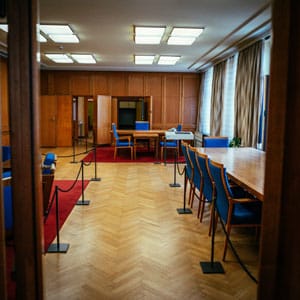
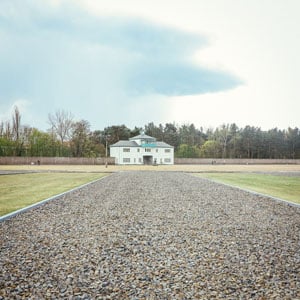
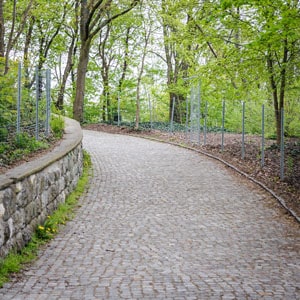
The interior of the Stasi Prison in Hohenschönhausen - Z thomas
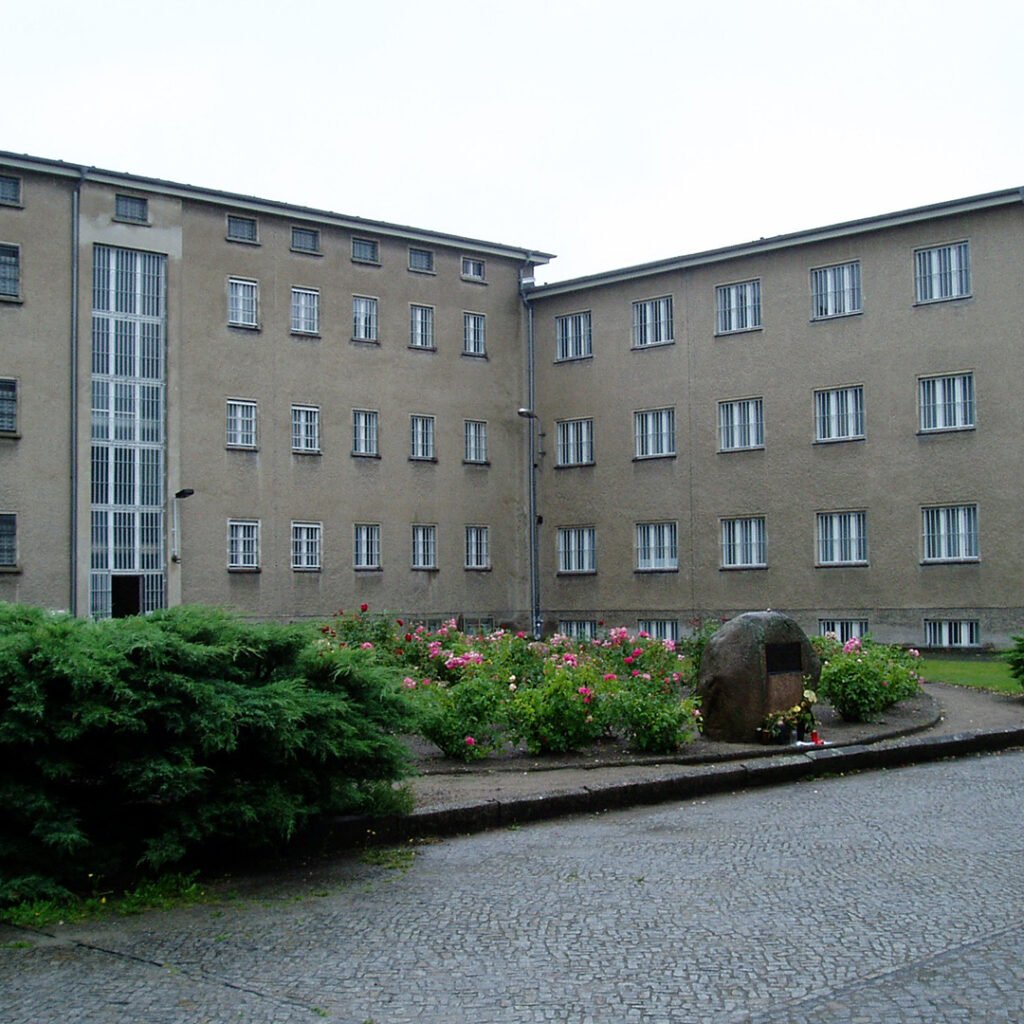
The interior of the Stasi Prison in Hohenschönhausen - Anagoria
The history of the Hohenschönhausen site predates the Stasi’s infamous tenure. Its grim legacy began shortly after the Second World War, in the summer of 1945.

The occupying Soviet forces established Special Camp No. 3 within the buildings of what was once a large industrial canteen. This was part of a network of camps across the Soviet zone used to intern alleged Nazis, members of opposing political groups, and others deemed dangerous by the new authorities. Conditions were catastrophic; thousands perished from malnutrition, disease, and brutal treatment before the camp was closed in 1946. The Soviets then converted part of the site into a central detention prison, constructing subterranean cells known chillingly as the ‘U-Boot’ (submarine). Here, prisoners were held in windowless, damp, underground bunkers, often in total darkness or under constant glaring light, subjected to extreme cold, sleep deprivation, and relentless psychological pressure – a horrific blueprint for what was to come.

In 1951, the nascent East German Ministry for State Security took control of the prison. While the ‘U-Boot’ remained in use for particularly harsh treatment well into the 1950s, the Stasi’s focus shifted towards more refined, insidious methods. Their primary goal wasn’t necessarily physical destruction but psychological decomposition – breaking a prisoner’s will to resist. In the late 1950s, construction began on a large, new prison building adjacent to the old one, completed around 1960. This modern facility housed over 200 cells and numerous interrogation rooms, becoming the Stasi’s main investigative prison. Externally, it looked nondescript, but inside, it was a meticulously designed machine for isolation and interrogation.

Prisoners brought here were accused of a wide range of crimes against the state. The most common was Republikflucht – attempting to leave the GDR without permission. Others included espionage (often fabricated), distributing Western propaganda (like magazines or music), political agitation (even mild criticism of the regime voiced privately could be grounds), or contact with Western organisations. Intellectuals, artists, critical students, and anyone who dared question the party line could find themselves ensnared. They arrived often bewildered, bundled into windowless delivery vans disguised as grocery trucks or refrigerated transports – the infamous Barkas B1000 vans fitted with tiny, hidden cells – ensuring they had no idea where they were being taken.

Upon arrival, a system of total disorientation began. Prisoners were stripped of their identities, given numbers, subjected to invasive searches, and placed in cells where isolation was paramount. Contact with other inmates was strictly forbidden; even guards were trained to minimise interaction, using coloured lights and specific protocols to move prisoners through the corridors without them ever seeing each other. The psychological torment of uncertainty, the endless interrogations using sophisticated manipulation techniques, and the complete loss of control over one’s life were the Stasi’s primary weapons here.
The Stasi Prison in Hohenschönhausen - Anagoria

Did you know...

The Stasi meticulously collected ‘scent samples’ (Geruchsproben) from suspected dissidents, storing cloths wiped on individuals' bodies or possessions in sealed jars. These were intended for use with tracker dogs should the person ever go underground or try to escape across the border.

To understand Hohenschönhausen, one must understand its master: the Stasi.

Founded in 1950 and modelled on the Soviet KGB, the Ministry for State Security’s (MfS) stated mission was proactive defence of the SED’s socialist state against all perceived enemies, both foreign and domestic. Under the iron-fisted leadership of Erich Mielke, who headed the organisation from 1957 until the GDR’s collapse in 1989, the Stasi evolved into a behemoth of internal control.

At its peak, it employed over 91,000 official staff and commanded an estimated 189,000 unofficial informants (IMs) – ordinary citizens spying on their neighbours, colleagues, friends, and even family members. This vast network created a pervasive atmosphere of mistrust and fear that permeated every aspect of East German society.

The Stasi’s methods were multifaceted. Surveillance was exhaustive, encompassing phone tapping, mail interception, hidden microphones, and physical observation. But its most insidious technique, particularly against dissenters who weren’t immediately imprisoned, was Zersetzung (literally ‘decomposition’ or “corrosion”). This was a sophisticated form of psychological warfare aimed at subtly undermining a target’s life, confidence, and reputation. Stasi officers would orchestrate disruptions in the target’s career, spread damaging rumours, manipulate personal relationships, organise mysterious break-ins where items were moved but nothing stolen, cause deliberate bureaucratic obstructions, and induce psychological distress through anonymous calls or veiled threats. The goal was to destabilise individuals, make them doubt their own sanity, isolate them socially, and ultimately silence their opposition without resorting to overt violence or imprisonment, which could attract negative international attention.

Why was the prison system, and specifically a place like Hohenschönhausen, so critical? It served multiple purposes. Firstly, it was the endpoint for those whose opposition was deemed too direct or dangerous to be managed solely through Zersetzung. Secondly, it was the engine room for extracting information and confessions, often used in show trials or to justify further surveillance and arrests. Interrogations could last for hours, days, or weeks, employing tactics ranging from feigned empathy and manipulation (“good cop/bad cop”) to sleep deprivation, threats against family members, and relentless repetition under duress. Thirdly, and perhaps most importantly, the existence of places like Hohenschönhausen, even if shrouded in secrecy, served as a potent deterrent. The rumour, the fear of vanishing into the Stasi’s invisible archipelago of prisons, was enough to keep many potential critics silent.
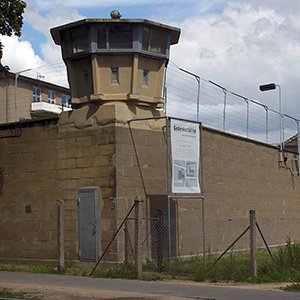
The interior of the Stasi Prison in Hohenschönhausen - Anagoria
The Stasi Prison in Hohenschönhausen - Anagoria
Erich Mielke, a staunch communist ideologue, saw any deviation from the party line as inherently hostile. He famously declared his love for all humanity (“Ich liebe doch alle Menschen!”) in a confusing public statement shortly before his downfall, but his actions bespoke a deep paranoia and ruthlessness towards anyone labelled a ‘hostile-negative element’. The Stasi, under his command, was the ultimate guarantor of the SED’s power, a state within a state built on surveillance and fear. Yet, when the people of East Germany finally rose up peacefully in the autumn of 1989, this seemingly invincible apparatus proved powerless to stop the tide, crumbling alongside the Berlin Wall it was meant to protect.
The fall of the Berlin Wall in November 1989 and the subsequent dissolution of the GDR marked the end of the Stasi and its reign of terror. Hohenschönhausen ceased operations as a prison. Remarkably, instead of being demolished or repurposed beyond recognition, the site was preserved largely in its original state, thanks in large part to the efforts of former political prisoners who campaigned for its protection as a place of remembrance and education. In 1994, the Berlin Hohenschönhausen Memorial (Gedenkstätte Berlin-Hohenschönhausen) was officially established.

This is not a reconstruction or a museum filled with display cases; it is the place. Visitors walk the same corridors, stand in the same cramped cells, and sit in the same chilling interrogation rooms where thousands suffered. You can descend into the dank, claustrophobic ‘U-Boot’ cells from the Soviet era, witness the stark functionality of the 1960s cell block with its pervasive surveillance features, see the exercise yards resembling cages, and view the original disguised transport vans. The layers of history, from the post-war Soviet camp to the high-tech Stasi prison, are palpable.

Perhaps the most powerful aspect of the Hohenschönhausen experience is the guided tours, many of which are led by former inmates themselves. Hearing firsthand accounts from individuals who were incarcerated and interrogated within these very walls provides an emotional depth and personal perspective that no history book or documentary can replicate. These guides share their personal stories – why they were arrested, the methods used against them, the psychological toll of isolation and manipulation, and their experiences of life under the Stasi regime.

Their testimonies transform the cold concrete and steel into a living testament to human rights abuses and the struggle for freedom. While tours are also conducted by knowledgeable historians, the presence of former prisoners offers an unparalleled connection to the past. Visitors should be prepared for an emotionally challenging but profoundly important experience. It’s a stark reminder of the value of democracy, freedom of speech, and the rule of law, and the horrific consequences when these are suppressed.

The Stasi Prison In Hohenschönhausen

Some useful links:

FEATURED EXPERIENCES