Skip to content
Sachsenhausen Concentration Camp Pamphlet

Berlin Experiences/Articles

The Sachsenhausen Concentration Camp In The DDR

The Sachsenhausen concentration camp has been open longer as a memorial and museum than either Nazi or Soviet detention facility...

Berlin Experiences · 29/09/24 · 2 min read

In purely numerical terms, the time that Sachsenhausen existed as a living hell during the Nazi era and its additionally appalling half-decade as a Soviet camp, has long since been surpassed by its configuration as a place of remembrance.

These two distinct stages of the camp’s existence can be viewed as being unmistakably different – what we can term the ‘operational’ phase, from 1936 until 1950, and the ‘memorial’ phase from 1961 until the present day.

While the operational phase can also be broken down into the time that the site functioned as a Nazi facility and its time as a Soviet run detention centre; it is intriguing to also consider the differences in the location’s character during the East German period (1961-1990) and its present day manifestation (1993-now), as part of this ‘memorial’ phase.

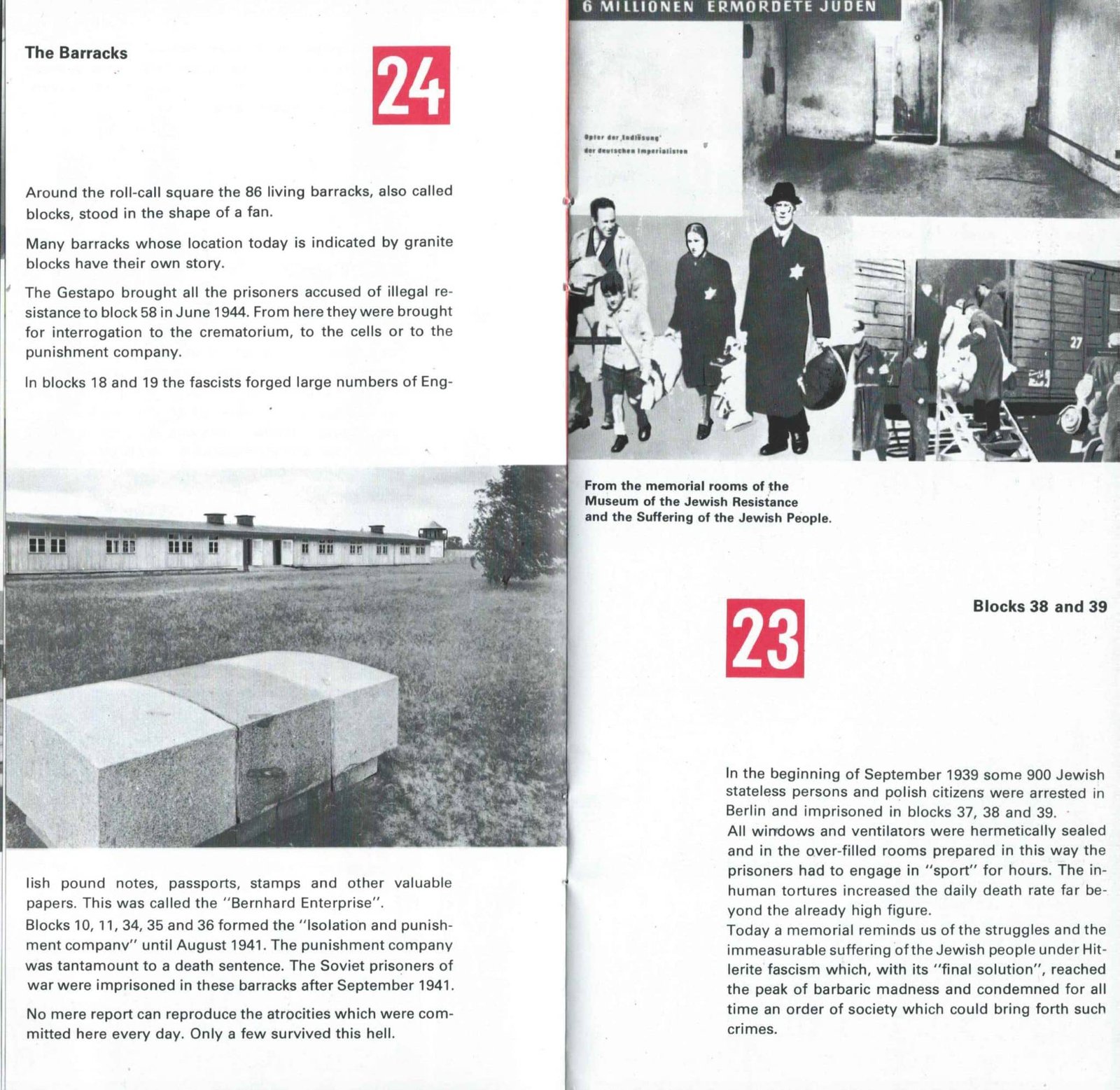
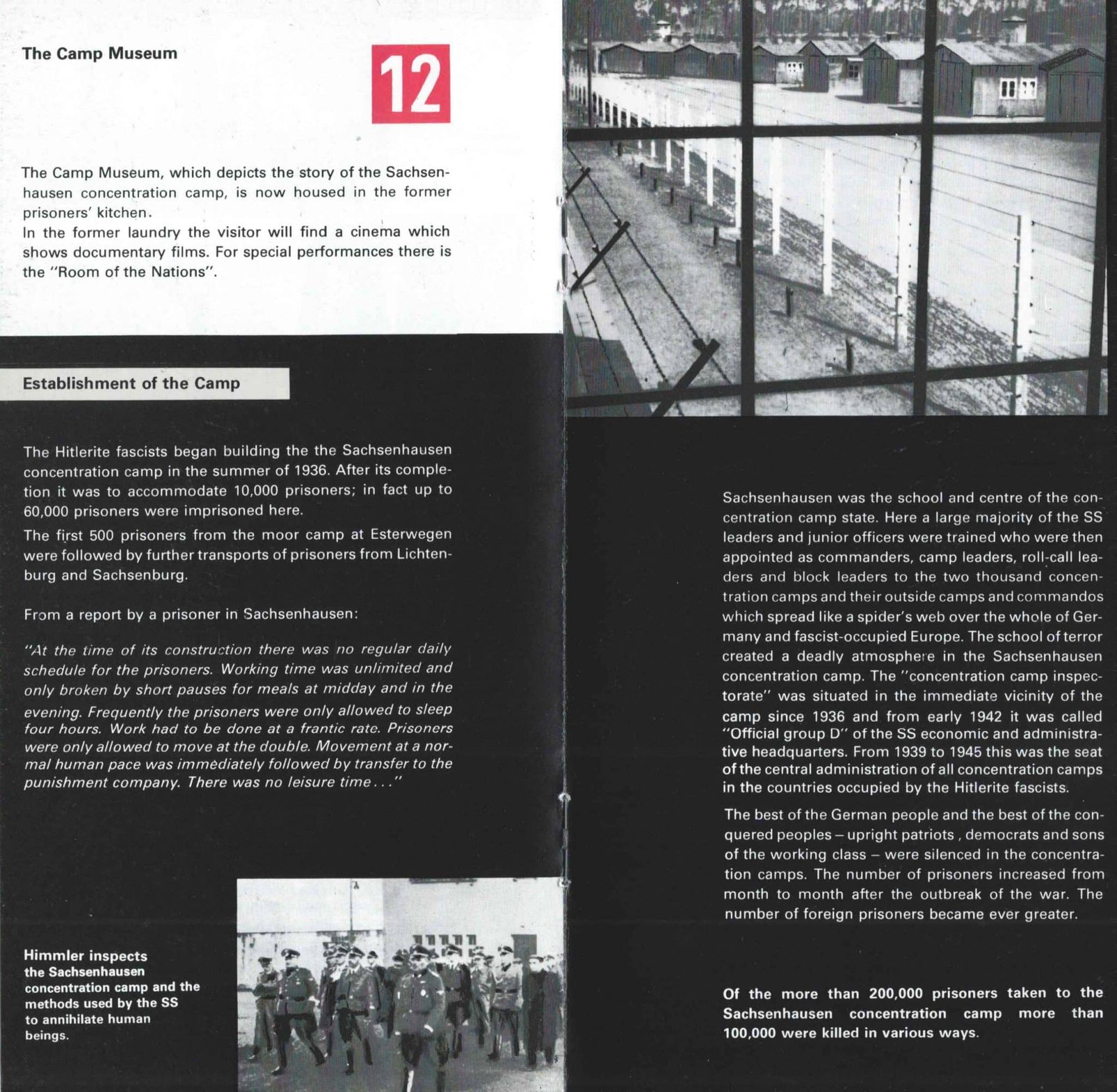
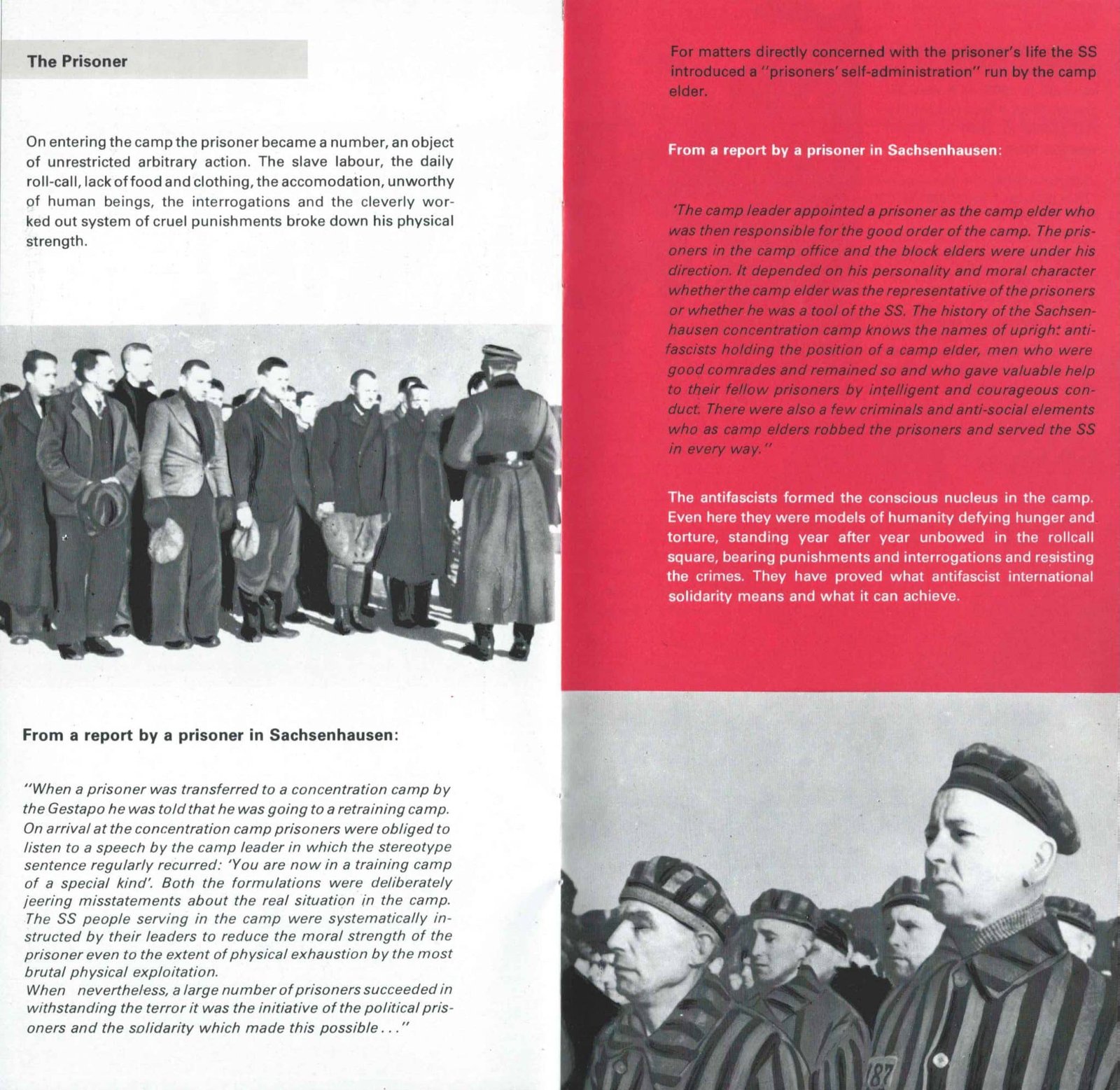
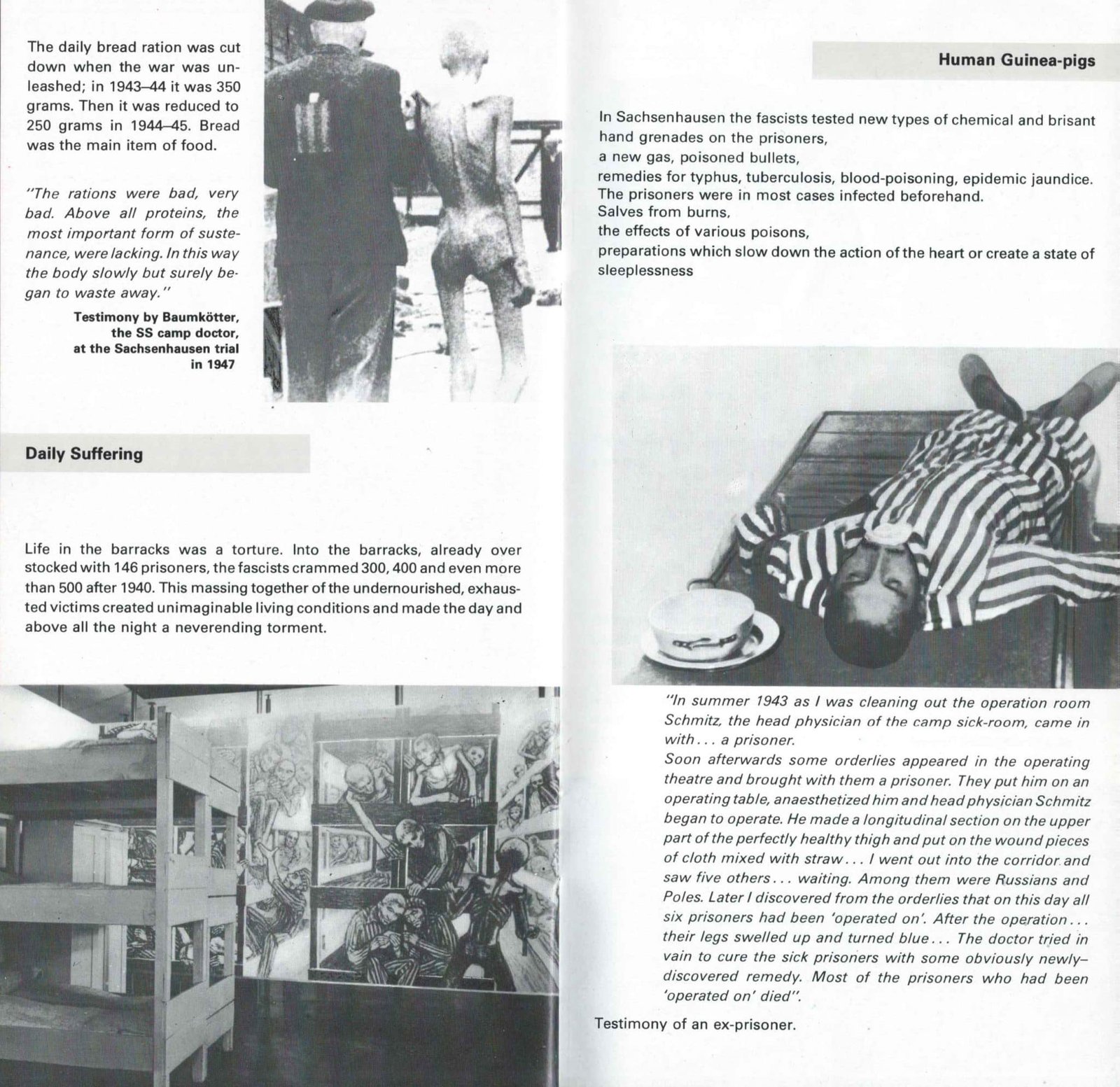
Re-opening Sachsenhausen as a memorial location enabled the East German government to illuminate, for all to see, the crimes of National Socialism, the horrendous conditions in the camp, and treatment of those held prisoner here. However, control of this location also allowed the East Germans to frame the narrative of this period to fit their own agenda, with the curation of the facts and artefacts on display a matter of presenting a perspective that fit within the Marxist-Leninist school of thought.

The Wikipedia entry dealing with the Sachsenhausen concentration camp alludes to this in two sentences, referring to the establishment of the national memorial in 1961: “The plans involved the removal of most of the original buildings and the construction of an obelisk, statue and meeting area, reflecting the outlook of the East German government of that time. The government of East Germany emphasised the suffering of political prisoners over that of the other groups detained at Sachsenhausen.”

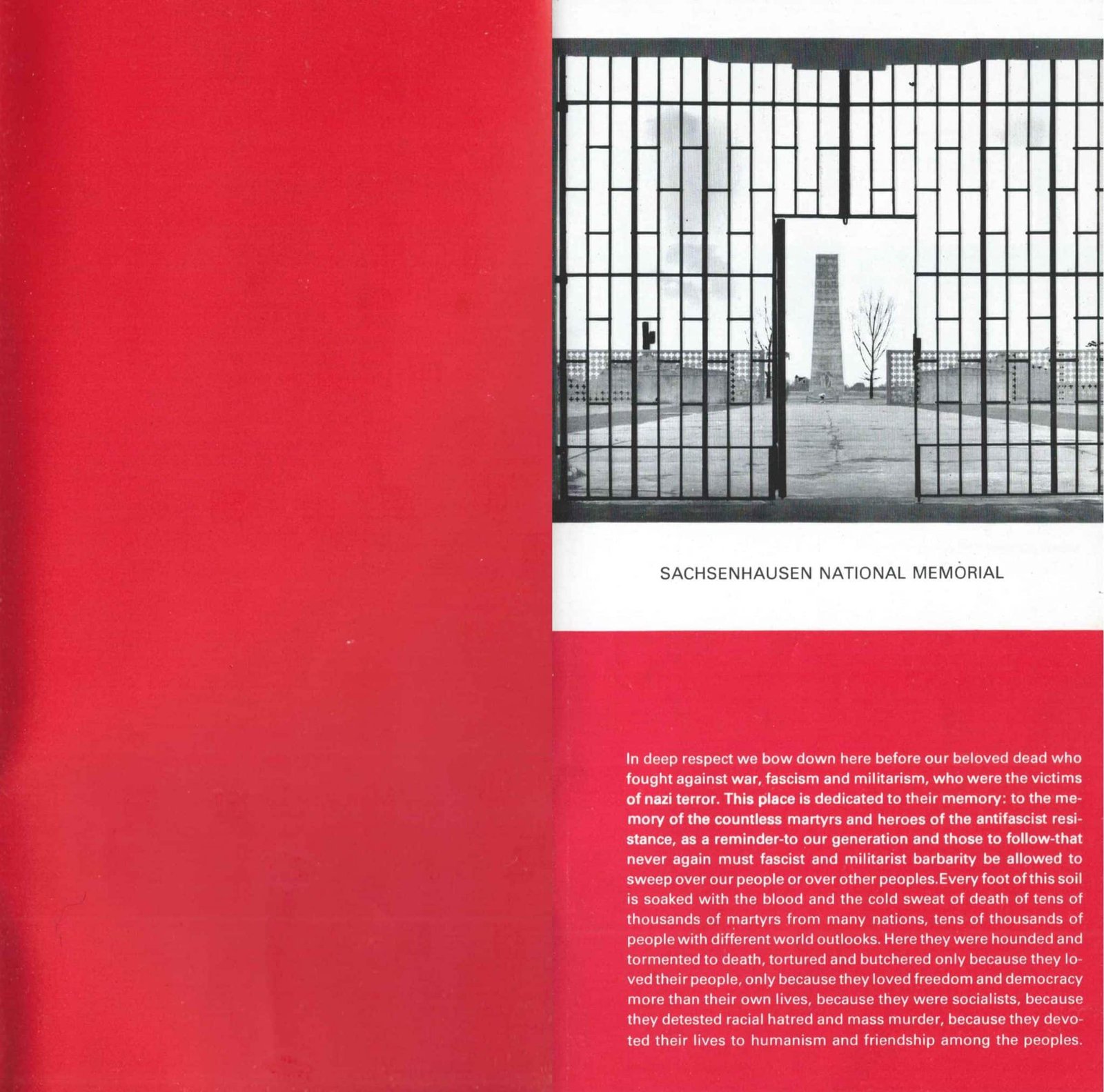
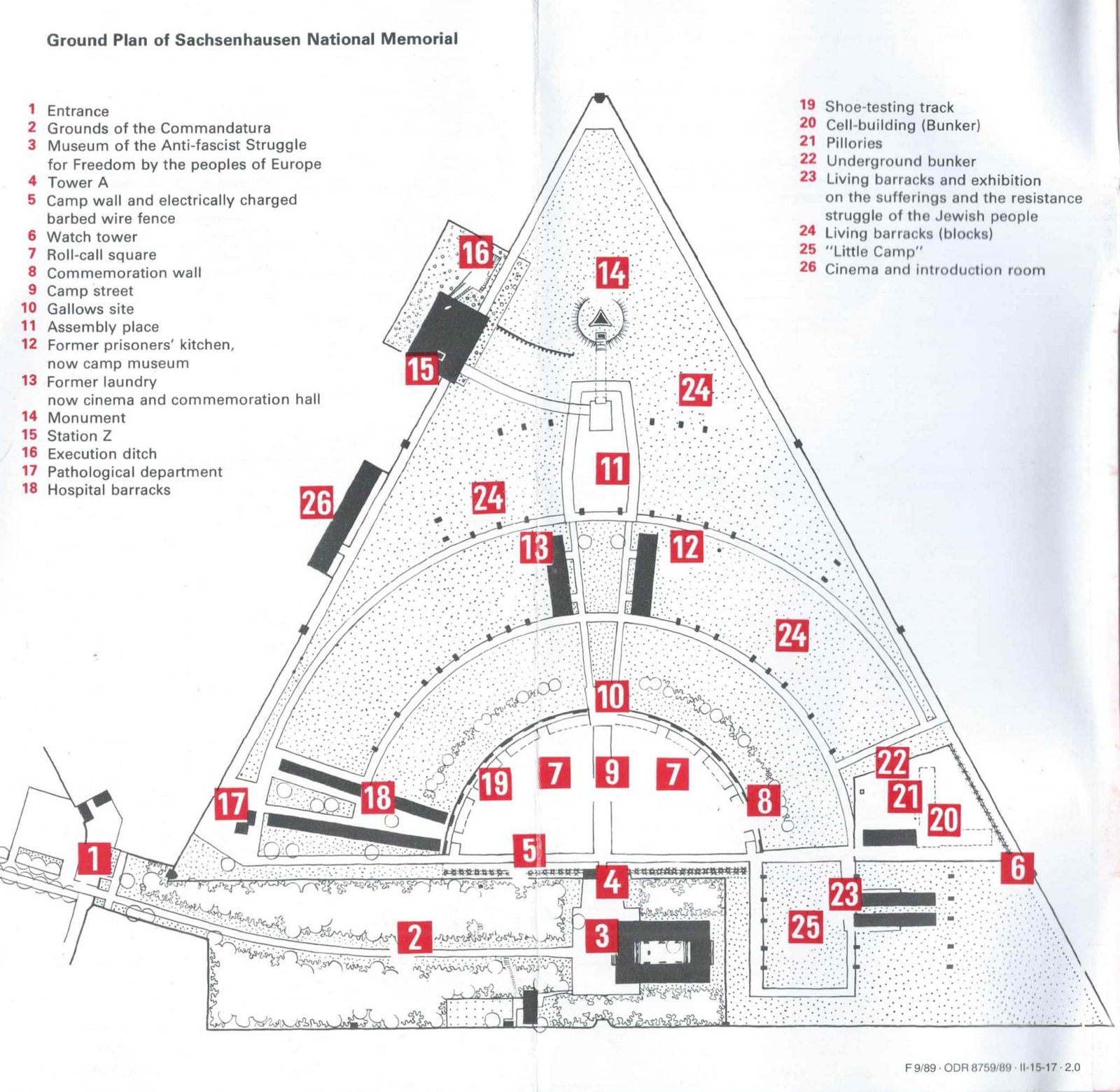
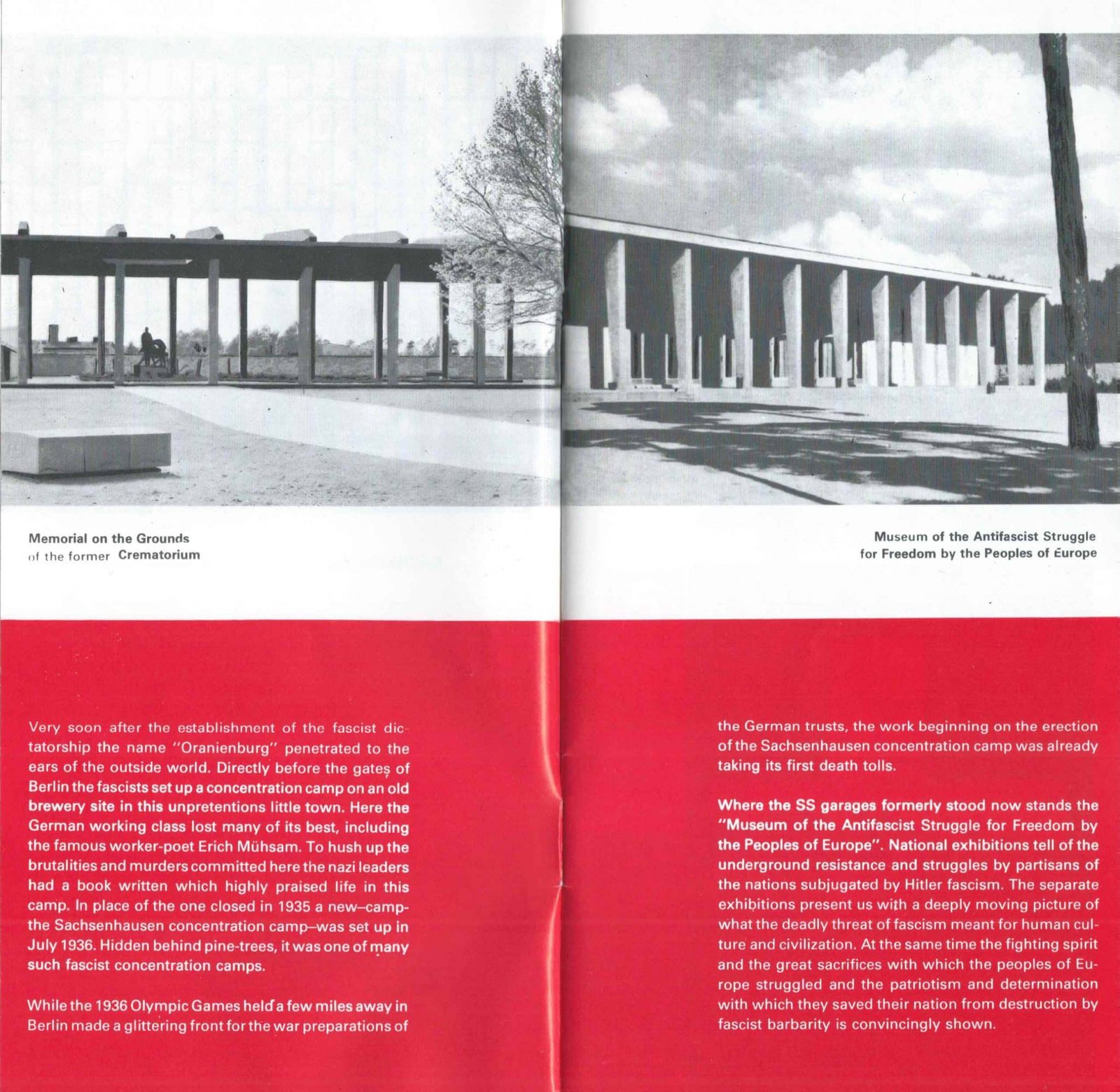
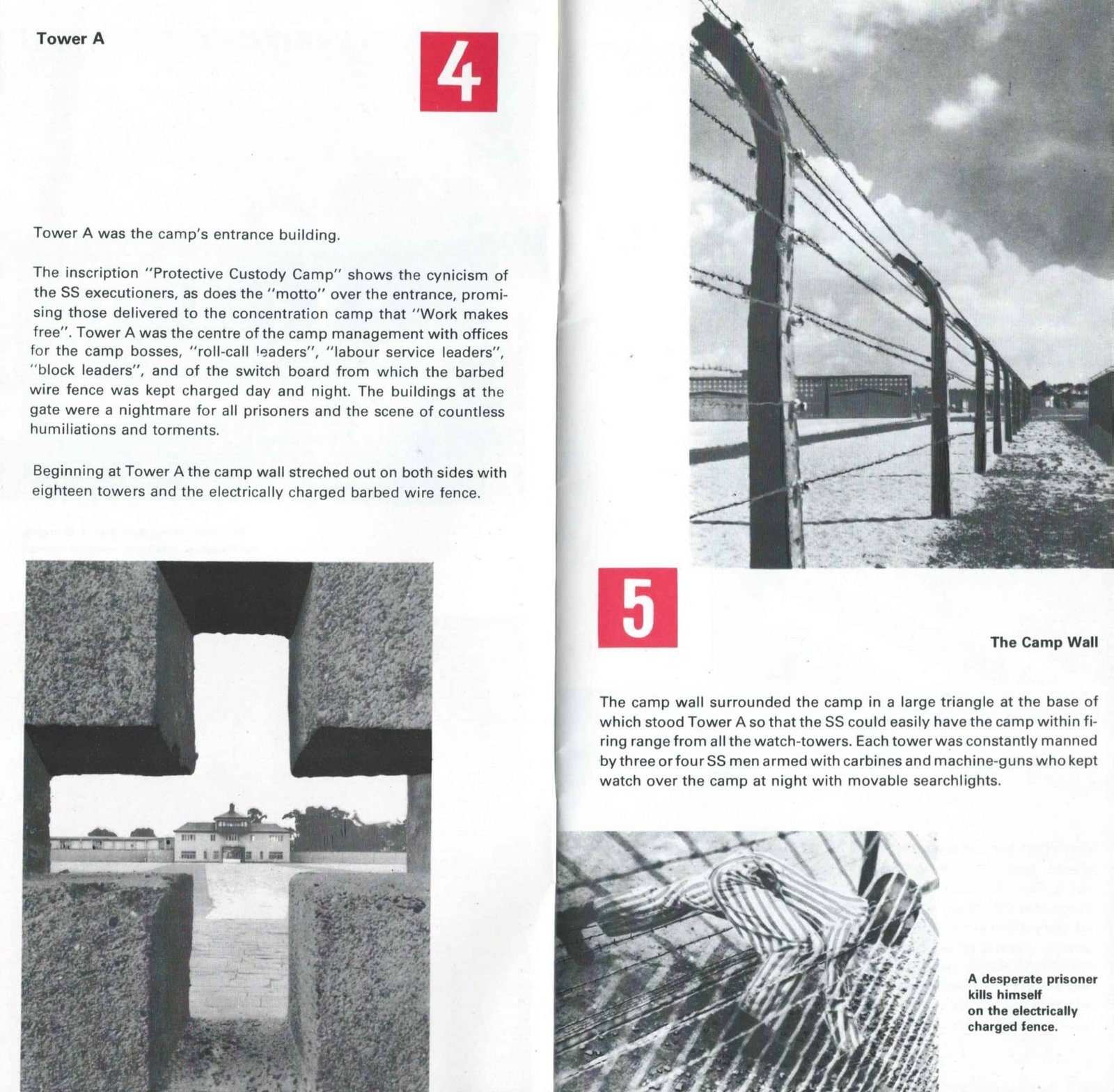
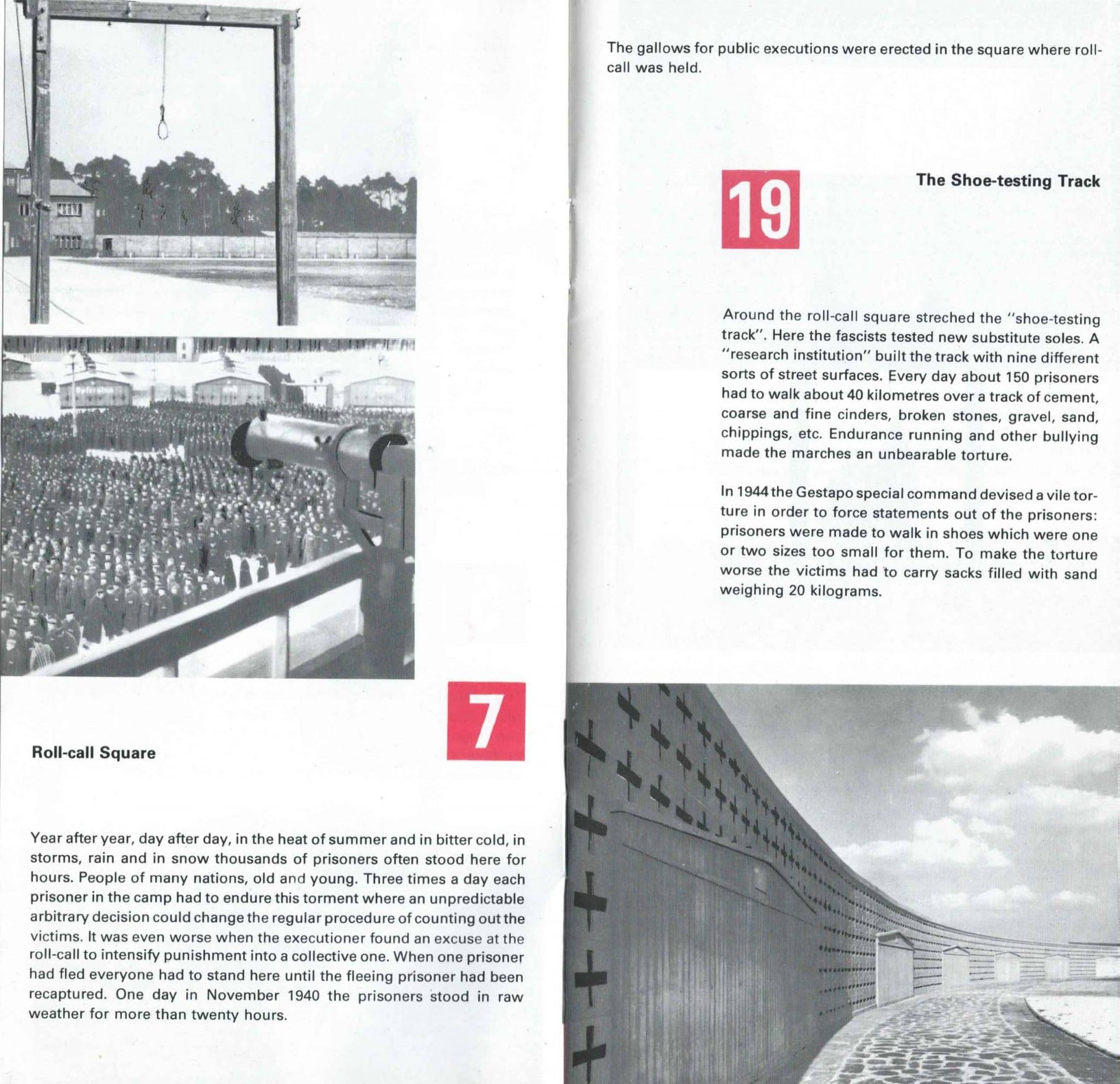
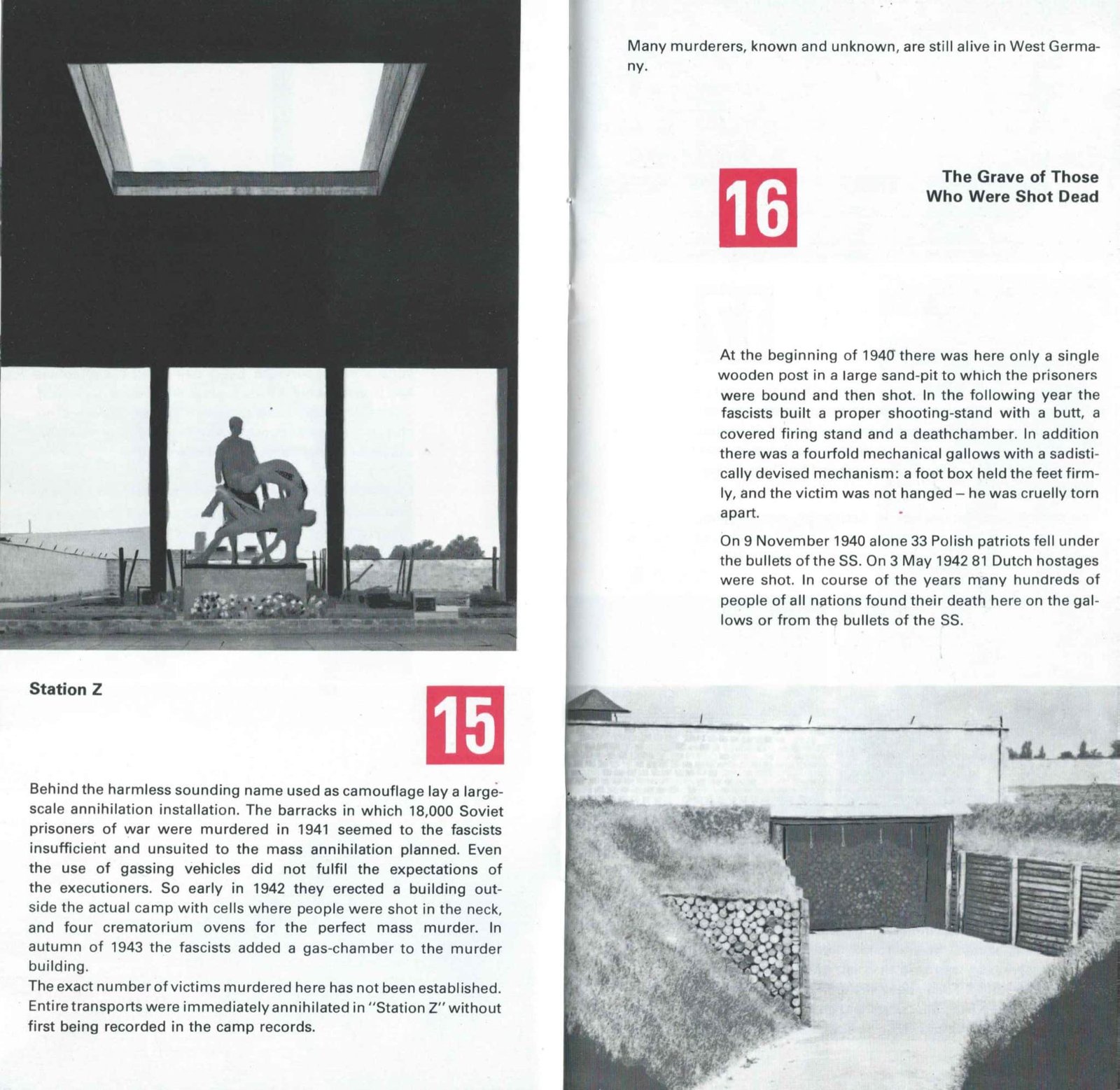
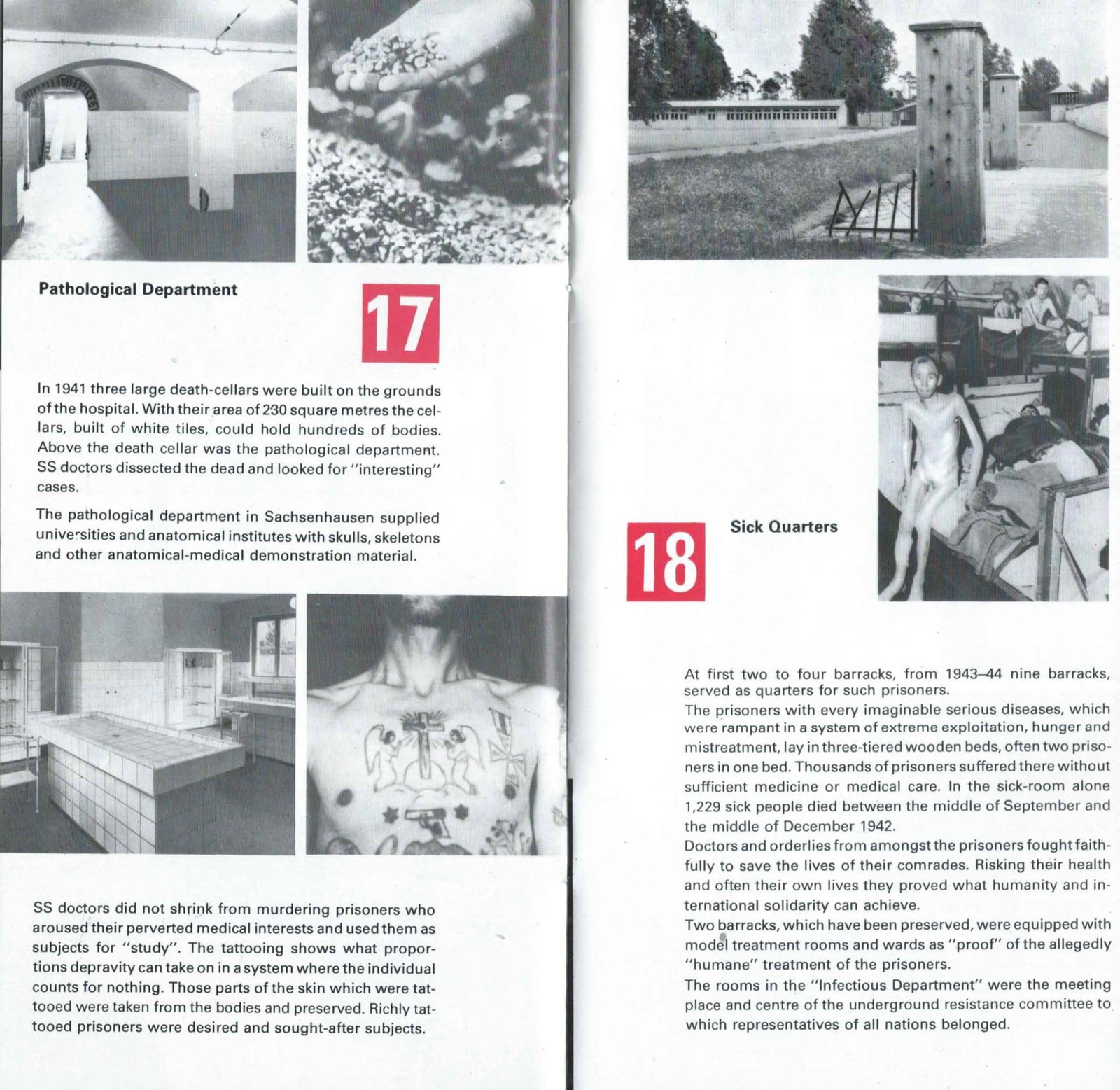
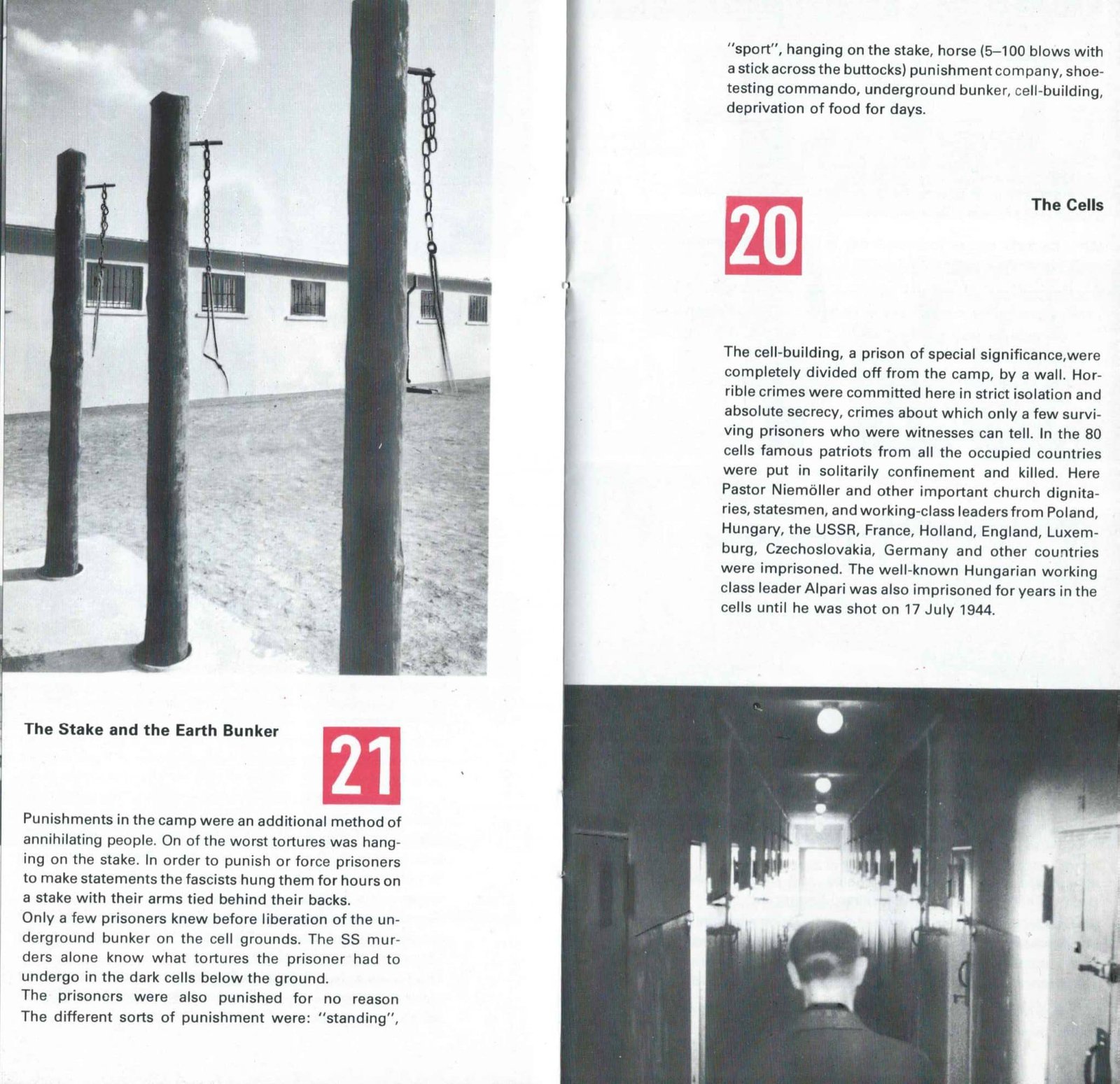
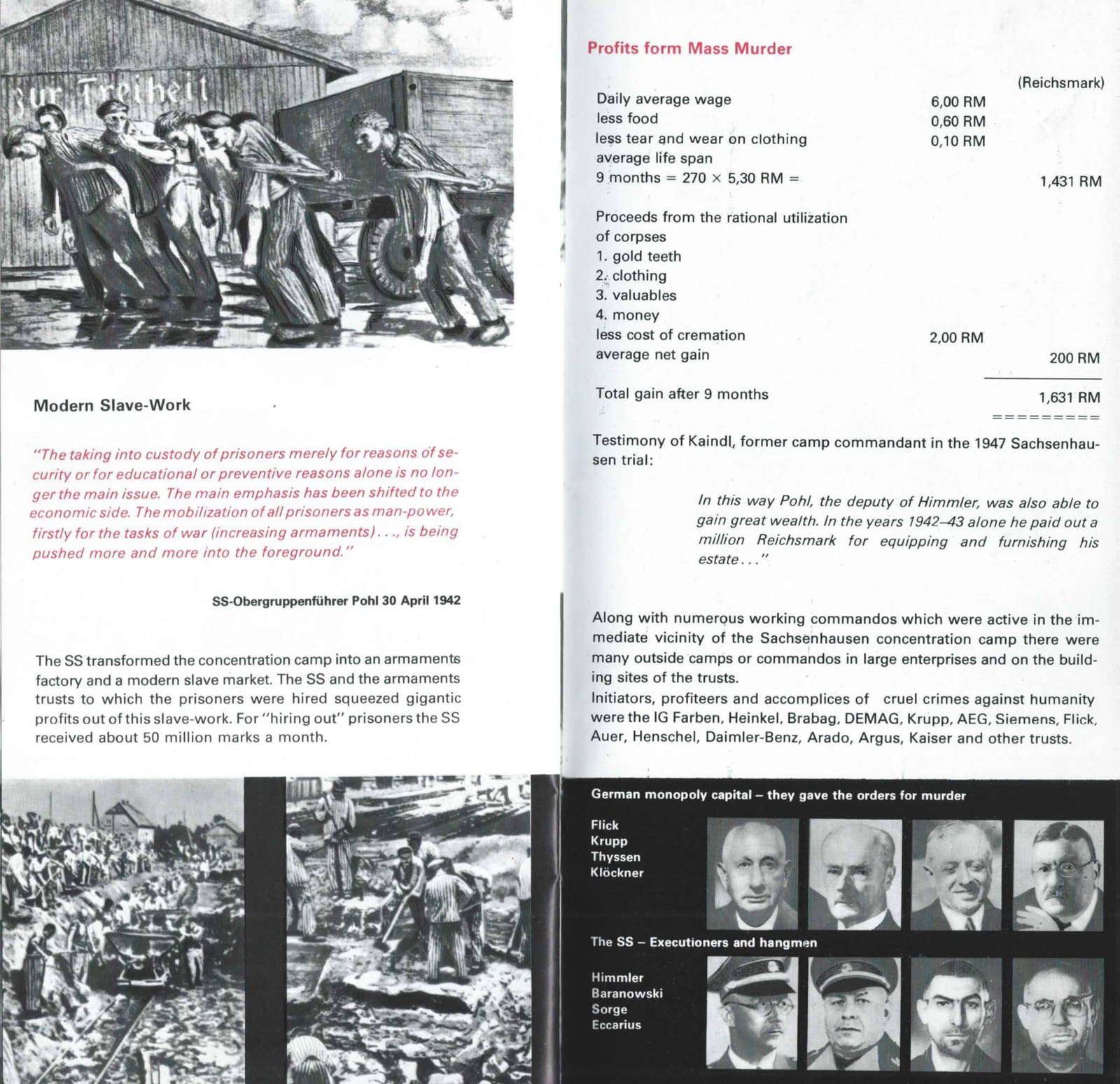
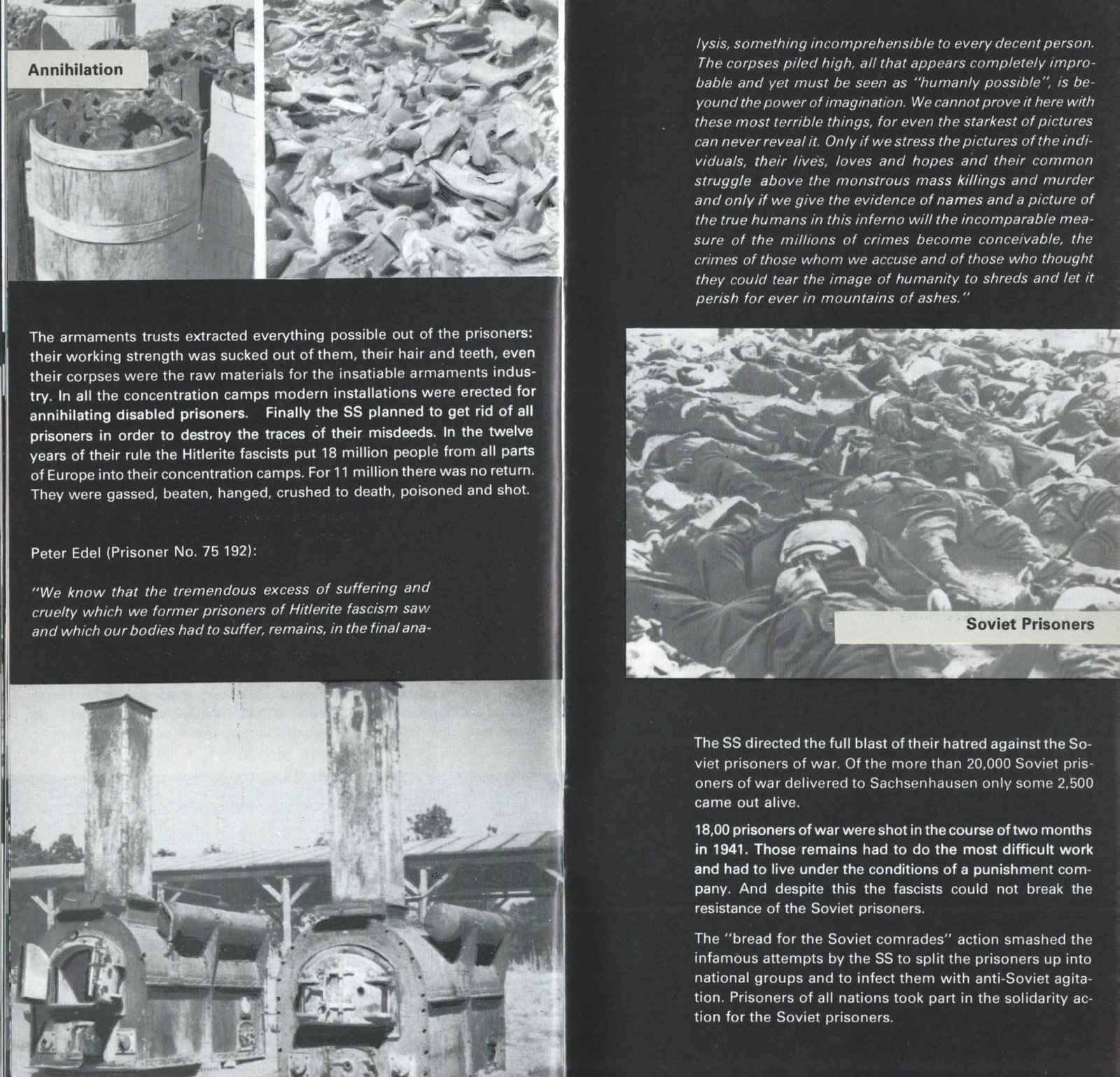
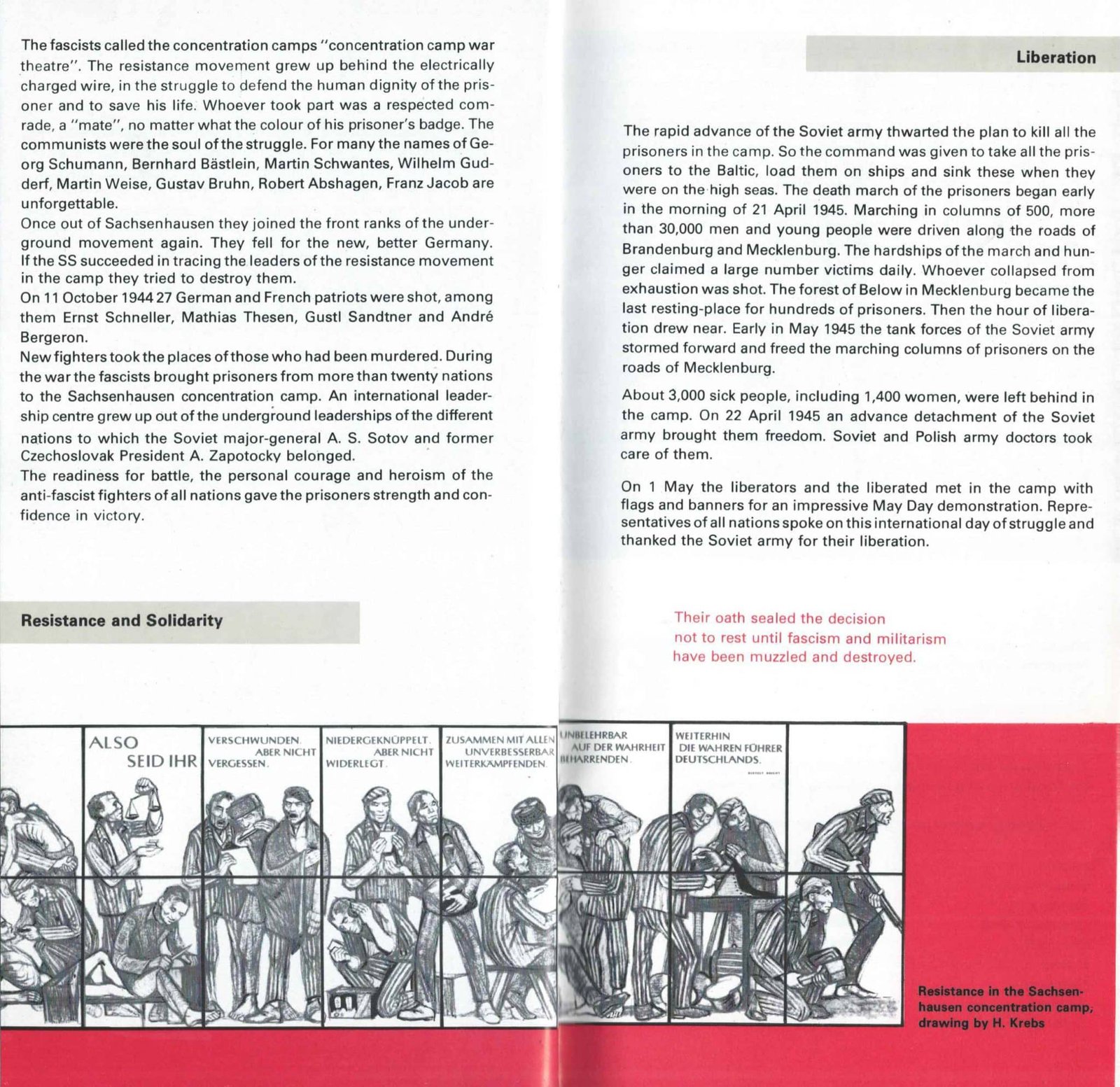
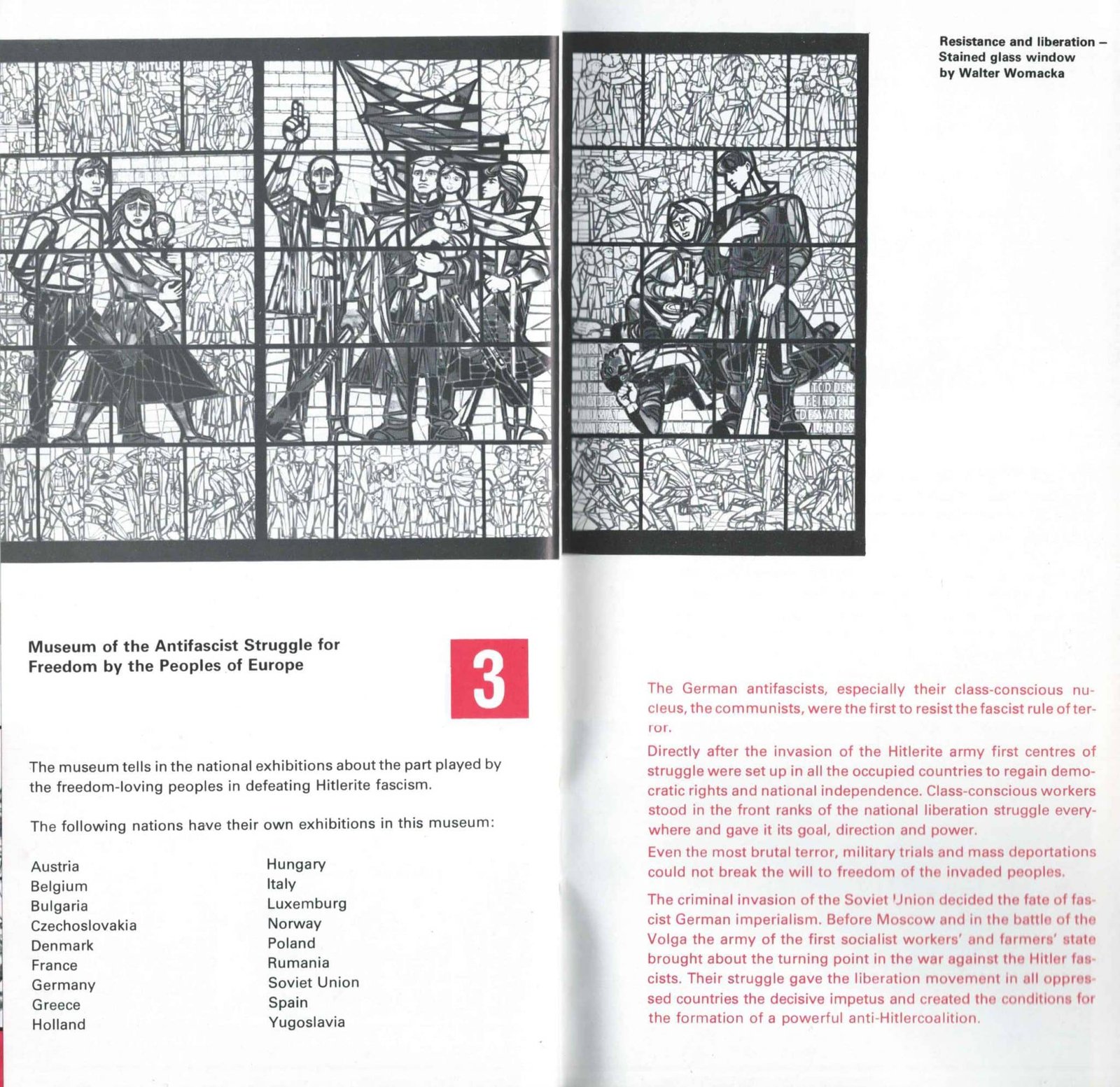
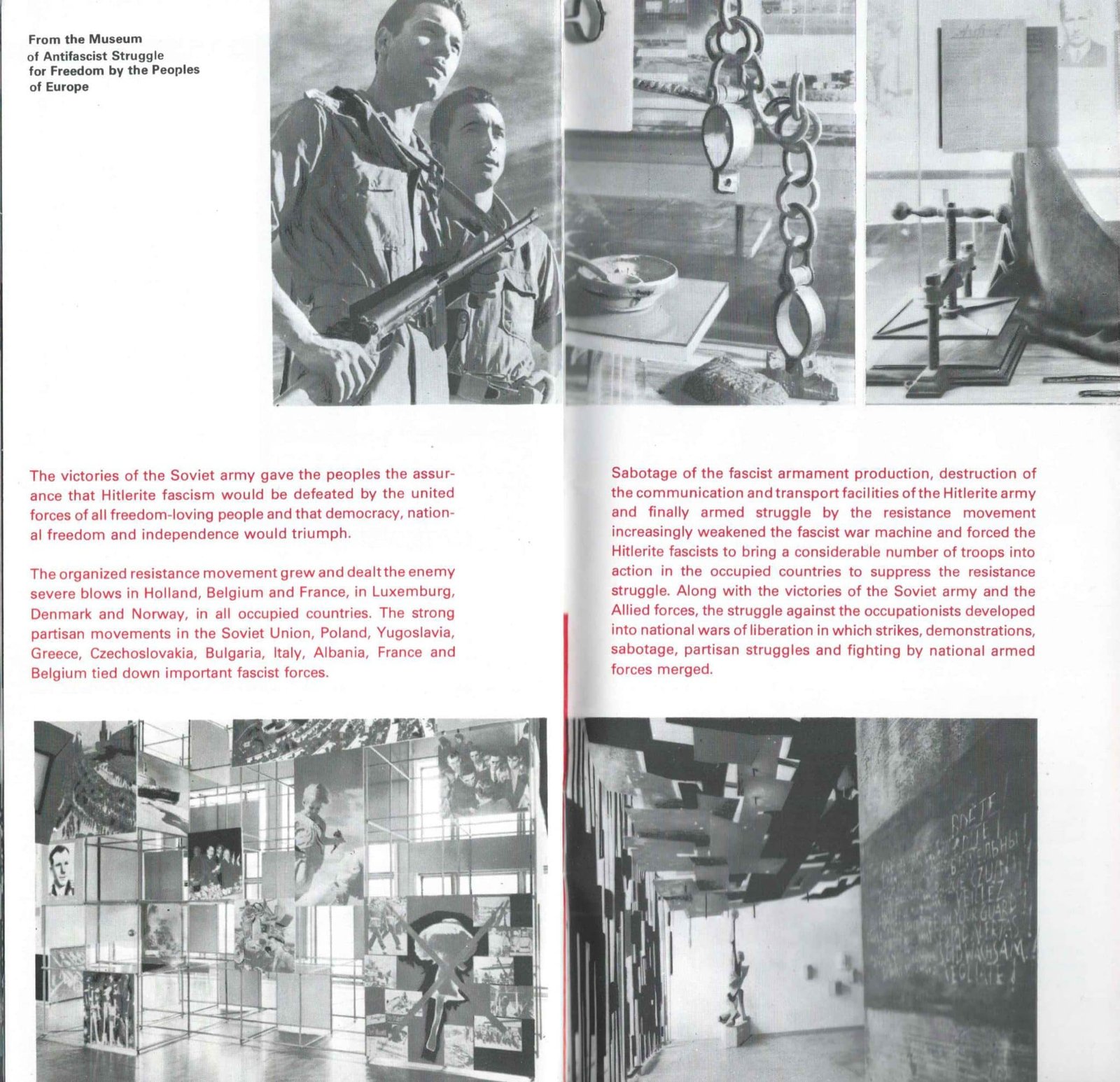
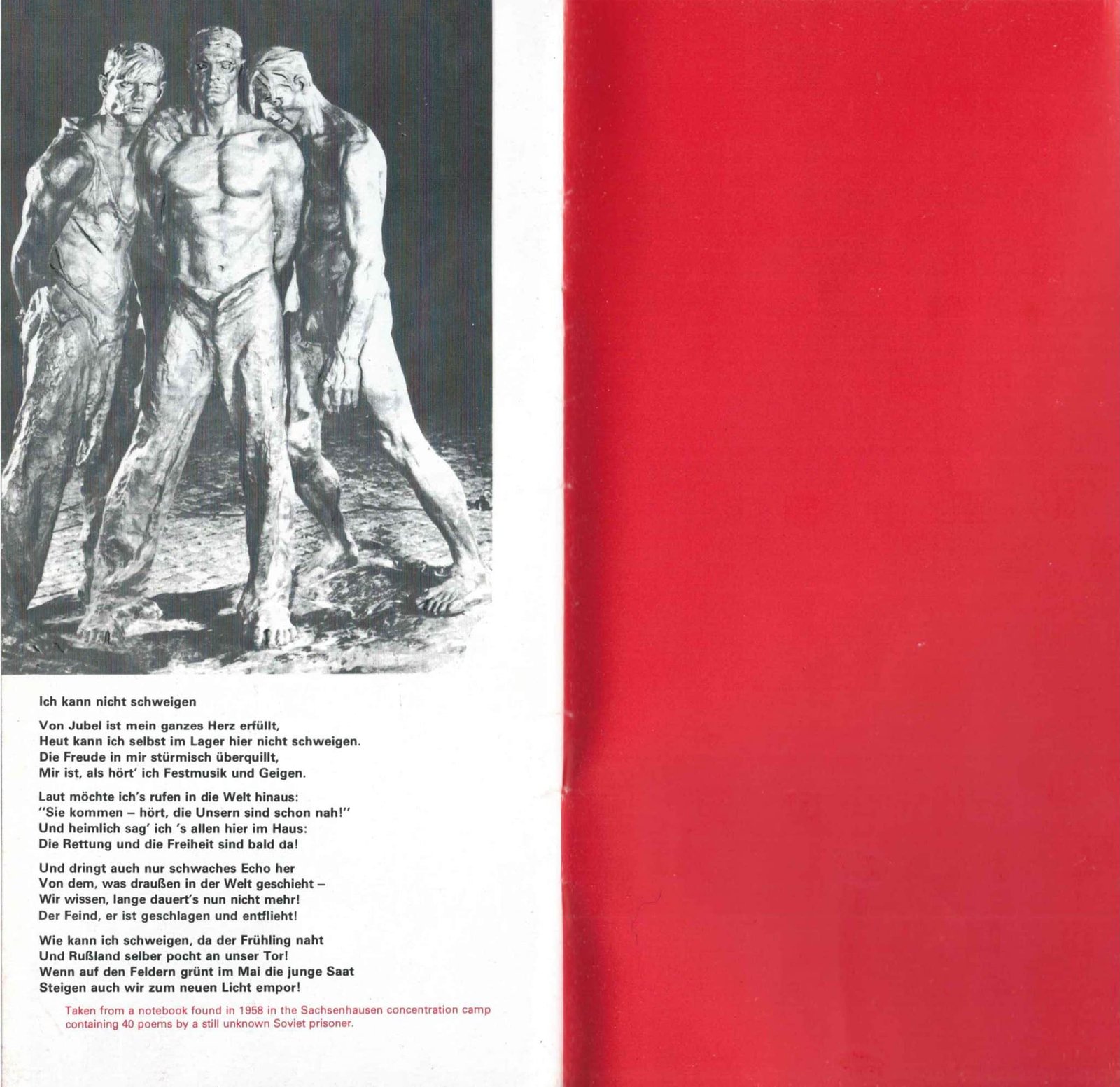
A prime example of this tendency is in the pamphlet presented to visitors to the Sachsenhausen concentration camp memorial during the East German times. Analysing this document it is possible to see the messages that the authorities wanted to transmit. From the language used and the tone of this language; to the choice of colours and rhunic title font – the imagery presented tells a story. One where the nuances of this presentation need to be understood through the lens of the ruling ideology of East Germany.

The horrendous extent of the story remains the same; what is fascinating to the historian and student of history, however, is the emphasis and editorial direction. 

In comparison to the dry, factual, objective manner of the memorial foundation today – this more bombastic and oratorial approach explains as much about the East German system as it does the record of atrocity at Sachsenhausen.

Few of these pamphlets remain in circulation; fewer still in good condition. 

Below you can find high quality photos of the entire leaflet.

–

Sachsenhausen Concentration Camp In The DDR - 1
Sachsenhausen Concentration Camp In The DDR - 2
Sachsenhausen Concentration Camp In The DDR - 3
Sachsenhausen Concentration Camp In The DDR - 4
Sachsenhausen Concentration Camp In The DDR - 5
Sachsenhausen Concentration Camp In The DDR - 6
Sachsenhausen Concentration Camp In The DDR - 7
Sachsenhausen Concentration Camp In The DDR - 8
Sachsenhausen Concentration Camp In The DDR - 9
Sachsenhausen Concentration Camp In The DDR - 10
Sachsenhausen Concentration Camp In The DDR - 11
Sachsenhausen Concentration Camp In The DDR - 12
Sachsenhausen Concentration Camp In The DDR - 13
Sachsenhausen Concentration Camp In The DDR - 14
Sachsenhausen Concentration Camp In The DDR - 15
Sachsenhausen Concentration Camp In The DDR - 16
Sachsenhausen Concentration Camp In The DDR - 17
Sachsenhausen Concentration Camp In The DDR - 18

–

To learn more about Sachsenhausen now; have a look at our Sachsenhausen: Invention Of Hell private tours

Liked this piece? Have a look at the Berlin Experiences tours that covers this fascinating history.

Book the The Sachsenhausen Camp TourMore articles →

Share this piece

Know someone who still believes it?

Explore in person

Tours that explore this story.

The Invention Of Hell Tour - Berlin Experiences
Full Day5 Hours

The Sachsenhausen Camp Tour

Our Sachsenhausen Camp Tour is a five hour expert-led private guided tour of the Sachsenhausen concentration camp memorial and museum.

€975up to 6
View Tour

More reading

Other essays.

31 more — drag, scroll or use the arrow keys.

Inside Berlin's Reichstag - Norman Foster
55 Things You Should Know Before Visiting Berlin
Berlin Experiences - Soviet Tanks In Berlin
Allied Victory Parade 1945: The Forgotten Parade
Brandenburg Gate
Battle Of Berlin Quiz: Test Your Battle Of Berlin Knowledge?
BER Airport - the Fiasco Flughafen
Berlin Brandenburg Airport – Behind The Scenes
Unter den Linden - Berlin's Avenue of Failed Assassinations
Berlin’s Avenue Of Failed Assassinations: Unter Den Linden
Strange clock in West Berlin
Berlin’s Most Unusual Objects – Explore Berlin In Objects
Berlin Experiences - The British Victory Parade In Berlin
British Victory Parade 1945: Desert Rats! May Your Glory Ever Shine!
Hitler Speech 1933
Capital Of Tyranny Quiz: How Much Do You Know About Nazi Germany?
The Day The Wall Fell sculpture in Berlin
Cold War Era Artefacts – Explore Berlin In Objects
Berlin Experiences - The Berlin Wall Escapes
Eight Strangest Berlin Wall Escapes
Berlin's Rotes Rathaus and the Berlin flag
Experience A City In Objects – Explore Berlin In Objects
Potsdam in Prussia - Landscape
Glory Of Prussia Quiz: How Much Do You Know About Potsdam?
Sachsenhausen Tower A
Invention Of Hell Quiz: How Much Do You Know About Sachsenhausen?
Matt Robinson: Private Guide Profile
Günter Litfin - the first victim of the Berlin Wall
On this day: Guenter Litfin is killed trying to escape to West Berlin
Ida Siekmann - the first Berlin Wall victim
On this day: Ida Siekmann becomes the first known victim of the Berlin Wall
Napoleon Arrives In Berlin - 1806
On this day: Napoleon Boneparte announces the Berlin Decree (21st November 1806)
Hegel the Philosopher
On this day: Philosopher G.W.F. Hegel dies (14th November 1831)
On this day: The Berlin Airlift officially ends
1936 Summer Olympics Opening Ceremony
Our Favourite Facts about the 1936 Summer Olympics
Prometheus Statue Berlin
Remnants Of Nazi Berlin – Explore Berlin In Objects
The Berlin Expert Quiz - Palast Der Republik
Republic Of Fear Quiz: Test Your Knowledge Of East Germany
Berlin War Damage in the Mitte district
Scars Of Battle: War Damage In Berlin
Berlin Experiences - Stolpersteine In Berlin
Stolpersteine: Personalising The Void
Cold War Tour Of Berlin - Bernauer Strasse Berlin Wall Memorial
Ten Great Reasons To Tour The Berlin Wall
The Berlin Expert Quiz - TV Tower
The Berlin Expert Quiz: Are You A Berlin Expert?
The Berlin Quiz - Berlin Skyline
The Berlin Quiz: How Much Do You Know About Berlin?
Ernst Thälmann Island - The Last Piece Of East Germany
The Last Piece Of East Germany – Ernst Thälmann Island
Paul Ogorzow - The S-Bahn Murderer
The S-Bahn Murderer: A Serial Killer In Nazi Berlin
Berlin Experiences - Caspar David Friedrich
Top Ten Must-See Berlin Museums
The Kreuzberg in Berlin
Traces Of The Iron Kingdom – Explore Berlin In Objects