

The Berlin History Tour
Private 6-hour van tour of Berlin's whole history in one day for up to 6 people. Starts at your hotel or anywhere in the city.

Do you think you are a Berlin Expert? Take our quiz and find out - answer these 35 questions about Berlin and its complex history.
By Matt Robinson · Updated · 35 questions
Answer all 35 questions — we’ll reveal the correct answer and the story behind it as you go.
Finished the quiz, or just curious? Open a question to see the answer and the story behind it.
Answer: Russian Tsar Alexander I
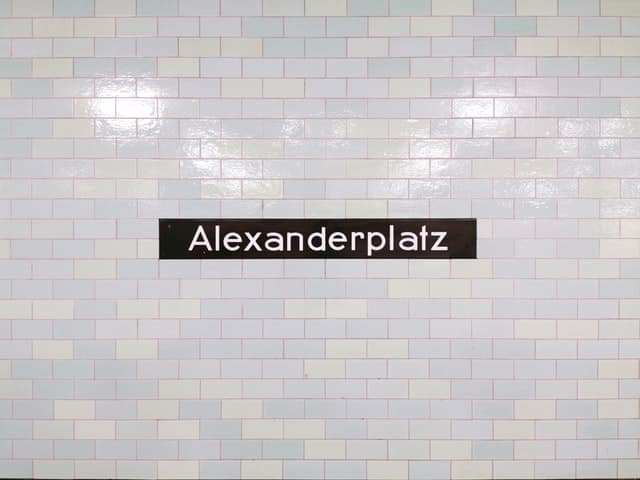
After his coronation in Königsberg on May 6, 1701, Prussian King Frederick I entered Berlin through a city gate at today's Alexanderplatz – named the Georgian Gate. As a result this would be renamed the King's Gate, the royal entrance to the city from the east, with a military parade ground added in the late 18th century. On October 25, 1805, the Russian Tsar Alexander I was welcomed to the city on the parade grounds in front of the old King's Gate and Prussian King Frederick William III soon ordered the square to be renamed in his honour .
Answer: Kreuzberg
Kreuzberg was formed on 1 October 1920 as one of the twenty boroughs established by the Greater Berlin Act. The eastern Friedrichsvorstadt, the southern Friedrichstadt, the western and southern Luisenstadt and the Tempelhofer Vorstadt were merged into the new VIth borough of Berlin, first named Hallesches Tor . The next year, the borough assembly of Hallesches Tor decided to rename the borough after the Kreuzberg (cross hill), the point of the highest elevation in the Kreuzberg locality and nickname of the 1821 Prussian National Monument for the Liberation Wars by Karl Friedrich Schinkel that features at the top of this hill.
Answer: A clock
The Mengenlehreuhr (Set Theory Clock) is the first public clock in the world that tells the time by means of illuminated, coloured fields – for which it is listed in the Guiness Book of World Records.
Answer: 9
The Berlin Brandenburg Airport was originally planned to open in October 2011, five years after starting construction in 2006. It finally opened on October 31st 2020 – nine years behind schedule.
Answer: France
A French Farman known as the Jules Verne – part of the French Naval Aviation – was the first Allied bomber to raid Berlin: on the night of June 7th 1940 it dropped eight bombs of 250 kg and 80 of 10 kg weight on the German capital.
Answer: Kreuzberg/Friedrichshain
Previously divided by the Berlin Wall, the residents of the districts of Friedrichshain and Kreuzberg still meet (albeit infrequently) to engage in the Battle of the Oberbaumbrücke. A pitched food and water fight (Wasserschlacht) that usually takes place in September across the former Cold War crossing point of the Oberbaumbrücke.
Answer: The central train line
The Stadtbahn line is Berlin's elevated central rail line. It connects the eastern district of Friedrichshain with Charlottenburg in the west via 11 intermediate stations including Hauptbahnhof. The Berlin Stadtbahn is often also defined as the slightly longer route between Ostkreuz and Westkreuz, although this is not technically correct.
Answer: Pankow
The most populous and second largest borough in Berlin is Pankow . The largest borough by area is Treptow-Köpenick.
Answer: The worst team ever in the Bundesliga
In 1965, Tasmania Berlin were promoted to the top flight after Hertha Berlin was compulsorily relegated for illegal payments to players. They were clearly out of their depth, ending the season with only eight points and a goal difference of 15:108 – making them the worst team in Bundeliga history to this day.
Answer: The Cruise Liner
The Cruise Liner is a popular nickname for the Centre Pompidou in Paris. The Beer Brush (Bierpinsel) is a futuristic pop art structure in Berlin's Steglitz district, the Federal Washing Machine ( Bundeswaschmaschine ) is a name commonly used to describe the German Federal Chancellery building next to the Reichstag, and the Kaiser-Wilhem-Gedächtniskirche in West Berlin is often referred to as the Hollow Tooth (Hohle Zahn) due to its visible war damage.
Answer: Russia
Speaking from the balcony of Portal IV on the Berliner Schloss, Kaiser Wilhelm II declared war on Russia on August 1st 1914 – explaining how he saw "no more parties and no more denominations" – a formula he would repeat three days later in the German parliament, famously stating "I no longer know any parties, I only know Germans."
Answer: The costs were covered by a donation made by the widow of a mail-order catalogue magnate
Although the original Stadtschloss was almost entirely destroyed in 1950, this palace-shaped replica now sits on the southern edge of Museum Island – topped with a rather controversial Christian cross bearing the name of its mail-order-catalogue czar benefactor.
Answer: In anticipation of an outbreak of the bubonic plague
In 1709, King Frederick I of Prussia ordered that a hospital be established north of the Berlin city walls in anticipation of an outbreak of the bubonic plague that had already depopulated East Prussia. The plague would spare the city and the hospital would be used as a charity hospital for the poor – given the name Charité, French 'charity, by Frederick William I of Prussia on January 9th 1727.
Answer: Sausages
Responding to Otto von Bismarck's challenge, Virchow is said to have chosen two sausages , one infected with worms, as the weapons (they each had to eat one for the "duel"). Bismarck, upon hearing the choice of weapons, declined. As comical as the story may sound, it is highly unlikely it is true. Correspondences from Bismarck and Virchow tell a slightly different tale; and the story of the famous 'sausage duel' seems to have originated from an 1893 edition of a pseudoscientific journal called the Homœopathic News.
Answer: 2006
The Love Parade first appeared in Berlin in 1995 – when 150 people took to the streets of the city for a political demonstration under the motto: Friede, Freude, Eierkuchen (Peace, Joy, Pancakes). It just happens that demonstration also featured techno music and dancing, and became quite successful in the following years. The last time the Love Parade appeared in Berlin was in 2006 .
Answer: Bernhard Lichtenberg
Known for repeatedly speaking out against the persecution of Jews and the Nazi involuntary euthanasia programme, Father Bernhard Lichtenburg was arrested by the Gestapo in 1943 and taken to Dachau concentration camp in Bavaria – where he caught pneumonia and died. Lichtenberg's tomb is situated in the crypt of St. Hedwig's Cathedral in Berlin.
Answer: In front of the Reichstag
The Victory Column originally stood in Königsplatz (now Platz der Republik), in front of the Reichstag , at the end of the Siegesallee (Victory Avenue). In 1939, in preparation for Berlin's transformation into Welthauptstadt Germania, the Nazis relocated the column to its present site at the Großer Stern (Great Star) – a roundabout named after the star formation of the roads visible from above and from the viewing platform of the column.
Answer: Wertheim
The Tresor nightclub opened in March 1991 in the vaults of the former Wertheim department store at Leipziger Strasse 126-128, near Potsdamer Platz.
Answer: A swimming pool
Once the largest train station in continental Europe, the Anhalter Bahnhof was severely damaged during the Second World War. Had Nazi Germany been victorious, Adolf Hitler's grand plan for resdesigning Berlin would have seen the train station transformed into the site of a public swimming pool .
Answer: A peppermint liqueur
Berliner Luft was the name of a peppermint liqueur made in East Germany with 25% alcohol. It is still produced in Germany, although now in three different strengths – 18 Vol-%, 40 Vol-% ("Strong") und 50-% ("Extra Strong).
Answer: Otto-Grotewohl-Straße
In September 1964, following the death of East German prime minister Otto Grotewohl, the eastern section of Berlin's central Wilhelmstrasse government street was renamed Otto-Grotewohl-Strasse and would remain so until German reunification. Lenin-Allee is currently known as Landsberger Allee; Dimitroffstrasse is now Eberswalderstrasse; and Käthe-Niederkirchner-Strasse still bears the same name – not to be confused with Niederkirchner-Strasse, which is located between the former Nazi SS/Gestapo headquarters and Nazi Reich Aviation Ministry building.
Answer: 6
The Berlin Modernism Housing Estates are a combined World Heritage Site designated in 2008, comprising six separate subsidized housing estates distributed across the German capital – Gartenstadt Falkenberg, Siedlung Schillerpark, Großsiedlung Britz (the Hufeisensiedlung), Wohnstadt Carl Legien, Weiße Stadt, Großsiedlung Siemensstadt.
Answer: Max Liebermann
The first building on the northern side of the Brandenburg Gate ensemble is the Haus Liebermann (Pariser Platz 7) – named after the German painter & President of the Berlin Academy of the Arts, Max Lierbermann , who lived and worked in this house following its acquisition by his father in 1857.
Answer: Erich's Lamp Shop
Completed in 1976, the Palace of the Republic, housed the East German parliament until 1990. Designed in a modernist style with distinctive bronze-mirrored windows, its decorative lighting fixtures would earn it the nickname ' Erich's Lamp Shop ' (Erichs Lampenladen) – in reference to East German leader Erich Honecker.
Answer: Willy Brandt
The ruling mayor of West Berlin on August 13th 1961 – the day construction of the Berlin Wall began – was Willy Brandt . Brandt would later serve as Chancellor of the Federal Republic of Germany (West Germany) from 1969 to 1974.
Answer: An apartment opposite the Pergamon Museum
Angela Merkel lives in an apartment opposite the Pergamon Museum – on the 4th floor of Am Kupfergraben 6.
Answer: The Egyptian Museum in Charlottenburg
In 1967, the bust of Nefertiti was moved to the Egyptian Museum in the Charlottenburg borough of Berlin and remained there until 2005, when it was moved to the Altes Museum for a further four years before finally returning to the Neues Museum where it is currently on display.
Answer: None
None of the German or West German Chancellors since 1949 were born in Berlin.
Answer: The Royal Museum
When it was originally opened the Altes Musuem was originally called The Royal Museum ( Königliches Museum) until the construction of a second museum to the north – which would become the Neues Museum as the Royal Museum received the name it still bears today.
Answer: Marx-Engels-Platz
During the Cold War era, the Hackescher Markt train station was known as the Marx-Engels-Platz station. It continues to function as one of only two Stadtbahn stations preserved in their original condition. The remaining three stations listed were closed until following German reunification in 1990.
Answer: Bornholmer Straße
The first border crossing to fully open on November 9th 1989 was the Bornholmer Straße Crossing – when at 11:30pm the guards raised the barrier and allowed the crowd that had gathered to continue unhindered into the French sector of the city. Over the next 24 hours, an estimated 20,000 people would cross this bridge.
Answer: The Juliusturm
As the oldest building in Berlin and one of the landmarks of the borough of Spandau, the 30 metre high Juliusturm dates back to the 13th century and served for a long time as a secure location for all kinds of treasure.
Answer: A sculpture in West Berlin
Unveiled by the husband-and-wife sculpting team of Brigitte Matschinsky-Denninghoff and Martin Matschinsky in 1987, this sculpture is simply titled 'Berlin' but has also come to be known by many other names – including the 'Dancing Spaghetti'. Consisting of four intertwined, but not touching steel tubes, it was added to Berlin's Kufürstendamm shopping street to celebrate the city's 750th anniversary year.
Answer: The Berliner Dom
Although constructed on the site of a Karl Friedrich Schinkel building (the previous Supreme Parish and Cathedral Church ), the Berliner Dom was designed by Julius Raschdorff in Renaissance and Baroque Revival styles. It is the largest Protestant church in Germany and also acts as a dynastic tomb for the former ruling Hohenzollern royal family.
Answer: A part of the city that existed as an exclave of West Berlin inside East Germany
The Eiskeller (Ice Cellar) is an area of Berlin in the northwestern district of Hakenfelde, considered to be the coldest place in the city it is where ice was previously stored after being cut from the nearby Falkenhagener See before being resold to breweries and hospitals. Since the formation of Greater Berlin in 1920, the Eiskeller was an exclave of Berlin in the surrounding area and later of West Berlin in the GDR .
Liked this piece? Have a look at the Berlin Experiences tours that cover this history.
See the Berlin History TourMore articles →Explore in person
Private 6-hour van tour of Berlin's whole history in one day for up to 6 people. Starts at your hotel or anywhere in the city.

Private half-day walking tour of historic Mitte for up to 10 people. Starts at your hotel or anywhere in the centre.
More reading


