“In all areas we increasingly have the thing without its essence. We have beer without alcohol, meat without fat , coffee without caffeine – and even virtual sex without sex.”
Slavoj Žižek
Decaffeinated coffee is either a blessing for those who love the taste but not the tremors, or a tragic compromise—akin to sugar-free cake or an alcohol-free pint.
It exists, but in doing so, it negates its very essence.
It’s the kind of conundrum that brings to mind a joke from Ernst Lubitsch’s Ninotchka, where a customer orders coffee without cream, only for the waiter to reply: “I’m sorry, sir, we have no cream. But can I offer you coffee without milk?”
A certain kind of reverse-Hamlet. Thus spake the bonnie prince: “To not to be whilst being, that is the answer!”.
The success of certain regimes has hinged on the full-strength of particular beverages. The British Empire ran on sweet milky tea, Italy without espresso is unthinkable, and Spanish colonial South America was, and remains for many, fueled by yerba-maté. What we drink, much like what we buy, has always been tied to identity—particularly under capitalism, where consumer habits shape personal and national narratives.
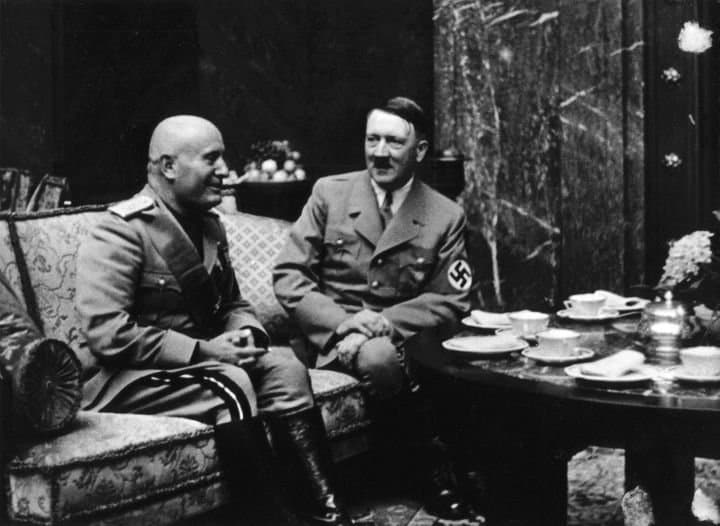
But tea for British imperialists, espresso for fascists… and decaf for Nazis?
The idea that Hitler’s regime had something to do with the rise of decaf coffee has been whispered in closed circles for years. It’s the kind of claim that now thrives online, blending historical intrigue with the sinister allure of the Third Reich’s technological, medical, and military experiments. Given the Nazis’ notorious obsession with controlling bodily functions—through diet, drugs, and pseudo-scientific engineering—there may be some truth to it.
But here lies the paradox. A state obsessed with racial and ideological purity promoting a drink that has been stripped of its most defining quality? It seems contradictory. Then again, if anyone were to try to ‘purify’ coffee by removing its stimulant properties, it would be the Nazis.
–
From Goat Herders to Global Addiction
“The coffee must be black as the devil , hot as hell , pure as an angel and sweet as love.”
Charles-Maurice de Talleyrand-Périgord
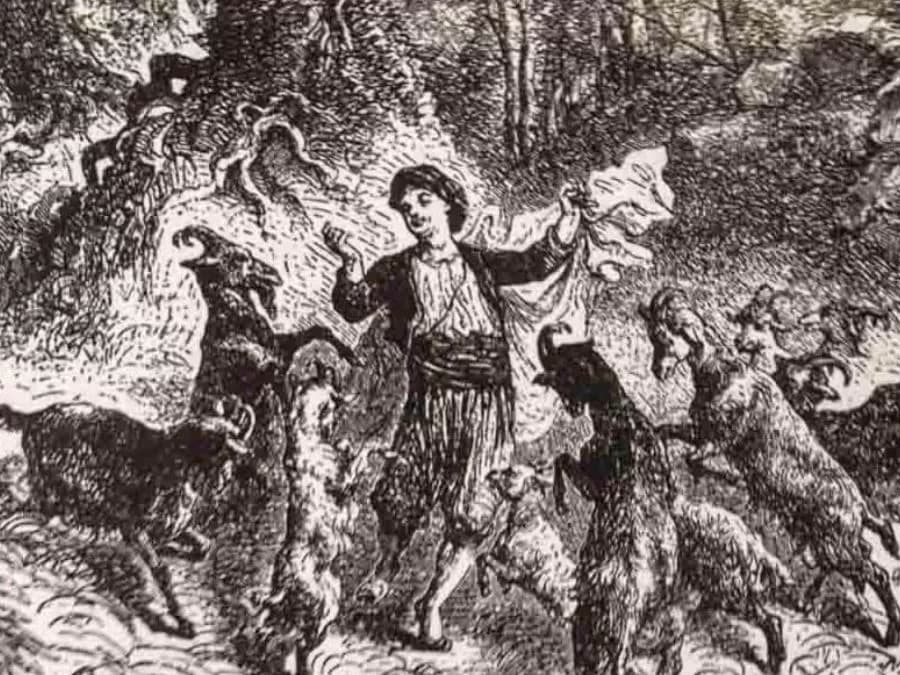
Coffee’s development from obscure regional beverage to global phenomenon begins in Ethiopia, where, according to legend, a 9th-century goat herder named Kaldi noticed his goats behaving erratically after munching on some red berries.
Unlike most historical origin stories, this one has a ring of truth—coffee cherries contain caffeine, a natural stimulant that can make animals (and humans) unusually energetic.
By the 15th century, coffee had made its way to the Arabian Peninsula, where Sufi mystics used it to stay awake during long nights of prayer.
In 1574, the first mention in Europe of coffee appeared in a European botany book. But for almost 100 years, it was of interest only to natural scientists and travelers to the Orient.
From there, it spread like wildfire. The Ottomans took it to Istanbul, the Venetians smuggled it into Europe, and by the 17th century, coffee houses were popping up across England, France, and the German states.
In its early years, coffee was often viewed with suspicion. Religious leaders in Mecca tried to ban it, labelling it an intoxicant. European clergy debated whether it was a “Christian drink” or a “Muslim vice”—until Pope Clement VIII allegedly took a sip and declared it “too delicious to be Satanic.” From then on, coffee’s rise was unstoppable.
By the 18th century, coffee plantations were springing up across the European colonies. European colonial powers like the Dutch, French, and British established coffee plantations in the Caribbean, South America, and Southeast Asia—to meet booming demand. The cultivation of coffee dramatically increased global trade, making coffee beans more accessible and affordable for a broader segment of society by the late 18th century.
Brazil, in particular, became the powerhouse of global production, and by the 19th century, coffee was a daily staple for millions. Becoming a regular part of daily routines, particularly among Europe’s burgeoning middle classes. Technological innovations, including improved roasting methods and mass-produced coffee grinders, contributed to coffee’s widespread domestic consumption.
By 1914 – the year the First World War started in Europe – Germany in particular accounted for one-third of worldwide coffee consumption, second only after the USA, which had 30 million more inhabitants.
Nowadays, around 80% of the world’s population – around 6.4 billion people – consumes caffeine – typically in the form of coffee, tea, or cola – with the average consumer’s daily intake being around 200 milligrams. Making caffeine the worldwide number one drug of choice. Decaf coffee makes up around 12% of total global coffee consumption – a number that is steadily growing year by year.
–
Vive Prussian Muckefuck
“It is disgusting to notice the increase in the quantity of coffee used by my subjects, and the amount of money that goes out of the country as a consequence. Everybody is using coffee; this must be prevented. His Majesty was brought up on beer, and so were both his ancestors and officers. Many battles have been fought and won by soldiers nourished on beer, and the King does not believe that coffee-drinking soldiers can be relied upon to endure hardships in case of another war.”
Frederick II of Prussia, 1777; quoted by Bert L. Vallée, Alcohol in the Western World, Scientific American, Vol. 278, No. 6 (June), 1998, pp. 80-85
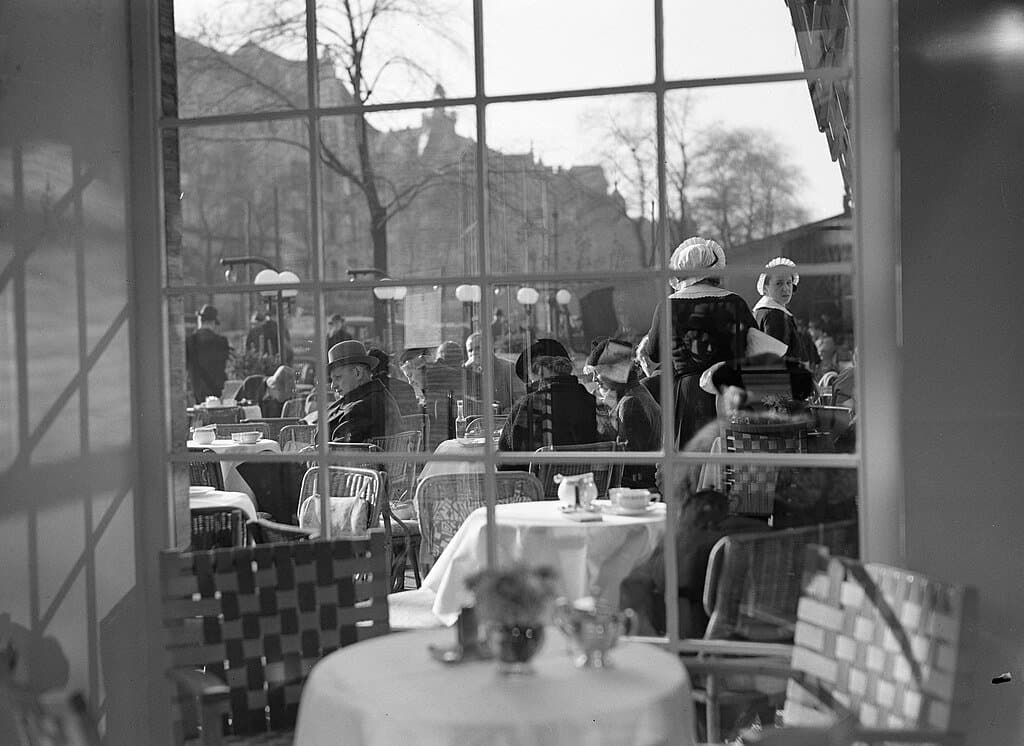
If you were to walk through the cities of Berlin, Vienna, or Königsberg in the 18th or 19th century, the smell of roasting coffee beans would have been impossible to ignore. Coffee had taken root in German-speaking lands, but its journey was far from smooth.
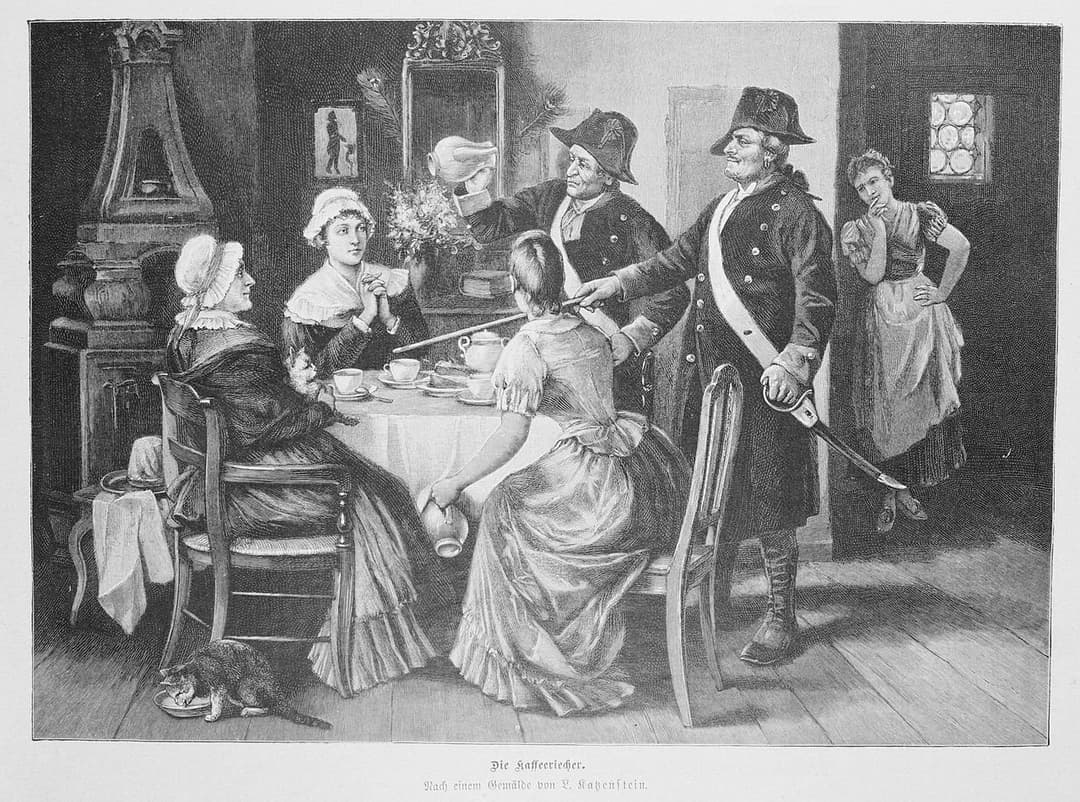
In Prussia, coffee consumption became so popular that it irritated Frederick the Great. Concerned that beer was losing its status as the national beverage, he tried to discourage coffee drinking, even hiring 400 soldiers who had been invalided out of his army as official ‘coffee sniffers’ – to patrol the streets and sniff out illegal roasters. His efforts failed.
In 1766, he introduced a state monopoly on roasting coffee beans and implemented heavy taxes, making coffee consumption prohibitively expensive for ordinary citizens. These restrictive measures led to widespread smuggling, illegal roasting, and secretive coffee gatherings in homes, illustrating Prussians’ persistent affection for the beverage.
The rise of Muckefuck is closely connected with Frederick the Great’s attempts in the mid-1700s to restrict coffee imports. Prussians chose to find creative solutions to satisfy their desire for caffeination, leading to widespread home production of coffee substitutes. As authentic coffee became a luxury reserved for the wealthy, Prussians of modest means turned to Muckefuck, a beverage that offered similar bitterness and warmth at a fraction of the cost.
The name Muckefuck likely originates from the French phrase mocca faux, meaning “fake coffee,” humorously adapted into local dialect. The Duden dictionary cites the olloquial use of “Muckefuck” as “thin coffee” in Rhenish-Westphalia as its origin. Derived from the Rhenish “Mucken” for brown wood, “mulm, ” and the Rhenish ” fuck” for lazy.
Another suggestion is that the term itself did not arrive until 1870 during the Franco-Prussian War again Napoleon III or even during the post-WWI French occupation of the Rhineland.
Regardless of the provenance of the term, this ersatz coffee provided a practical alternative during periods of economic hardship, war, or trade embargoes when coffee beans were heavily taxed or unavailable.
Common ingredients in Mukkefukk included:
- Chicory root, which provided a slightly bitter flavor
- Barley and rye, roasted to mimic the dark color of coffee
- Acorns and beets, used in extreme shortages to create a coarse, bitter brew
Vienna, meanwhile, embraced coffee wholeheartedly in the 1700s. The Austrians had supposedly ‘discovered’ coffee after the 1683 Siege of Vienna, when the retreating Ottoman army left behind sacks of beans. The city’s coffee houses became legendary, hosting everyone from Mozart to Freud.
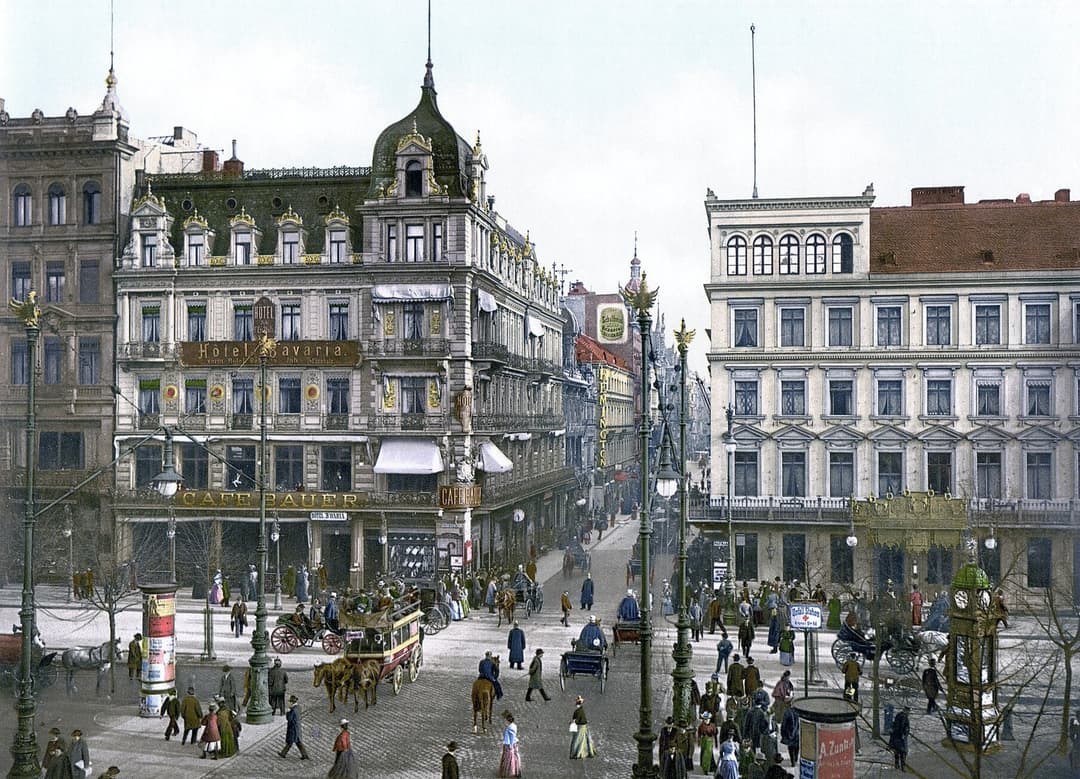
By the late 19th century, Berlin – no longer just the capital of Prussia but now the capital of the unified German state – had finally developed its own coffee culture, as German scientists were also starting to tinker with the chemistry of coffee itself.
In order to create a truly decaffeinated coffee, it would first be necessary to better understand the presence of caffeine within the beans – and how to extract it.
The first person to extract caffeine from coffee beans was German chemist Friedlieb Ferdinand Runge, who in 1819 isolated the active ingredient of the deadly nightshade plant Atropa belladonna – a toxic alkaloid today known as atropine. During the Renaissance, women dripped extract of deadly night shade into their eyes to dilate their pupils and achieve a fashionable doe-eyed look – hence the name belladonna, meaning “beautiful woman.”
Runge determined that atropine was responsible for this dilating effect, testing the compound on the eyes of cats. This research soon came to the attention of German poet and polymath Wolfgang von Goethe, who, having just received a shipment of coffee beans, asked Runge if he could isolate the active stimulant compound. Runge obliged, and in 1820 succeeded in extracting and identifying caffeine.
However, this is where his research on the matter ended; he did not further investigate the chemistry of caffeine nor seek to use his extraction process commercially to produce decaffeinated coffee.
That breakthrough would have to wait nearly a century.
–
Decaffeination & The Roselius Process
“Coffee was only a way of stealing time that should by rights belong to your slightly older self.”
Terry Pratchett
Like many scientific discoveries, the road to decaffeinated coffee happened upon by chance, and then improved over time.
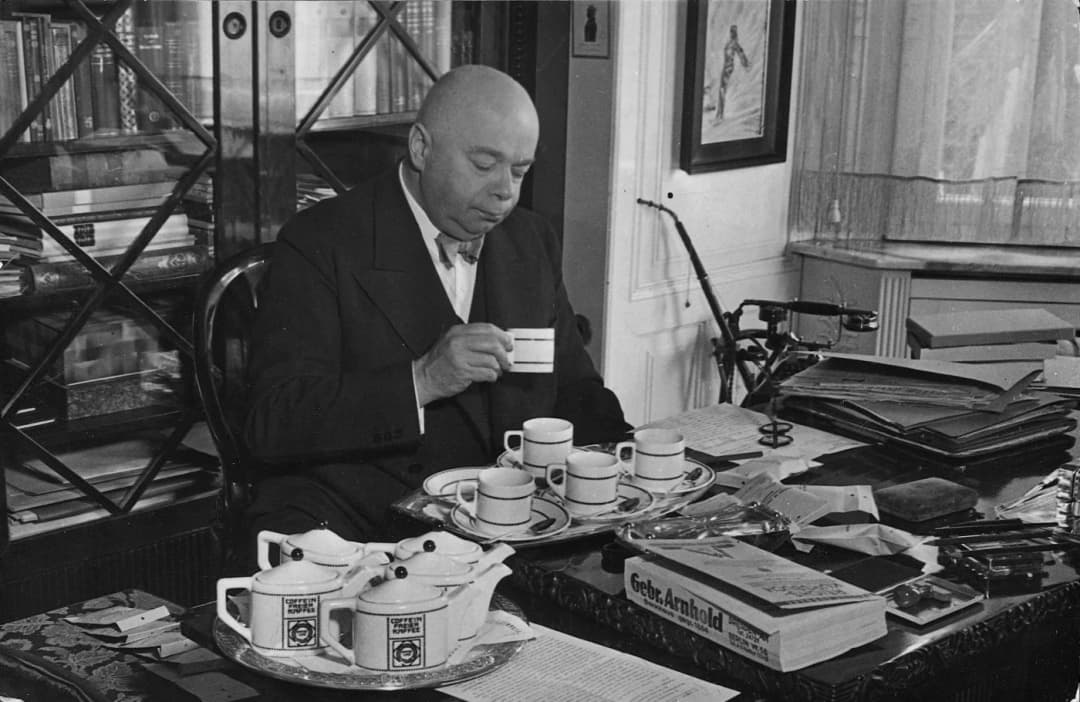
The process to remove caffeine from coffee beans was first discovered by the German merchant, patron of the arts, and Nazi sympathizer, Ludwig Roselius.
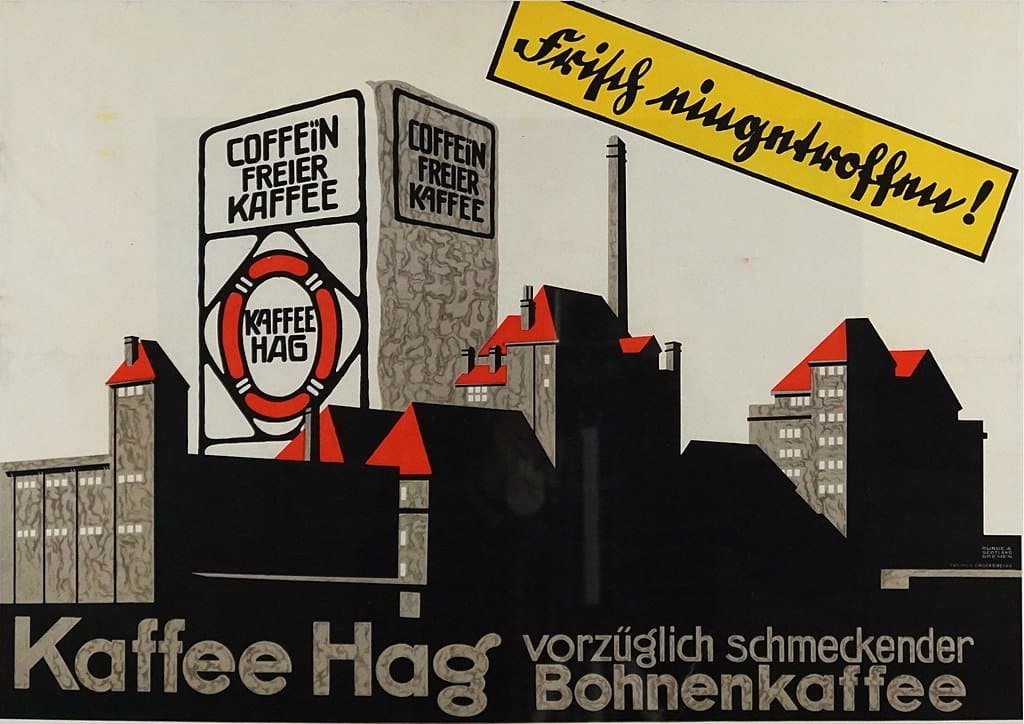
Ludwig Roselius wasn’t a Nazi, but his company, Kaffee HAG, continued operating under the Third Reich. His method for removing caffeine—using benzene, a chemical now known to be carcinogenic—was the first commercial decaffeination process. It was developed in the early 20th century, long before Hitler came to power.
So, as the story goes, in 1903 Roselius purchased a large amount of beans from Latin America which were shipped across the ocean by cargo ship to his warehouse in Germany. During the voyage, the ship was battered by turbulent waters and the cargo hold took on sea water. When the ship arrived the coffee beans had been completely soaked in salt water.
Roselius, not wanting to lose the shipment of “ruined” beans, asked his team of researchers to analyze the beans and see if they could be salvaged. The team conducted a series of taste tests and found that the seawater had removed much of the caffeine without losing much of the flavor. The resulting coffee was quite salty from the seawater but otherwise tasted similar to regular coffee.
They refined the process with chemicals and The Roselius Process was born.
This involved steaming green, unroasted coffee beans with ammonia-laced water until they became saturated with water and swelled to double their original size. The beans were then washed with an organic solvent like benzene or chloroform, which dissolved and flushed out the caffeine. Finally, the now-decaffeinated beans were dried and packaged for shipment to roasters and distributors.
Alternatively, the official story is that rather than being an accident, Roselius attributed his father’s death in 1902 to drinking too much coffee, so he invented decaf to save other addicts.
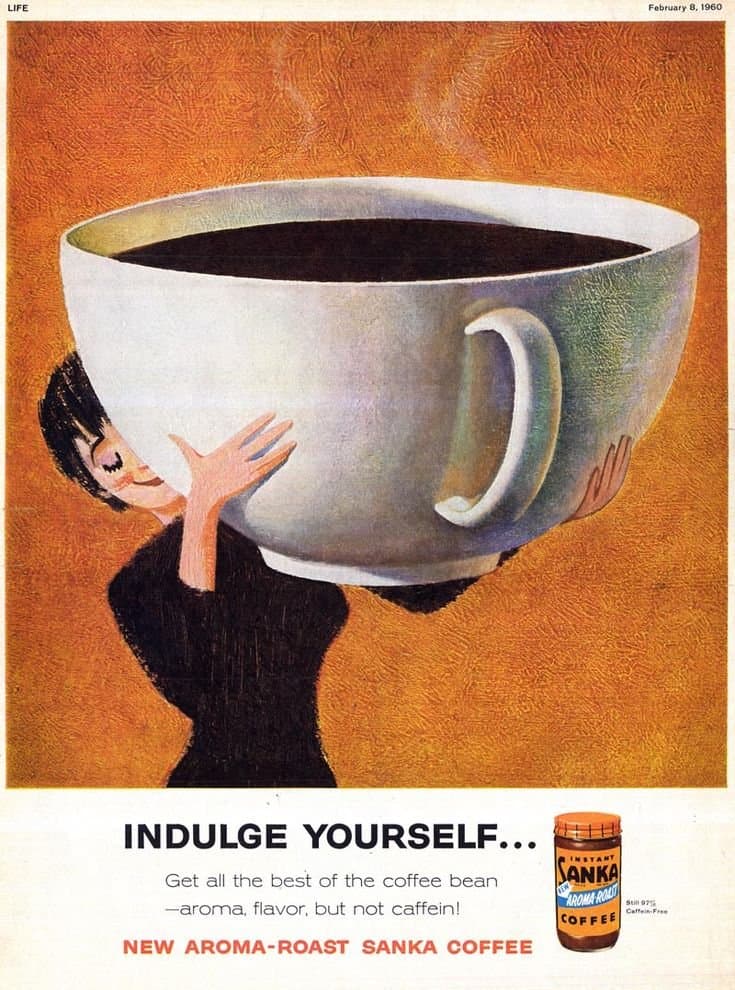
In 1906, Roselius founded the company Kaffee Handels-Aktiengesellschaft or Coffee Public Trading Company – better known as Kaffee HAG. Roselius’s decaffeinated coffee beans would soon be sold across Europe under the brand name Sanka – a contraction of the French sans caféine – and in the United States as Dekafa. Marketed as the first ever offering of decaffeinated coffee.
The Kaffee Hag company expanded its operations throughout the world at a very fast pace, and in 1914, Roselius established the U.S. headquarters in New York.
Three years later, Kaffee Hag in the United States was confiscated by the Office of Alien Property Custodian in 1917 because it was considered an enemy property.
By which time, Sanka would start appearing in the US with its distinctive orange packaging.
Sanka’s appeal worldwide lay not only in its exclusivility but also in its status as a luxury product, costing three times as much as regular coffee.
Other, less carcinogenic processes have since been created, most of which use chemicals, but the most natural and chemical-free process is the Swiss Water Process – relying on a combination of water, temperature, and time to gently remove caffeine while keeping the coffee’s flavour intact.
And this is where the Nazis enter the picture. Well, kind of.
–
The Reich Stuff
“Coffee, which makes the politician wise
And see through all things with his half-shut eyes…”
Alexander Pope, The Rape of the Lock
The Nazis’ real drug of choice wasn’t caffeine but methamphetamine—marketed under the brand name Pervitin.
German soldiers swallowed these pills by the handful, staying awake for days as they steamrolled through Poland and France. The Wehrmacht’s blitzkrieg tactics owed much to this pharmaceutical boost; though the subsequent paranoia, aggression, and psychotic breakdowns were an unfortunate side effect.
Yet, despite fuelling their war machine with stimulants, the Nazi leadership espoused a “clean and pure” lifestyle. Alcohol and tobacco were frowned upon, at least in official rhetoric. Adolf Hitler, famously abstinent from alcohol, took a hard stance against smoking, even introducing anti-tobacco campaigns long before they were fashionable.
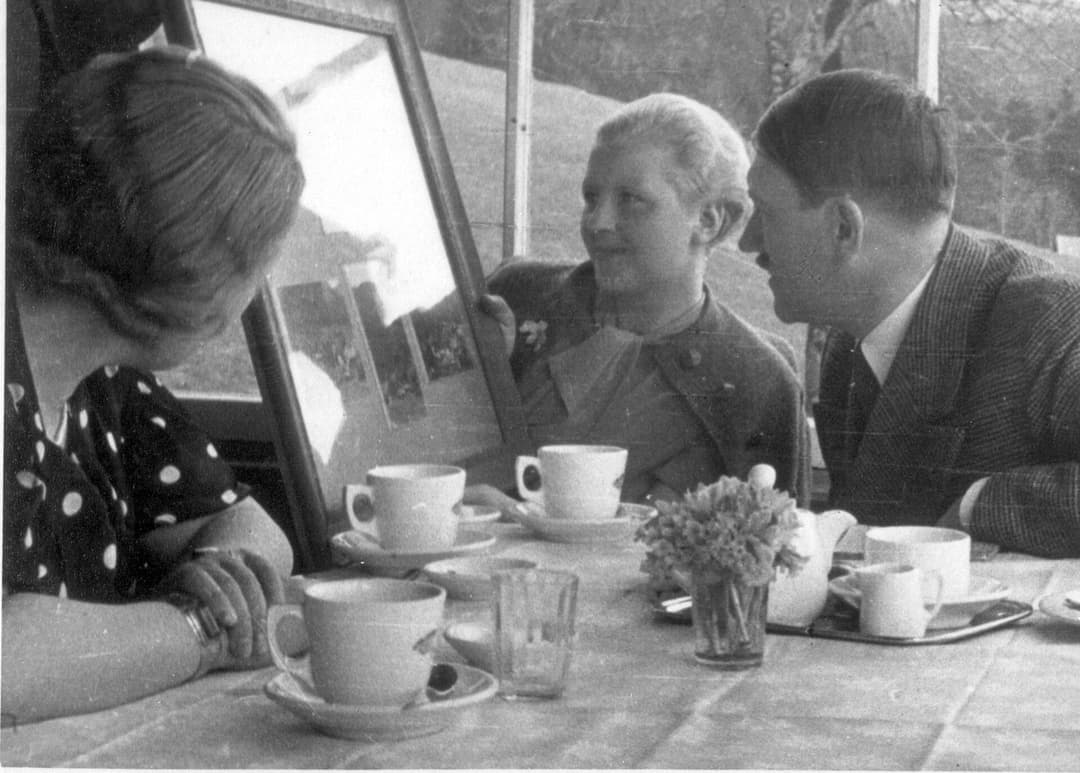
Hitler himself wasn’t much of a coffee drinker—at least, not at first. His beverage preferences were famously tame: apple juice, sparkling water (Apollinaris and Pachinger), and the occasional alcohol-free beer from Munich’s Holzkirchen brewery. Yet, British intelligence concluded that he drank copious amounts of coffee during the war, perhaps in a bid to keep up with his erratic and increasingly drug-fuelled schedule.
Before the war, Hitler’s preferred stimulant was tea, which he took Russian-style—black, with lemon, and no milk — according to the writer, Jean Merrill du Cane, who interviewed Hitler in 1938 for an article published in the Australian Nambour Chronicle. Given his deep admiration for Mussolini, perhaps he shared Il Duce’s belief that coffee was an unnecessary luxury, a distraction from the rigours of national struggle.
For ordinary Germans, coffee was a vital part of daily life.
In 1933, Joseph Goebbels noted that Germany imported 2.16 million sacks of coffee annually, a figure that swelled to 3.29 million by 1938. But as the Nazis pursued economic self-sufficiency (autarky), the coffee trade was squeezed.
When Hermann Göring introduced the Four Year Plan in 1936 – a series of economic measures intended to prepare Germany for war – he spoke in terms of “guns before butter”, declaring that “guns will make us powerful; butter will only make us fat”.
Consumer goods and luxury items like coffee would be sacrificed at the altar of war.
By the early 1940s, real coffee was increasingly scarce. A pound of roasted coffee, which had cost 1.80 Reichsmarks in the early 1930s, shot up to an eye-watering 40 RM.
Mukkefukke made a grim return and the state produced Kaffee-Surrogat-Extrakt (Coffee Surrogate Extract) entered production.
The regime used its propaganda machine to frame coffee shortages as a patriotic sacrifice. After all, Hitler had declared that National Socialism and Fascism rejected a “comfortable and pleasant life.” If the people could tolerate Eintopf Sonntag (a monthly “one-pot meal” day where families ate leftovers to save money for state charities), surely they could stomach a lack of coffee.
Officially, the Nazi leadership took an ambivalent stance on the coffee. Some health officials condemned caffeine, particularly for women and young people. But there was no outright ban. Instead, Nazi propaganda subtly nudged the public towards German-made substitutes, portraying them as a patriotic alternative to foreign imports.
The real beneficiary of this policy was decaffeinated coffee, which became less or an expensive alternative and more of an alternative for the ideologically inclined.
Ludwig Roselius, the Bremen-based coffee merchant who had invented the first commercial decaf coffee in the early 1900s was one of the chief beneficiaries of this policy. His company, Kaffee HAG, flourished under the Nazis. At the 1937 Reichsausstellung Schaffendes Volk festival, over a dozen cantinas served Kaffee HAG. At the 1936 Nuremberg Rally, the company provided Kaba, a chocolate milk drink, to more than 42,000 members of the Hitler Youth.
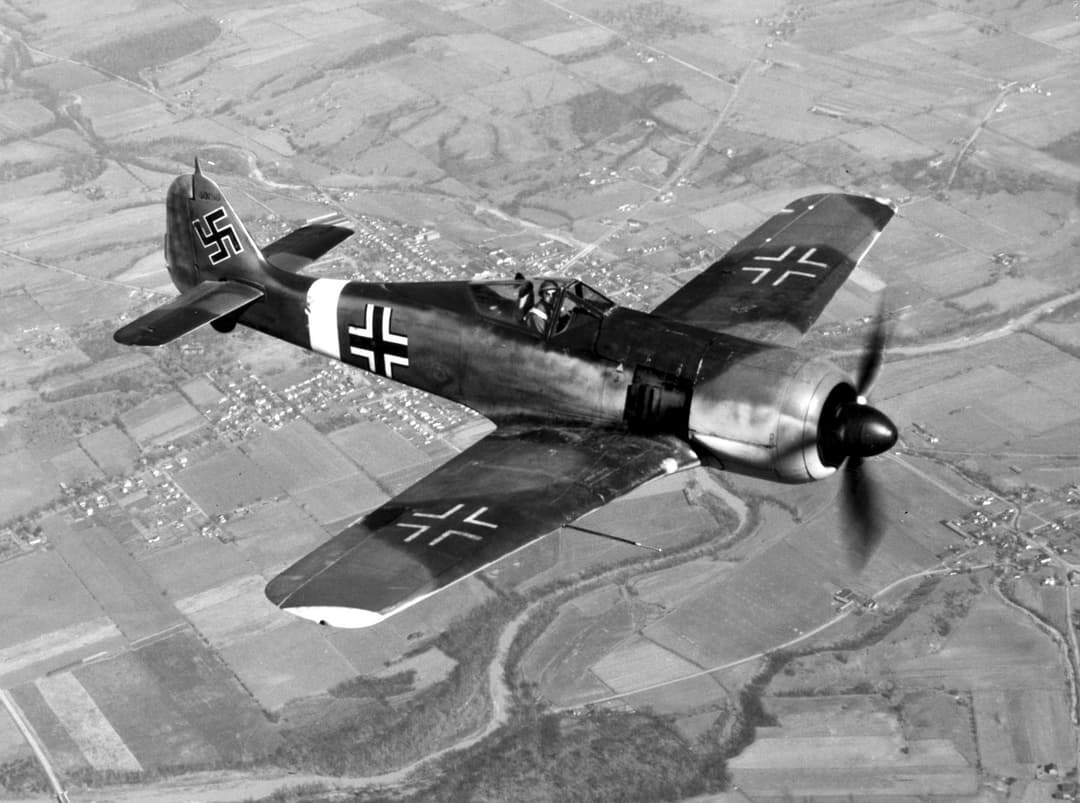
Roselius, however, was already so sufficiently successful before the Nazi takeover that in 1925 he also became the Chairman of Focke-Wulf Flugzeugbau, a position he would hand over to his brother in 1933, with the family retaining 46% control as the majority shareholders.
The Roselius family benefit from increased sales of Sanka decaf and also provide the war machines that would enable the Nazi conquests.
Focke-Wulf would build the first fully controllable helicopter, piloted by Nazi aviatrix Hanna Reitsch; the four-engined Fw 200 airliner that became the first plane to fly nonstop between Berlin and New York City on August 10, 1938; and the Fw 190 – the mainstay single-seat fighter for the Luftwaffe during World War II.
When Roselius died in 1943 it was at the end of a nine month stint in the luxury of the same Berlin hotel, the Kaiserhof, that Adolf Hitler had used as his pre-takeover headquarters.
Did this make Roselius a Nazi? Not quite. He had applied to join the party twice but was rejected—not because he opposed Nazi ideology, but because of his involvement in modernist art, which the regime labelled “degenerate.” He later fell out with Hitler over racial theories, advocating for a “purebred Lower German race” (geographical, not hierarchical) which didn’t align with the Nazi racial hierarchy.
While Roselius was neither a card-carrying Nazi – nor much of a Nazi sympathiser in his later life – his process for decaffeinating coffee was discovered way back in 1906. Before Adolf Hitler had even arrived in Vienna, nevermind served in the Germany Army, fought in the First World War, and encountered the German Workers Party in its infancy.
To attribute the development or even the popularisation of decaf coffee to the Nazi Party would be simply erroneous.
One year after Roselius’ death, even the most indescribable ersatz coffee was running out. The German economy, stretched by war and Allied blockades, could no longer support even the illusion of a caffeine fix. Coffee had gone from a symbol of economic prosperity under the early Nazi years to yet another casualty of war.
And as the Third Reich collapsed, so too did its coffee policies. In the post-war years, real coffee flooded back into Germany, along with American cigarettes and jazz records. The Nazis had tried to control consumer habits, dictate what Germans drank, and replace coffee with ersatz alternatives.
But in the end, even the Führer couldn’t stamp out the need for a decent cup of coffee.
Conclusion
No
Decaf was invented far before the Nazi Party takeover by Bremen coffee merchant Ludwig Roselius.
Liked this piece? Have a look at the Berlin Experiences tours that cover this history.
See the Capital Of TyrannyMore articles →Share this piece
Know someone who still believes it?
Explore in person
Tours that address this myth.
The Capital Of Tyranny
Private 6-hour van tour of Hitler's Berlin and the Third Reich for up to 6 people. Starts at your hotel or anywhere in the city.

The Berlin History Tour
Private 6-hour van tour of Berlin's whole history in one day for up to 6 people. Starts at your hotel or anywhere in the city.
More reading
The other myths, busted.
49 more — drag, scroll or use the arrow keys.


UNIQUE EXPERIENCES FOR MODERN EXPLORERS

