Skip to content
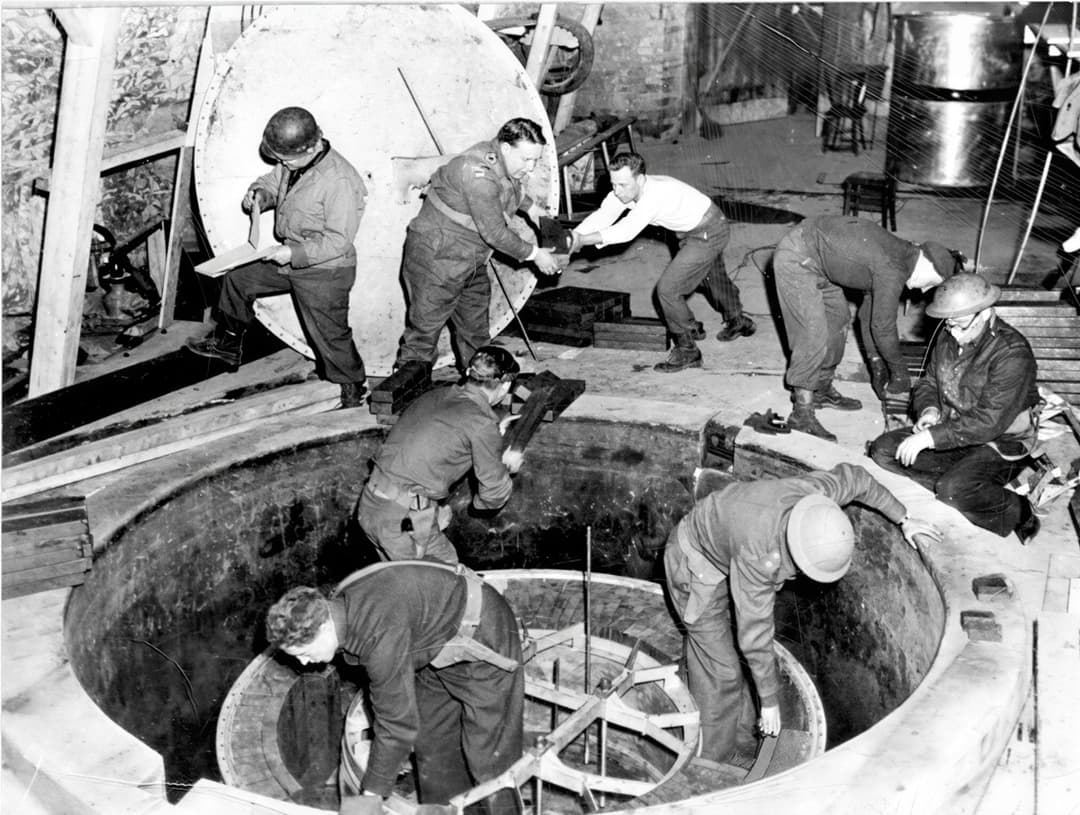
Dismantling the German experimental nuclear pile at Haigerloch (April 1945) - Public Domain

Berlin Experiences/Mythbusting Berlin

Did The Nazis Develop Nuclear Weapons?

No. Germany had a nuclear programme, but it never came close to a bomb, and the Third Reich made no serious, committed attempt to build one.

By Matt Robinson · Updated · 18 min read

“Our technological superiority is undisputed in very numerous fields of armaments… We possess inventions that will enable us to inflict the most terrible blows on the enemy.”
Nazi leader, Adolf Hitler, in a speech on November 8th 1943 hinting at the new weapons to come

In a town just north of Berlin lies a strange legacy of the Third Reich: ‘Germany’s most radioactive ground’.

The story involves a secret weapons project, a bizarre consumer product promising radioactive health, and a devastating Allied bombing raid whose effects linger today. This is the story of the Auergesellschaft factory in Oranienburg, a place central to understanding one of the war’s most persistent myths.

The question isn’t just what the Nazis were building there, but why, in the final weeks of the war, the Allies felt it had to be obliterated. The answer reveals just how close Hitler really came to wielding atomic power.

–

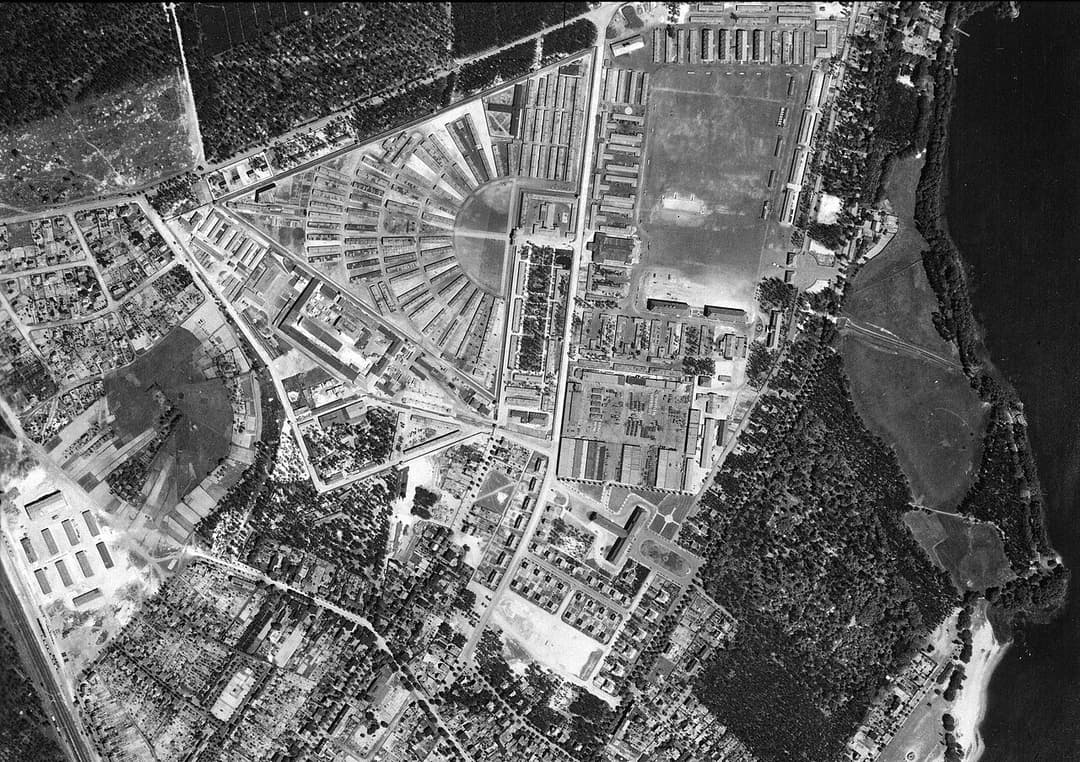
An aerial shot of Sachsenhausen Concentration Camp in Oranienburg (May 1943) - Public Domain

The Radioactive Ghosts of Oranienburg

“Oranienburg became the primary center for uranium production in Germany. We worked tirelessly to refine the uranium oxide into the metal cubes that were essential for the experimental reactors… All roads for the ‘Uranium Club’ led, in one way or another, through our facility.”
Nikolaus Riehl, Scientific Director of Auergesellschaft in his memoir, Ten Years in a Golden Cage

The small Brandenburg town of Oranienburg, just north of Berlin, holds a grim superlative.

It is, by some measures, the most dangerously radioactive place in all of Germany. 

It is also littered with unexploded bombs.

Decades after the end of the Second World War, specialised disposal teams are still routinely called out to defuse decaying ordnance, and residents are evacuated from their homes as bombs are carefully unearthed. The source of this dual contamination—the radioactivity and the bombs—is the ghost of a single factory and the epic, terrifying ambition it once represented.

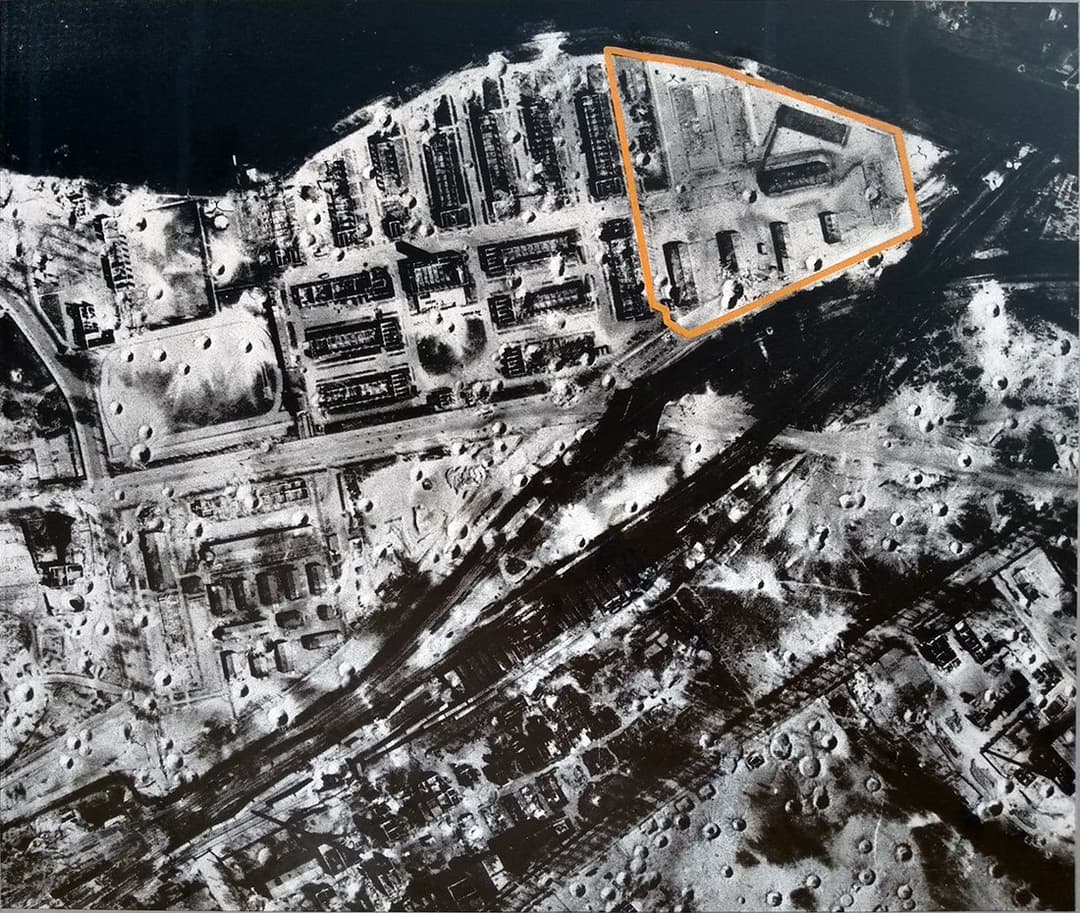
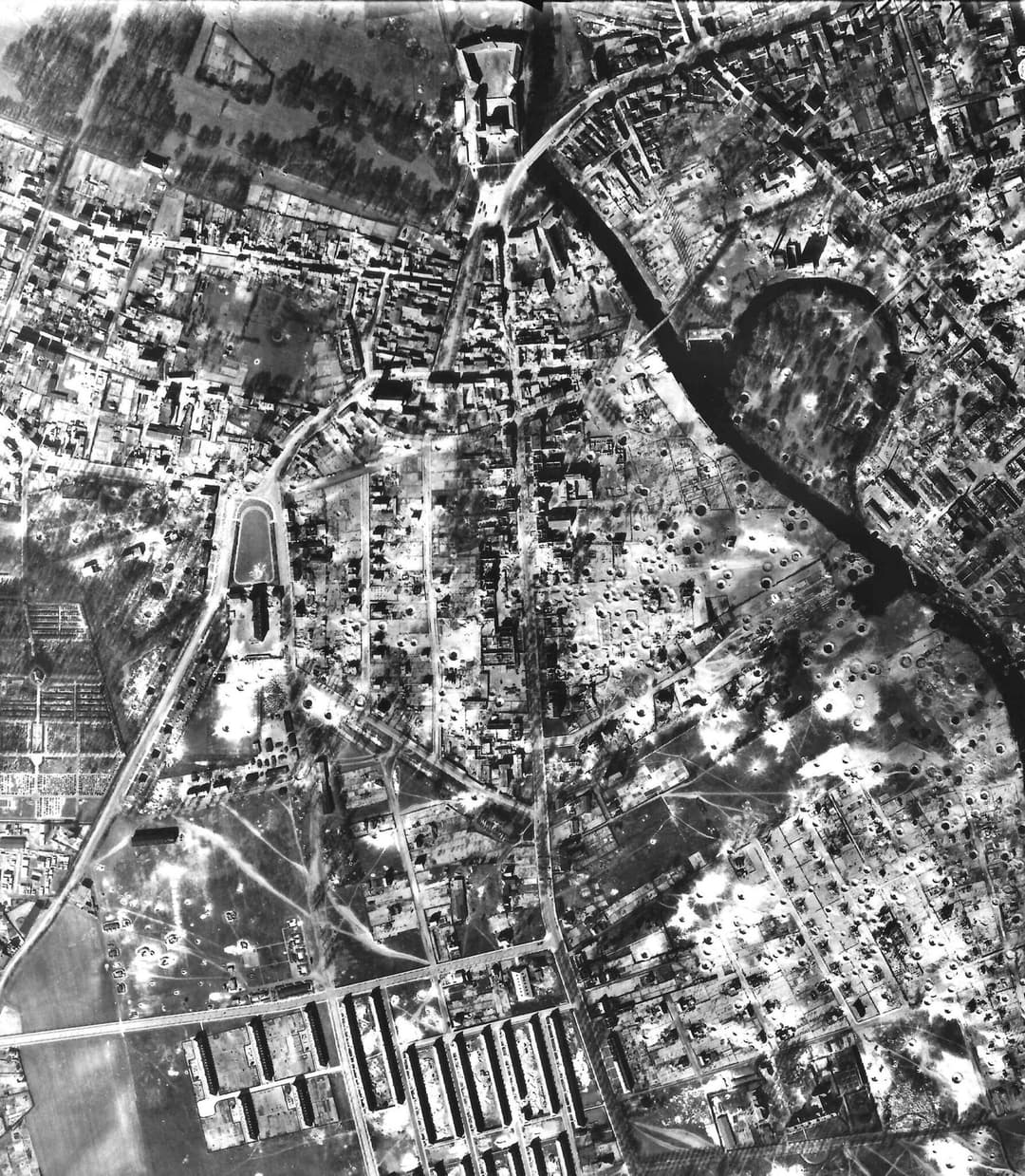
A closeup view of the Auerwerke from an Allied aerial photo taken in 1945 - Public Domain

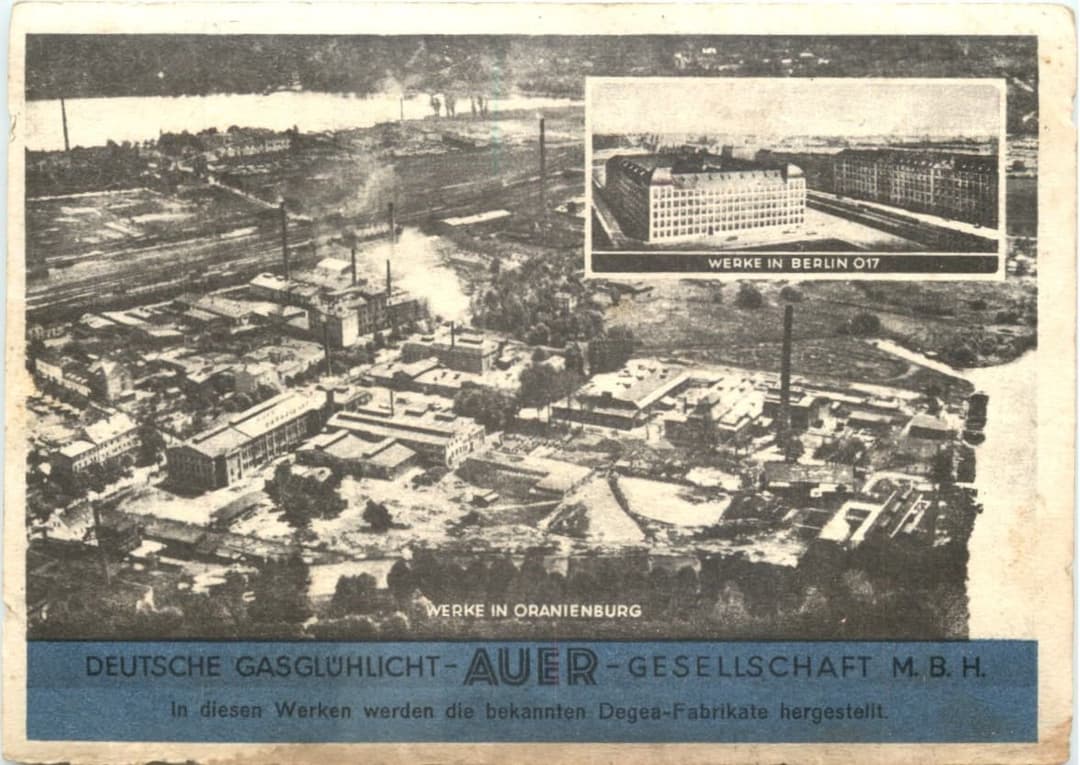
Near the site of the former Sachsenhausen Concentration Camp stood the Auergesellschaft works, a large industrial plant with a curious product line. 

Before and during the war, this company was involved in all manner of chemical and industrial manufacturing. Its shareholders, like so many others, were Aryanized early in the Nazi regime, its Jewish owners forced out.

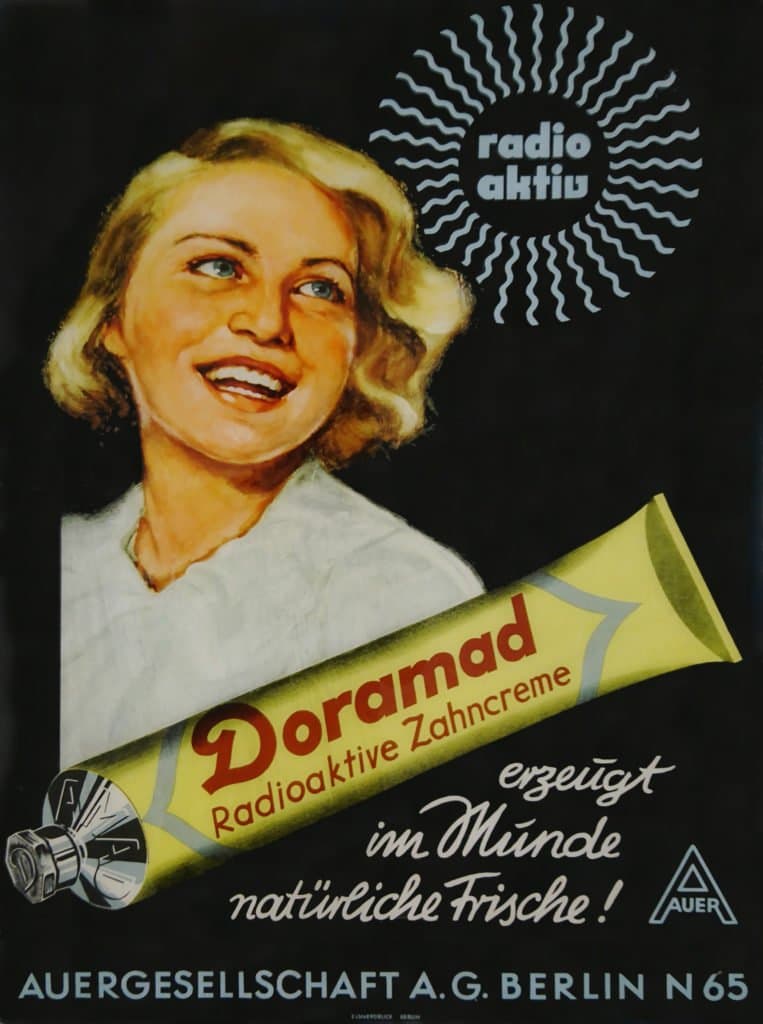
For a time in the 1940s, the company produced a toothpaste called ‘Doramad’.

A commercial for Doromad toothpaste - Public Domain

In an era when the dangers of radiation were poorly understood and its supposed curative properties were a marketing fad, Doramad was sold to the public with a bold promise.

Containing small amounts of thorium, a radioactive metal, its advertisements claimed it would provide a “natural freshness” by using the “biological healing effects of radium rays” to strengthen the “defenses of teeth and gums.”

The back of the tube boasted that through its radioactive properties, “cells are loaded with new life energy.”

This was, of course, dangerous quackery. But it was a side business. The thorium for the toothpaste was a byproduct of the company’s main enterprise: producing mantles for gas lanterns, rare-earth metals—and, crucially, refining uranium.

A postcard featuring the Auerwerke factory and headquarters - Public Domain

By the early 1940s, the Auer plant in Oranienburg had become the industrial heart of Hitler’s most secret and feared weapons program. This is where the raw materials for a German atomic bomb were being processed.

When the Allies discovered the factory’s true purpose, they decided to mount a raid that would conclusively end all development.

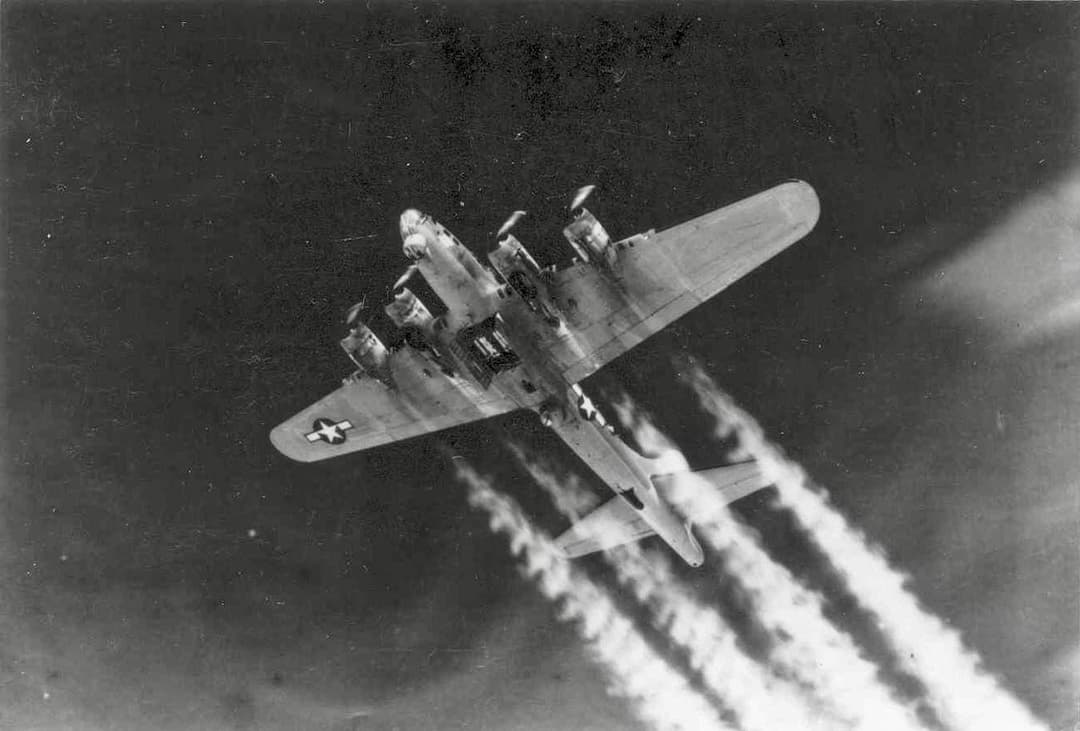
Boeing B-17G Flying Fortress of the 452nd Bomb Group with its bomb bay doors open over Berlin - Public Domain

On the afternoon of March 15th 1945, with the Red Army closing in from the east, the skies over Oranienburg filled with the drone of 612 B-17 Flying Fortresses of the U.S. Eighth Air Force.

In the space of 45 minutes, they dropped over 1,500 tons of high-explosive and nearly 180 tons of incendiary bombs onto the Auer works.

The factory was annihilated.

The raid not only flattened the facility but also blasted its radioactive materials—its refined uranium and thorium stockpiles—into the atmosphere and soil, contaminating the town for generations to come. Today, every discovery of a dud bomb armed with a complex, chemically-delayed fuse is a reminder of that desperate, targeted attack.

But the raid was not just about stopping Hitler.

It was about what came after.

It was a violent opening move in the Cold War, intended to deny the spoils of the German nuclear program to the approaching Soviets.

But what exactly were the Allies so afraid of?

Was the world truly on the brink of seeing a swastika-shaped mushroom cloud?

–

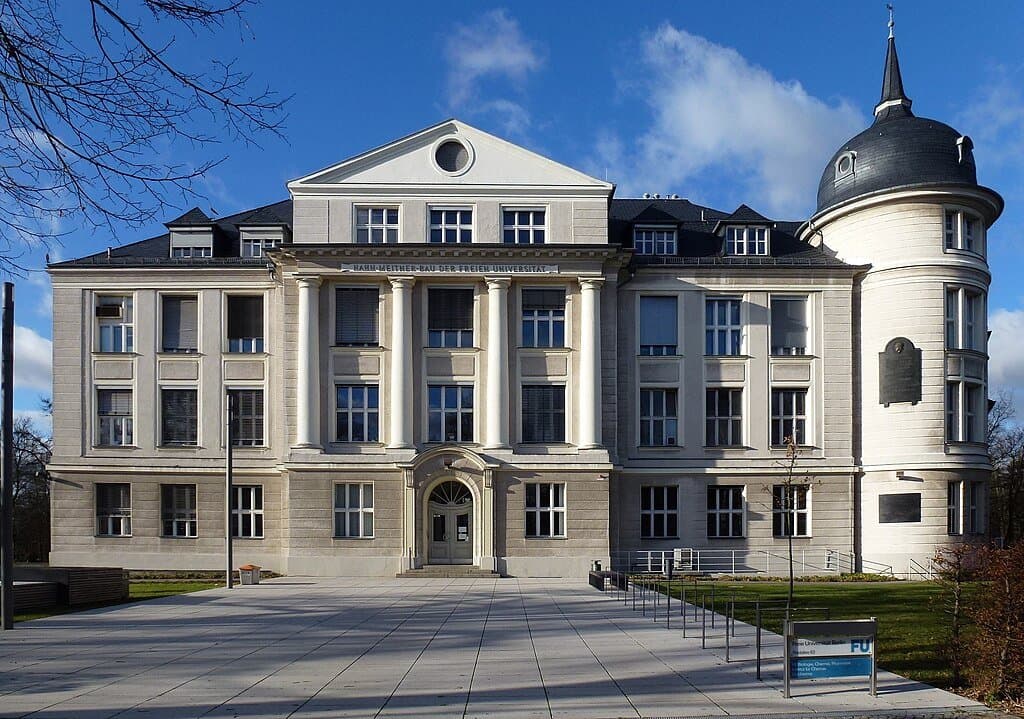
The former Kaiser-Wilhelm-Institut for Chemistry in Berlin (2012) - Fridolin freudenfett (Peter Kuley)

The ‘Uranium Club’ - Nuclear Development In Nazi Germany

“I have no doubt that Germany will… make a major effort to build uranium bombs… Germany has the physicists who have the ability, and they have a government that has the will to use it.”
Leó Szilárd, the Hungarian-American physicist who drafted the Einstein-Roosevelt letter, warning of German capabilities in 1939

The story of the atom bomb begins, ironically, not in the deserts of New Mexico, but in a laboratory in Berlin.

In December 1938, in Berlin’s Dahlem district, chemists Otto Hahn and Fritz Strassmann, working at the Kaiser Wilhelm Institute, made a discovery that would change the world.

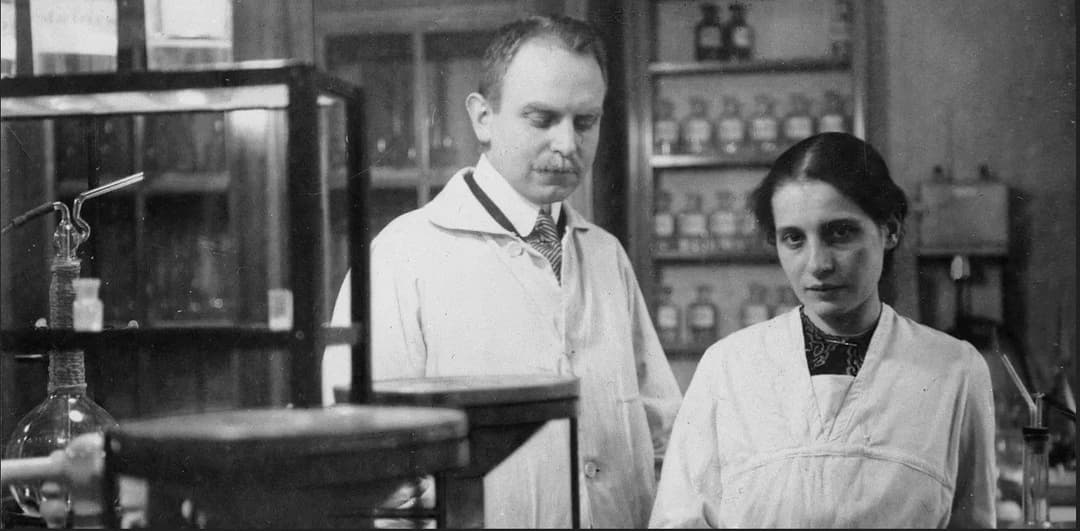
While bombarding uranium with neutrons, they were bewildered to find traces of barium—an element roughly half the size of uranium. Hahn wrote to his exiled former colleague, the brilliant physicist Lise Meitner, who had fled Nazi persecution and was now in Sweden. Meitner and her nephew Otto Frisch quickly realized the earth-shattering implication: Hahn and Strassmann hadn’t chipped a piece off the uranium atom; they had split it.

They had achieved nuclear fission.

The energy released from this single event was immense.

The military potential was terrifyingly obvious.

German scientists, Otto Hahn & Lise Meitner in Emil Fischer's Chemistry Institute in Berlin, 1909 - Public Domain

Word spread through the international physics community like a shockwave.

By April 1939, German physicists, including Wilhelm Hanle and Georg Joos, formally alerted the Reich Ministry of Education to the potential of a ‘uranium machine’.

This led to the formation of the first Uranverein, or ‘Uranium Club’—an informal gathering of Germany’s top nuclear scientists to investigate the military applications of fission.

The project, however, was soon interrupted by the invasion of Poland, as many of its physicists were drafted into the Wehrmacht. But the military was not about to let such a potentially decisive weapon go unexamined.

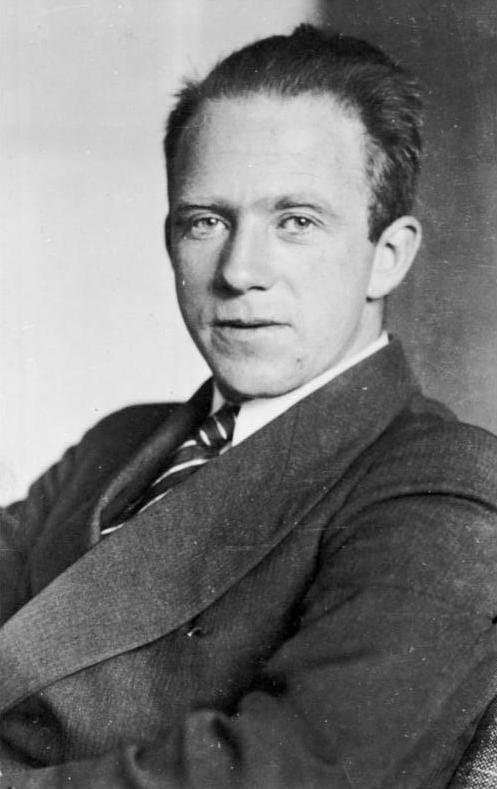
Werner Heisenberg, principal scientist in the German nuclear programme - Public Domain

On the very day the war began, September 1st 1939, the Army Ordnance Office (Heereswaffenamt) established a second, official Uranprojekt.

It commandeered the Kaiser Wilhelm Institute for Physics and brought Germany’s greatest remaining scientific minds into its orbit.

The project was led by luminaries like Werner Heisenberg, the Nobel laureate and a founder of quantum mechanics, Carl Friedrich von Weizsäcker, and Walther Gerlach.

Their task was to investigate two terrifying possibilities: a controlled chain reaction, which could power submarines and warships, and an uncontrolled one—an atomic bomb.

They had a significant head start on the Allies, access to brilliant scientists, a powerful industrial base, and, for a time, the full backing of the German military.

–

An aerial shot of Oranienburg after the Allied bombing in 1945 - Public Domain

Heavy Water & Hindering The Nazi Programme

“Compared with the British and American war research efforts united in the Manhattan Project, to this day the prime example of “big science,” the Uranverein was only a loosely knit, decentralized network of researchers with quite different research agendas. Rather than teamwork as on the American end, on the German side we find cut-throat competition, personal rivalries, and fighting over the limited resources.”
German historian Klaus Hentschel

To build a ‘uranium machine’—a nuclear reactor—the German scientists knew they needed two key ingredients: uranium and a moderator.

The moderator’s job is to slow down the neutrons released during fission so they are more likely to split other uranium atoms, thus sustaining a chain reaction.

The two best candidates for a moderator were highly pure graphite and ‘heavy water’, water in which the hydrogen atoms are replaced with a heavier isotope, deuterium.

The scientists made a fateful error.

Walther Bothe, a leading experimental physicist, conducted an experiment that incorrectly concluded that graphite was unsuitable as a moderator, believing it absorbed too many neutrons. The mistake likely stemmed from using impure graphite. This error, born of a single miscalculation, steered the entire German program down a much more difficult and ultimately doomed path: the pursuit of heavy water.

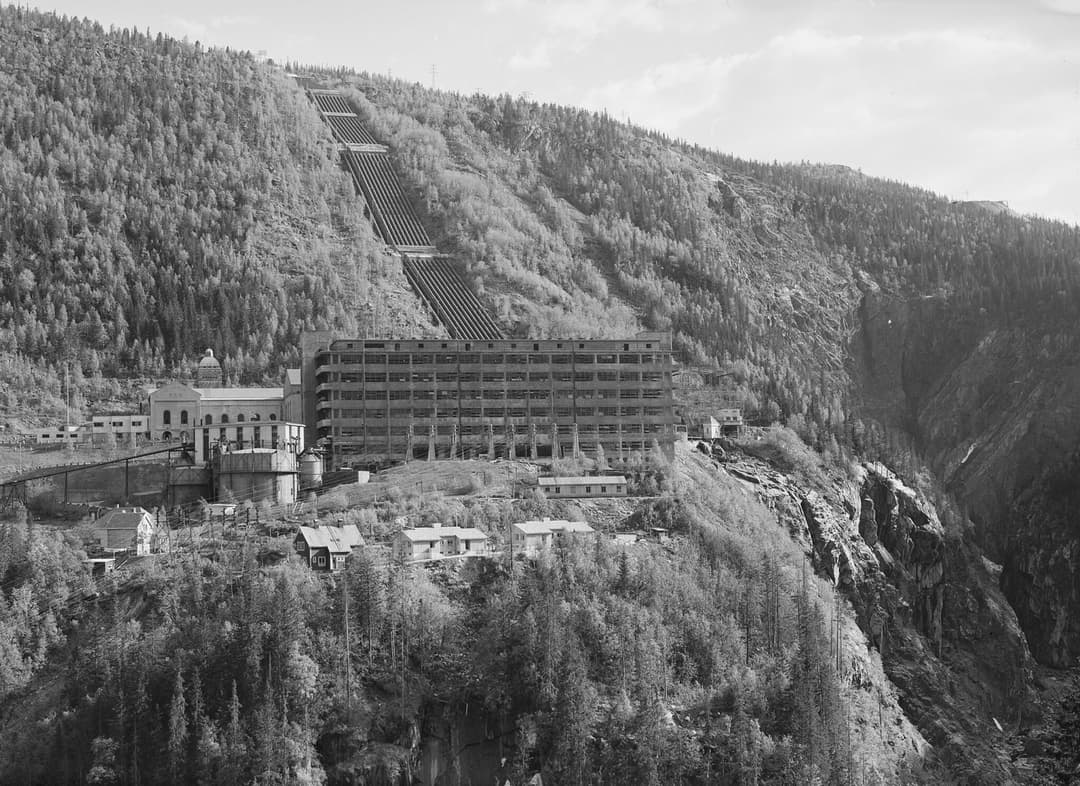
The Vemork hydroelectric power plant and heavy water facility in Norway - Public Domain

The only place in the world producing heavy water on an industrial scale was the Vemork hydroelectric plant in Nazi-occupied Norway.

This made the plant one of the most critical single targets of the war for Allied special forces. A series of daring and costly sabotage missions carried out by Norwegian commandos and Allied bombers throughout 1942 and 1943 famously crippled production and, in a final dramatic raid, sank a ferry carrying the last of the German heavy water stockpile to the bottom of a fjord.

While the struggle for a moderator took place in the Norwegian mountains, the struggle for uranium was centered in Oranienburg.

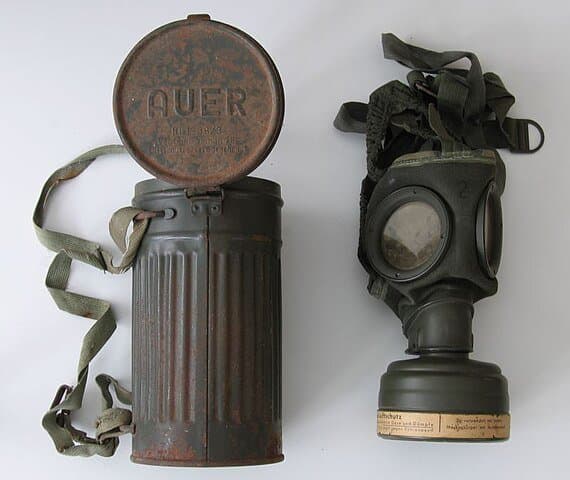
An Auer gas mask with box, produced in 1940 - Public Domain

Dr. Nikolaus Riehl, the scientific director of Auergesellschaft, had seen a business opportunity. The company had large quantities of uranium as a waste product from its work with radium.

In 1939, he convinced Army Ordnance to give him an order, and the Auer plant began refining uranium oxide on an industrial scale. Soon, with the help of the Degussa corporation, they were producing metallic uranium plates and cubes—the very fuel for Heisenberg’s experimental reactors. The plant became the primary supplier for the secret tests being conducted across Germany, from a bunker in Berlin to a cave in Haigerloch in the war’s final days.

For years, the factory operated in relative obscurity.

However, in November 1944, the Allied intelligence unit known as the Alsos Mission, tasked with discovering the extent of the Nazi nuclear program, got a breakthrough.

In liberated Paris and Strasbourg, they found documents connecting Auergesellschaft to the processing of uranium and thorium.

They had found the industrial heart of the Uranprojekt.

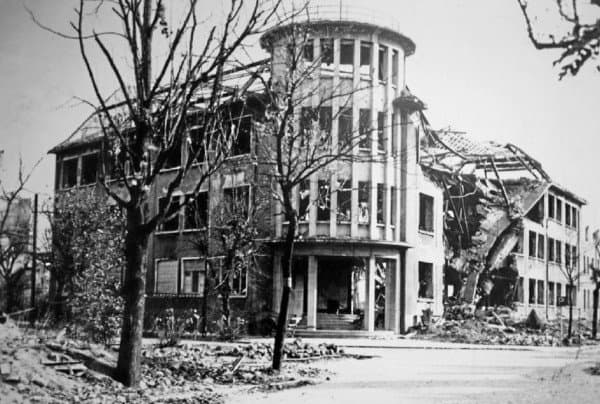
The Auerwerke after the 1945 Allied air attack - Public Domain

General Leslie Groves, the military commander of America’s own, far larger Manhattan Project, made a strategic calculation.

The Oranienburg plant lay in the path of the advancing Red Army and would soon fall into the future Soviet occupation zone. Groves recommended to General George Marshall that the plant be utterly destroyed by air, not primarily to stop the Nazis, who were by now clearly losing the war, but to deny its equipment and stockpiles to the Soviets.

In his memorandum to Marshall, General Leslie Groves said: “The Auer Company at Oranienburg, north of Berlin, is producing uranium metal… Investigations in Paris have confirmed that this plant is the one which has been processing the Belgian and other ores. The product is used in the German experimental piles. While the Germans are not believed to have a practical atomic weapon now, this plant, if it is not destroyed, will be of the utmost value to the Russians in their efforts to develop the weapon.”

When Riehl visited the ruins of his factory with the Soviets after the bombing, he noted the astonishing precision of the raid and recalled later that the Russians knew exactly why the Americans had done it.

The attack, he said, had been “directed at them rather than the Germans.”

–

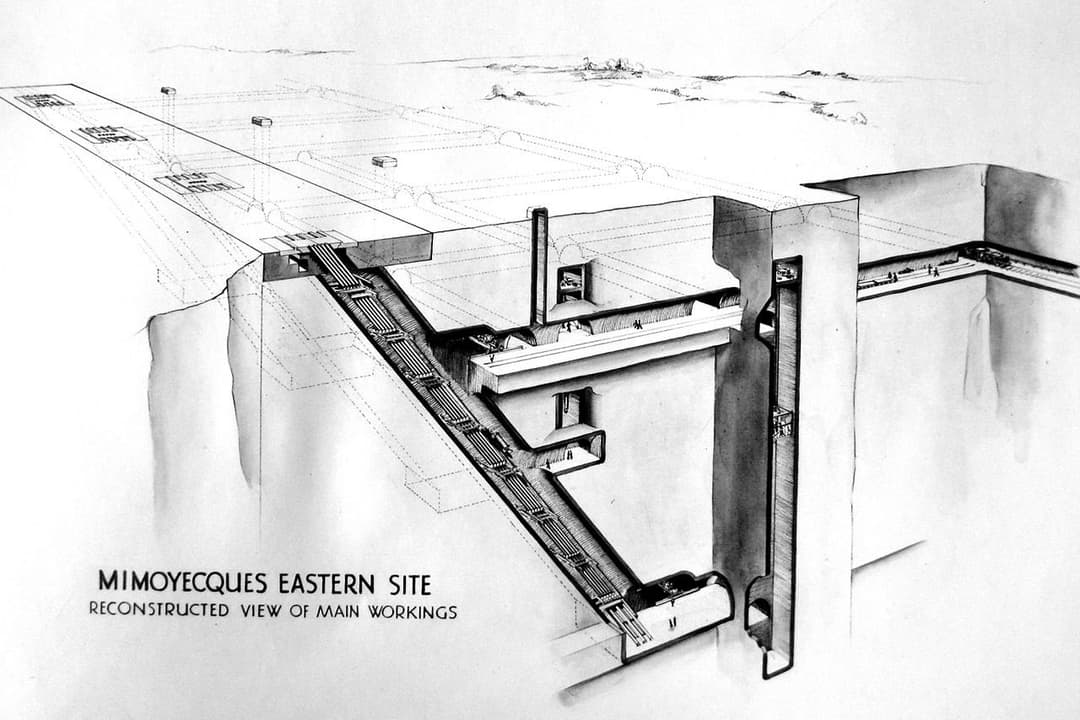
A diagram of the V3 large-caliber gun full-size guns built in the underground Fortress of Mimoyecques and aimed at London - Public Domain

The Reality Of Nazi 'Wunderwaffen'

“It seemed likely that, if the Germans had succeeded in perfecting and using these new weapons six months earlier than they did, our invasion of Europe would have proved exceedingly difficult, perhaps impossible.”
General Dwight D. Eisenhower, Supreme Allied Commander, on the V-2 rocket

The legend of the Nazi A-bomb is often bundled with a host of other supposedly revolutionary “Wunderwaffen” or wonder weapons, which a desperate Third Reich hoped would turn the tide of the war.

An examination of these weapons reveals much about German technological priorities.

While the Uranverein struggled with infighting, limited resources, and critical scientific errors, the Nazi regime poured immense capital and engineering talent into weapons that were technologically impressive but ultimately irrelevant to the war’s outcome.

The most famous of these were the V-weapons.

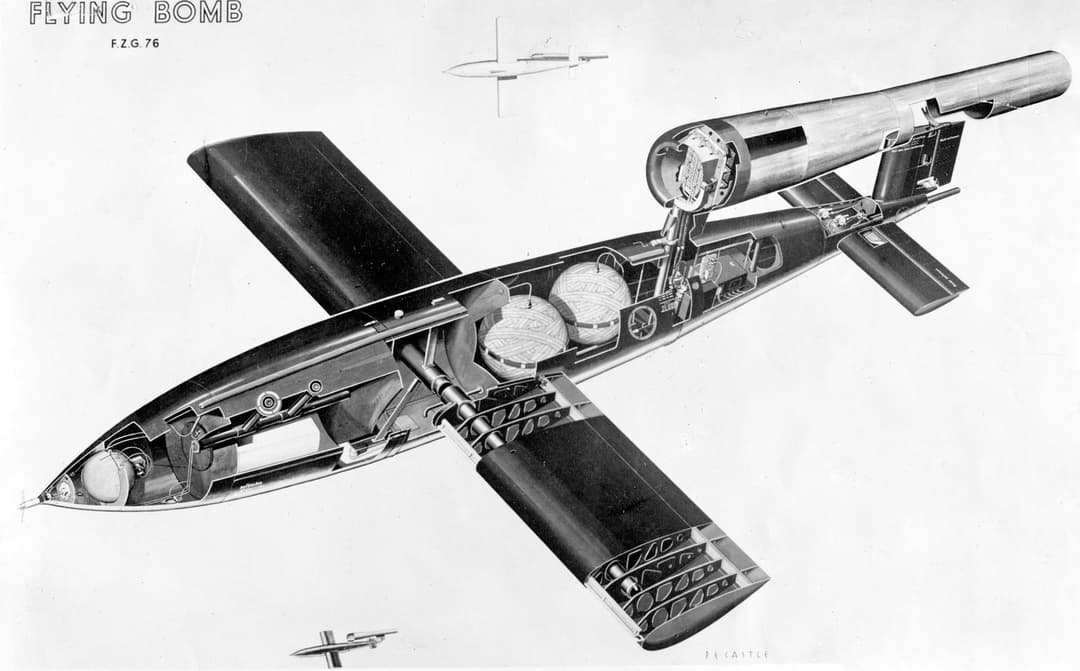
A diagram of a V-1 flying bomb (Vergeltungswaffe 1) - an early cruise missile produced the Nazis - Public Domain

The V-1 flying bomb, a simple cruise missile powered by a pulsejet engine, was a terror weapon used against London, but its inaccuracy made it strategically ineffective.

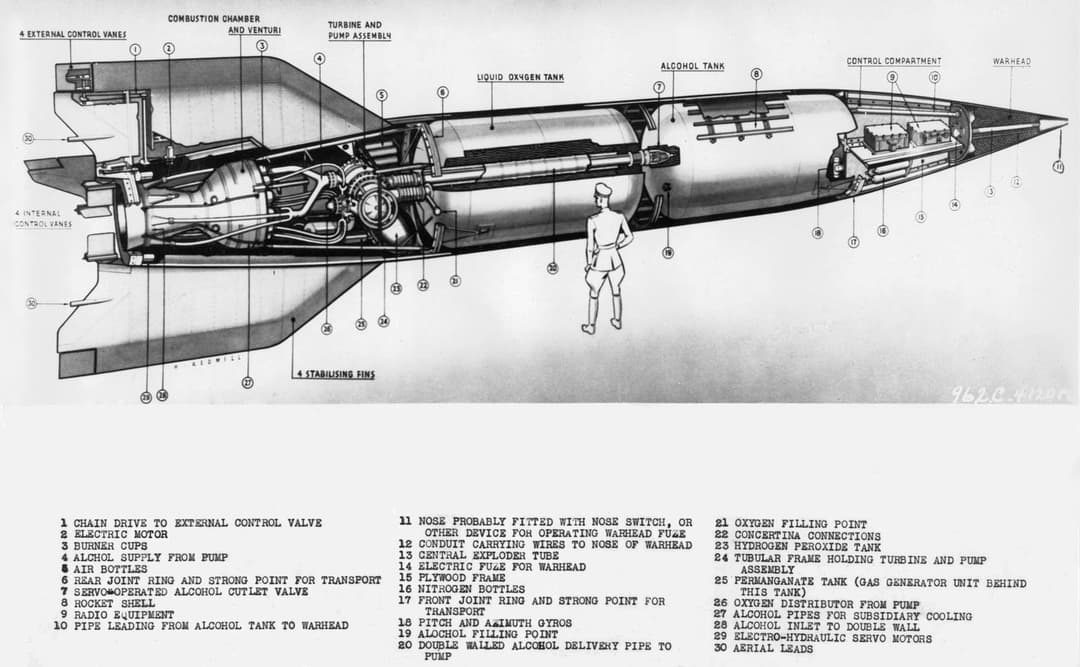
A diagram of a V-2 flying bomb (Vergeltungswaffe 2) - the world's first long-range guided ballistic missile produced the Nazis - Public Domain

The V-2 rocket, developed by Wernher von Braun’s team at Peenemünde, was a true technological marvel—the world’s first long-range ballistic missile.

It was a weapon years ahead of its time, but it was fantastically expensive, required enormous resources to build, and, like the V-1, was too inaccurate and its warhead too small to serve as anything more than a tool of vengeance.

For all the resources spent on the V-2 program, it had a negligible effect on the Allied war effort.

Beyond the V-weapons lay a veritable zoo of futuristic, and often fantastical, projects:

  • The Horten Ho 229, a jet-powered flying wing that looked like a modern stealth bomber. A few prototypes flew, but it never entered production.
  • The gargantuan Panzer VIII ‘Maus’, a 188-ton super-heavy tank that was so overweight it could barely move and was mechanically unreliable.
  • Speculative designs for a ‘Sun Gun’, a giant orbital mirror designed to focus sunlight to burn cities, and a ‘Sonic Cannon’ that would use sound waves to kill.
  • Advanced guided munitions like the Fritz X, an early smart bomb that successfully sank the Italian battleship Roma.
    The diminutive Goliath tracked mine, a remote-controlled miniature tank filled with explosives.
  • The colossal Schwerer Gustav, the largest artillery piece ever built, capable of firing a seven-ton shell over 29 miles.
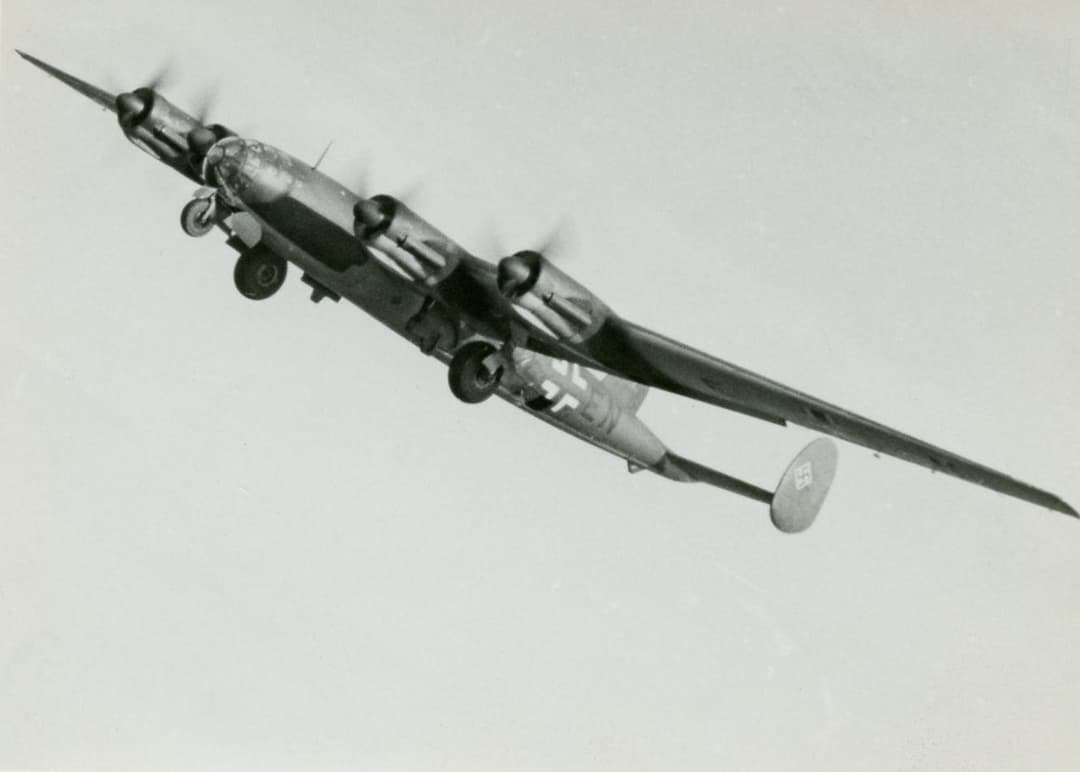
The Messerschmitt Me 264 - Amerikabomber - Nazi Germany's prototype long-range bomber - Public Domain

While many of these projects were engineering dead-ends, they demonstrate where Nazi Germany’s priorities lay.

The regime, and Hitler in particular, was captivated by tangible, intimidating machines of war—colossal tanks, long-range rockets, futuristic jets.

These projects received funding, manpower, and political support that dwarfed what was allocated to the highly theoretical and uncertain atomic bomb project.

Thankfully, the German war machine focused on engineering, not theoretical physics.

–

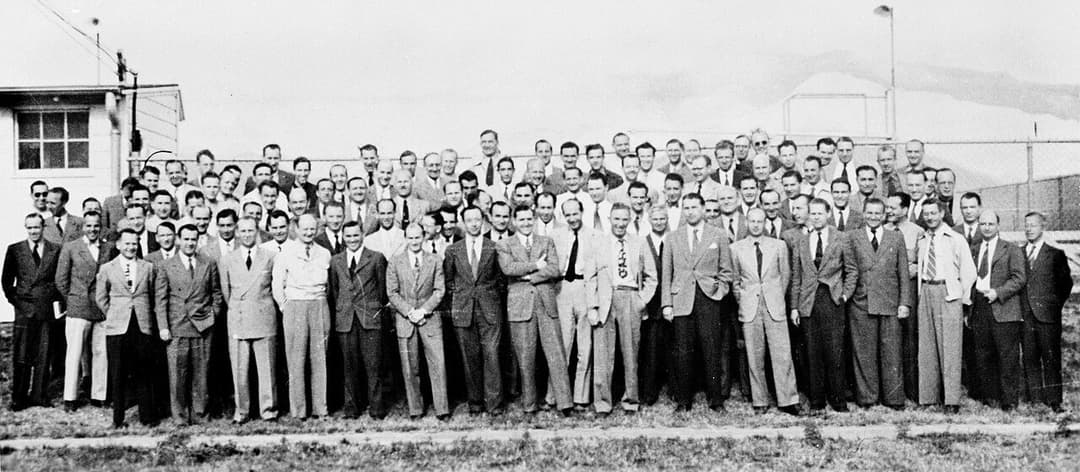
A proup of 104 German rocket scientists - part of Operation Paperclip - in 1946, including Wernher von Braun, Ludwig Roth and Arthur Rudolph, at Fort Bliss, Texas - Public Domain

Operation Paperclip, Operation Big & Atomic Secrets

“We hold these individuals to be potentially dangerous… Their former eminence as Nazi Party members and supporters raises the issue of their fitness to become American citizens and hold key positions in American industrial, scientific and educational institutions.”
Albert Einstein, in a letter to President Truman protesting Operation Paperclip

When the war in Europe ended, the ‘success’ of the Nazi nuclear program was measured not in weapons built, but in the knowledge possessed by its scientists.

The frantic final weeks of the war saw a new kind of conflict emerge: a race between the Western Allies and the Soviet Union to capture German scientific and technological assets.

Berlin, with its world-class research hubs like the Kaiser-Wilhelm Institut für Physik, Frederick William University, and the Technische Hochschule in Charlottenburg, was the grand prize.

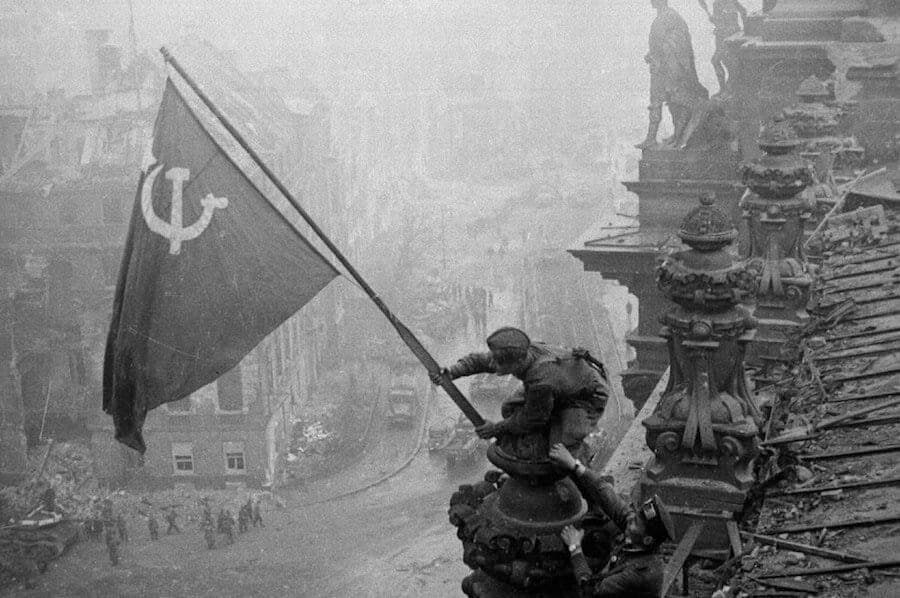
Soviet flag of the Red Army raised above the Reichstag building on May 2nd 1945
Soviet flag of the Red Army raised above the Reichstag building on May 2nd 1945/Image: Mil.Ru

The Soviets, having captured Berlin, had a significant geographical advantage.

They immediately began systematically dismantling research facilities and securing scientists.

Nikolaus Riehl, the man who had overseen uranium production at the Auer plant, was ‘invited’ to meet with Soviet officials in Berlin. That invitation turned into a ten-year relocation to the USSR, where he and other captured German scientists were instrumental in developing the Soviet atomic bomb project.

The nearly 100 tons of uranium oxide the Soviets recovered from the Oranienburg site, even after the bombing, saved them at least a year on their own nuclear timeline.

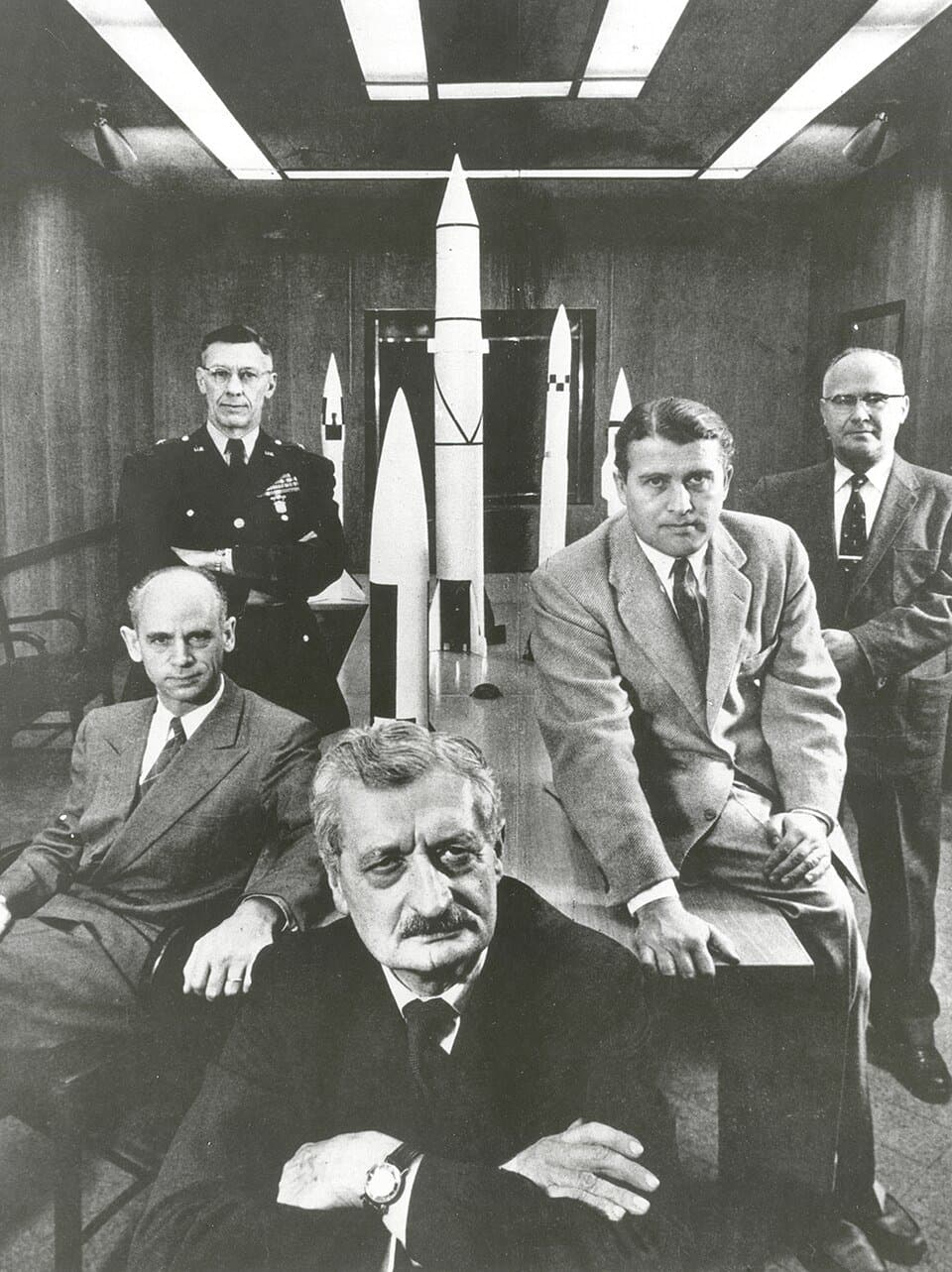
Officials of the US Army Ballistic Missile Agency (1956) - including Major General H.N. Toftoy (back left), responsible for Operation Paperclip, and Nazi rocket scientist, Werner von Braun (second from right) - Public Domain

The Americans had their own highly effective program, Operation Paperclip. 

Its goal was to identify and recruit hundreds of German scientists, engineers, and technicians—including many with devoted Nazi pasts—and bring them to the United States.

The most famous of these was Wernher von Braun and his entire V-2 rocket team.

They were seen as too valuable to be left for the Soviets or to face full accountability for their roles in the Nazi war machine.

While the American Alsos mission captured the core nuclear physicists, including Heisenberg and Hahn (who were famously interned at Farm Hall in England and secretly recorded), the real prize for the American military-industrial complex was the rocket technology that would form the bedrock of the U.S. space program and its intercontinental ballistic missile arsenal.

The hunt for atomic secrets had turned into a hunt for the men who possessed them.

–

Dismantling the German experimental nuclear pile at Haigerloch (April 1945) - Public Domain

Conclusion

“The German physicists knew at least so much about the manufacture and construction of atomic bombs that it was clear to them that the manufacture of bombs in Germany could not succeed during the war. For this reason, they were spared the moral decision whether they should make an atomic bomb, and they had only worked on the uranium engine.”
Werner Heisenberg, lead scientist in the German nuclear program

So how close were the Nazis to building an atomic bomb?

The simple, definitive answer is: not even remotely close.

The evidence gathered by the Alsos mission by late 1944 was already clear—the formidable German project the Allies had feared was a disorganized, underfunded, and scientifically misguided effort.

The captured scientists at Farm Hall were genuinely stunned to hear the news of the Hiroshima bombing on August 6th 1945; their secret recordings reveal disbelief and an immediate scramble to rationalise how the Americans could have succeeded where they had failed.

The German program failed for a constellation of reasons.

The expulsion of brilliant Jewish scientists like Lise Meitner and Albert Einstein had drained the project of crucial intellectual capital.

Illustrative of those who remained in Germany was the case of Fritz Strassmann, who along with Otto Hahn identified the element barium as a product of the bombardment of uranium with neutrons. Strassman resigned from the Society of German Chemists in 1939 when it became part of a Nazi-controlled public corporation and was blacklisted by the Nazi regime. Famously stating “despite my affinity for chemistry, I value my personal freedom so highly that to preserve it I would break stones for a living.”. His disdain for the Nazi regime he voiced in adding: “If my work would lead to Hitler having an atomic bomb I would kill myself.”

The Nazi leadership itself was divided, with competing teams often working against each other. Key scientific errors, like the dismissal of graphite as a moderator, sent them on a wild goose chase for heavy water. And perhaps most importantly, the project never received the political priority or the resources necessary for success.

The final comparison is the most telling.

The Manhattan Project, which successfully developed and tested the first atomic bomb in July 1945—two months after the war in Europe was over—was the largest scientific and industrial undertaking in human history. The contrast in scale with the German effort is staggering:

  • The Manhattan Project cost approximately $2 billion (about $34 billion in 2024 dollars). It employed a peak of 120,000 people and involved a total of nearly 500,000 workers, almost 1% of the entire U.S. civilian labor force at the time.
  • The Uranverein, by comparison, was budgeted a mere 8 million Reichsmarks. This is equivalent to about $2 million in 1945 dollars—a thousandth of the American expenditure. The number of scientists actively involved numbered in the dozens, not the thousands.

The Third Reich never made a serious, committed attempt to build an atomic bomb.

However, the mere threat of its realisation was one of the main driving factors behind the US development of nuclear weapons. “The Manhattan Project was built on fear: fear that the enemy had the bomb, or would have it before we could develop it,” said Robert Furman, an intelligence officer on the project. General Leslie Groves, the military director of Manhattan, later admitted that until near the end of the war they had “to assume that the most competent German scientists… were working on an atomic program with the full support of their government…. Any other assumption would have been unsound and dangerous”

Fortunately, Hitler was a man impressed by what he could see—giant tanks, screaming rockets, jet fighters.

A theoretical device requiring years of research and a budget that could have funded thousands more conventional weapons never captured his imagination or that of his inner circle.

In 1942, when Albert Speer asked Werner Heisenberg whether a bomb was feasible, the scientist’s cautious and uncertain timeline led the Nazi leadership to downgrade the project’s priority. They pursued a ‘uranium machine’, a nuclear reactor for naval propulsion, but the bomb was deemed too costly and too far off.

The myth of the nearly-completed Nazi atomic bomb persists because it makes for a better story.

It fuels a narrative of a knife-edge “what if” scenario and plays into the legend of the Nazis’ secret technological prowess.

The reality is far more mundane, but no less important.

The German nuclear project was a failure not of German science, but of the Nazi system itself: a regime driven by confused priorities, internal rivalries, ideological blindness, and a fundamental misunderstanding of the very physics its scientists had discovered.

The ghosts of Oranienburg are not a testament to how close they came, but a permanent, radioactive monument to how far away they truly were.

Bibliography

Bernstein, Jeremy (ed.) (2001), Hitler’s Uranium Club: The Secret Recordings at Farm Hall, Copernicus Books, ISBN 978‑0‑387‑95089‑1
Cassidy, D. C. (1992). Uncertainty: The Life and Science of Werner Heisenberg. W. H. Freeman.
Goudsmit, Samuel (1947), Alsos, Henry Schuman
Karlsch, Rainer (2005), Hitler’s Bomb, Deutsche Verlags‑Anstalt, ISBN 978‑3‑421‑05809‑6
Pash, Boris T. (1969), The Alsos Mission, Award House
Powers, Thomas (1993), Heisenberg’s War: The Secret History of the German Bomb, Knopf
Rhodes, Richard (1986), The Making of the Atomic Bomb, Simon & Schuster
Rose, Paul Lawrence (1998), Heisenberg and the Nazi Atomic Bomb Project, University of California Press
Speer, Albert (1970), Inside the Third Reich (trans. Richard & Clara Winston), Macmillan
Tooze, A. (2007). The Wages of Destruction: The Making and Breaking of the Nazi Economy. Viking.
Walker, Mark (1995), Nazi Science: Myth, Truth, and the German Atomic Bomb, Perseus (or Plenum) Press, ISBN 978‑0‑306‑44941‑3

Liked this piece? Have a look at the Berlin Experiences tours that cover this history.

See the Capital Of TyrannyMore articles →

Share this piece

Know someone who still believes it?

Explore in person

Tours that address this myth.

The Capital Of Tyranny Tour - Berlin Experiences
Full Day6 Hours

The Capital Of Tyranny

Private 6-hour van tour of Hitler's Berlin and the Third Reich for up to 6 people. Starts at your hotel or anywhere in the city.

€1,000up to 6
View Tour
The Third Reich Tour
One Hour1 Hour

The Third Reich Tour

Private 1-hour walking tour of the Nazi government district for up to 10 people. Starts at Pariser Platz by the Brandenburg Gate.

€200up to 10
View Tour

More reading

The other myths, busted.

49 more — drag, scroll or use the arrow keys.

Soviet troops pose next to the Reichsadler as it once appeared on top of Tempelhof Airport (1934) - Public Domain
Are There Any Nazi Statues Left In Berlin?
US Army soldiers crossing the Rhine (1945) - Public Domain
Could The Western Allies Have Captured Berlin?
Women at Ravensbrück - where Elizabeth Rothschild was imprisoned and died
Did Any Of The Rothschild Dynasty Die In The Holocaust?
Frederick the Great - Der Konig Uberall
Did Frederick The Great Introduce The Potato To Germany?
Adolf Hitler Eastern Front
Did Hitler Escape To Argentina In 1945?
March of SA men in uniform giving the Hitler salute - on their way to Kaffelstein (1933) - State Archives of Baden-Württemberg, Wertheim State Archives SN 70 G 4135
Did Hugo Boss Design The Nazi Uniforms?
Rudolf Hess (1933 & 1945) - Public Domain
Did Rudolf Hess Really Commit Suicide?
Did The Nazis Invent Decaf Coffee? – Mythbusting Berlin
Did The Nazis Invent Decaf Coffee?
German infantry on bicycles during the invasion of the Soviet Union
Did The Nazis Invent The Bicycle Reflector?
The site of the Nazi's Operation Bernhard counterfeiting operation: KZ Sachsenhausen
Did The Nazis Run The Largest Counterfeiting Operation In History?
Surrender of Berlin - 1945
Did The Second World War End In Berlin?
Spanish Flu & the rise of Nazi Germany
Did The Spanish Flu Pandemic Help The Nazis Take Power?
One of the final photos of Adolf Hitler, taken on March 20th 1945 -Public Domain
Have Adolf Hitler’s Remains Been DNA Tested?
Prisoners at Sachsenhausen Concentration Camp attend roll call (1937) - Public Domain
How Did The Nazi Concentration Camps Differ From The Soviet GULAG?
The construction of the first actual Berlin Wall in August 1961 - Public Domain
How Long Did It Take To Build The Berlin Wall?
The remains of the Bürgerbrauhalle after an assassination attempt against Adolf Hitler in 1939 - Bundesarchiv, Bild 183-E12329 / Wagner / CC-BY-SA 3.0
How Many Assassination Attempts On Adolf Hitler Were There?
Evidence of Jewish prisoners at Auschwitz-Birkenau being undressed and led to their deaths - Public Domain
How Many Jews Died In The Holocaust?
A sign at the Berlin Wall in East Berlin (November 1961) declares, “Whoever attacks us will be destroyed," - Public Domain
How Many People Died Trying To Escape East Germany?
Berlin's Nikolaiviertel
How Old Is Berlin?
Adolf Hitler practices his speech techniques
Was Adolf Hitler A Drug Addict?
Adolf Hitler practicing his oratory skills - Public Domain
Was Adolf Hitler A Freemason?
Adolf Hitler practicing his oratory skills - Public Domain
Was Adolf Hitler Gay?
Adolf Hitler practicing his oratory skills - Public Domain
Was Adolf Hitler Jewish?
Hertha Heuwer - the inventor of Currywurst - Public Domain
Was Currywurst Invented In Berlin?
Fanta advertising from the 1940s - Public Domain
Was Fanta Invented By The Nazis?
Frederick the Great at the Battle of Zorndorf by Carl Roechling (1911)
Was Frederick The Great Gay?
Henry Ford
Was Henry Ford A Nazi?
Franz Rudolf Frisching portrait in 1785 in Prussian Blue.
Was The Colour Blue Invented In Berlin?
Döner Kebab
Was The Döner Kebab Invented In Berlin?
Menschen am Potsdamer Platz auf der Westseite der Berliner Mauer am 11. November 1989
Was The Fall Of The Berlin Wall An Accident?
The Nazi Party in parliament (1935)
Was The Nazi Party Democratically Elected?
The Allied bombing of Wesel during the Second World War - Public Domain
Were The Allied Bombings Of Germany War Crimes?
Photograph of the Hadamar killing centre with a smoking chimney, (1941) - Hadamar Memorial Museum
Were The Nazi Medical Experiments Useful?
The Oath of the Horatii by Jacques-Louis David - Public Domain
What Are The Origins Of The Nazi Salute?
Members of the Hitler Youth parade in the formation of a swastika to honor the Unknown Soldier. Germany, August 27th 1933 - Public Domain
What Are The Origins Of The Nazi Swastika?
Pink pipes in Berlin - Public Domain
What Are The Pink Pipes In Berlin?
A street battle between revolutionaries and the royal military in the Breite Strasse Street, Berlin during the March 1848 revolution - Public Domain
What Do The Colours Of The German Flag Symbolise?
Adolf Hitler's Alligator - Saturn
What Happened To Adolf Hitler’s Alligator?
German Kaiser Wilhelm II in Bruges, Belgium during the First World War - Public Domain
What Happened To The German Royal Family?
Adolf Hitler (right) and Benito Mussolini (left) in Munich, Germany, 1937 - Public Domain
What Is The Difference Between Fascism & Nazism?
Checkpoint Charlie in 1989
What Was Checkpoint Charlie?
The crowning of Wilhelm I as German Emperor and the birth of Germany in 1871
What Was Prussia?
United States Air Force building a runway for Operation Vittles planes (1948) - Public Domain
What Was The Berlin Airlift?
A close-up of the Socialist Kiss painted on the East Side Gallery - LeO Tiresias
What Was The Socialist Kiss?
Construction of the Berlin Wall at the Brandenburg Gate
Who Built The Berlin Wall?
Soviet flag on the Reichstag - 1945
Who Really Raised The Soviet Flag On The Reichstag?
Inside the Reichstag Plenary Chamber/Image: United States Holocaust Memorial Museum
Who Was Really Responsible For The Reichstag Fire?
The defendants at the Nuremberg Trial (1946) - Public Domain
Who Were The Last Nazis On Trial?
The Brandenburg Gate at night
Why Is Berlin The Capital Of Germany?