Skip to content
A street battle between revolutionaries and the royal military in the Breite Strasse Street, Berlin during the March 1848 revolution - Public Domain

Berlin Experiences/Mythbusting Berlin

What Do The Colours Of The German Flag Symbolise?

No single fixed meaning. Black, red and gold began as the colours of the Lützow Free Corps in 1813 and came to stand for a united, free Germany.

By Matt Robinson · Updated · 15 min read

“Democracy is for us not only a matter of the moment, but it is a matter of our historical legacy… The symbol of this path, with all its tragedy and all its failed attempts, is black-red-gold. We would be faithless to our own history if we were to abandon this symbol.”
Carlo Schmid, a key architect of the West German Basic Law (1948)

Before we unfurl the specific history of Schwarz-Rot-Gold, it’s worth remembering that flags are never just pieces of fabric. They are loaded symbols, visual shorthand for a nation’s entire history and aspirations.

A flag can inspire patriotic fervour, revolutionary zeal, or deep-seated resentment.

It represents a collective identity, a promise of belonging.

In the 19th century, as the very idea of the ‘nation-state’ was being forged in the fires of revolution and war across Europe, the question of a flag was paramount.

For the disparate collection of German-speaking kingdoms, duchies, and free cities, a flag was not just a nice-to-have accessory; it was the visual embodiment of a question that haunted the age:

What is Germany? And who gets to decide?

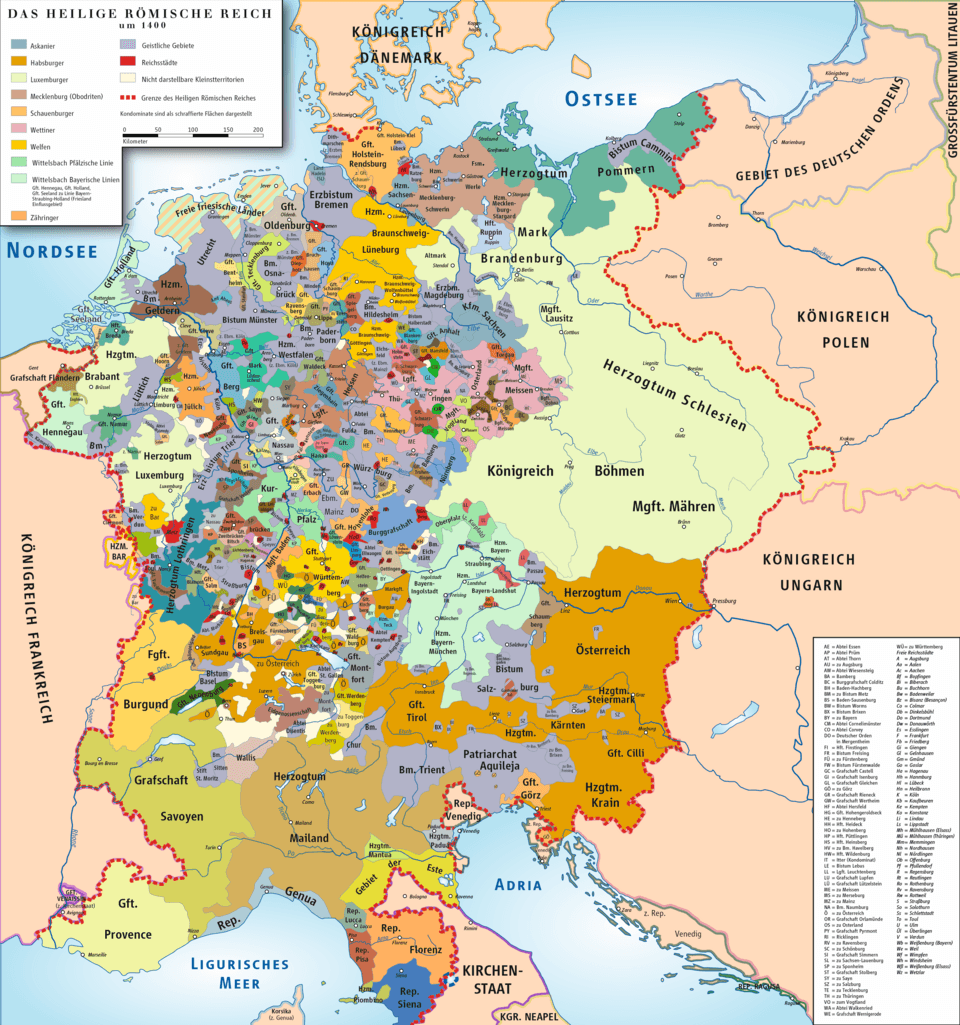
The Holy Roman Empire of the German Nation (around 1400) - Public Domain

The answer, for a long time, was unclear.

Before the 19th century, there was no ‘German’ national flag because there was no unified Germany.

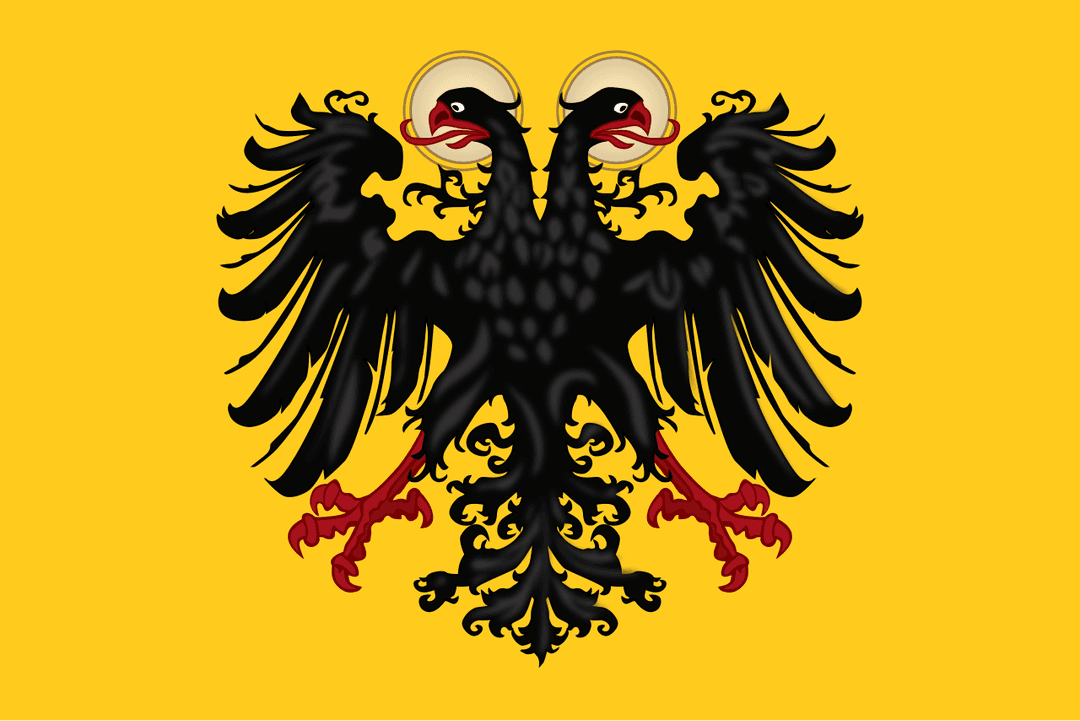
Banner of the Holy Roman Emperor with haloes (1430-1806) - Public Domain

The Holy Roman Empire, a bewildering patchwork of territories that existed for a thousand years before its dissolution by Napoleon in 1806, had no national flag in the modern sense.

Its imperial banner featured a black eagle on a golden background, colours associated with the Emperor.

These imperial colours, black and gold, were ancient and august, but they represented the authority of the Emperor, not the sovereignty of a German people.

Red and white were also significant, often associated with the powerful Hanseatic League, a medieval confederation of merchant guilds and their market towns.

But a single flag to unite all German speakers?

The idea was as foreign as the French troops marching across their lands.

It took an invasion to spark a revolution, and a revolution to create a flag.

–

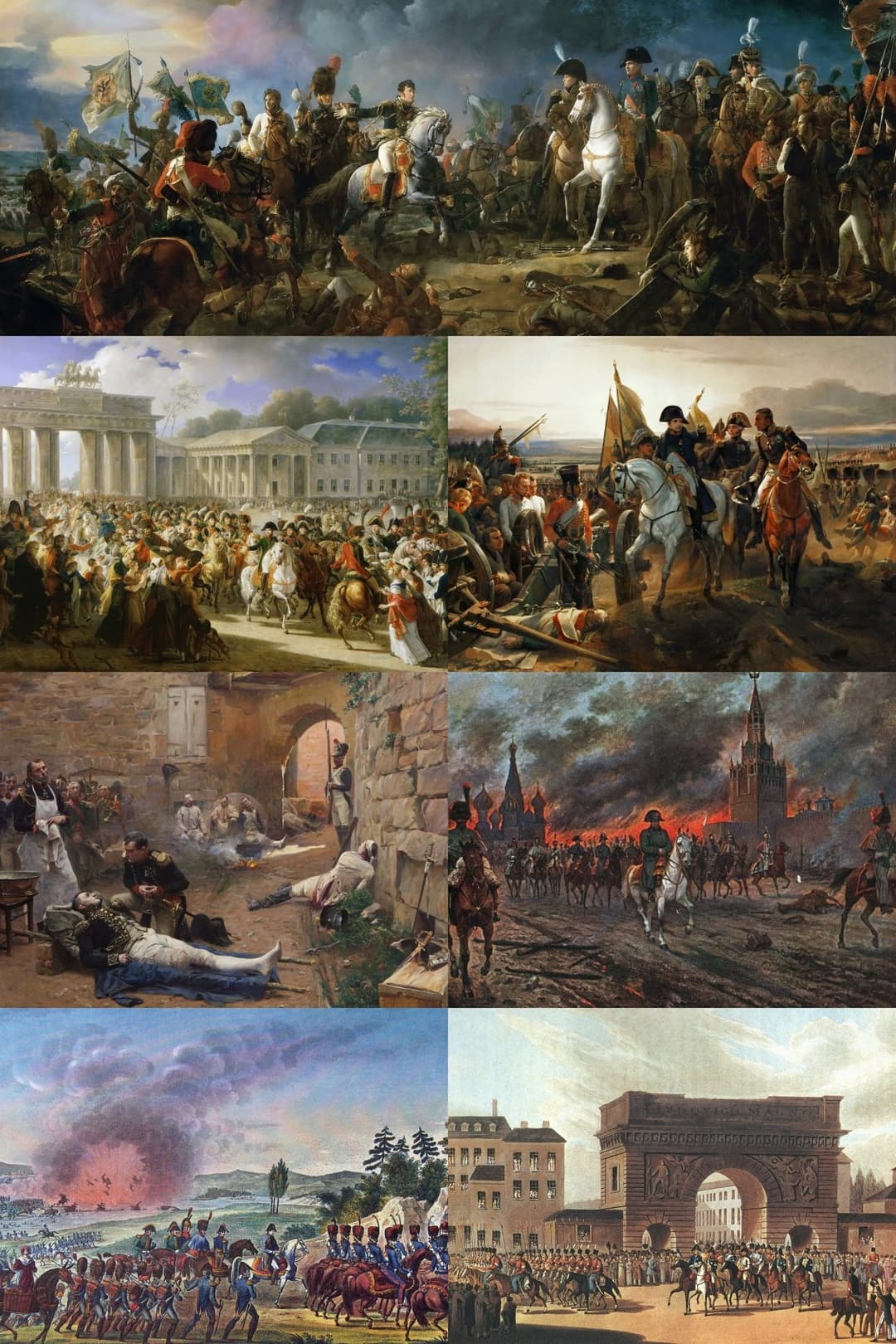
A collage of artwork depicting the Napoleonic Wars (1803-1815) - Public Domain

The Black-Red-Gold: A Revolutionary Birth

“Out of the blackness (black) of servitude through bloody (red) battles into the golden (gold) light of freedom.”
A popular saying from the time of the Napoleonic wars

The story of Schwarz-Rot-Gold begins, as so many modern German stories do, with Napoleon Bonaparte. 

His conquest and reorganisation of the German lands at the start of the 19th century had a paradoxical effect. While it dismantled the old Holy Roman Empire, it also ignited a powerful new feeling of common identity among German speakers in opposition to their French occupiers.

This burgeoning nationalism needed a symbol, and it found one in the uniforms of a legendary volunteer unit: the Lützow Free Corps.

Formed in 1813 during the “Wars of Liberation” against Napoleon, the Lützow Free Corps was a motley crew of students, academics, and artisans drawn from all across the German states, united in their desire to expel the French.

Because its volunteers came from different regions with their own military attire, creating a standardised uniform was a challenge.

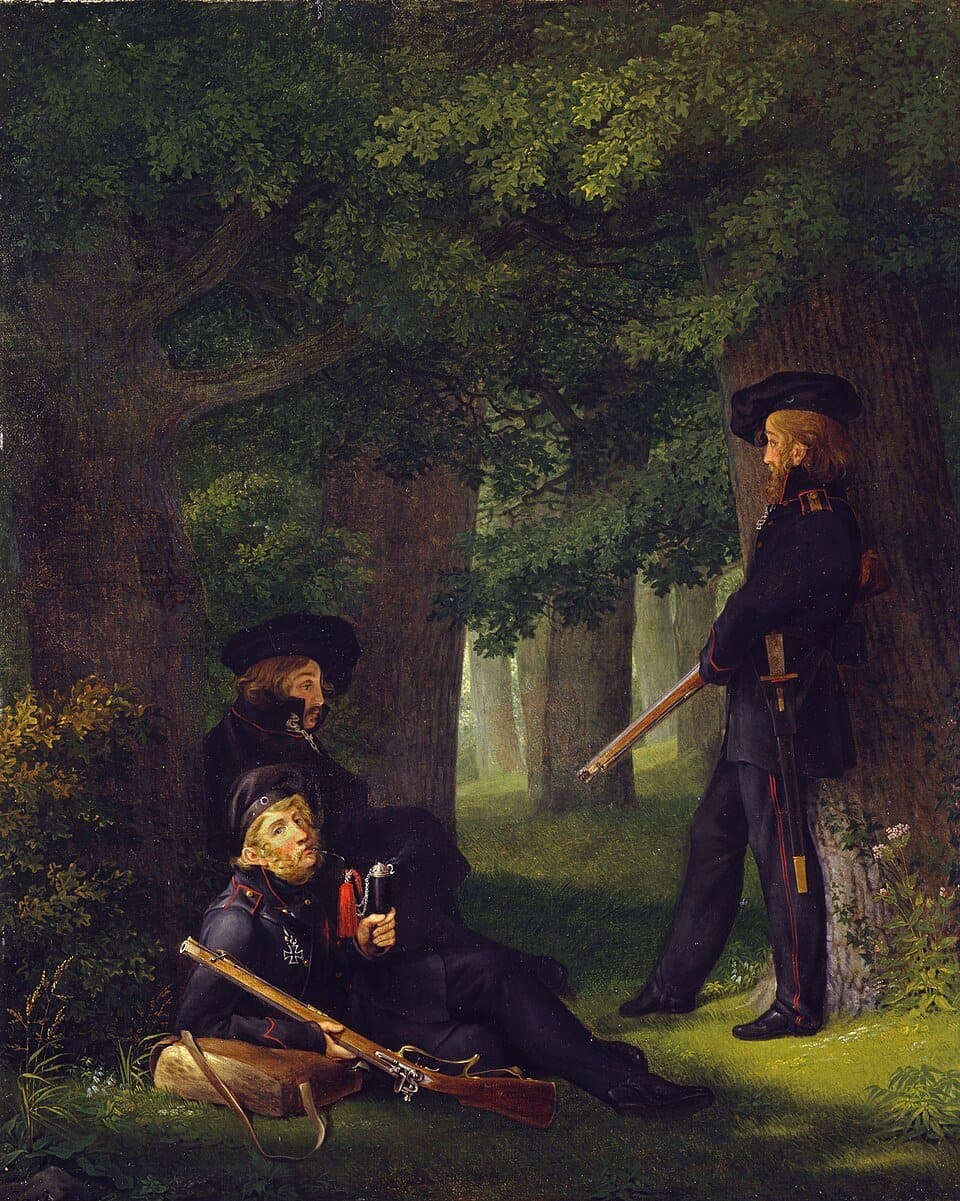
Outpost Duty (1815) depicting members of the Lützow Free Corps - Public Domain

Major Adolf von Lützow, their charismatic leader, opted for a practical solution: dye all the uniforms black. It was the cheapest and easiest way to create uniformity from diversity.

The uniforms were then adorned with red facings and piping, and finished with shiny, golden-coloured brass buttons.

Black uniforms, red trim, gold buttons. A colour combination born not of grand symbolism, but of pragmatism.

Yet, it was this very group, representing a pan-German fighting force, that captured the popular imagination.

The colours of the Lützow Free Corps became synonymous with the fight for a united and free Germany.

After Napoleon’s defeat, the dream of a unified German nation-state was swiftly quashed.

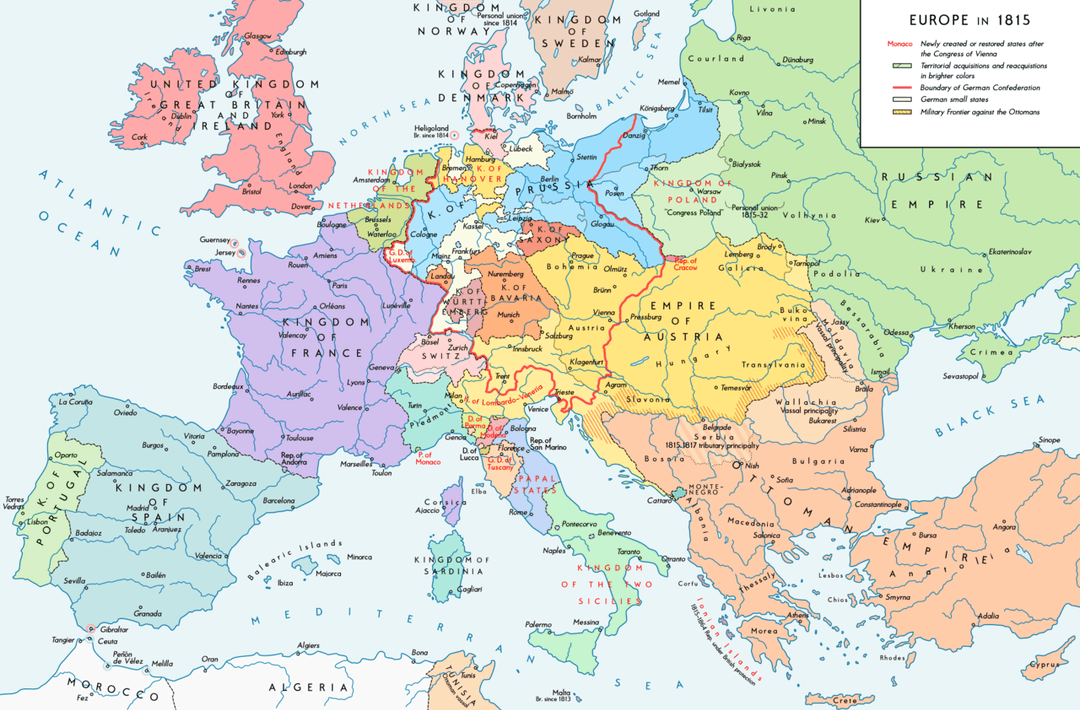
The national boundaries of Europe set following the Congress of Vienna - Public Domain

The 1815 Congress of Vienna established the German Confederation, a loose and conservative association of 39 sovereign states dominated by Austria, designed to maintain the old monarchical order.

For the young, liberal, and nationalist students—many of them veterans of the Free Corps—this was a bitter disappointment. They had fought for a nation and been given a committee.

Their frustration found an outlet in the burgeoning Burschenschaften, student fraternities that became hotbeds of liberal and nationalist sentiment. 

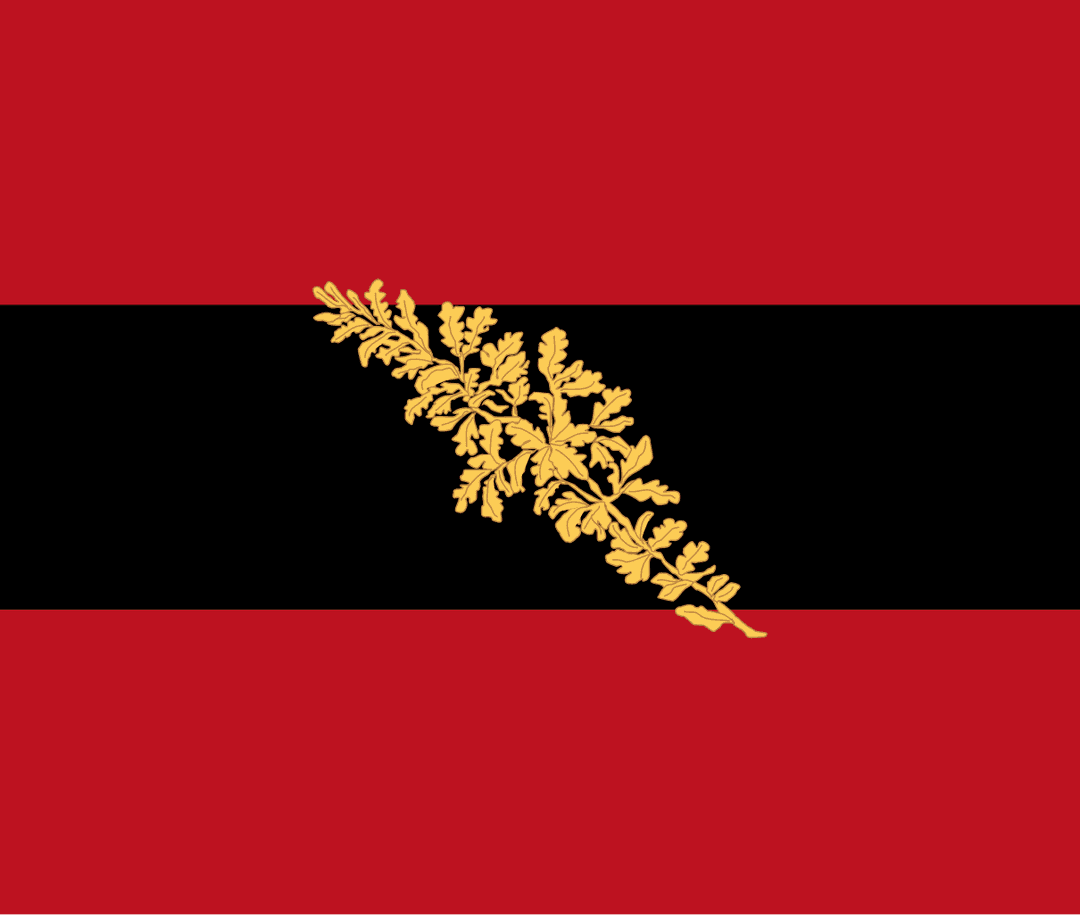
In 1815, a fraternity in Jena, the Urburschenschaft, which included Lützow veterans, adopted a flag with red and black horizontal stripes and a golden oak branch emblem.

These colours quickly spread.

The flag of Jena Urburschenschaft (1816) - Public Domain

At the 1817 Wartburg Festival, a landmark gathering of students demanding unity and constitutional rights, a black-red-gold banner was proudly displayed.

The colours had found their cause: the liberal, democratic, and nationalist movement pushing against the conservative order. This association was cemented at the Hambach Festival in 1832. Disguised as a county fair to circumvent restrictions on political gatherings, it was a massive demonstration of around 30,000 people demanding national unity, freedom of the press, and civil rights.

The festival grounds were a sea of black, red, and gold flags.

One of the most prominent flags, carried by Johann Philipp Abresch, bore the inscription “Deutschlands Wiedergeburt” (Germany’s Rebirth).

The colours were no longer just a memory of a military uniform; they were the banner of a future, democratic Germany.

The breakthrough moment came with the Revolutions of 1848. 

As liberal uprisings swept across the German states, the tricolour was everywhere.

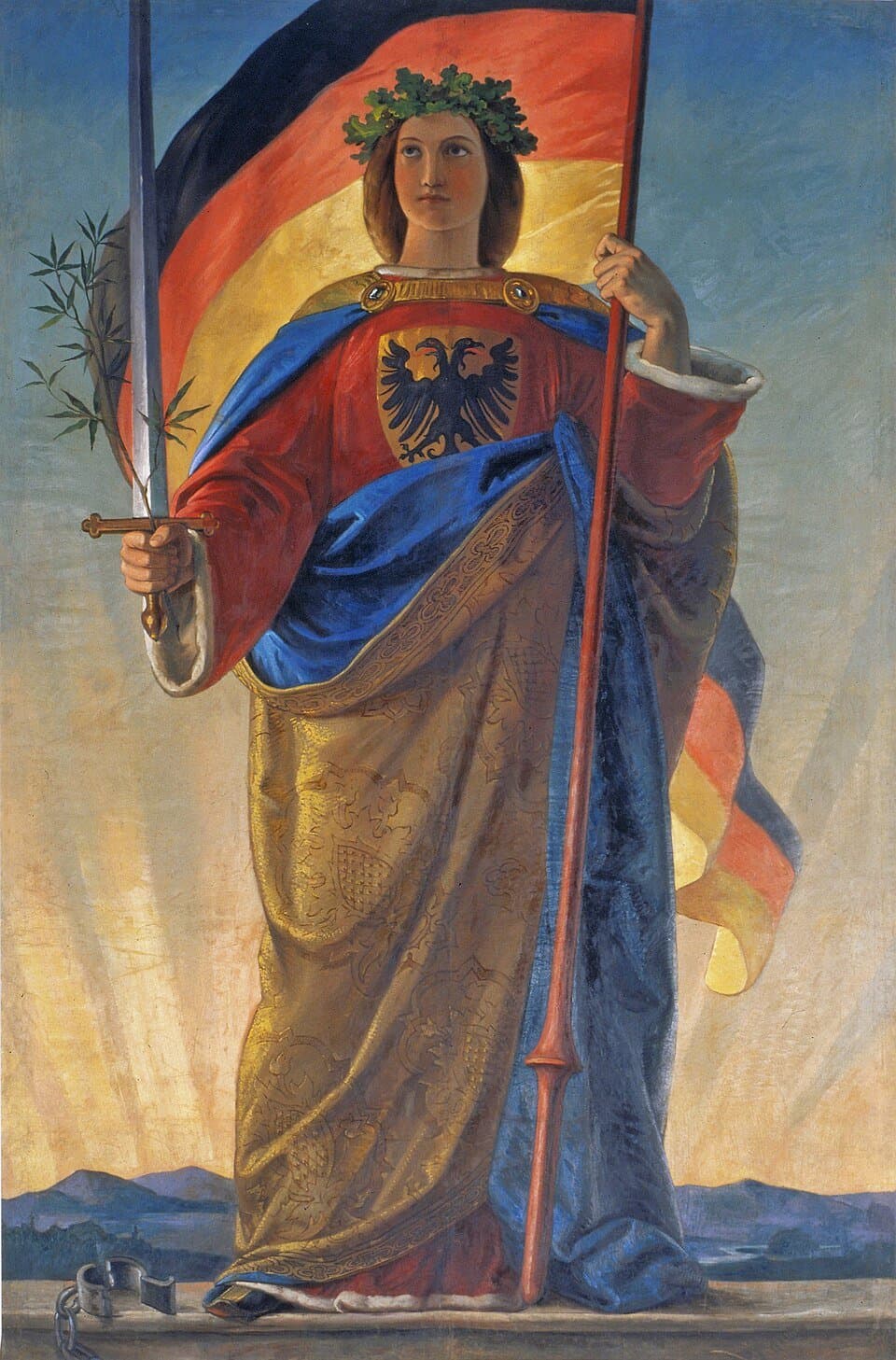
Germania (painting), wall fresco, St. Pauls Church, Frankfurt am Main, designed to cover the organ during the Frankfurt Assembly/Parliament, 1848-49 - Public Domain

On March 9th 1848, the German Confederation’s Bundestag, panicking in the face of popular pressure, officially adopted the black-red-gold as the colours of the German Confederation.

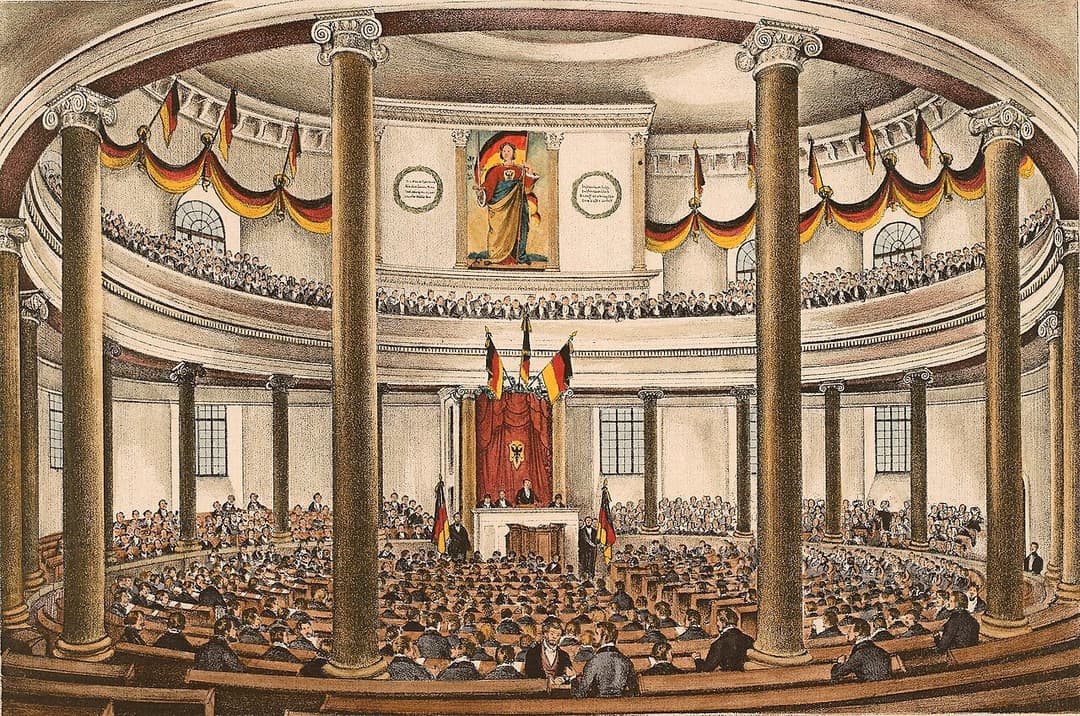
Shortly after, the newly elected German National Assembly, the Frankfurt Parliament, reaffirmed these as the national colours for the new German Empire it intended to create.

For a brief, shining moment, the revolutionaries’ flag was the official flag of Germany.

It was during this period that the romantic interpretation—”out of the blackness of servitude, through red blood, to the golden light of freedom”—gained currency. It was a powerful piece of political poetry, retroactively applying a heroic narrative to the colours. While not their origin, this interpretation helped cement their symbolic power in the public consciousness.

However, the revolution failed. 

The dream of a unified, liberal Germany was crushed by the old monarchical powers, primarily Prussia.

The Frankfurt Parliament was dissolved, and the black-red-gold flag, the symbol of the failed revolution, was suppressed.

–

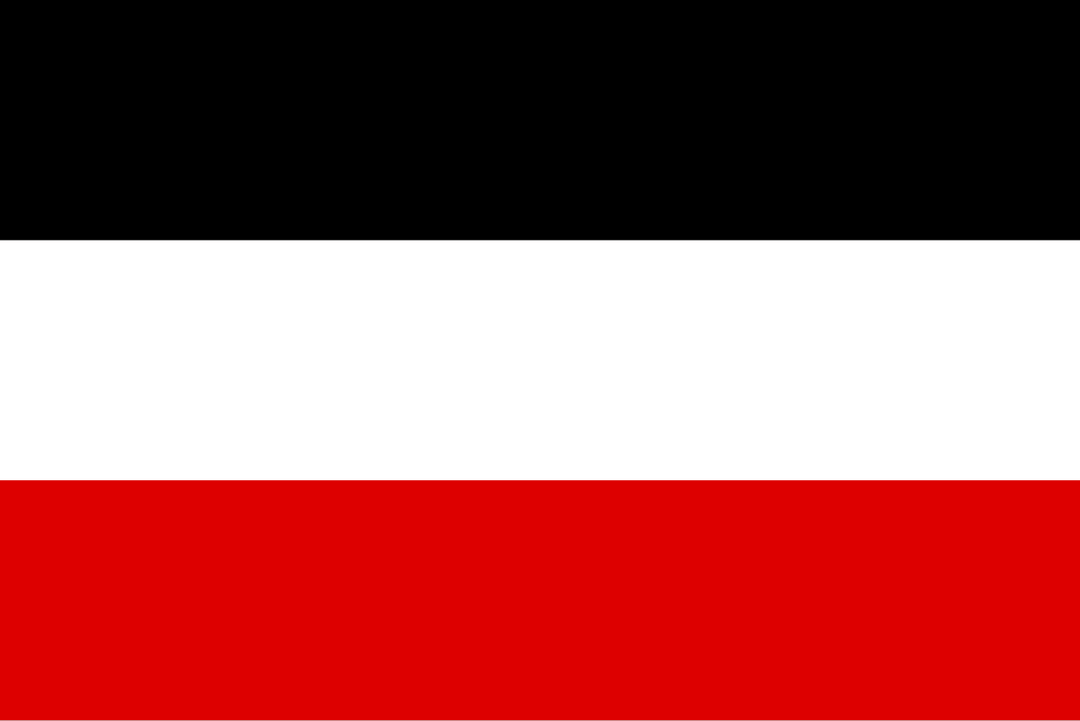
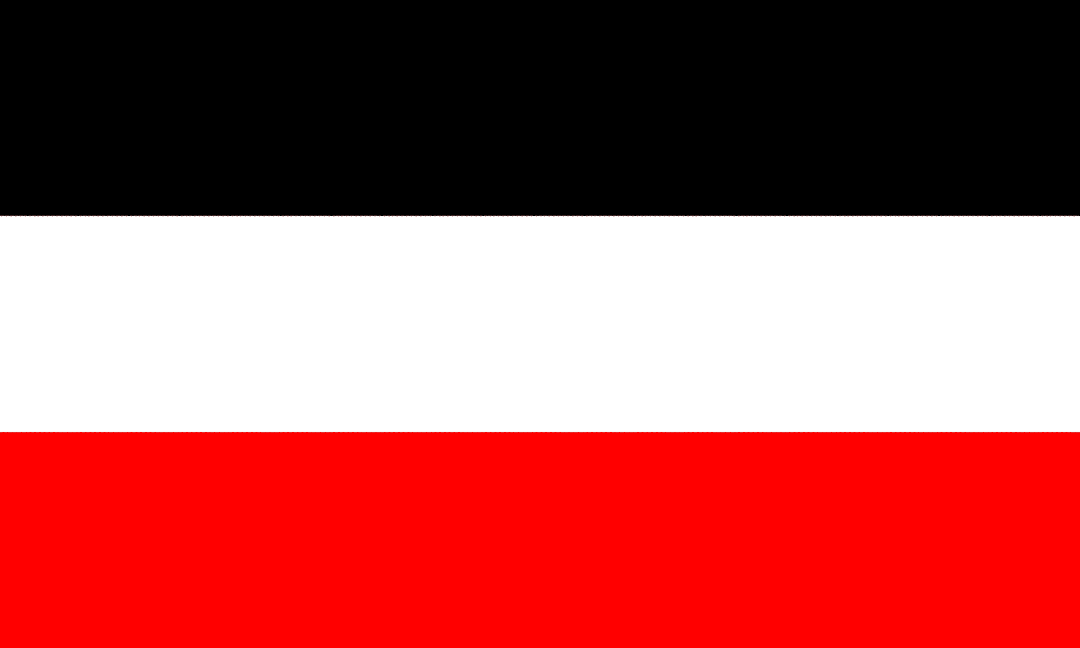
Flag of North German Confederation 1866–1871 - Public Domain

The Black-White-Red: A Rival Identity

“I don’t care whatsoever about those colors! Whatever, green and yellow and dancing pleasure, or the flag of Mecklenburg-Strelitz…”

Otto von Bismarck on the creation of the Black-White-Red flag

As the revolutionary embers of 1848 faded, the task of unifying Germany fell not to liberal parliamentarians, but to the iron-willed chancellor of Prussia, Otto von Bismarck. Bismarck was a pragmatist, a conservative, and a monarchist. He had no romantic attachment to the black-red-gold flag, which he associated with the liberal opposition that he had so effectively outmaneuvered.

When Bismarck created the North German Confederation in 1867, a precursor to the German Empire, a new flag was needed. The choice was a calculated political move.

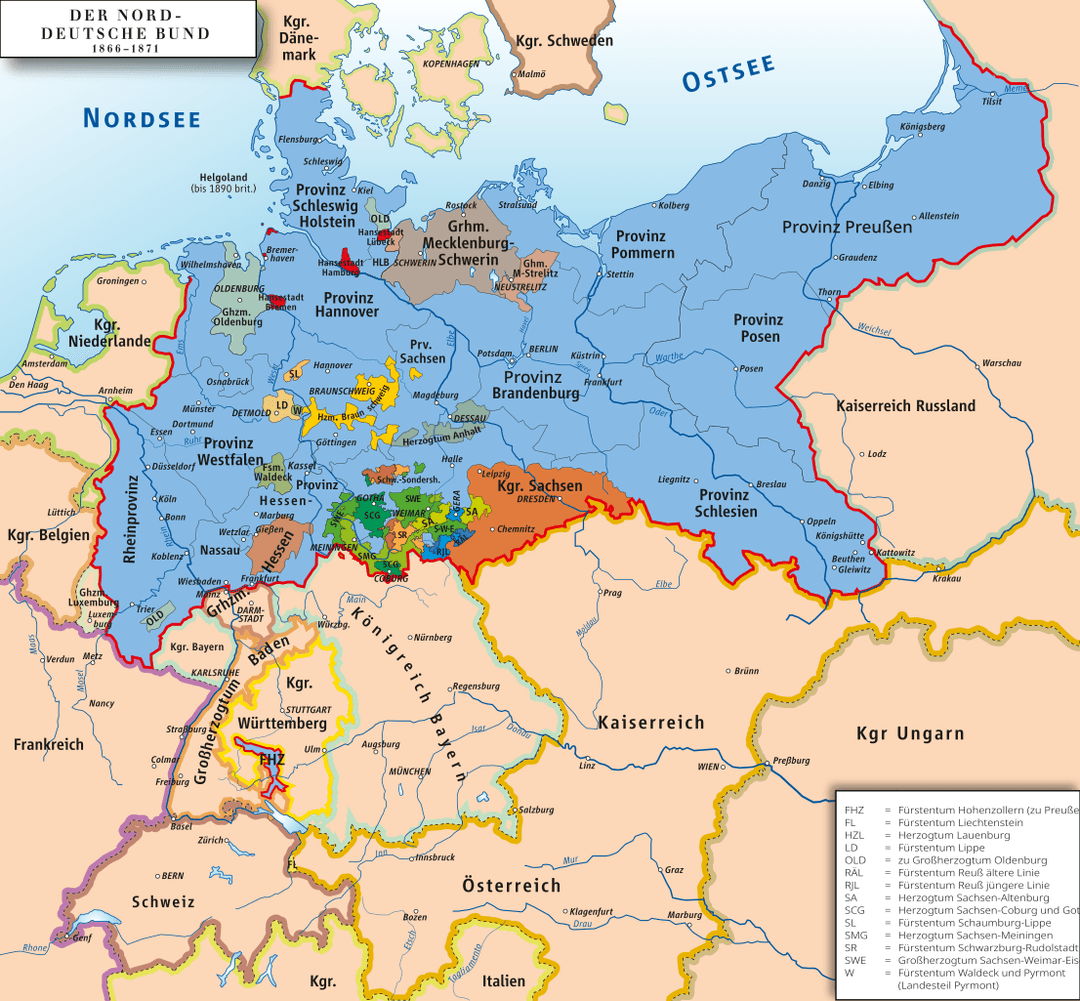
Map of North German Confederation 1866–1871 - Public Domain

The new tricolour combined the black and white of Prussia with the red and white of the Hanseatic cities (like Hamburg, Bremen, and Lübeck).

The result was a horizontal tricolour of black, white, and red.

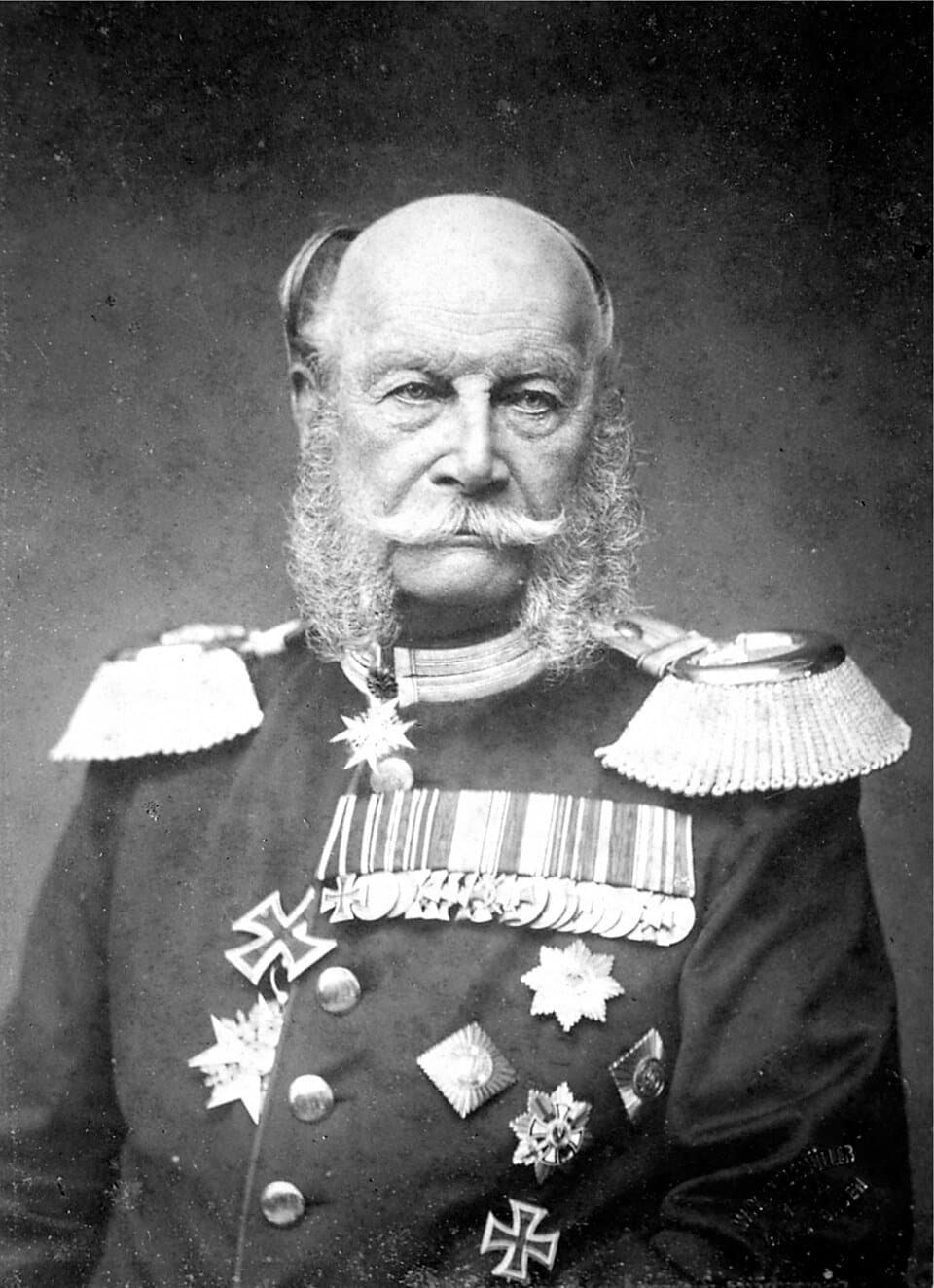
Prussian King, Wihlelm I, who believed the red and white were also taken to represent the Margraviate of Brandenburg, the Imperial elector state that was a predecessor of the Kingdom of Prussia - Public Domain

This new flag was a symbol of a very different kind of Germany. It was not born from a popular democratic movement but imposed from above. It represented a Germany unified by Prussian military might and industrial prowess, a constitutional monarchy, not a liberal republic. 

It was the flag of the Kaiserreich, the German Empire proclaimed in the Hall of Mirrors at Versailles in 1871.

For nearly fifty years, Schwarz-Weiß-Rot was the flag of Germany. The revolutionary Schwarz-Rot-Gold did not disappear entirely, but it became the banner of opposition, used by parties and groups who clung to the democratic ideals of 1848. 

Germany now had two competing flag traditions, each representing a different vision of the nation.

–

Flag of the Weimar Republic (1919–1933) - Public Domain

The Weimar Republic and the 'Flag Dispute'

“And when at last he waved the black-red-gold banner, and predicted to a free German nation a magnificent future, enthusiasm without bounds broke forth… In a moment the city was covered with black, red, and gold flags.”
Carl Schurz, 1848 Revolutionary and later U.S. Statesman

Germany’s defeat in World War I and the subsequent revolution of 1918-19 swept away the monarchy.

In its place rose the Weimar Republic, Germany’s first democratic state.

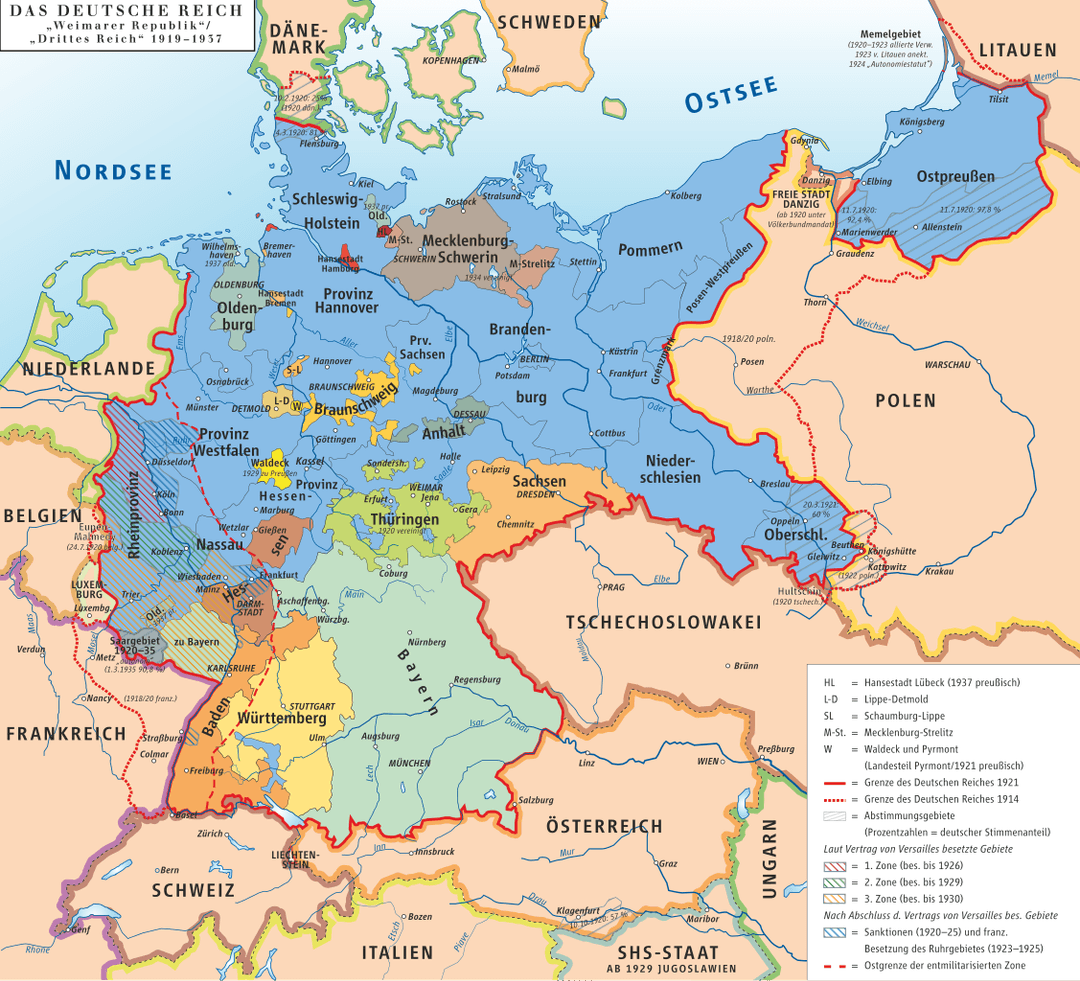
The territory of the Weimar Republic (1919–1933) with the 'Third Reich' borders until 1937 visible - Public Domain

One of the new republic’s first and most contentious decisions was to choose a national flag.

To the founders of the republic—the Social Democrats, the Centre Party, and the liberal Democrats—the choice was obvious. They needed to reclaim the democratic tradition. In 1919, the Weimar Constitution officially reinstated the black-red-gold tricolour as the national flag of Germany.

It was a deliberate link back to the failed revolution of 1848 and its liberal ideals.

This decision was anything but universally popular. The “flag dispute” (Flaggenstreit) that ensued tore at the fabric of the young republic. To the political right—the monarchists, the nationalists, and the conservative old guard—the black-red-gold was a symbol of national humiliation. They associated it with the defeat of 1918 and the hated Treaty of Versailles.

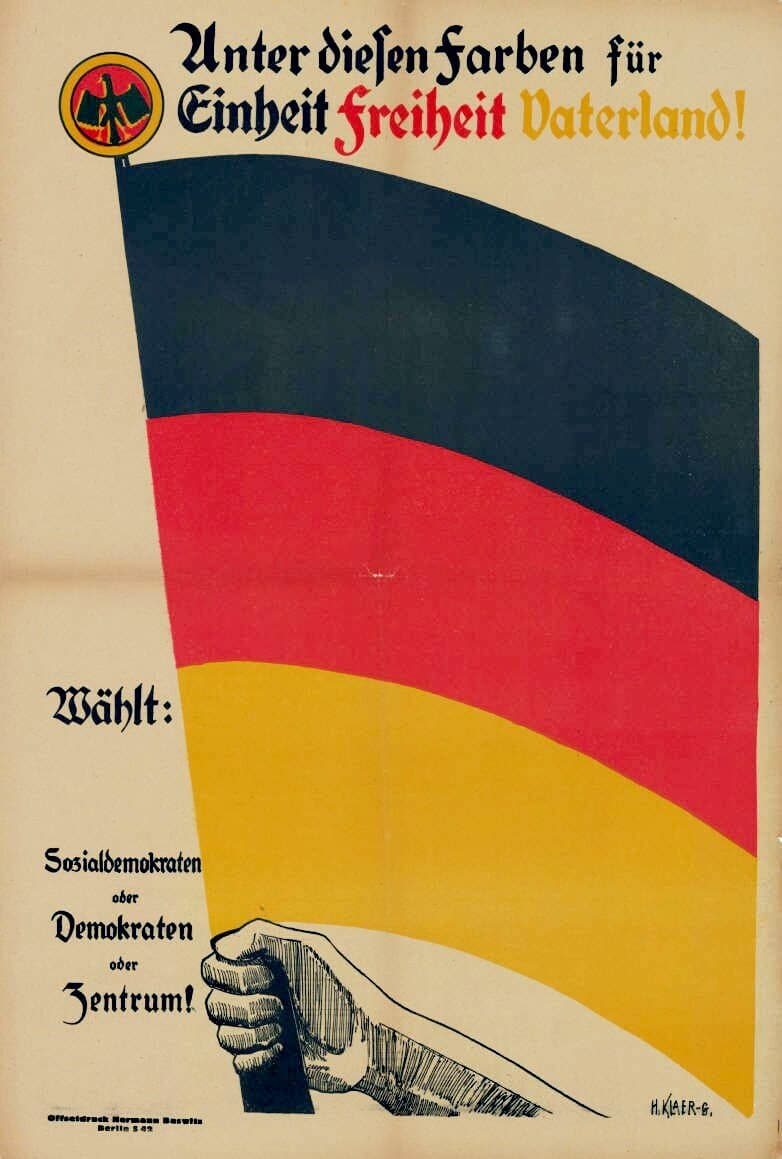
"Under these colours for Unity, Freedom, and the Fatherland" - campaign poster for the allied "Sozialdemokraten oder Demokraten oder Zentrum" (1923) - Public Domain
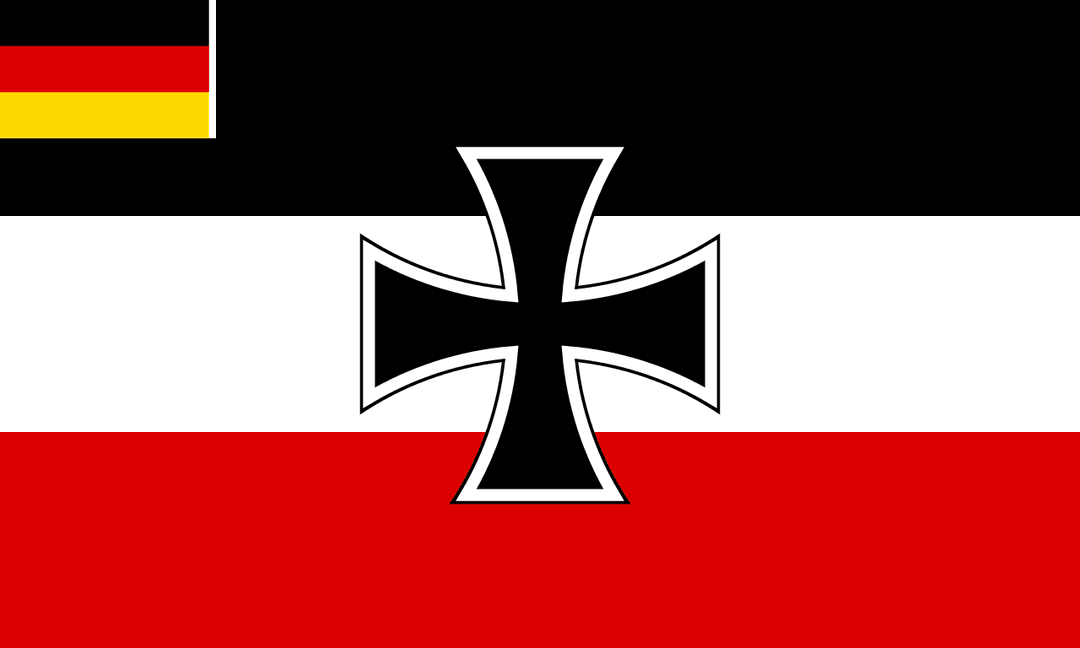
The War Ensign of the Reichwehr (the German Armed Forces) - (1921–1933) - Public Domain

For them, the black-white-red of the empire represented Germany’s era of strength and glory. They derisively referred to the new flag’s colours as Schwarz-Rot-Gelb (black-red-yellow) or even Schwarz-Rot-Senf (black-red-mustard), a subtle but potent insult that stripped the gold of its heraldic dignity.

This was not merely a debate about aesthetics; it was a battle over the soul of the nation. Right-wing parties and paramilitary groups like the Stahlhelm continued to use the imperial colours as a symbol of their opposition to the democratic republic.

The republic’s supporters, in turn, rallied under the Schwarz-Rot-Gold, forming organizations like the Reichsbanner Schwarz-Rot-Gold to defend democracy against its extremist enemies.

The flag became a clear dividing line in a deeply polarised society. A compromise in 1922 allowed the old imperial flag to be used by diplomatic missions abroad, but this did little to heal the rift.

–

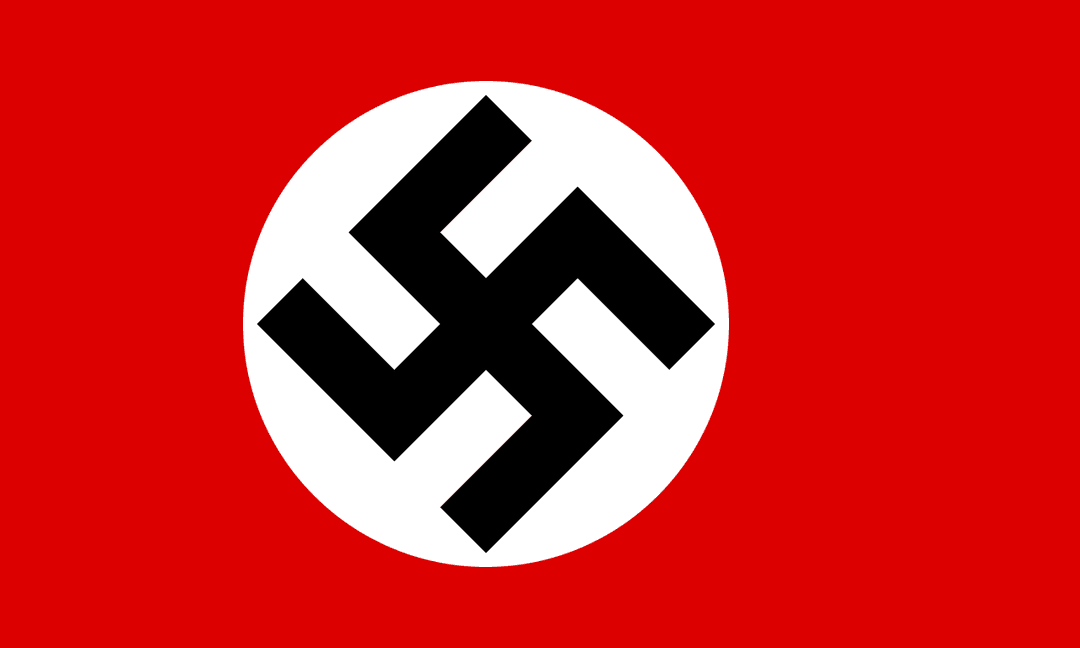
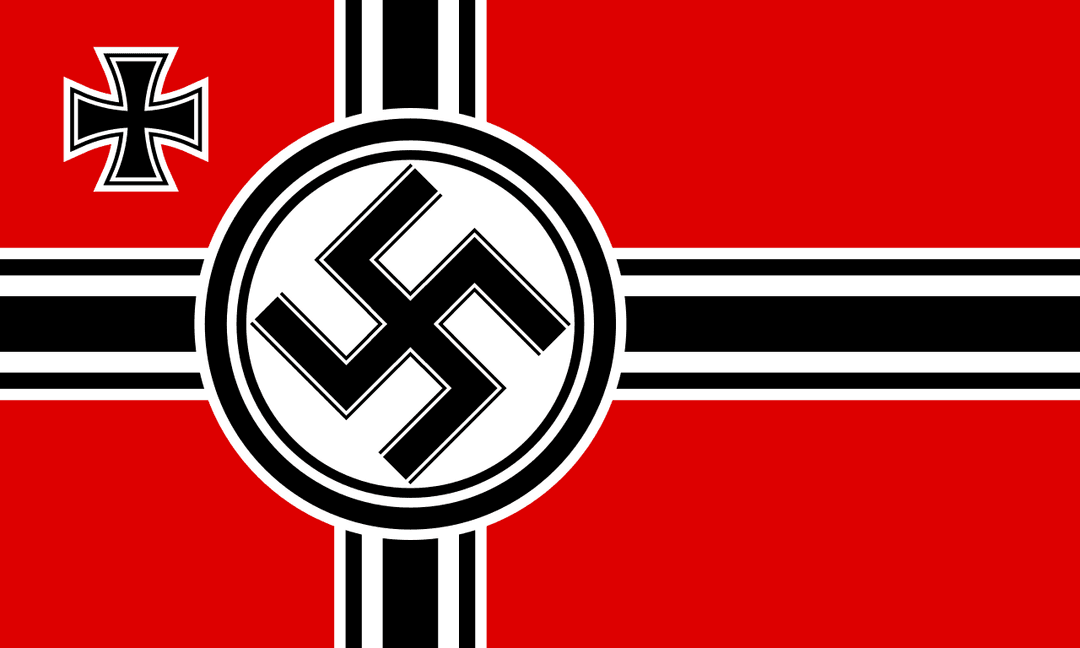
The flag of Nazi Germany (1935–1945) - Public Domain

The Swastika and the Perversion of Colours

“In red we see the social idea of the movement, in white the nationalistic idea, in the swastika the mission of the struggle for the victory of the Aryan man.”
Adolf Hitler, in Mein Kampf

When Adolf Hitler and the Nazi Party came to power in 1933, they immediately sought to eradicate the symbols of the Weimar Republic.

On March 12th 1933, the black-red-gold flag was officially abolished.

Initially, the Nazis reinstated the old imperial black-white-red tricolour as the national flag, flying it alongside their own party banner, the swastika flag (Hakenkreuzflagge).

This was a clever move to appeal to the traditional conservatives and nationalists who longed for a return to the days of the empire.

National flag and ensign of Nazi Germany (1933–1935). It used a slightly different aspect ratio than the previous flag of the German Empire - Public Domain

In Mein Kampf, Hitler explained his design for the party flag, which deliberately co-opted the imperial colours. He claimed the red represented the social idea of the Nazi movement, the white represented the nationalist idea, and the black swastika symbolised the “mission of the struggle for the victory of the Aryan man.”

By using black, white, and red, the Nazis positioned themselves as the true heirs of the German imperial tradition, while simultaneously denouncing the democratic legacy of the black-red-gold.

War Ensign of Germany 1935-1938 - Public Domain

In 1935, a year after the death of President Hindenburg, the dual-flag arrangement ended. The Nazis banned the imperial flag, labelling it “reactionary,” and the swastika flag became the sole national flag of Germany.

The colours of the empire, once a symbol of monarchical conservatism, were now fully subsumed into the horrific iconography of the Third Reich.

–

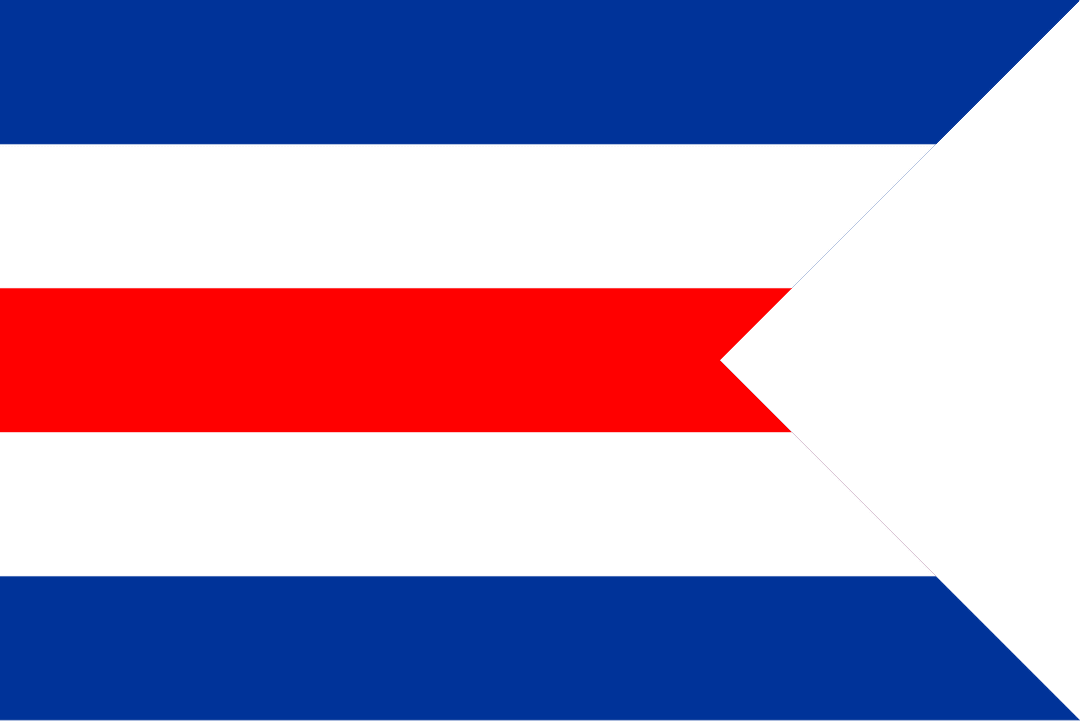
The merchant flag of Germany (1946–1949) - as German ships were required by international law to have a national ensign of some kind - Public Domain

The Post-War Division and Reunification

“We didn’t want a new flag. We wanted the Germany that this flag originally promised. By cutting out the emblem of our oppressors, we were taking back the original symbol of unity and freedom for ourselves. It was an act of liberation.”
Bärbel Bohley, East German opposition artist and activist

After Germany’s total defeat in 1945, all previous national flags were banned by the Allied occupation forces.

As two new German states emerged from the ashes of the Cold War in 1949, they both faced the same question that had confronted the Weimar Republic: what should the flag be?

Remarkably, both the democratic Federal Republic of Germany (West Germany) and the communist German Democratic Republic (East Germany) chose the same colours.

Both states readopted the black-red-gold tricolour.

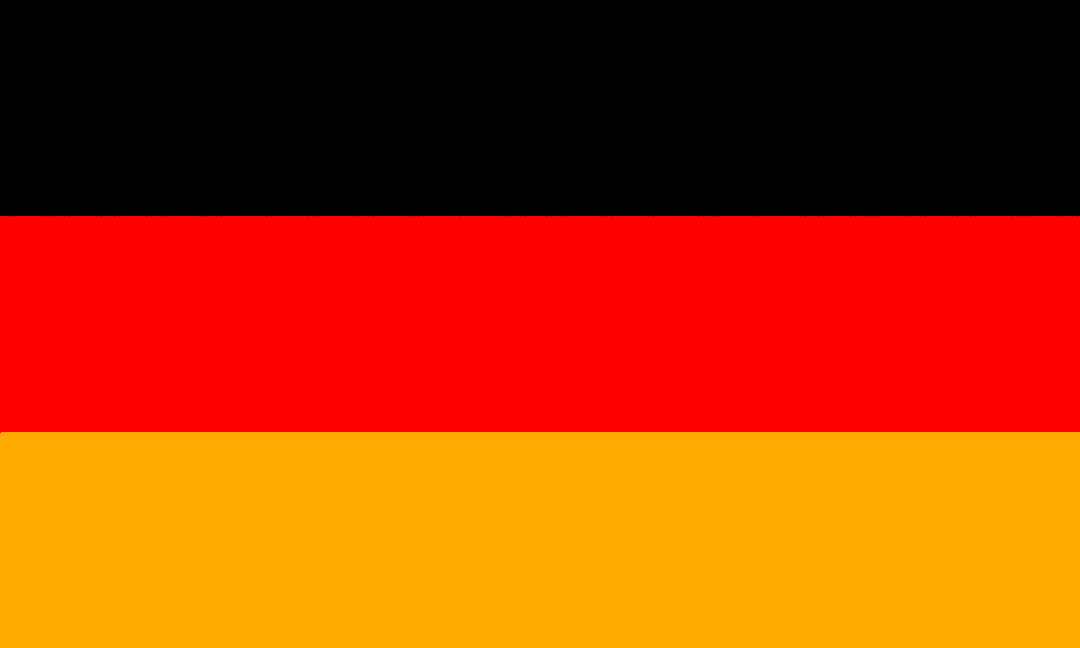
Flag of West Germany and Germany after reunification (1949–present) - Public Domain

For West Germany, the choice was a conscious return to the democratic, liberal tradition of 1848 and the Weimar Republic.

Article 22 of the new Basic Law stated simply: “The federal flag is black, red, and gold.”

For East Germany, the choice was more complex. While also claiming to represent a true democratic tradition, their adoption of the colours was also a strategic move to position themselves as the legitimate German state.

For the first ten years, the flags of East and West Germany were identical.

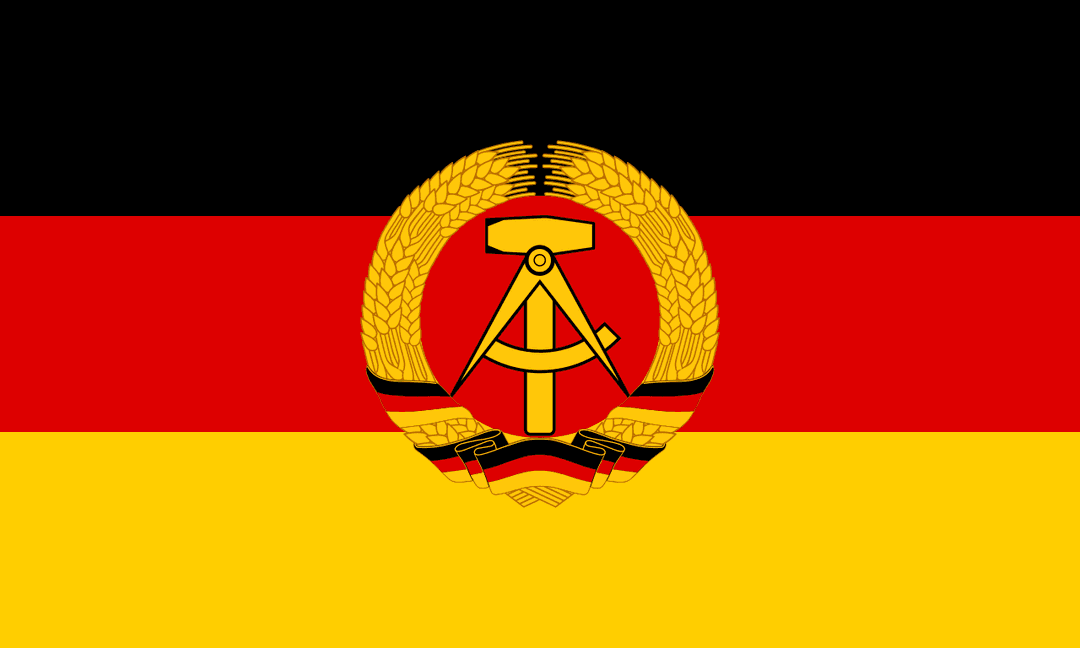
Flag of the German Democratic Republic (1959-1990) - Public Domain

In 1959, however, the GDR added its own socialist coat of arms—a hammer (representing the workers), a compass (representing the intelligentsia), and a wreath of corn (representing the farmers)—to the centre of its flag to distinguish it from the West.

For forty years, the two flags represented a divided nation. The simple tricolour flew in the West, a symbol of freedom and democracy, while the emblazoned tricolour flew in the East, a symbol of a separate socialist state.

The fall of the Berlin Wall in 1989 and the subsequent reunification of Germany in 1990 brought the story of the flag full circle. As the GDR crumbled, many East Germans defiantly cut the socialist emblem out of their flags, leaving a hole in the middle but restoring the pure black-red-gold tricolour of 1848.

It was a powerful, spontaneous symbol of their desire for unity and freedom.

On October 3rd 1990, the day of German reunification, the black-red-gold tricolour became, once again, the undisputed flag of a single, united, and democratic Germany.

–

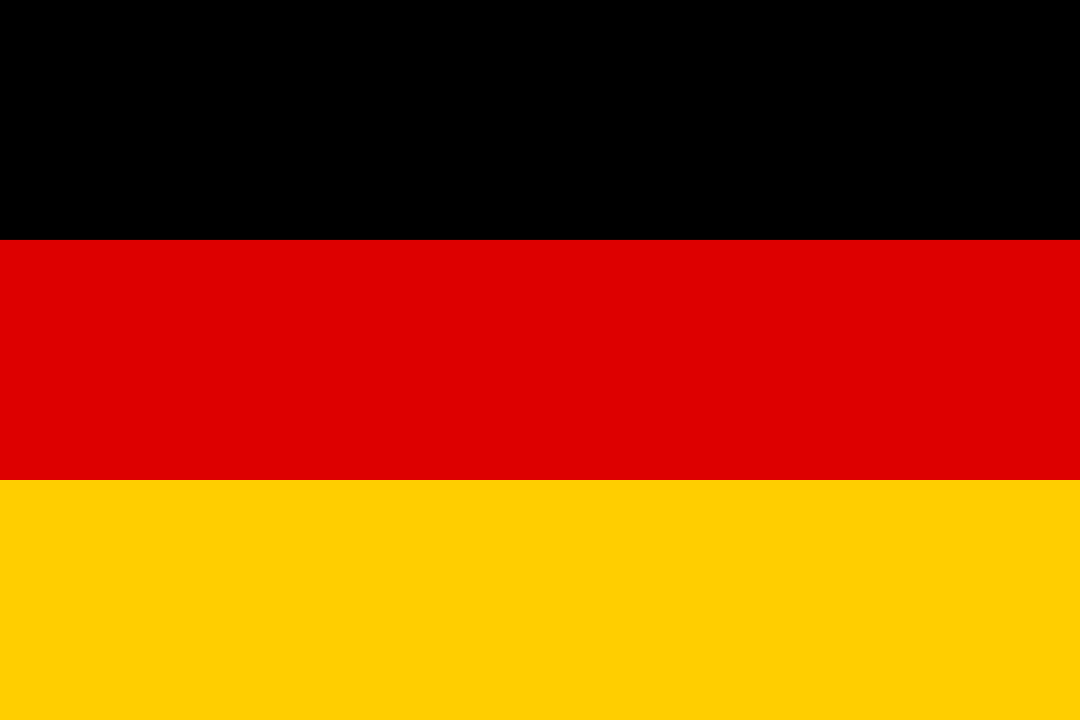
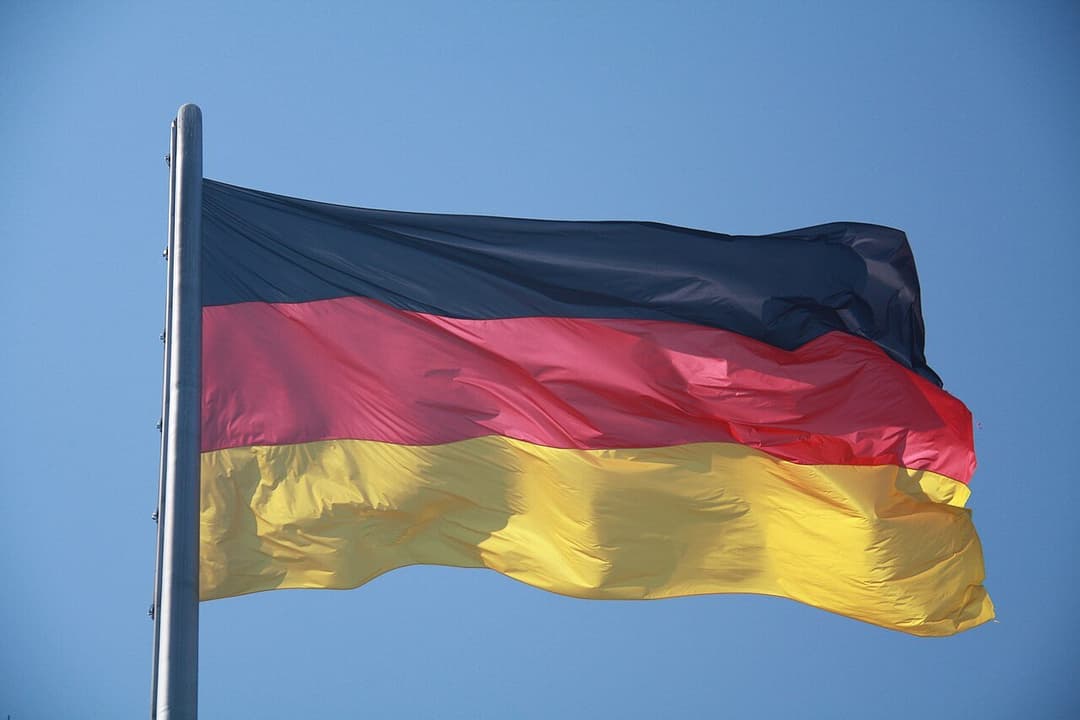
The current German flag - Silver Spoon

The Meaning of the Shades: It's Gold, Not Yellow

“Das ist das alte Reichspanier, / Das sind die alten Farben! / Pulver ist schwarz, Blut ist rot, / Golden flackert die Flamme!”
(This is the old imperial banner, / These are the old colours! / Gunpowder is black, Blood is red, / Golden flickers the flame!)
Ferdinand Freiligrath, Poet (1848)

One final, but crucial, point of contention throughout history has been the precise shade of the third stripe.

Officially and constitutionally, the colour is gold (Gold), not yellow (Gelb).

This distinction is not just pedantic; it is rooted in the heraldic tradition where gold (Or) is a distinct and more noble colour than yellow.

As mentioned, opponents of the Weimar Republic deliberately used the term ‘yellow’ as a form of political insult.

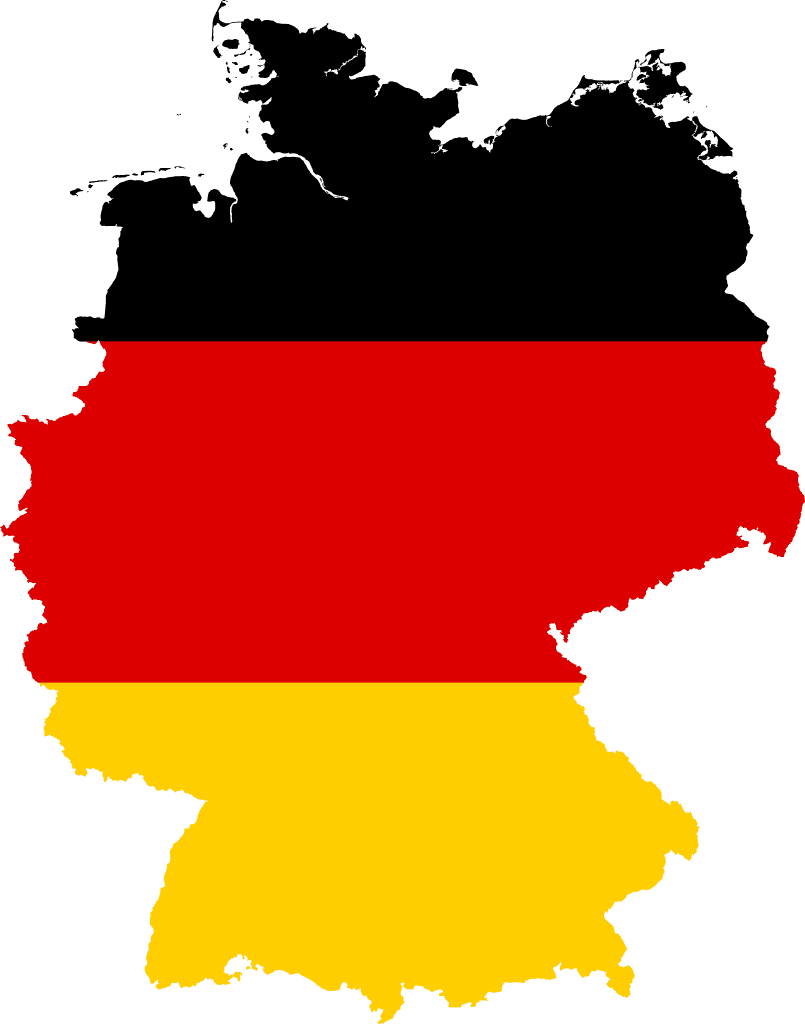
An outline of Germany's current borders with the colours of the German flag - Public Domain

Today, the German government specifies the exact shades for the flag to ensure uniformity. While the visual difference might be subtle, the historical and symbolic difference is profound. The gold represents the preciousness of the freedom and unity that the flag symbolises.

The official specifications for the colours are precise, often defined using systems like RAL or Pantone. For example, the gold is a specific “custom mix,” while the red is a vibrant “traffic red.”

These technical details underscore the importance of the flag as a formal state symbol, a long way from the makeshift black-dyed tunics of Lützow’s volunteers.

–

The opening of the Frankfurt Parliament in Frankfurt's Paulskirche in 1848 - Public Domain

Conclusion

“A new patriotism has emerged, a patriotism that is open to the world, friendly… When I see the black-red-gold flags, I see a country that has found its place, that has accepted its history and looks to the future with confidence.”
Joachim Gauck, former President of Germany and East German civil rights activist

So, what do the colours of the German flag symbolise? The simple, poetic answer—”out of blackness, through blood, to gold”—is not the origin story, but it is part of the flag’s acquired meaning, a layer of myth applied to a symbol that needed a heroic narrative.

The historical truth is that the colours of the German flag represent the journey of an idea: the idea of a unified, democratic, and free Germany.

They were born from the pragmatic necessity of a volunteer army fighting for national liberation.

They were adopted by students and liberals who dreamed of a nation built on constitutional rights, not monarchical decree.

They became the banner of Germany’s first, tragic attempt at a democratic revolution in 1848.

Suppressed and replaced by the authoritarian black-white-red of the German Empire, they became the colours of the democratic opposition. Reinstated by the Weimar Republic, they became a focal point of a bitter national conflict, despised by those who rejected democracy.

Banned by the Nazis, they were revived after the Second World War as a symbol of a Germany seeking to rebuild itself on democratic foundations.

For forty years, they represented a divided nation, before finally being embraced by a reunified country.

The colours black, red, and gold, therefore, do not have a single, static meaning.

They symbolise a process.

They represent the struggle for German democracy itself—a struggle that was long, often bloody, and fiercely contested. They are a reminder that national identity is not a given; it is forged, fought for, and defined by the symbols people choose to rally under.

Every time the Schwarz-Rot-Gold flies over Berlin, it tells a story not of a simple path from servitude to freedom, but of a complex, turbulent, and ultimately triumphant journey toward the very ideals it has come to represent.

Bibliography

Blackbourn, David. The Long Nineteenth Century: A History of Germany, 1780–1918. Oxford University Press, 1998.

Clark, Christopher. Iron Kingdom: The Rise and Downfall of Prussia, 1600–1947. Belknap Press, 2006.

Evans, Richard J. The Coming of the Third Reich. Penguin Books, 2004.

Fulbrook, Mary. A Concise History of Germany. Cambridge University Press, 2019.

Kitchen, Martin. A History of Modern Germany: 1800 to the Present. Wiley-Blackwell, 2011.

Rapp, Adolf. Der deutsche Gedanke: Seine Entwicklung im politischen und geistigen Leben seit dem 18. Jahrhundert. Rösl & Cie, 1920.

Schulze, Hagen. The Course of German Nationalism: From Frederick the Great to Bismarck, 1763–1867. Cambridge University Press, 1991.

Smith, Whitney. Flags Through the Ages and Across the World. McGraw-Hill, 1975.

Liked this piece? Have a look at the Berlin Experiences tours that cover this history.

See the Berlin Intro TourMore articles →

Share this piece

Know someone who still believes it?

Explore in person

Tours that address this myth.

The Berlin Intro Tour
One Hour1 Hour

The Berlin Intro Tour

Private 1-hour walking tour of Berlin's main historic sites for up to 10 people. Starts at Pariser Platz by the Brandenburg Gate.

€200up to 10
View Tour
The Berlin History Tour
Full Day6 Hours

The Berlin History Tour

Private 6-hour van tour of Berlin's whole history in one day for up to 6 people. Starts at your hotel or anywhere in the city.

€1,000up to 6
View Tour

More reading

The other myths, busted.

49 more — drag, scroll or use the arrow keys.

Soviet troops pose next to the Reichsadler as it once appeared on top of Tempelhof Airport (1934) - Public Domain
Are There Any Nazi Statues Left In Berlin?
US Army soldiers crossing the Rhine (1945) - Public Domain
Could The Western Allies Have Captured Berlin?
Women at Ravensbrück - where Elizabeth Rothschild was imprisoned and died
Did Any Of The Rothschild Dynasty Die In The Holocaust?
Frederick the Great - Der Konig Uberall
Did Frederick The Great Introduce The Potato To Germany?
Adolf Hitler Eastern Front
Did Hitler Escape To Argentina In 1945?
March of SA men in uniform giving the Hitler salute - on their way to Kaffelstein (1933) - State Archives of Baden-Württemberg, Wertheim State Archives SN 70 G 4135
Did Hugo Boss Design The Nazi Uniforms?
Rudolf Hess (1933 & 1945) - Public Domain
Did Rudolf Hess Really Commit Suicide?
Dismantling the German experimental nuclear pile at Haigerloch (April 1945) - Public Domain
Did The Nazis Develop Nuclear Weapons?
Did The Nazis Invent Decaf Coffee? – Mythbusting Berlin
Did The Nazis Invent Decaf Coffee?
German infantry on bicycles during the invasion of the Soviet Union
Did The Nazis Invent The Bicycle Reflector?
The site of the Nazi's Operation Bernhard counterfeiting operation: KZ Sachsenhausen
Did The Nazis Run The Largest Counterfeiting Operation In History?
Surrender of Berlin - 1945
Did The Second World War End In Berlin?
Spanish Flu & the rise of Nazi Germany
Did The Spanish Flu Pandemic Help The Nazis Take Power?
One of the final photos of Adolf Hitler, taken on March 20th 1945 -Public Domain
Have Adolf Hitler’s Remains Been DNA Tested?
Prisoners at Sachsenhausen Concentration Camp attend roll call (1937) - Public Domain
How Did The Nazi Concentration Camps Differ From The Soviet GULAG?
The construction of the first actual Berlin Wall in August 1961 - Public Domain
How Long Did It Take To Build The Berlin Wall?
The remains of the Bürgerbrauhalle after an assassination attempt against Adolf Hitler in 1939 - Bundesarchiv, Bild 183-E12329 / Wagner / CC-BY-SA 3.0
How Many Assassination Attempts On Adolf Hitler Were There?
Evidence of Jewish prisoners at Auschwitz-Birkenau being undressed and led to their deaths - Public Domain
How Many Jews Died In The Holocaust?
A sign at the Berlin Wall in East Berlin (November 1961) declares, “Whoever attacks us will be destroyed," - Public Domain
How Many People Died Trying To Escape East Germany?
Berlin's Nikolaiviertel
How Old Is Berlin?
Adolf Hitler practices his speech techniques
Was Adolf Hitler A Drug Addict?
Adolf Hitler practicing his oratory skills - Public Domain
Was Adolf Hitler A Freemason?
Adolf Hitler practicing his oratory skills - Public Domain
Was Adolf Hitler Gay?
Adolf Hitler practicing his oratory skills - Public Domain
Was Adolf Hitler Jewish?
Hertha Heuwer - the inventor of Currywurst - Public Domain
Was Currywurst Invented In Berlin?
Fanta advertising from the 1940s - Public Domain
Was Fanta Invented By The Nazis?
Frederick the Great at the Battle of Zorndorf by Carl Roechling (1911)
Was Frederick The Great Gay?
Henry Ford
Was Henry Ford A Nazi?
Franz Rudolf Frisching portrait in 1785 in Prussian Blue.
Was The Colour Blue Invented In Berlin?
Döner Kebab
Was The Döner Kebab Invented In Berlin?
Menschen am Potsdamer Platz auf der Westseite der Berliner Mauer am 11. November 1989
Was The Fall Of The Berlin Wall An Accident?
The Nazi Party in parliament (1935)
Was The Nazi Party Democratically Elected?
The Allied bombing of Wesel during the Second World War - Public Domain
Were The Allied Bombings Of Germany War Crimes?
Photograph of the Hadamar killing centre with a smoking chimney, (1941) - Hadamar Memorial Museum
Were The Nazi Medical Experiments Useful?
The Oath of the Horatii by Jacques-Louis David - Public Domain
What Are The Origins Of The Nazi Salute?
Members of the Hitler Youth parade in the formation of a swastika to honor the Unknown Soldier. Germany, August 27th 1933 - Public Domain
What Are The Origins Of The Nazi Swastika?
Pink pipes in Berlin - Public Domain
What Are The Pink Pipes In Berlin?
Adolf Hitler's Alligator - Saturn
What Happened To Adolf Hitler’s Alligator?
German Kaiser Wilhelm II in Bruges, Belgium during the First World War - Public Domain
What Happened To The German Royal Family?
Adolf Hitler (right) and Benito Mussolini (left) in Munich, Germany, 1937 - Public Domain
What Is The Difference Between Fascism & Nazism?
Checkpoint Charlie in 1989
What Was Checkpoint Charlie?
The crowning of Wilhelm I as German Emperor and the birth of Germany in 1871
What Was Prussia?
United States Air Force building a runway for Operation Vittles planes (1948) - Public Domain
What Was The Berlin Airlift?
A close-up of the Socialist Kiss painted on the East Side Gallery - LeO Tiresias
What Was The Socialist Kiss?
Construction of the Berlin Wall at the Brandenburg Gate
Who Built The Berlin Wall?
Soviet flag on the Reichstag - 1945
Who Really Raised The Soviet Flag On The Reichstag?
Inside the Reichstag Plenary Chamber/Image: United States Holocaust Memorial Museum
Who Was Really Responsible For The Reichstag Fire?
The defendants at the Nuremberg Trial (1946) - Public Domain
Who Were The Last Nazis On Trial?
The Brandenburg Gate at night
Why Is Berlin The Capital Of Germany?