Skip to content
Prisoners at Sachsenhausen Concentration Camp attend roll call (1937) - Public Domain

Berlin Experiences/Mythbusting Berlin

How Did The Nazi Concentration Camps Differ From The Soviet GULAG?

Stalin's GULAG exploited prisoners' labour and killed through neglect; the Nazi camps became factories of death, built to annihilate entire peoples.

By Matt Robinson · Updated · 21 min read

“Under the Nazis, I was a ‘political’. I knew I had an enemy. Under the Soviets, I was a ‘socially dangerous element’. It was like fighting fog.”
Margarete Buber-Neumann, prisoner of Stalin & Hitler

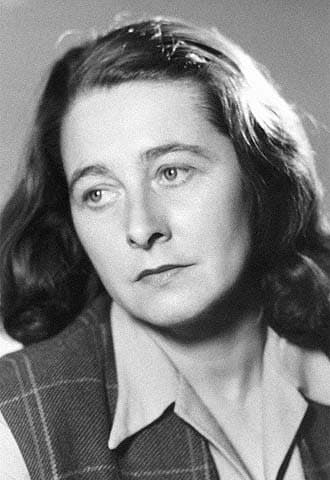
In the winter of 1940, on a windswept bridge spanning the River Bug at Brest-Litovsk, Margarete Buber-Neumann walked from one nightmare into another. 

She was a German Communist who had fled to Moscow to escape Hitler, only to be swallowed by Stalin’s terror and sent to a labour camp in Kazakhstan. 

Now, in a grotesque gesture of alliance under the Molotov-Ribbentrop Pact, Stalin was handing her back to the Nazis.

German writer, Margarete Buber-Neumann (1930s) - Public Domain

She had survived the starvation and lice of the Gulag, only to be immediately thrown into the Ravensbrück concentration camp by the SS. She became history’s unwilling control group—a rare witness who looked into the eyes of both monsters and survived to tell the difference.

Her eventual conclusion in her memoir, ‘Under Two Dictators’, was chilling: while the methods varied, the disregard for human life was identical.

While Buber-Neumann provided the comparative anatomy of these systems, it was others who mapped their distinct souls for the public. 

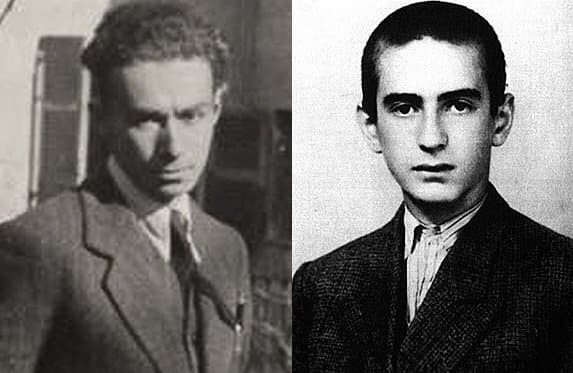
Primo Levi, aged 24 in 1943/43 (left) and Elie Wiesel, aged 15 in 1943/1944 (right) - Public Domain

On the Nazi side, the chemist Primo Levi dissected the ‘Grey Zone’ of Auschwitz, alongside Elie Wiesel – survivor of Buchenwald and Auschwitz – whose ‘Night’ gave a voice to the spiritual void of the Holocaust. 

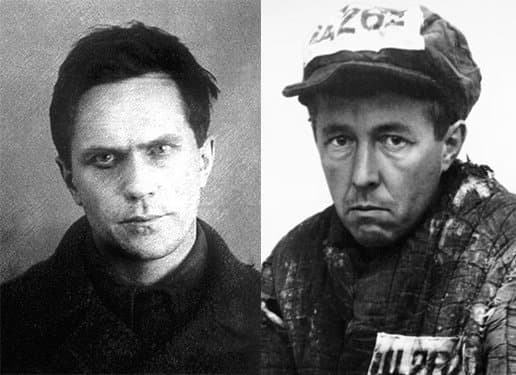
Varlam Shalamov (1937) and Aleksandr Solzhenitsyn (1953) - Public Domain

Facing them from the frozen east were Varlam Shalamov, whose ‘Kolyma Tales’ captured the radioactive effect of the GULAG on the human spirit, and Aleksandr Solzhenitsyn, the archivist who compiled the screaming testimony of the entire Archipelago.

Through the lens of Buber-Neumann’s unique journey and the writings of these titans, we can at least hope to come close to better comprehend the function – the theory and practice of hell – in these penal facilities.

But to understand how a prison cell transformed from a holding pen into a slave labour pool and factory for death, we cannot start in 1940.

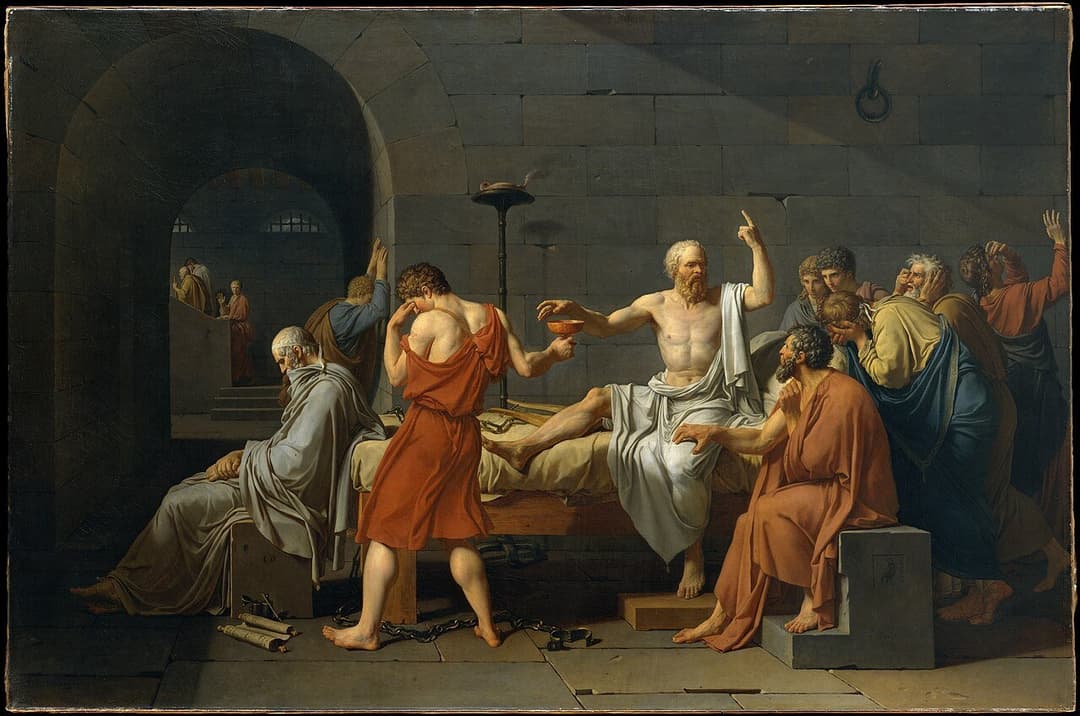
We must travel much further back—to an Athenian prison cell in 399 BC, where an old philosopher sat calmly, awaiting a cup of hemlock.

–

The Death Of Socrates by Jacques-Louis David (1787) - Public Domain

The Long Shadow Of Punishment

“Roman law only allowed the use of prisons for preventive custody, a stage in processing criminals before trial or execution… punitive imprisonment [was] an illegal deviation from an ideal model of punishment.”
Theodor Mommsen, Römisches Strafrecht (1899)

The ancient world had prisons, but it did not have imprisonment.

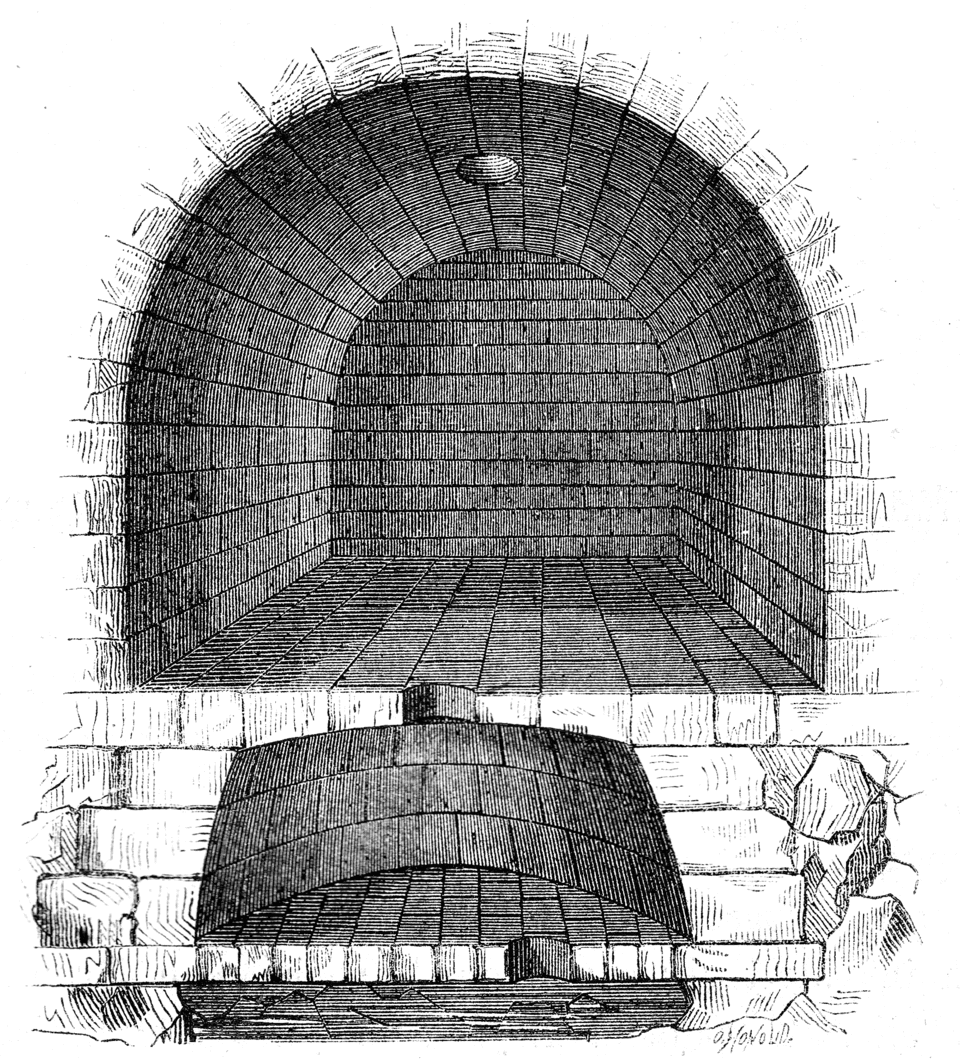
This distinction may seem pedantic until you realize it explains why the Greek philosopher, Socrates, spent his final month in an Athenian jail yet died for a crime that carried no prison sentence. His cell near the Agora—archaeologists have likely identified it by the peculiar discovery of thirteen small clay medicine bottles, each containing individually measured doses of hemlock held him only until his actual punishment could be administered.

Going to prison was not the penalty. Death was.

The Romans codified this principle.

The jurist Ulpian (c.170-223AD) declared prisons should be used “ad continendos homines non ad puniendos”—for holding men, not punishing them.

An illustration of Rome's Mamertine prison (1876) - Public Domain

Rome’s most infamous prison, the Mamertine (known as the Tullianum), stood beneath the Capitoline Hill as a waiting room for execution, not a destination in itself.

Jugurtha, King of Numidia, starved to death there.

Vercingetorix, the Gallic chieftain who dared resist Caesar, was paraded in triumph before being strangled in its circular lower dungeon.

The historian Sallust described this place as “hideous and fearsome to behold”—twelve feet underground, enclosed by walls and a vaulted ceiling of stone, reeking of neglect and darkness.

For over a millennium, this remained the paradigm.

Medieval castle dungeons—the word derives from donjon, the keep’s central tower—held prisoners awaiting trial, ransom, or the executioner’s attention.

The transformation into prolonged imprisonment for its own sake began with an unlikely source: the Church.

Monastic prisons pioneered the concept of confinement for penance—solitary cells where wayward monks might reconnect with God.
The very word ‘penitentiary’ preserves this origin.

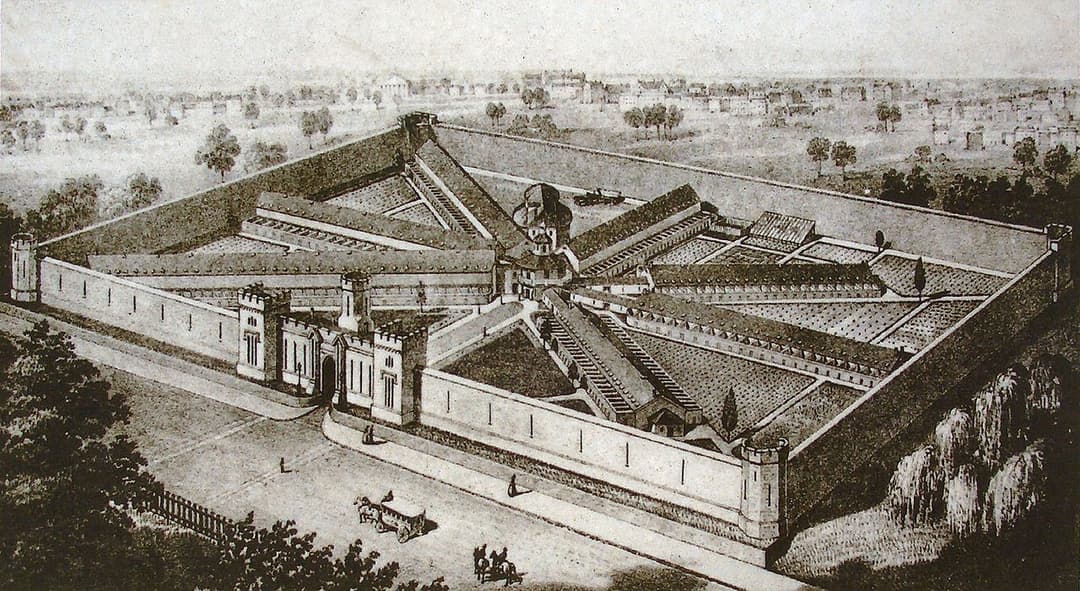
The Eastern State Penitentiary in the District of Pennsylvania (1830s) - the the largest and most expensive public structure in the United States at the time - Public Domain

In the late 18th and early 19th centuries, a wave of Enlightenment reformers—Quakers in America, evangelicals in England, and progressives in Prussia—looked at the public floggings, stocks, and executions of the time with horror.

They considered physical violence barbaric. They proposed a ‘kinder’ alternative based on monastic life. If you locked a man in total silence, gave him a Bible, and isolated him from the “moral contagion” of other criminals, he would surely reflect, repent, and emerge a new man.

The historical irony is bitter: these 19th-century reformers inadvertently created the infrastructure of mass detention. They proved that the State could take thousands of citizens, strip them of their names, clothe them in uniforms, stack them in barracks (or cells), and completely regulate their calories, movement, and time.

The question of whether imprisonment should cure or punish would never be definitively settled—and both totalitarian systems of the twentieth century would claim, with varying degrees of sincerity, that their camps were instruments of reformation.

–

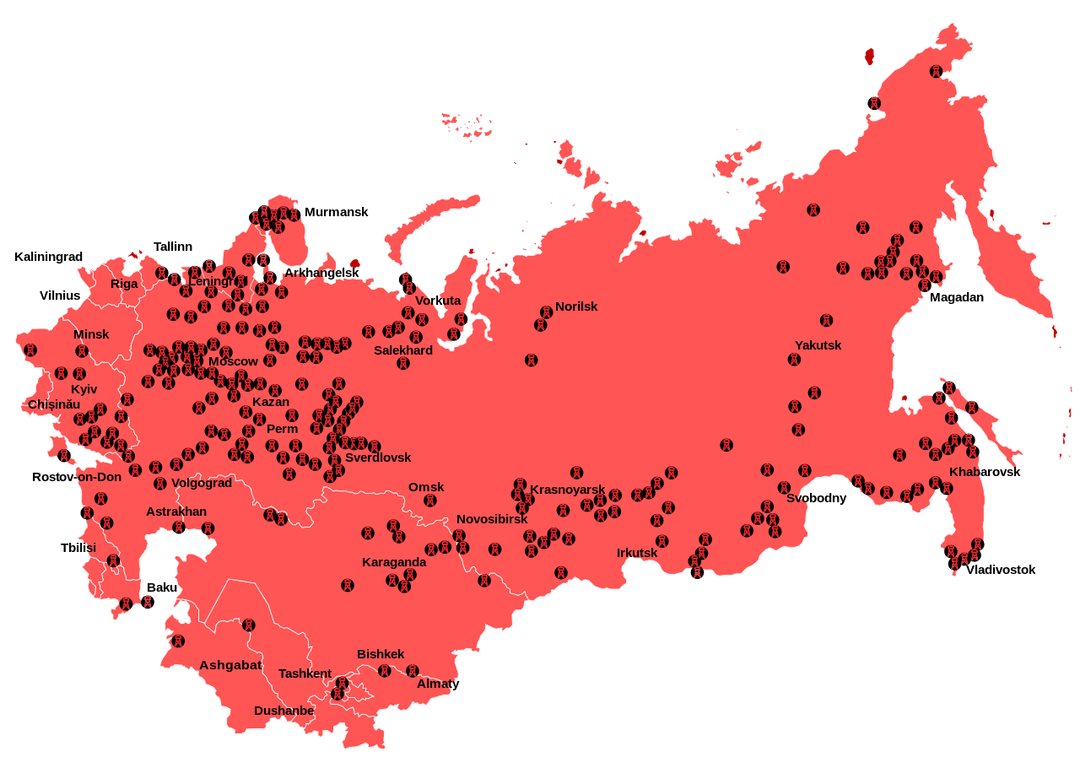
The 'System of Correctional Labor Camps in the USSR' - prepared by the human rights society 'Memorial'

The Evolution Of The Soviet GULAG

“We stand for organised terror—this should be frankly admitted… Our aim is to fight against the enemies of the Soviet Government.”
Felix Dzerzhinsky, head of the Soviet Cheka

The Soviet camp system preceded Nazi Germany by more than a decade, and its origins lay partly in the very experiences of imprisonment its founders had suffered—and apparently learned nothing humane from.

Nearly every Bolshevik leader who seized power in 1917 had done time in Tsarist prisons or Siberian exile.

This was not coincidental—it was almost a prerequisite for revolutionary credibility.

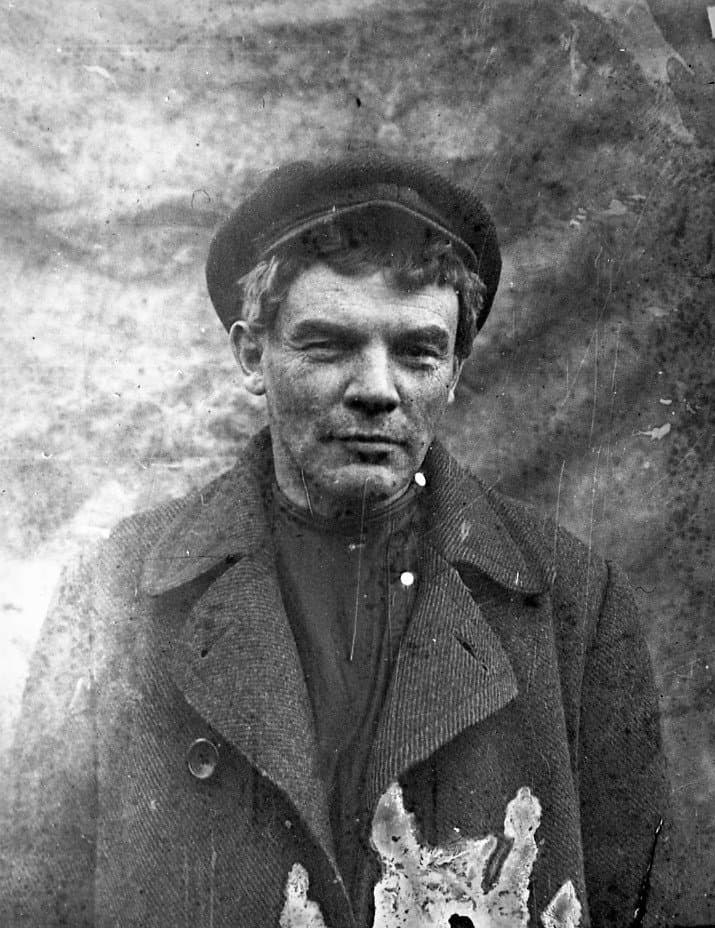
Vladimir Lenin (1917) - Public Domain

Lenin spent over a year in pre-trial detention before being exiled to Shushenskoye, where the supposedly “minor threat” was permitted to swim in the Yenisei River, hunt duck, and complete ‘The Development of Capitalism in Russia’. His future wife, Nadezhda Krupskaya, joined him in exile; they married there in 1898.

For Lenin, and for many other Soviet leaders, prison was a finishing school.

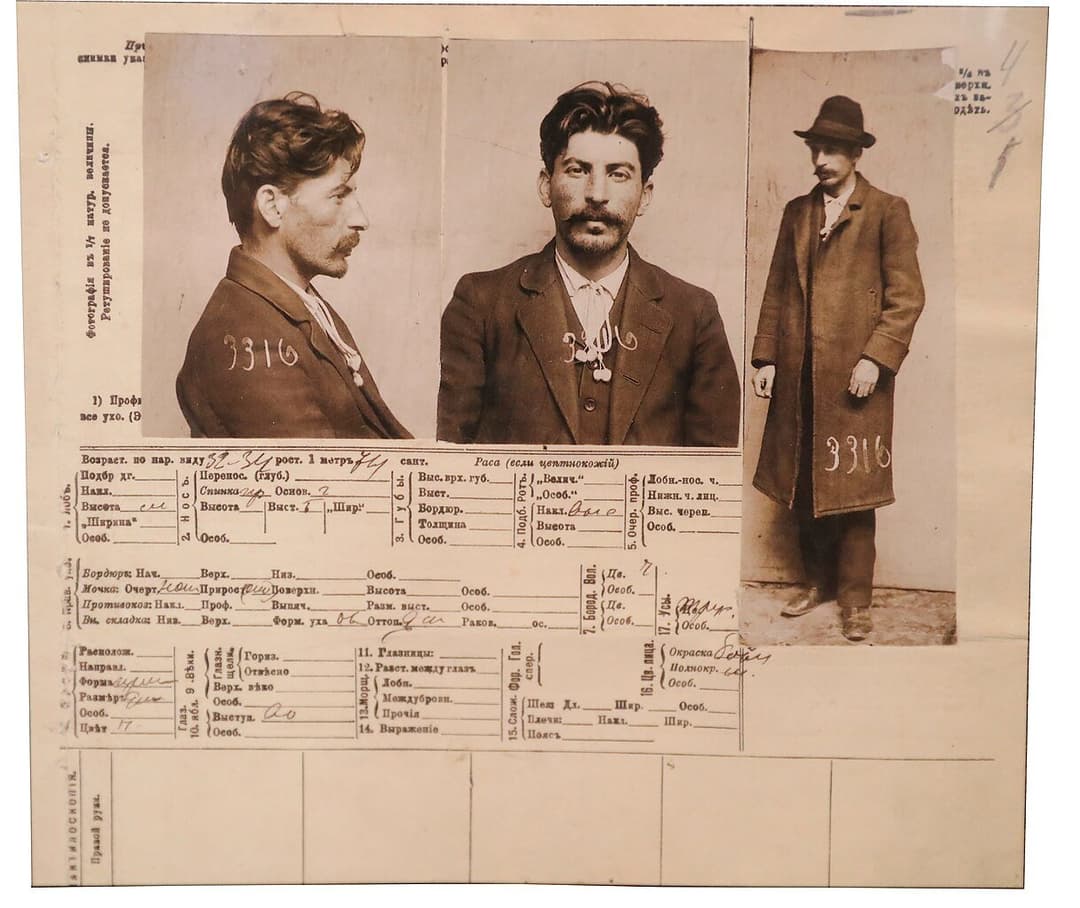
The information card on Joseph Stalin, from the files of the Tsarist secret police in St. Petersburg (1911) - Public Domain

Stalin was arrested seven times between 1902 and 1913, escaping exile five times.

Only his final banishment—four years beyond the Arctic Circle in the Turukhansk district—proved inescapable. He learned to hunt and fish with the local Evenk people, adapted to subzero temperatures, and waited.

“Two years of revolutionary activity among the workers in the oil industry steeled me as a practical fighter,” he later reflected on an earlier imprisonment. “I thus received my second revolutionary baptism of fire.”

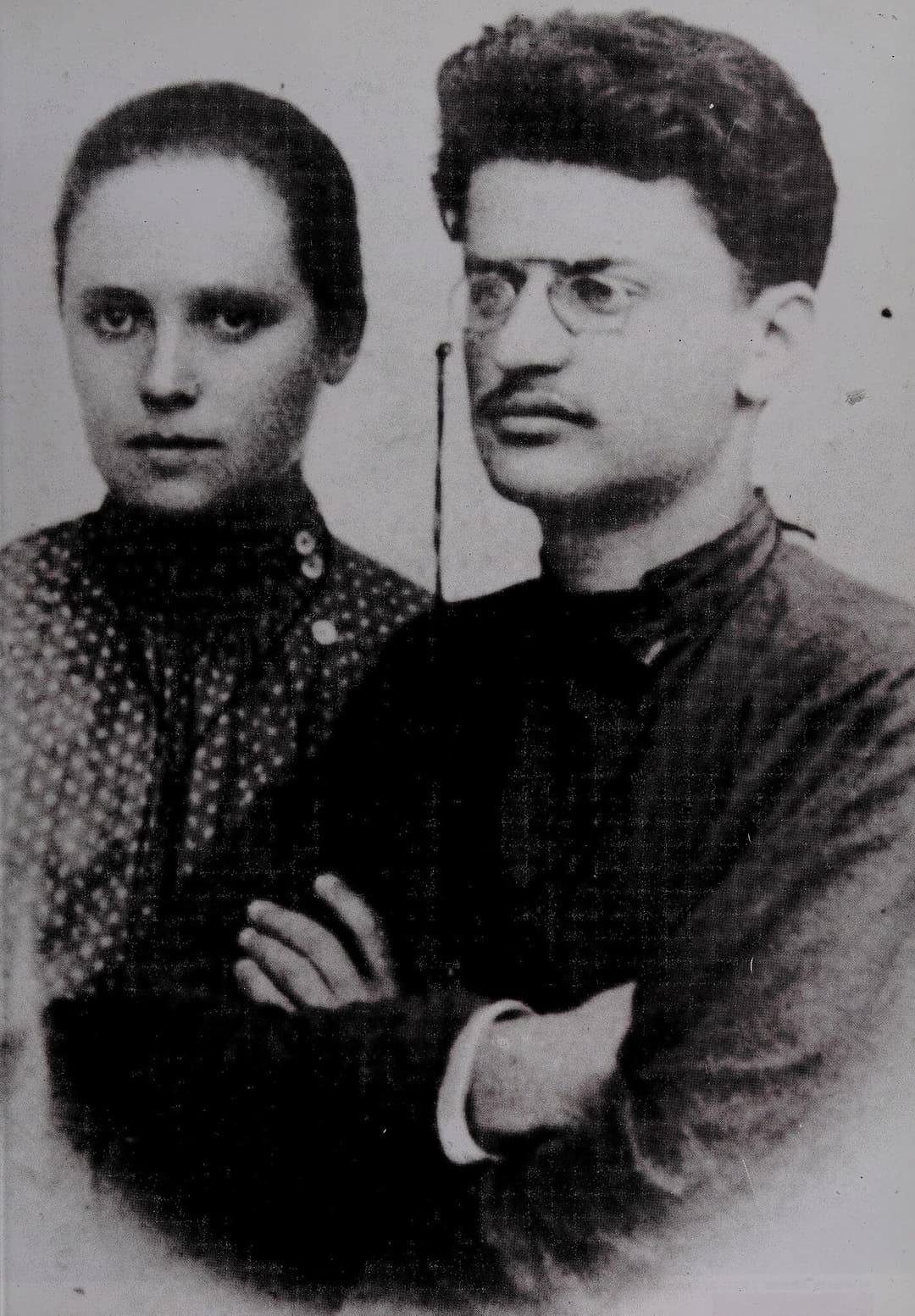
Leon Trotsky and Aleksandra Sokolovskaya in exile before Trotsky's escape (1902) - Public Domain

Lev Davidovich Bronstein, more popularly known as Leon Trotsky, is widely rumoured to have adopted his famous pseudonym from a jailer in Odessa prison – an ironic choice that became his revolutionary identity.

Imprisoned after organising the South Russian Workers’ Union in 1898, he escaped in 1902 hidden in a hay cart. After the failed 1905 Revolution, he was sentenced to life exile in Siberia but escaped again, traveling 400 miles over seven days through “an icy, roadless desert of white emptiness” on a sleigh drawn by reindeer and driven by an intoxicated Zyryan tribesman.

In his autobiography, Trotsky confessed he “quite liked incarceration” because it gave him time for systematic reading and writing.

If these Tsarist penal facilities were the staging point for the revolution – a time for reading and gaining strength in exile – the GULAG was the lessons in that revolutionary zeal implemented on a wide scale.

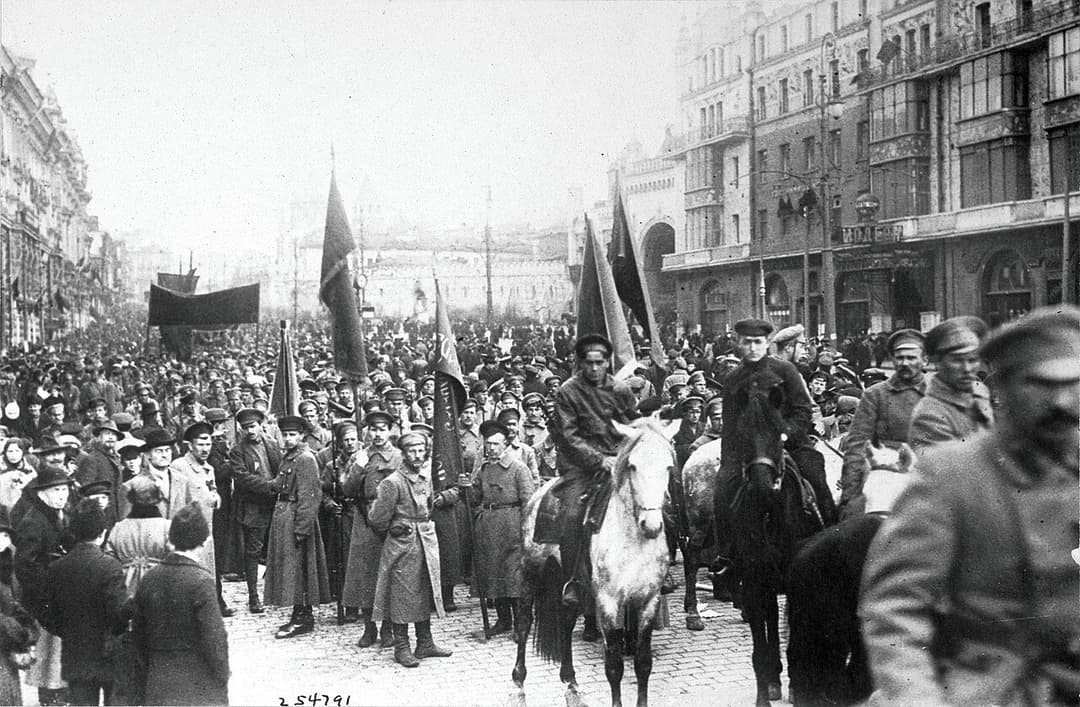
A parade of Bolsheviks through the streets of Moscow (1917) - Public Domain

The first Soviet forced-labour camps emerged almost immediately after the October Revolution.

On April 15th 1919, a decree inaugurated the system; by the early 1920s, 84 camps operated across the Soviet Union for ‘reforming’ political dissidents.

The Solovki prison camp on the Solovetsky Islands became ‘the first camp of the GULAG’, pioneering forced labour as a “method of reeducation.”

The administrative apparatus evolved in layers: the Cheka (1917-1922), then the OGPU (1922-1934), then the NKVD (1934-1946), and finally the MVD.

On April 25th 1930, the GULAG—Glavnoye Upravleniye Lagerei, or Main Directorate of Correctional Labor Camps—was officially established.
Its population growth was staggering: approximately 100,000 prisoners in the late 1920s, 800,000 by 1935, 1.5 million by 1941, and 2.4-2.5 million at its early-1950s peak.

The expansion coincided with Stalin’s ‘revolution from above’ – forced collectivisation and rapid industrialisation. Dekulakisation, the campaign to eliminate so-called wealthy peasants, saw 2.14 million kulaks deported between 1930 and 1933, with at least 20,000 executed. In 1931 alone, over 1.8 million people were exiled.

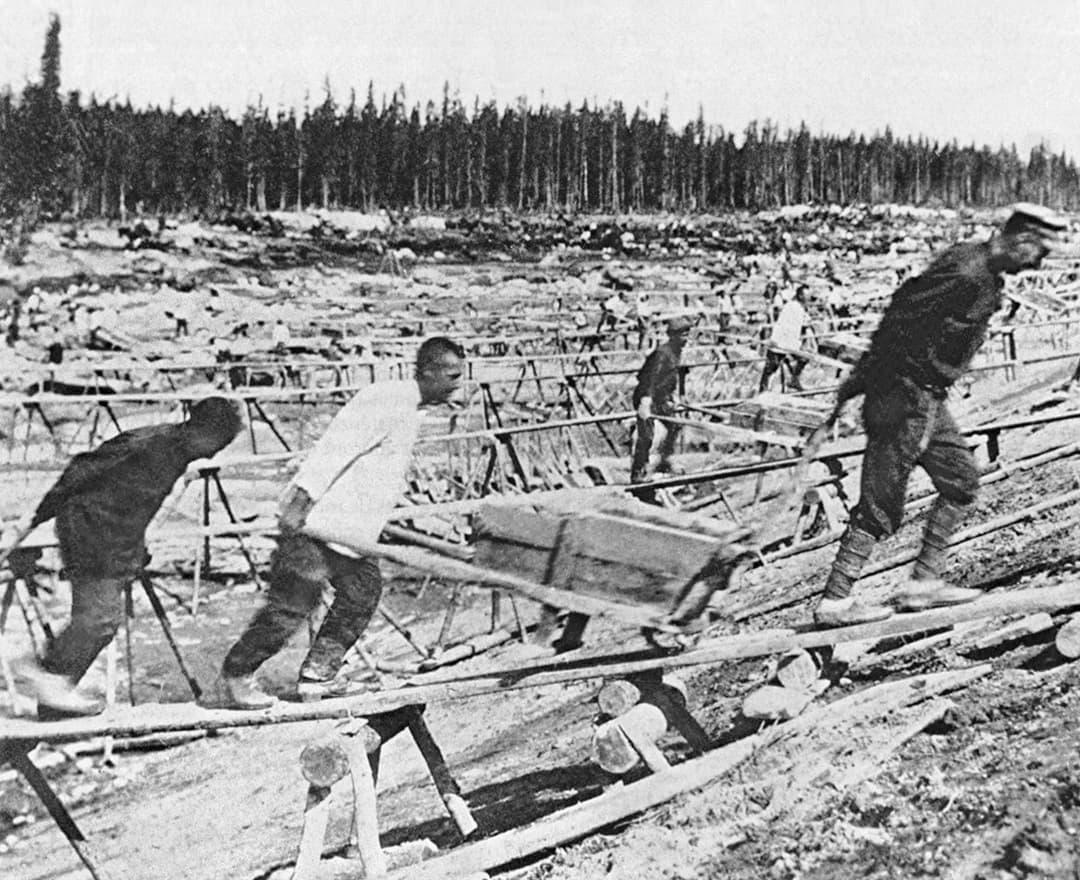
The camps became essential to the Soviet economy, providing 46.5% of the nation’s nickel, 76% of its tin, 60% of its gold, and 25% of its timber through forced labour.

GULAG prisoners construct the Belomorkanal (White Sea Canal) in 1932 - Public Domain

The Great Terror

The system’s most horrific phase came during 1936-1938, the period Robert Conquest’s landmark study named the ‘Great Terror’.

Three Moscow show trials eliminated the old Bolshevik leadership—Zinoviev, Kamenev, Bukharin, Rykov, and even former NKVD chief Yagoda were among those executed after confessions extracted through torture and threats against families.

“The confessions of guilt of many arrested and charged with enemy activity were gained with the help of cruel and inhuman tortures,” Khrushchev later acknowledged.

But these show trials were merely the visible tip.

NKVD Order No. 00447, issued July 30th 1937, directed mass operations against ‘ex-kulaks’ and ‘anti-Soviet elements’, with regional quotas for arrests and executions decided by three-person tribunals called troikas. In just two days – July 10th-11th 1937 – the Politburo approved death sentences for approximately 23,000 people and exile for 51,000 more.
Soviet archives document 681,692 executions during 1937-1938 alone.

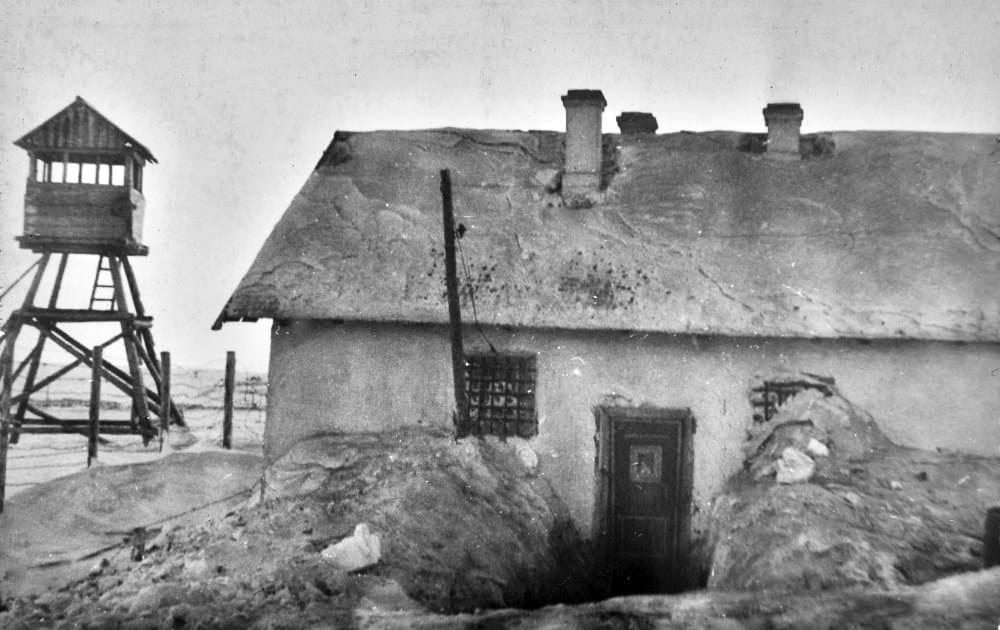
Detention cell ("penal isolator") of a camp in the Vorkuta Region (1945) - Public Domain

The Geography Of Suffering

The camp complexes bore names that became synonyms for suffering.
Kolyma, in northeast Siberia, was what Solzhenitsyn called “the pole of cold and cruelty” – temperatures dropping to minus sixty degrees Celsius, mortality estimated at 75-80% within the first year.

Between 250,000 and over one million perished there from 1930 through the mid-1950s.

Vorkuta, 100 miles above the Arctic Circle, held 73,000 prisoners at its 1951 peak, with 132 sub-camps spread across 35,000 square miles.
The camp entrance bore a sign reading “Work in the USSR Is a Matter of Honor and Glory.”

Approximately 200,000 of the two million who passed through died from disease, overwork, and Arctic exposure.

The brutality was both systematic and bureaucratic.

An imprisoned smuggler named Naftaly Frenkel proposed the infamous “you-eat-as-you-work” system (shkala pitaniya), linking food rations to production quotas.

This created a death spiral: inadequate food led to weakness, which led to reduced production, which led to reduced rations, which led to death.

Antoni Ekart, a survivor, recalled a camp doctor examining him: “Too early. If people like you are admitted to hospital, then nobody will be left to do the work.”

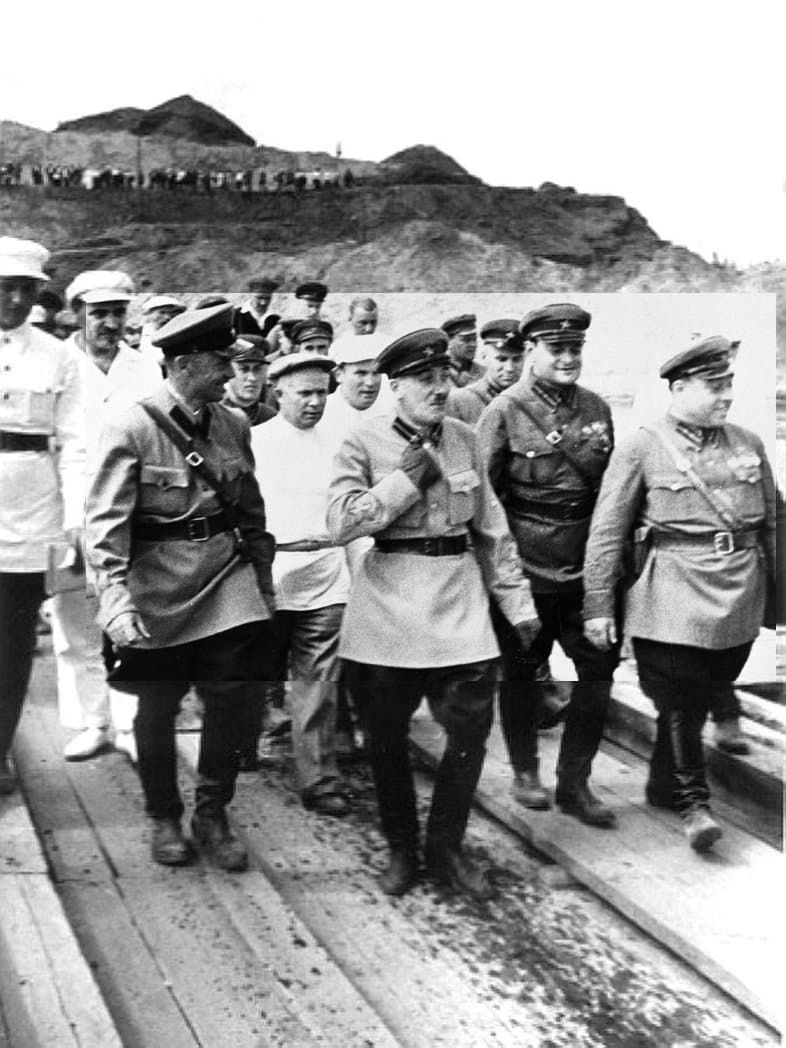
The OGPU-directors N. Filatov, Genrikh Yagoda, S. Firin and Lazar Kogan on the building-site of the Moskva-Volga-canal. Nikita Khrushchev is left behind Yagoda - Public Domain

Counting The Dead

Scholarly consensus, based on archives opened after 1991, estimates that 18 million people passed through the Gulag system between 1930 and 1953—14 million through camps, 4 million through colonies.
The death toll is more contested.

Archival data suggests 1.5-1.8 million deaths in camps and colonies, though some scholars argue this drastically undercounts “veiled mortality”—prisoners deliberately released when near death to avoid inflating camp statistics.

“Both archives and memoirs indicate that it was common practice in many camps to release prisoners who were on the point of dying,” Anne Applebaum notes.

Critically, as Applebaum and Oleg Khlevniuk confirm, archival researchers have found “no plan of destruction” of the Gulag population and no statement of official intent to systematically kill prisoners.

Releases vastly exceeded deaths; between 1934 and 1953, 20-40% of the population was released annually.

As Timothy Snyder observes, “with the exception of war years, a very large majority of people who entered the Gulag left alive.”

This would not be true of the system developing simultaneously in Germany.

–

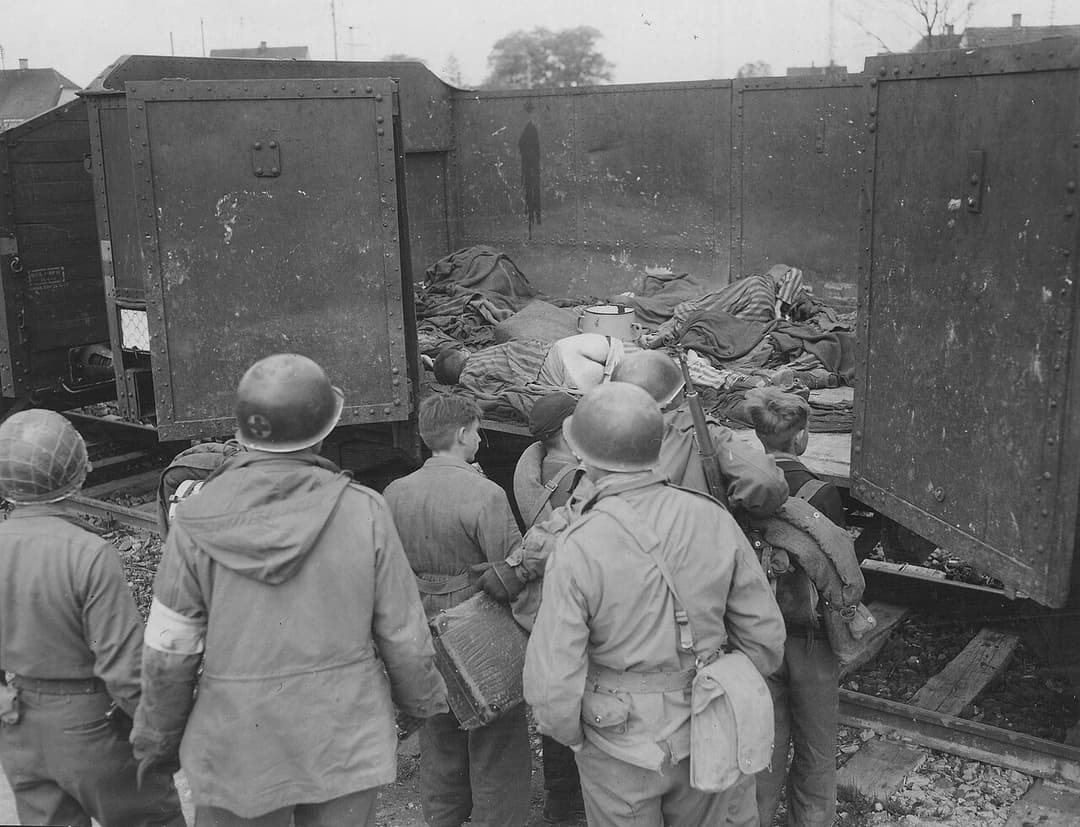
45th Infantry Division troops force suspected Hitler Youth members to view the bodies found in rail cars at Dachau Concentration Camp (1945) - Public Domain

The Crooked Road - From Dachau To Auschwitz

“There was no precedent for what the SS created… It was a ‘university of violence’ where young men were trained to lose their conscience.”
Nikolaus Wachsmann, historian and author of ‘KL: A History of the Nazi Concentration Camps’

When the Nazis seized power on January 30th 1933, they inherited no GULAG – but they improvised quickly.

Within weeks, ‘wild’ detention facilities sprang up across Germany: schools, pubs, abandoned factories commandeered by local Sturmabteilung units to hold Communists, Social Democrats, and anyone deemed politically unreliable.

Over 100,000 individuals were detained by March 1933.

Conditions varied wildly; at least 600 documented deaths occurred in these early concentration camps during the first half of the year.

The first step toward systematisation came on March 22nd 1933, when Heinrich Himmler personally announced the opening of Dachau in the Münchner Neueste Nachrichten. Located just eleven miles from Munich—the “Capital of the Movement”—it was described as “the first concentration camp for political prisoners” with a capacity for 5,000.
Dachau was meant to be visible.

As historian Nikolaus Wachsmann demonstrates, the Nazis initially spoke of concentration camps “with pride and openness,” justifying them as necessary for the ‘protection’ of German society from internal threats.

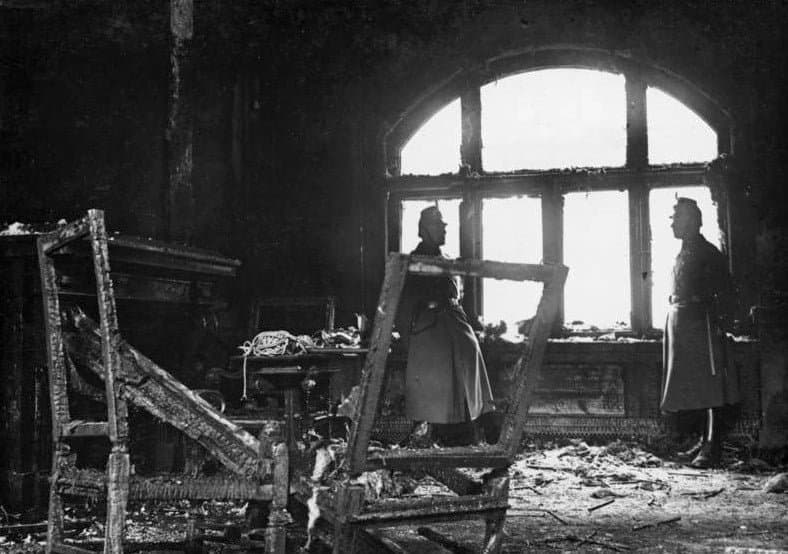
Burnt out interior of the Reichstag, February 28th 1933
Burnt out interior of the Reichstag/Image: Bundesarchiv-Bild 102-14367

The Legal Architecture Of Lawlessness

The crucial legal instrument for the development of these detention facilities was the Reichstag Fire Decree.

On February 27th 1933 – six days before parliamentary elections—the Reichstag building was gutted by fire.

The Nazis blamed Communists; a Dutch anarchist named Marinus van der Lubbe was arrested at the scene. The next day, President Hindenburg issued the ‘Decree for the Protection of People and State’, suspending fundamental rights: personal freedom, inviolability of the home, privacy of communications, freedom of expression and assembly, and guarantee of property.

This emergency decree remained in force until Germany’s surrender in 1945—a permanent state of emergency enabling indefinite detention through Schutzhaft (protective custody). The term was deliberately Orwellian: prisoners were held in ‘protective custody camps’ ostensibly to protect society from them.

Within hours of the decree, thousands were arrested.

By mid-March, approximately 10,000 Communists had been detained.
Two weeks after the fire, the Enabling Act granted Hitler’s cabinet power to decree laws without Reichstag approval. With Communist deputies arrested or in hiding and SA men intimidating representatives in the chamber, it passed with 85% support.

German democracy had effectively legislated itself out of existence.

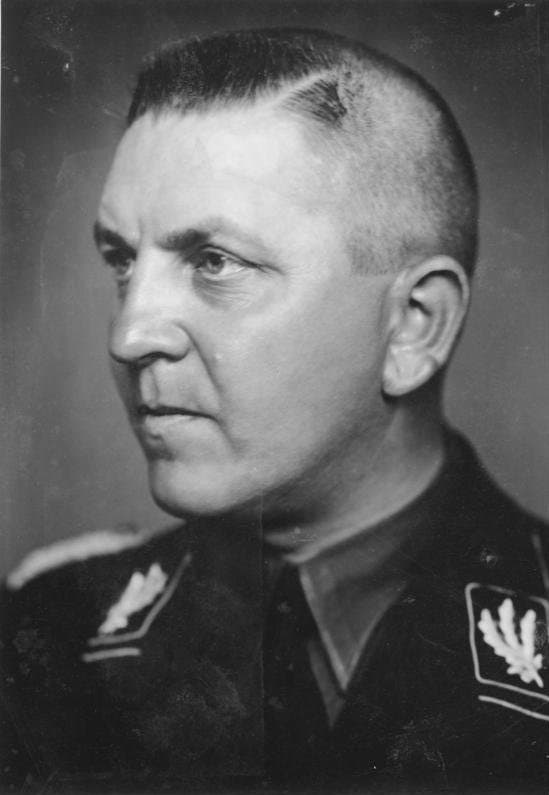
Theodor Eicke, the Dachau Commandant and first commander of the SS Death's Head Regiment - German Federal Archives, Image 183-W0402-503 / CC-BY-SA 3.0

Theodor Eicke And The Template Of Terror

The transformation of wild camps into a systematic terror apparatus came through one man: Theodor Eicke.

Taking command of Dachau on June 26th 1933, this “fanatically dedicated Nazi and a gifted organiser, as well as a stubborn, ruthless, and brutal man” (as Harold Marcuse describes him) codified camp procedures that would become standard across the system.

Eicke’s October 1933 regulations prescribed graduated punishments from loss of mail privileges through corporal punishment to execution – mandatory for “political agitation, spreading of propaganda, any acts of sabotage or mutiny, attempted escape or aid in an escape, attacking a sentry.”

Crucially, he rotated responsibility for administering punishments among guards, ensuring collective participation in brutality. He introduced the striped prisoner uniform and the Death’s Head skull insignia for guards, instilling in his men the belief that “the SS were the only soldiers in peacetime facing the enemy day and night: the enemy behind the barbed wire.”

On July 4th 1934 – days after personally executing Sturmabteiling (SA) leader, Ernst Röhm, during the Night of the Long Knives – Theodor Eicke was appointed as Inspector of Concentration Camps by Heinrich Himmler.

Dachau’s system thus became the template for all subsequent camps:
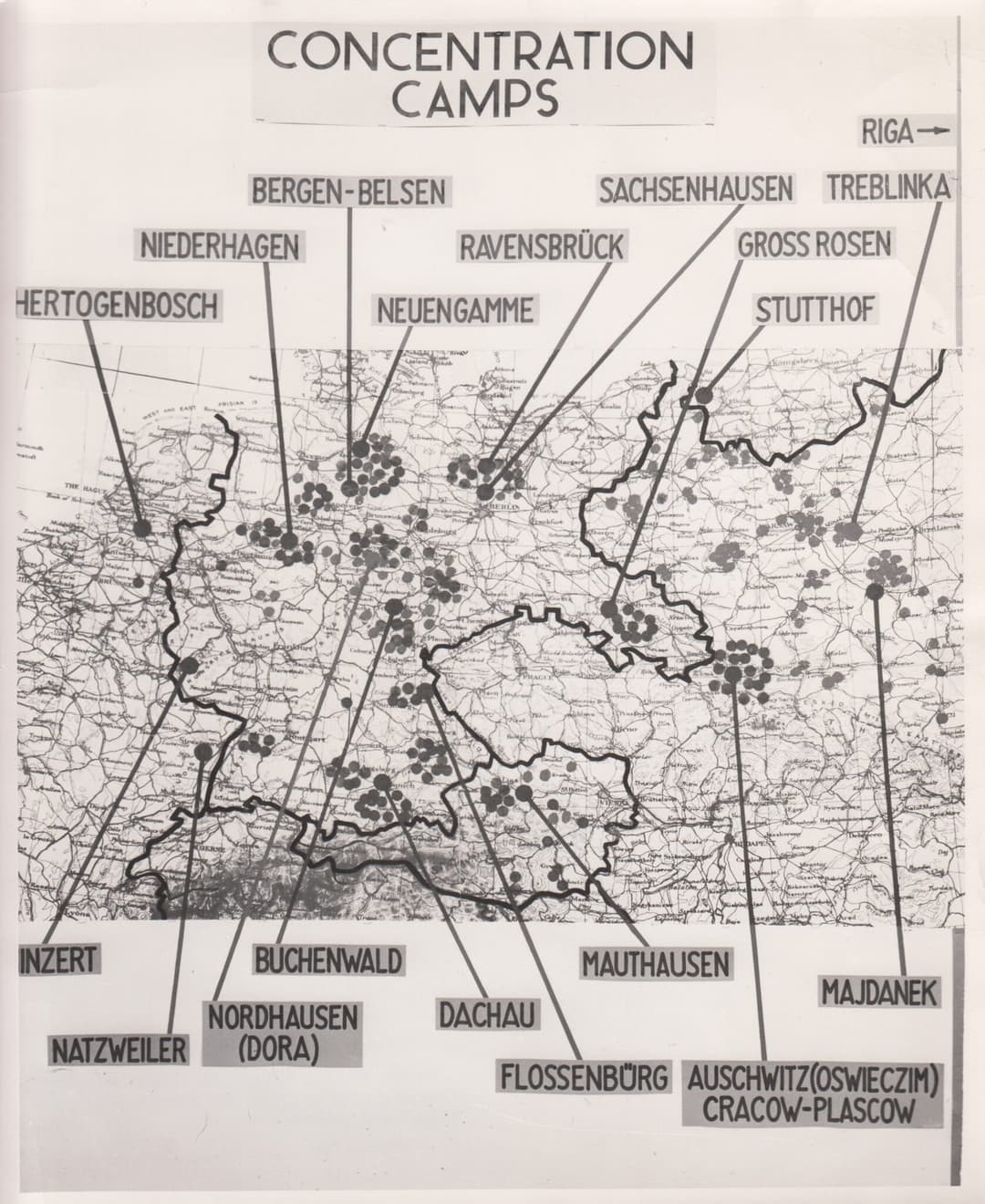
Sachsenhausen (1936), Buchenwald (1937), Flossenbürg (1938), Mauthausen (1938), Ravensbrück (1939).

Rudolf Höss, future commandant of Auschwitz, trained under Eicke at Dachau.

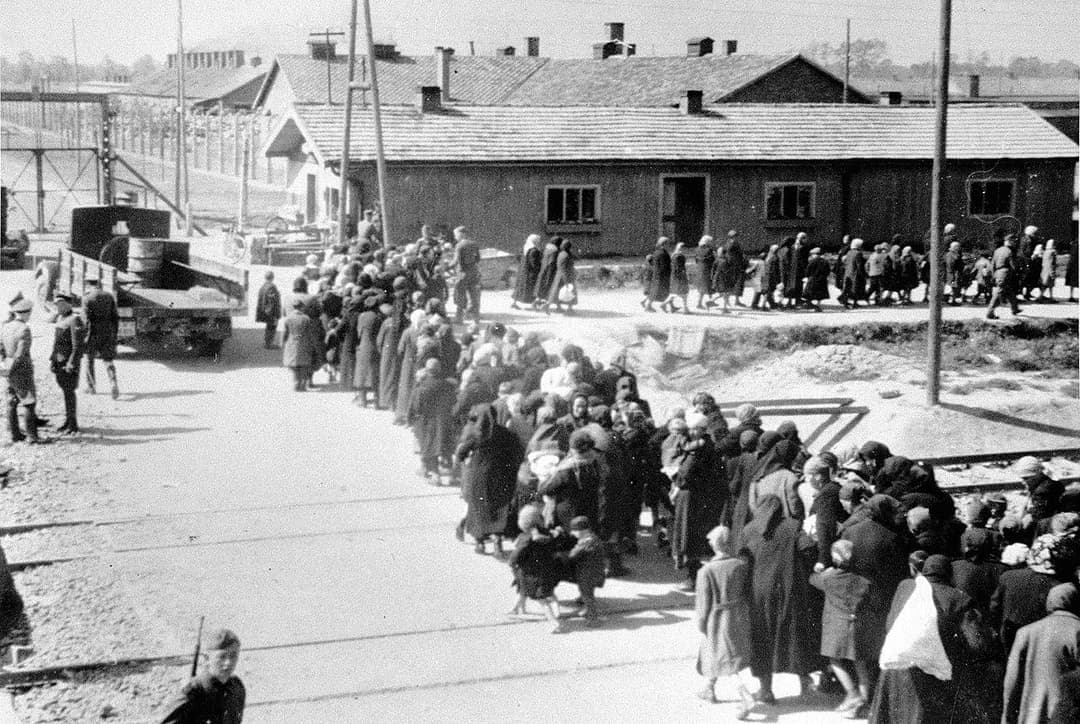
A group of Hungarian Jews from the Tet Ghetto walking towards the gas chambers and crematoria 2 and 3 at Auschwitz-Birkenau (May 27th 1944) - Public Domain

The Distinction That Matters

Between 1933 and 1945, the Nazis established over 44,000 camps and incarceration sites.

But a crucial distinction here must be made between concentration camps—which served detention, forced labour, and terror—and the six extermination camps, all located in occupied Poland:

Majdanek, opened in 1941 for the ‘special treatment’ (a Nazi euphemism) of the Jews from the Lublin ghetto – Chełmno (December 1941) pioneered mass murder using gas vans.

Bełżec (March 1942), Sobibór (May 1942), and Treblinka (July 1942) were purpose-built killing facilities staffed by only 20-35 SS men each, augmented by Trawniki auxiliaries and Jewish Sonderkommando prisoners. At Treblinka alone, an estimated 870,000-925,000 perished—nearly all within hours of arrival.

Auschwitz-Birkenau was unique as both a concentration and extermination camp. Its four gas chamber-crematoria complexes, designed by the J.A. Topf & Söhne company, could gas and cremate up to 12,000 people daily.

When capacity was exceeded, bodies were burned in open-air pits. Approximately 1.1 million people were murdered there—960,000 of them Jews.

As Timothy Snyder calculates in Bloodlands, the Germans deliberately killed approximately 11 million noncombatants during the Nazi era, rising to more than 12 million including foreseeable deaths from deportation, hunger, and camp sentences.

–

The Sachsenhausen Concentration Camp transformed in Soviet Special Camp No.1 (1951) - Public Domain

The Strange Afterlives Of The Nazi Camps

“The liberated prisoner was transferred from one barbed wire enclosure to another. The liberation was a lie.”
Wolfgang Leonhard, historian and contemporary witness

When Soviet forces liberated the Nazi concentration camp of Sachsenhausen, just north of Berlin, in April 1945, one might have expected the site’s horrors to end.

Instead, within months, the NKVD converted it into Special Camp No. 7 (later No. 1).

The Soviet special camp system, established under Beria Order No. 00315, nominally served denazification.

Ten camps held approximately 123,000 Germans; 43,000 died—a mortality rate around 35%. Sachsenhausen was the largest, with 60,000 total internees and 12,000 deaths, primarily from malnutrition and disease during the ‘Winter of Hunger’ of 1946-47.

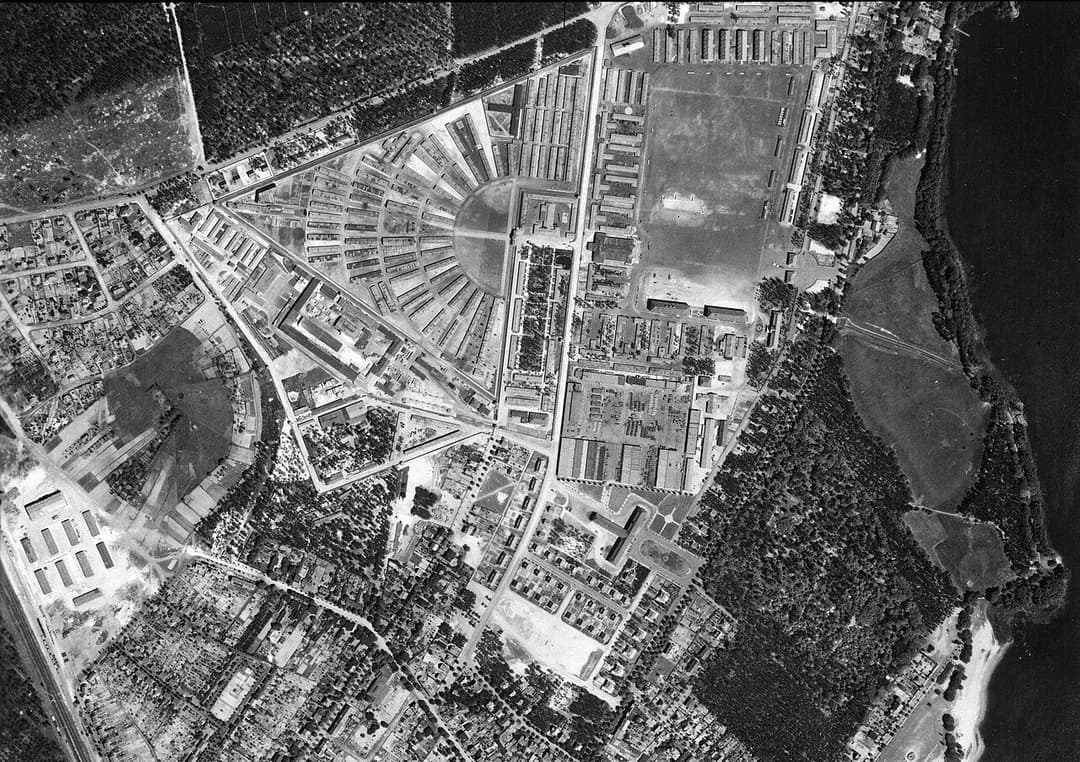
The Sachsenhausen Concentration Camp from above (1943) - Public Domain

The prisoner categories revealed much about Soviet priorities.

  • Roughly 30,000 were Nazi functionaries held without trial under the Potsdam Agreement.
  • But 16,000 more were Soviet Military Tribunal convicts—sentenced after brutal interrogations and tortured confessions for offenses often unrelated to Nazism.
  • Another 6,500 were Wehrmacht officers transferred from Western Allied POW camps.
  • Over 7,000 were Soviet citizens—former forced laborers, Red Army soldiers, émigré anti-Communists
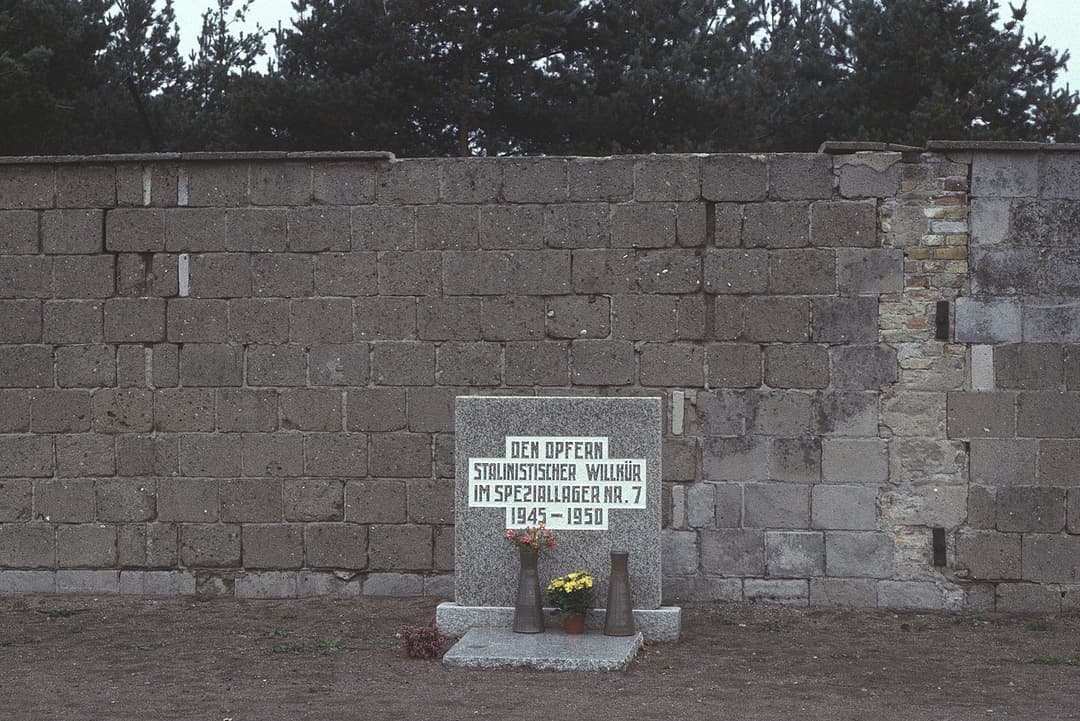
A memorial to Stalinist 'capriciousness' at Sachsenhausen - Berlijn

Unlike the Nazi camp, the Soviet Sachsenhausen was not a labour camp—prisoners were often forbidden to work, leading to psychological and physiological deterioration. It was a Schweigelager, a silence camp, with total isolation from the outside world. Families often learned nothing of their relatives’ fates for years.

Deaths came from starvation, tuberculosis, and dysentery—not from gas chambers or systematic execution.

At closure in 1950, 5,151 convicts were released; 4,836 were transferred to East German authorities; 721 were sent to Waldheim prison for show trials, some receiving death sentences. Mass graves discovered after reunification contained remains of prisoners whose families had never been notified.

–

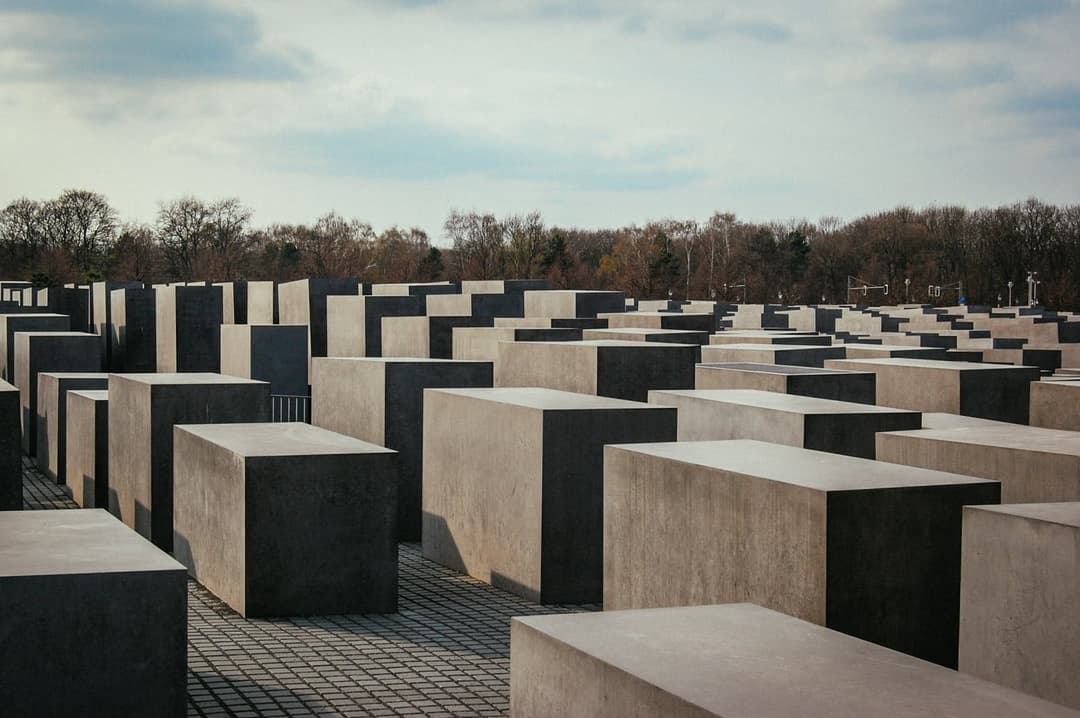
The Memorial for the Murdered Jews of Europe in Berlin - Berlin Experiences

Reckoning And Remembrance

“A man who stays in the camps for a long time will learn nothing good. He will learn to lie, to hate, to cheat… But he will also learn that the only thing that matters is surviving until the morning.”
Varlam Shalamov, GULAG survivor and author of ‘Kolyma Tales’

Germany’s confrontation with its Nazi past – Vergangenheitsbewältigung – has no parallel in post-Soviet Russia.

Since the 1952 Luxembourg Agreement, Germany has disbursed over $70 billion in compensation to Holocaust victims; approximately 1.6 million forced laborers received one-time payments through the Foundation “Remembrance, Responsibility and Future.” Criminal prosecutions continue; mandatory education and extensive memorialisation shape national identity.

The Holocaust Memorial in Berlin – 2,711 concrete stelae – stands minutes from the Reichstag and the central government quarter, part of collection of memorial for the Victims of National Socialism in the same area.

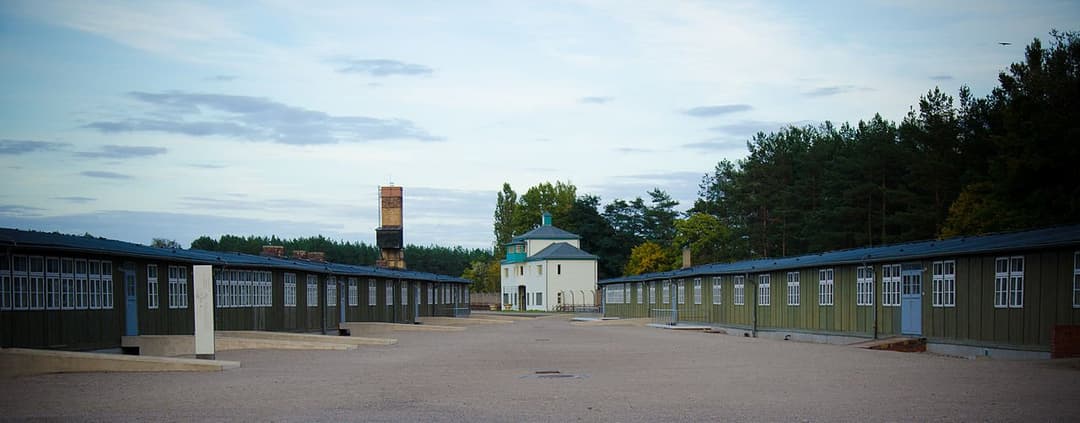
View of the Infirmiary and Tower A at the Sachsenhausen Concentration Camp Memorial - János Balázs

At the Sachsenhausen Memorial, a museum covering the Soviet camp era opened in 2001; the site’s Book of the Dead, documenting 11,889 Soviet-era deaths, was published in 2010.

Russia, on the other hand, offers a painful contrast.

A brief de-Stalinisation under Khrushchev and Glasnost-era opening gave way to Putin-era rehabilitation of Stalin’s image and the 2022 closure of Memorial, the organisation that had documented Soviet repression since 1989.

The Wall of Grief, erected in 2017, remains the only major Moscow memorial to terror victims.

Archives have become increasingly restricted.

No compensation exists for GULAG survivors or their descendants.

–

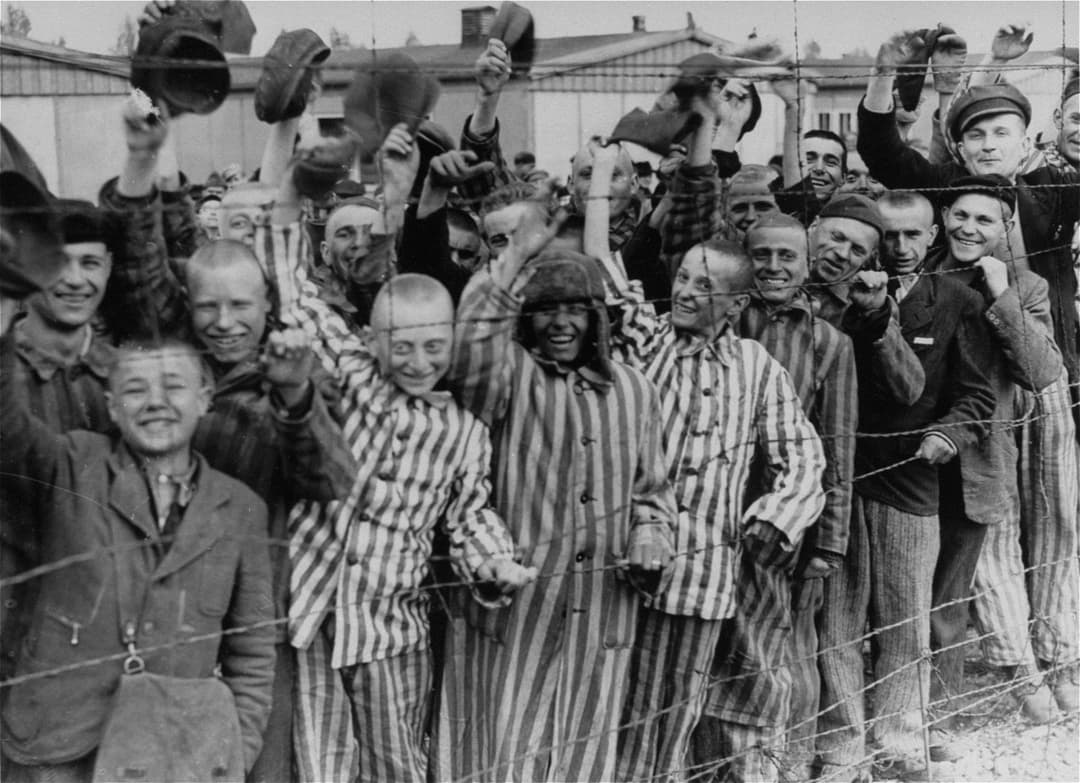
Prisoners at Dachau Concentration Camp following their liberation (1945) - Public Domain

Conclusion

“Monsters exist, but they are too few in number to be truly dangerous. More dangerous are the common men, the functionaries ready to believe and to act without asking questions.”
Primo Levi, survivor of Auschwitz

Aleksandr Solzhenitsyn wrote that “the line separating good and evil passes not through states, nor between classes, nor between political parties either—but right through every human heart.”

Both the Nazi and Soviet systems recruited ordinary human beings to administer extraordinary cruelty.

Both wrapped their atrocities in ideological justification—racial purity in one case, class struggle in the other.

Both demonstrated how bureaucratic rationality could serve irrational ends.

Yet the differences matter.

The Soviet system, for all its horrors, was not designed for genocide. Jews who entered the Gulag had reasonable prospects of survival—they faced the same brutal conditions as other prisoners, not selection for immediate death. Roma, homosexuals, and the disabled were not systematically murdered. The GULAG was a catastrophe of exploitation and indifference; the Nazi camps were something categorically different—the deliberate, industrialised annihilation of entire peoples.

A map of Nazi concentration camps exhibited at Pohl Trial, 8 April 1947-3 November 1947 - Public Domain

The Final Accounting

Total prisoners: The GULAG held approximately 18 million people (1930-1953); Nazi camps and killing sites held far fewer at any given time but murdered at far higher rates.

Deaths: Scholarly consensus places GULAG deaths at 1.5-1.8 million (some argue 6 million when accounting for veiled mortality). Nazi Germany deliberately killed 11-12 million noncombatants, including 6 million Jews.

Mortality rates: In the GULAG, 20-40% were released annually; most who entered left alive. While the Nazi concentration camps were more lenient in their early years, allowing some to be released, this was put to an end with the start of the Second World War – and in Nazi extermination camps, survival was measured in weeks.

Method of death: GULAG victims died primarily from starvation, disease, exhaustion, and exposure – byproducts of exploitation rather than goals. Nazi concentration camp victims were shot en-masse, hanged, gassed, and intentionally worked to death..

Possibility of release: GULAG sentences were definite (though often arbitrarily extended); release was common. Concentration camp inmates were indefinitely detained – and Nazi death camp victims had no prospect of release—their murder was the camps’ purpose.

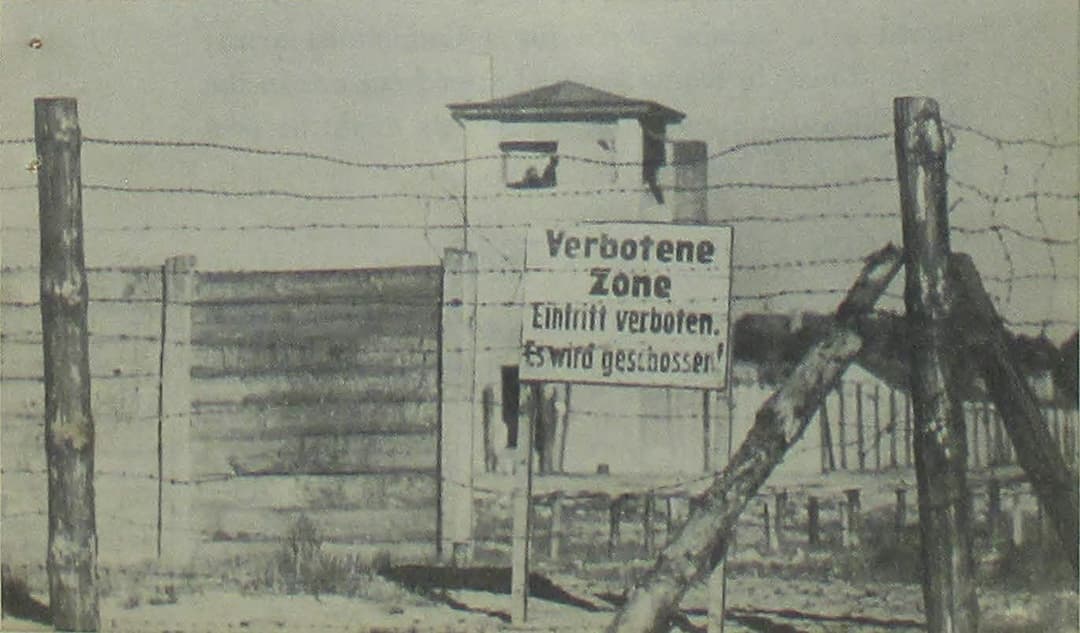
Possibility of escape: Both systems were heavily guarded, but Nazi camps were specifically designed to structure their terror (in the case of Sachsenhausen, in particular), prevent escape and destroy evidence of murder; the few successful escapes (like from Sobibór and Treblinka) required organised revolts.

The fundamental distinction though is between a system that killed through neglect and exploitation versus one that killed through industrialised genocide.

Whether that be the mass killings in the Nazi Vernichtungslager or the ‘annihilation through work’ that Heinrich Himmler would describe as the function of the concentration camps.

The GULAG was, as Solzhenitsyn called it, a system of “destructive-labour camps”—destructive, but labour-oriented.

The Nazi camps were designed, with increased effectiveness over time, as factories of death.

Bibliography

Applebaum, Anne (2003), Gulag: A History, Doubleday, ISBN 0767900561
Applebaum, Anne (2012), Iron Curtain: The Crushing of Eastern Europe, 1944–1956, Doubleday, ISBN 978-0385530804
Bentham, Jeremy (1791), Panopticon, or The Inspection House, T. Payne, ISBN 978-1120016140
Conquest, Robert (1990), The Great Terror: A Reassessment, Oxford University Press, ISBN 978-0195055801
Figes, Orlando (2007), The Whisperers: Private Life in Stalin’s Russia, Allen Lane, ISBN 978-0713996168
Foucault, Michel (1975), Discipline and Punish: The Birth of the Prison, Gallimard / Pantheon Books, ISBN 978-0394499420
Funder, Anna (2003), Stasiland: Stories from Behind the Berlin Wall, Granta Books, ISBN 978-1862076207
Hilberg, Raul (2003), The Destruction of the European Jews (3rd ed.), Yale University Press, ISBN 978-0300095920
Hobhouse, Emily (1902), The Brunt of the War and Where It Fell, (No standard ISBN; varies by modern reprint)
Howard, John (1777), The State of the Prisons in England and Wales, William Eyres / T. Cadell & N. Conant, ISBN 978-1379443490
Kershaw, Ian (1998), Hitler 1889–1936: Hubris, W. W. Norton & Company, ISBN 978-0393327476
Khlevniuk, Oleg V. (2004), The History of the Gulag: From Collectivization to the Great Terror, Yale University Press, ISBN 978-0300104073
Koehler, John (1999), Stasi: The Untold Story of the East German Secret Police, Bantam, ISBN 978-1857026915
Levi, Primo (1947), If This Is a Man / Survival in Auschwitz, Abacus, ISBN 978-1841956041
Levi, Primo (1986), The Drowned and the Saved, Abacus, ISBN 978-1841956058
Marcuse, Harold (2001), Legacies of Dachau, Cambridge University Press, ISBN 978-0521800225
Montefiore, Simon Sebag (2007), Young Stalin, Vintage, ISBN 978-0099520859
Naimark, Norman (1995), The Russians in Germany: A History of the Soviet Zone of Occupation, 1945–1949, Belknap Press, ISBN 978-0674317495
Range, Peter Ross (2016), 1924: The Year That Made Hitler, Pegasus Books, ISBN 978-1681774157
Semple, Janet (1993), Bentham’s Prison: A Study of the Panopticon Penitentiary, Clarendon Press, ISBN 978-0198273875
Service, Robert (2000), Lenin: A Biography, Macmillan, ISBN 978-0333669909
Service, Robert (2004), Stalin: A Biography, Macmillan, ISBN 978-0333748928
Service, Robert (2009), Trotsky: A Biography, Macmillan, ISBN 978-0330522382
Shalamov, Varlam (various years), Kolyma Tales, Penguin Books, ISBN 978-0141187980
Snyder, Timothy (2010), Bloodlands: Europe Between Hitler and Stalin, Basic Books, ISBN 978-0465031474
Solzhenitsyn, Aleksandr (1973), The Gulag Archipelago, YMCA Press (original), English translation (1974) Harper & Row, ISBN 0-06-013914-5
Van Heyningen, Elizabeth (2013), The Concentration Camps of the Anglo-Boer War: A Social History, Jacana Media, ISBN 978-1431405442
Wachsmann, Nikolaus (2015), KL: A History of the Nazi Concentration Camps, Farrar, Straus and Giroux, ISBN 978-0374299722

Liked this piece? Have a look at the Berlin Experiences tours that cover this history.

See the Sachsenhausen Camp TourMore articles →

Share this piece

Know someone who still believes it?

Explore in person

Tours that address this myth.

The Invention Of Hell Tour - Berlin Experiences
Full Day5 Hours

The Sachsenhausen Camp Tour

Private 5-hour van tour from Berlin to the Sachsenhausen Memorial for up to 6 people. Starts at your hotel in Berlin.

€975up to 6
View Tour
The Capital Of Tyranny Tour - Berlin Experiences
Full Day6 Hours

The Capital Of Tyranny

Private 6-hour van tour of Hitler's Berlin and the Third Reich for up to 6 people. Starts at your hotel or anywhere in the city.

€1,000up to 6
View Tour

More reading

The other myths, busted.

49 more — drag, scroll or use the arrow keys.

Soviet troops pose next to the Reichsadler as it once appeared on top of Tempelhof Airport (1934) - Public Domain
Are There Any Nazi Statues Left In Berlin?
US Army soldiers crossing the Rhine (1945) - Public Domain
Could The Western Allies Have Captured Berlin?
Women at Ravensbrück - where Elizabeth Rothschild was imprisoned and died
Did Any Of The Rothschild Dynasty Die In The Holocaust?
Frederick the Great - Der Konig Uberall
Did Frederick The Great Introduce The Potato To Germany?
Adolf Hitler Eastern Front
Did Hitler Escape To Argentina In 1945?
March of SA men in uniform giving the Hitler salute - on their way to Kaffelstein (1933) - State Archives of Baden-Württemberg, Wertheim State Archives SN 70 G 4135
Did Hugo Boss Design The Nazi Uniforms?
Rudolf Hess (1933 & 1945) - Public Domain
Did Rudolf Hess Really Commit Suicide?
Dismantling the German experimental nuclear pile at Haigerloch (April 1945) - Public Domain
Did The Nazis Develop Nuclear Weapons?
Did The Nazis Invent Decaf Coffee? – Mythbusting Berlin
Did The Nazis Invent Decaf Coffee?
German infantry on bicycles during the invasion of the Soviet Union
Did The Nazis Invent The Bicycle Reflector?
The site of the Nazi's Operation Bernhard counterfeiting operation: KZ Sachsenhausen
Did The Nazis Run The Largest Counterfeiting Operation In History?
Surrender of Berlin - 1945
Did The Second World War End In Berlin?
Spanish Flu & the rise of Nazi Germany
Did The Spanish Flu Pandemic Help The Nazis Take Power?
One of the final photos of Adolf Hitler, taken on March 20th 1945 -Public Domain
Have Adolf Hitler’s Remains Been DNA Tested?
The construction of the first actual Berlin Wall in August 1961 - Public Domain
How Long Did It Take To Build The Berlin Wall?
The remains of the Bürgerbrauhalle after an assassination attempt against Adolf Hitler in 1939 - Bundesarchiv, Bild 183-E12329 / Wagner / CC-BY-SA 3.0
How Many Assassination Attempts On Adolf Hitler Were There?
Evidence of Jewish prisoners at Auschwitz-Birkenau being undressed and led to their deaths - Public Domain
How Many Jews Died In The Holocaust?
A sign at the Berlin Wall in East Berlin (November 1961) declares, “Whoever attacks us will be destroyed," - Public Domain
How Many People Died Trying To Escape East Germany?
Berlin's Nikolaiviertel
How Old Is Berlin?
Adolf Hitler practices his speech techniques
Was Adolf Hitler A Drug Addict?
Adolf Hitler practicing his oratory skills - Public Domain
Was Adolf Hitler A Freemason?
Adolf Hitler practicing his oratory skills - Public Domain
Was Adolf Hitler Gay?
Adolf Hitler practicing his oratory skills - Public Domain
Was Adolf Hitler Jewish?
Hertha Heuwer - the inventor of Currywurst - Public Domain
Was Currywurst Invented In Berlin?
Fanta advertising from the 1940s - Public Domain
Was Fanta Invented By The Nazis?
Frederick the Great at the Battle of Zorndorf by Carl Roechling (1911)
Was Frederick The Great Gay?
Henry Ford
Was Henry Ford A Nazi?
Franz Rudolf Frisching portrait in 1785 in Prussian Blue.
Was The Colour Blue Invented In Berlin?
Döner Kebab
Was The Döner Kebab Invented In Berlin?
Menschen am Potsdamer Platz auf der Westseite der Berliner Mauer am 11. November 1989
Was The Fall Of The Berlin Wall An Accident?
The Nazi Party in parliament (1935)
Was The Nazi Party Democratically Elected?
The Allied bombing of Wesel during the Second World War - Public Domain
Were The Allied Bombings Of Germany War Crimes?
Photograph of the Hadamar killing centre with a smoking chimney, (1941) - Hadamar Memorial Museum
Were The Nazi Medical Experiments Useful?
The Oath of the Horatii by Jacques-Louis David - Public Domain
What Are The Origins Of The Nazi Salute?
Members of the Hitler Youth parade in the formation of a swastika to honor the Unknown Soldier. Germany, August 27th 1933 - Public Domain
What Are The Origins Of The Nazi Swastika?
Pink pipes in Berlin - Public Domain
What Are The Pink Pipes In Berlin?
A street battle between revolutionaries and the royal military in the Breite Strasse Street, Berlin during the March 1848 revolution - Public Domain
What Do The Colours Of The German Flag Symbolise?
Adolf Hitler's Alligator - Saturn
What Happened To Adolf Hitler’s Alligator?
German Kaiser Wilhelm II in Bruges, Belgium during the First World War - Public Domain
What Happened To The German Royal Family?
Adolf Hitler (right) and Benito Mussolini (left) in Munich, Germany, 1937 - Public Domain
What Is The Difference Between Fascism & Nazism?
Checkpoint Charlie in 1989
What Was Checkpoint Charlie?
The crowning of Wilhelm I as German Emperor and the birth of Germany in 1871
What Was Prussia?
United States Air Force building a runway for Operation Vittles planes (1948) - Public Domain
What Was The Berlin Airlift?
A close-up of the Socialist Kiss painted on the East Side Gallery - LeO Tiresias
What Was The Socialist Kiss?
Construction of the Berlin Wall at the Brandenburg Gate
Who Built The Berlin Wall?
Soviet flag on the Reichstag - 1945
Who Really Raised The Soviet Flag On The Reichstag?
Inside the Reichstag Plenary Chamber/Image: United States Holocaust Memorial Museum
Who Was Really Responsible For The Reichstag Fire?
The defendants at the Nuremberg Trial (1946) - Public Domain
Who Were The Last Nazis On Trial?
The Brandenburg Gate at night
Why Is Berlin The Capital Of Germany?