Skip to content
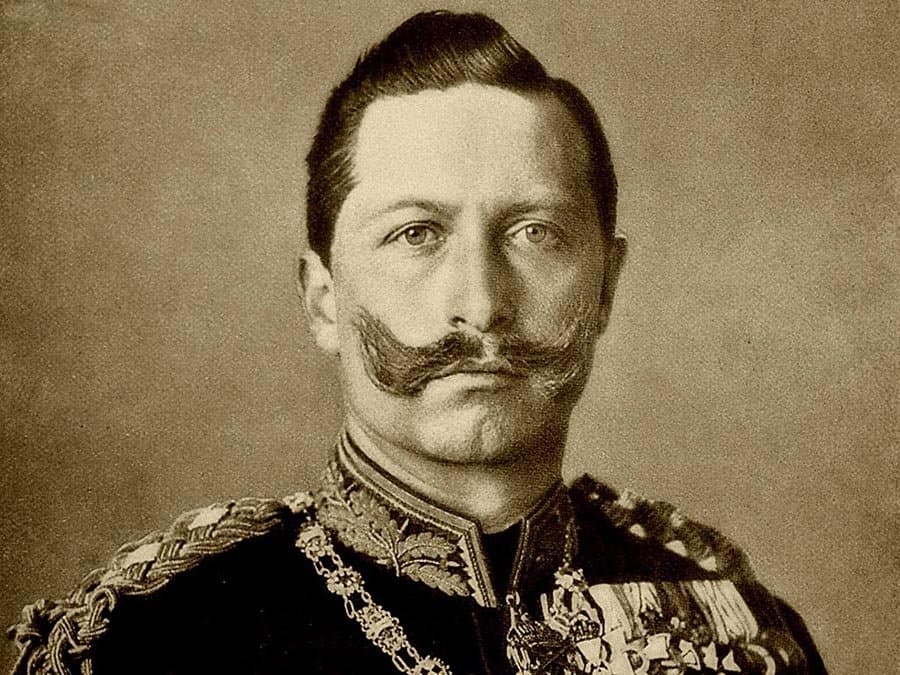
German Kaiser Wilhelm II in Bruges, Belgium during the First World War - Public Domain

Berlin Experiences/Mythbusting Berlin

What Happened To The German Royal Family?

From imperial splendour to post-war lawsuits: we dispel the myths of the German royal family and its supposed disappearance.

By Matt Robinson · Updated · 22 min read

“I am a broken man. I have no country. I have no army.”
Kaiser Wilhelm II, waiting at the Dutch border (November 1918)

In the midst of the First World War’s darkest days, as discontent and grief stalked the German home front, Kaiser Wilhelm II was busy building a palace.

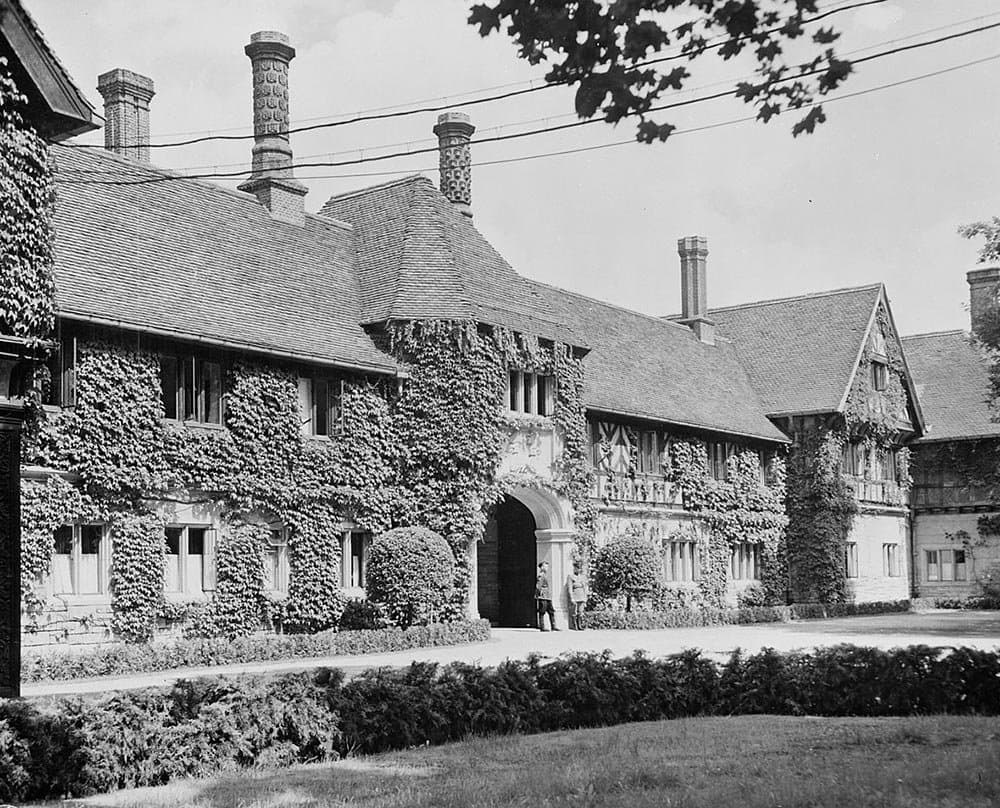
Not even the thunder of artillery could still the baulust of the German royal family – that near-innate urge of Prussian kings to erect grand residences. The result was Schloss Cecilienhof, located in Potsdam’s Neuer Garten and completed in 1917 as the last palace ever built by the Hohenzollern dynasty.

It is a building creaking under the weight of historical irony.

Commissioned by Kaiser Wilhelm II for his eldest son, Crown Prince Wilhelm, and his daughter-in-law, Duchess Cecilie of Mecklenburg-Schwerin, the palace was designed in the English Tudor style. At the precise moment the German war machine was expending millions of lives to crush the British Empire, the German Crown Prince was moving into a home that looked like it had been airlifted from the Cotswolds.

Potsdam Cecilienhof
The Cecilienhof Palace in Potsdam

It was a curious time to embark on palace-building: soldiers were dying by the thousands at the front, civilians rioted for turnip soup and sawdust bread; yet the royal family forged ahead.

Cecilienhof shouted that the Hohenzollerns were here to stay, that the war was a temporary inconvenience, and that English country living was simply too good to leave to the English. It was also meant to serve as a tangible reminder of the monarchy’s confidence in its own permanence – the palace a further architectural exclamation point onto their realm.

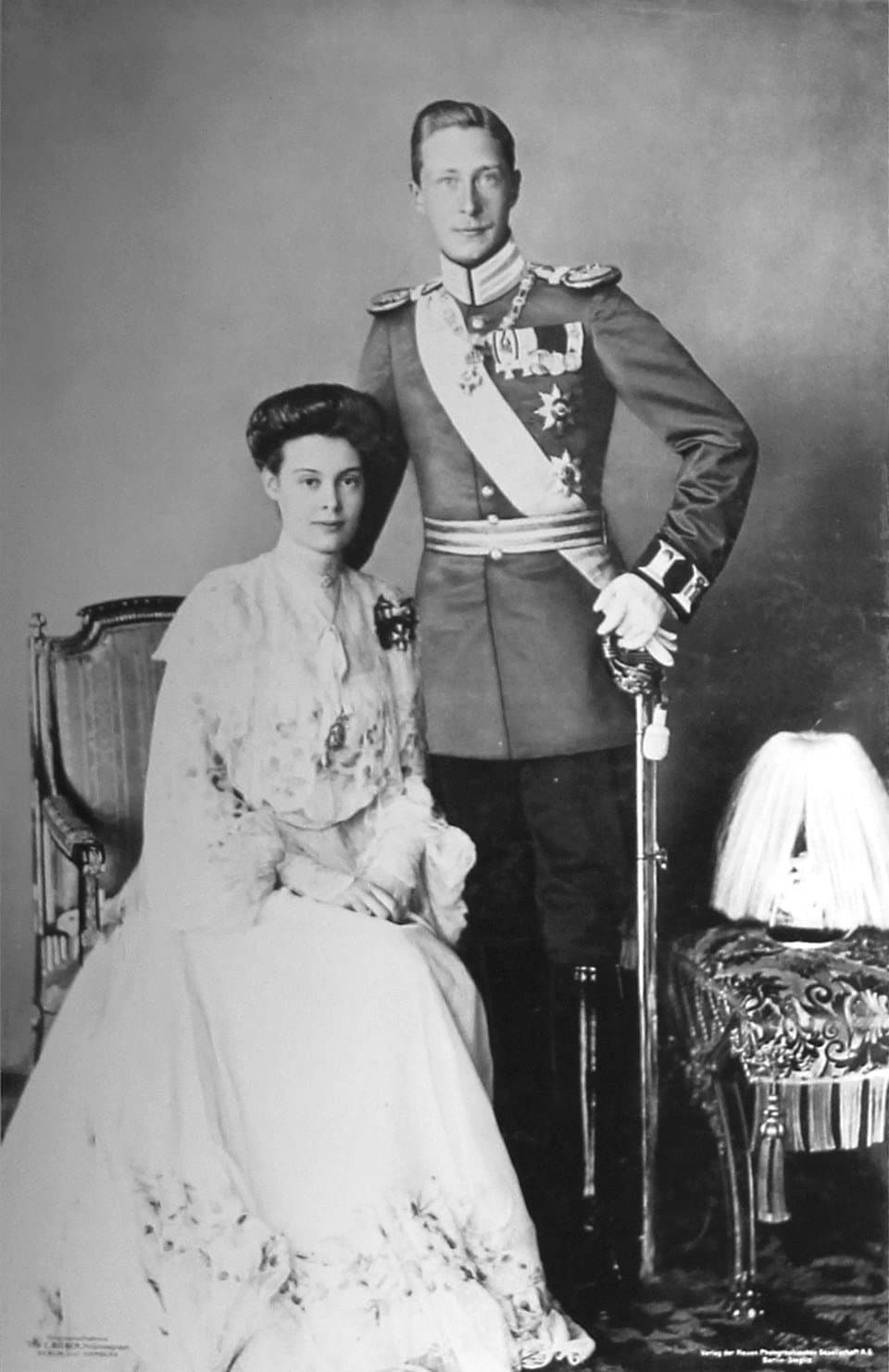
Crown Prince Wilhelm & Princess Cecilie in 1908 - Public Domain

However, barely a year after Princess Cecilie and her family moved into her new palace – even giving birth to a daughter there in August 1917 – the unthinkable happened.

In November 1918 the German Empire collapsed virtually overnight.

Kaiser Wilhelm II abdicated amid revolution and fled into exile in the Netherlands, ending 500 years of Hohenzollern rule in Prussia and Brandenburg.

The proud imperial family was suddenly out of power, their dominance extinguished in a matter of days.

Yet Cecilienhof, that strange wartime extravagance, would gain a second life in Germany’s post-monarchical saga. After the fall of the Hohenzollerns’ rule, this single palace – with its 176 rooms and decorative chimneys – became an unlikely refuge for the now-former royals.

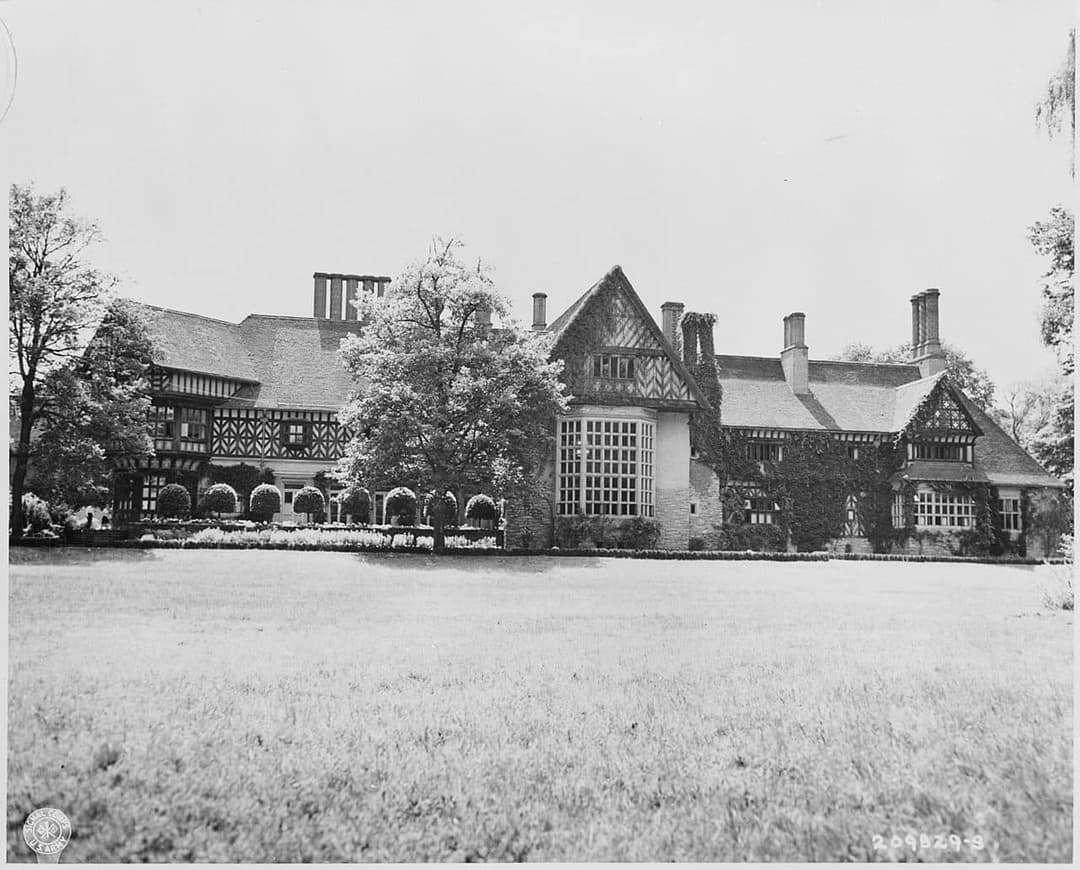
The Potsdam Conference - July 23rd 1945 - Schloss Cecilienhof as viewed from the river Havel side of the palace
Schloss Cecilienhof as viewed from the Jungfernsee lake side of the palace/Image: US National Archives and Records

Under a 1926 agreement with the young Weimar Republic, Cecilienhof was nominally turned over to the state, but the ex-Crown Prince Wilhelm and his family were granted a limited right of residence in the manor (specified to last three generations).

In other words, the Hohenzollerns could live on at Cecilienhof as private citizens, even as their other castles and palaces were seized or converted to museums.

For a time, it seemed the dynasty’s story might quietly continue under the Tudor gables of Cecilienhof – a last echo of Prussian royalty persisting into the age of democracy.

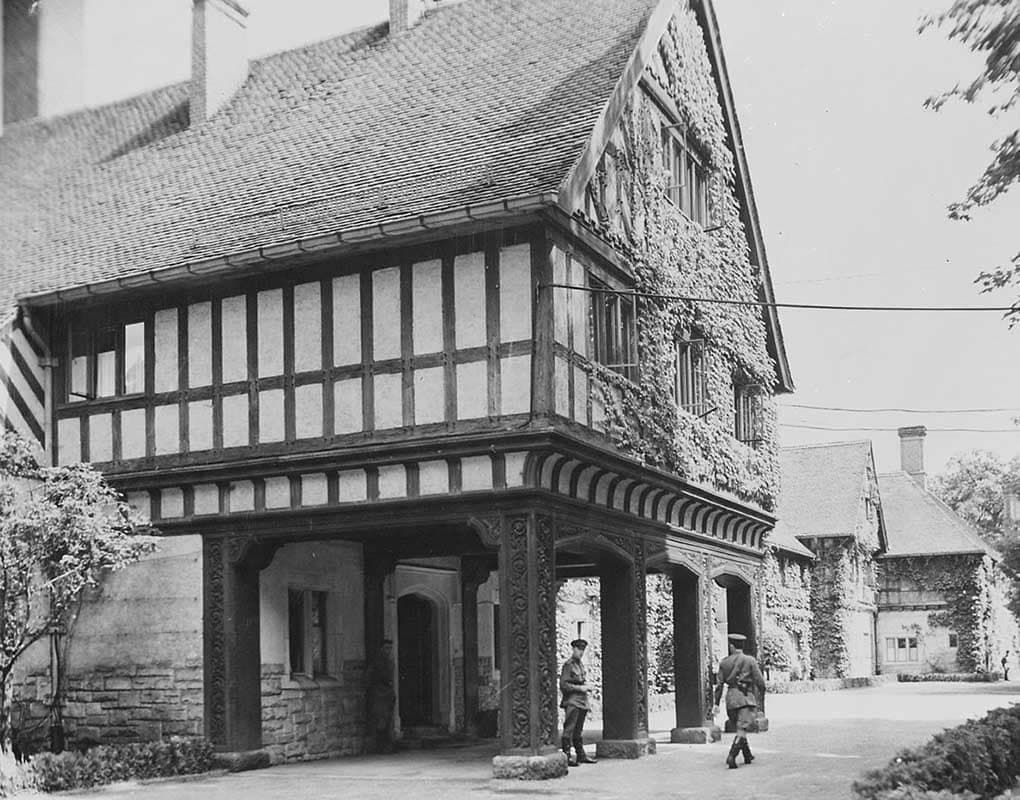
Potsdam Schloss Cecilienhof at it appeared in 1945/Image: US National Archives and Records

Two decades later, however, history intervened once more in brutal fashion.

In early 1945, as Soviet forces advanced into eastern Germany, Crown Prince Wilhelm and Cecilie hastily abandoned Cecilienhof and fled west for safety. They left behind most of their belongings – and their palace.

Within months, Cecilienhof would be hosting a very different kind of royal court: the victorious Allied leaders of World War II.

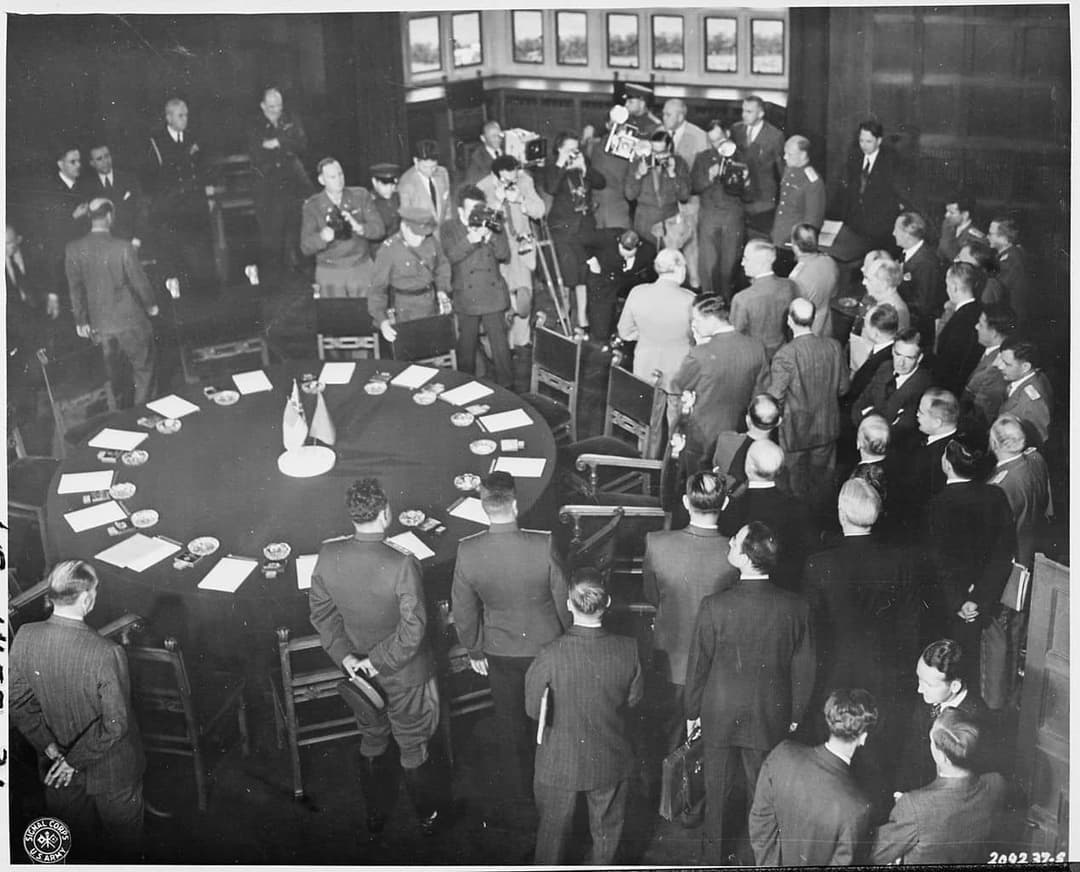
The Potsdam Conference - July 17th 1945 - The Big Three start the Potsdam conference on July 17th 1945
'The Big Three' start the Potsdam conference on July 17th 1945/Image: US National Archives and Records Administration

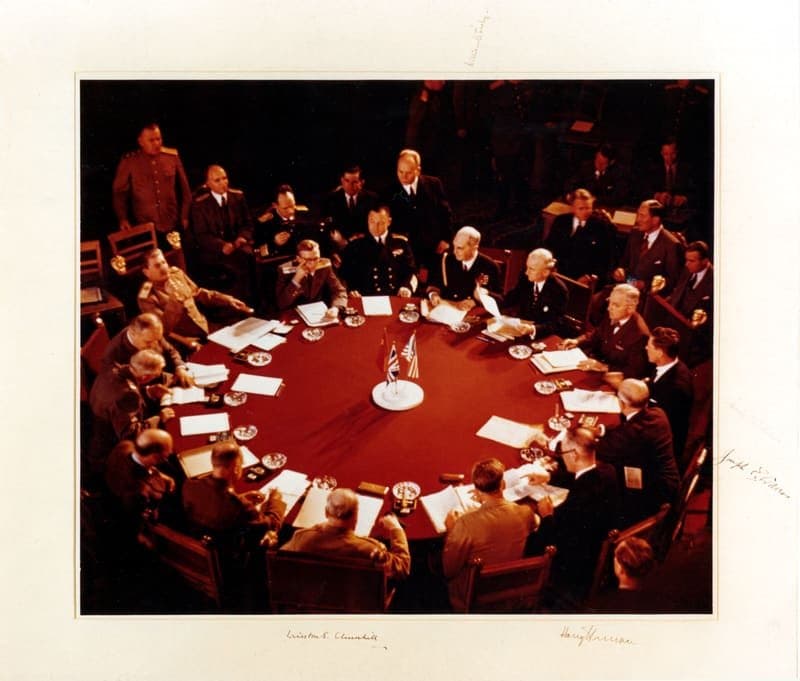
From July 17th to August 2nd 1945, the palace became the setting of the Potsdam Conference, where Truman, Stalin, Churchill (and later Attlee) gathered to decide Germany’s fate. The former residence of the German Crown Prince – a symbol of imperial pride – was thus repurposed as the stage on which the Allies dictated terms to vanquished Germany.

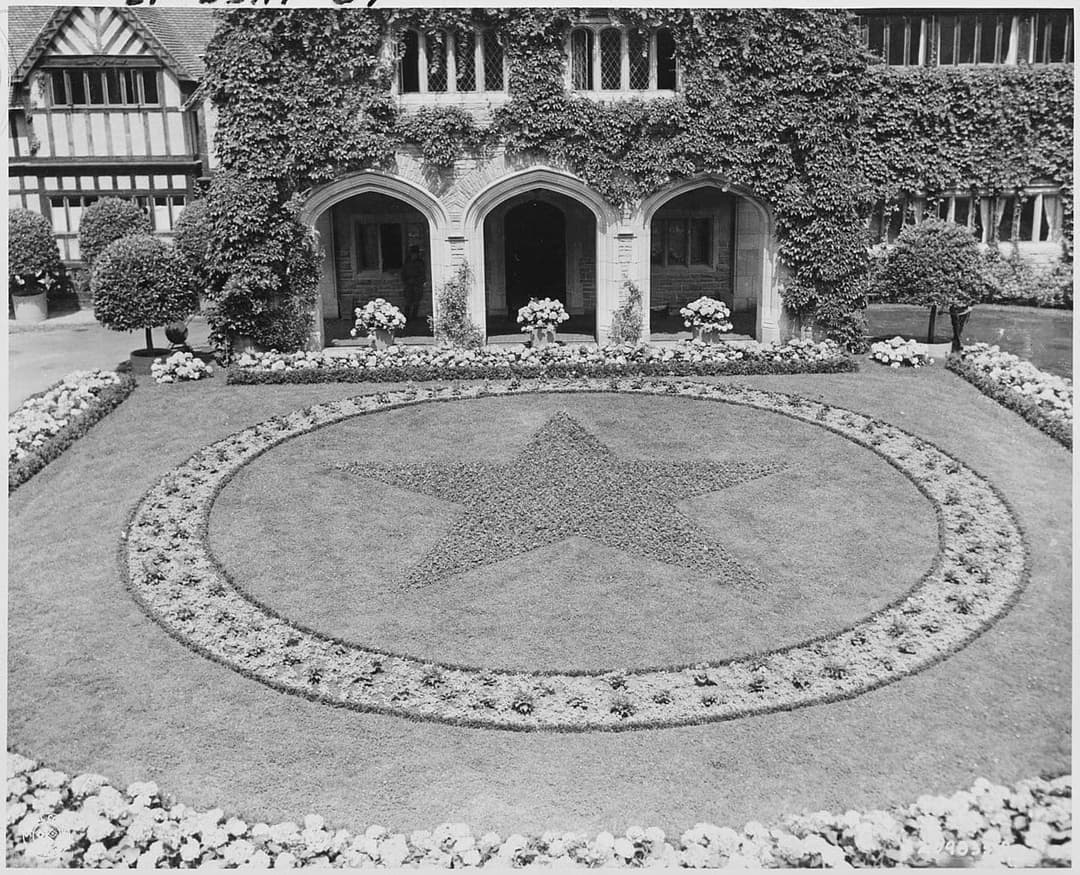
Soviet soldiers draped red flags over Cecilienhof’s entrances and even planted a massive red-star floral display in its courtyard to herald their triumph.

In this way Cecilienhof – the last palace of the Hohenzollerns – became the backdrop for a final reckoning with Prussian monarchism and militarism, which the Allied victors blamed for two world wars.

By war’s end, the very word ‘Prussia’ was deemed so toxic that the Allies abolished the Prussian state entirely in 1947.

The age of Hohenzollern dominion had not only ended; it was to be erased from the map – & extirpated from existence.

Cecilienhof itself survived, but it stood empty, soon to be a museum piece – a shell from which the royal family had been cast out by the tides of history.

The Potsdam Conference - July 25th 1945 - The eleventh plenary session of the Potsdam Conference on July 25th would be Winston Churchill's last (although he did not yet know it)
The ninth plenary session of the Potsdam Conference on July 25th would be Winston Churchill's last (although he did not yet know it)/Image: US National Archives and Records

So who were these Hohenzollerns, the family that once ruled over Prussia and imperial Germany from lavish residences like Cecilienhof?

What led to their dramatic fall from power – and what became of them after 1918?

Explore the rise of the Hohenzollern dynasty to the heights of Kaiserlich glory, the saga of their precipitous downfall, and the curious afterlife of Germany’s former royals.

We ask: where are the Hohenzollern descendants today, and could they ever come back?

–

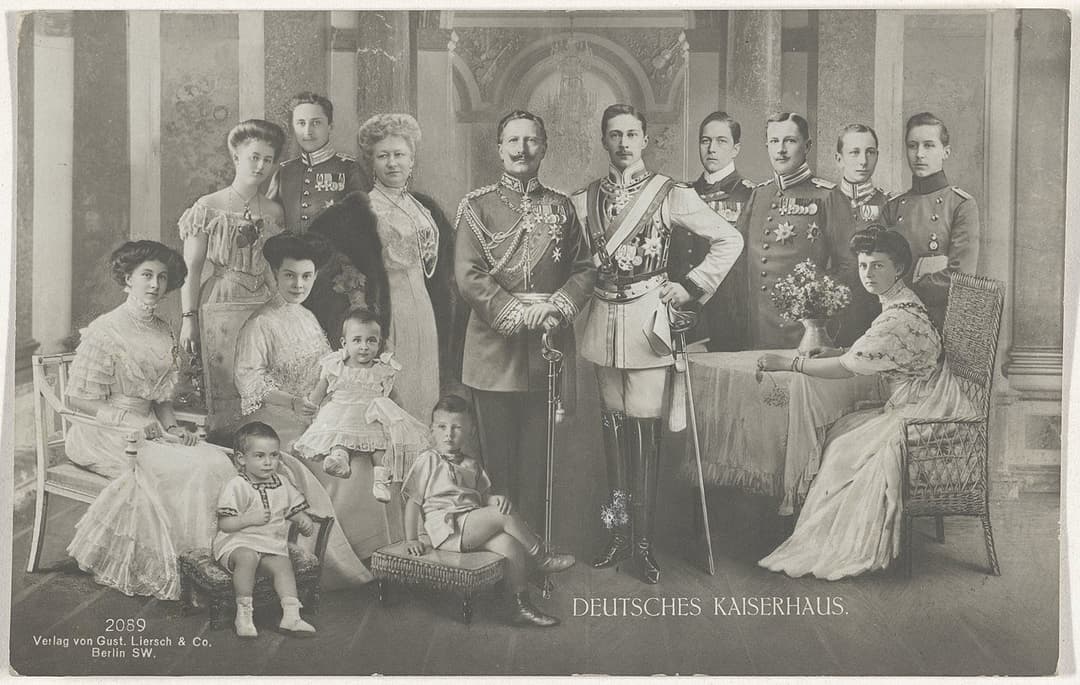
The Hohenzollern royal family in 1914 - Public Domain

The Hohenzollerns

“The House of Hohenzollern is the glorious exception to the mournful history of Germany. It is the only house that has known how to command, and thus, how to unite.”
Heinrich von Treitschke (German Historian, 19th Century)

Every grand dynasty begins humbly, and the Hohenzollerns are no exception.

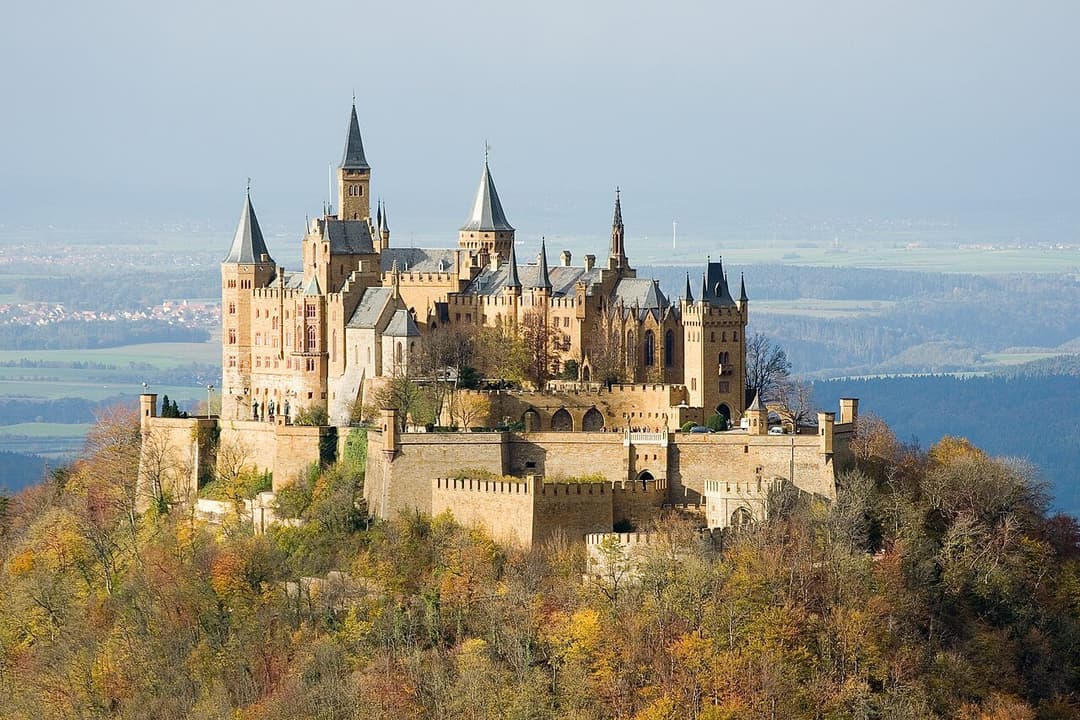
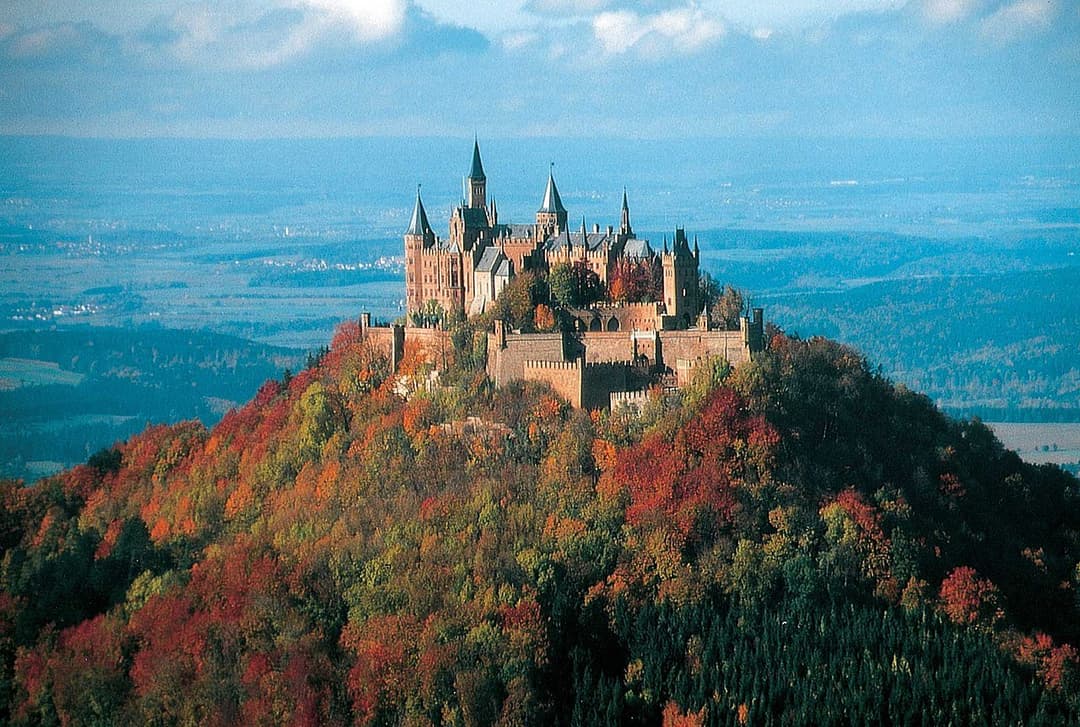
Long before they wore imperial crowns, the Hohenzollern family started as petty nobles in the forests of Swabia (southern Germany) over 800 years ago. Their name comes from Hohenzollern Castle, an ancestral fortress perched on a craggy hilltop – an appropriately dramatic cradle for a lineage that would later produce kings.

In the Middle Ages, the Hohenzollerns were mere burgraves (fortress lords) of Nuremberg.

Ambitious and shrewd, they steadily expanded their influence through strategic marriages, loyal service to higher monarchs, and the occasional well-timed purchase of land.

The Hohenzollern family ancestral home, Burg Hohenzollern - A. Kniesel

The big break came in 1415, when Frederick VI of Hohenzollern was granted the Margraviate of Brandenburg (near Berlin) by the Holy Roman Emperor.

With Brandenburg, the family acquired not just acres and titles, but a new mission: to “elect” the Holy Roman Emperor. As one of the seven prince-electors of the Empire, the Hohenzollerns suddenly found themselves at the nexus of German politics.

It was a long way up from Swabian hill castles, and they were just getting started.

Over the ensuing centuries, the House of Hohenzollern exhibited an uncanny knack for survival and growth. They weathered the Reformation’s storms (even converting to Protestantism to align with northern German princes), and during the chaotic Thirty Years’ War they clung to their territories while others were devastated.

By the 1700s, the Hohenzollerns ruled a patchwork of lands centered on Brandenburg and the Duchy of Prussia in the Baltic region.

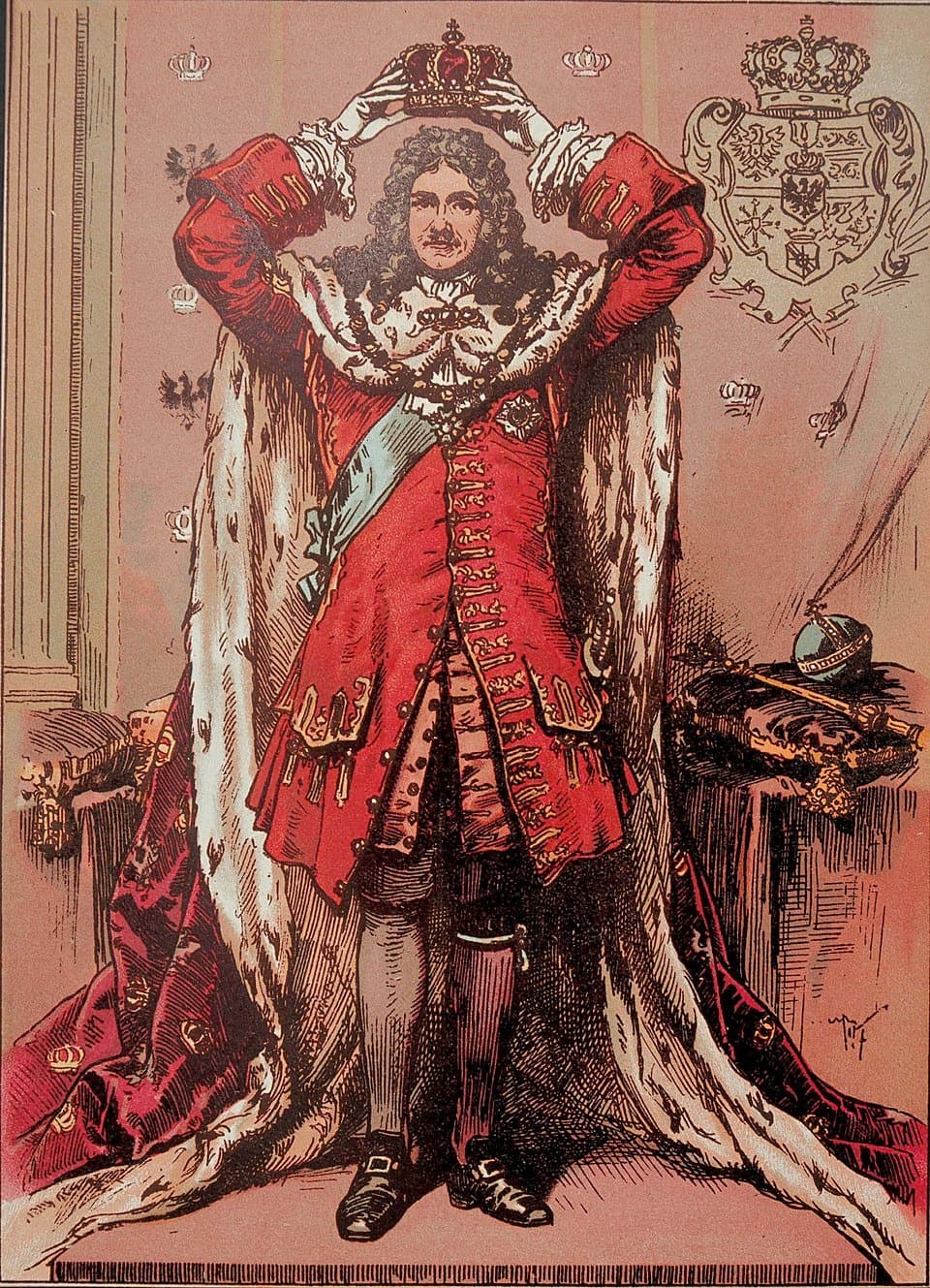
Hohenzollern Fredrick III crowning himself 'King in Prussia' in 1701 - Public Domain

In 1701, Elector Frederick III of Brandenburg crowned himself King Frederick I in Prussia – a bold move that elevated the family from mere electors to full-fledged royalty.

The title “King in Prussia” signaled that he was a king over his Prussian lands (though not yet over all of Prussia, some of which was still under Polish sovereignty). It was a semantic dance to avoid offending the Holy Roman Emperor, but it worked.

The Hohenzollerns had joined the ranks of Europe’s monarchies.

Once kingship was achieved, the dynasty’s ambitions only grew.

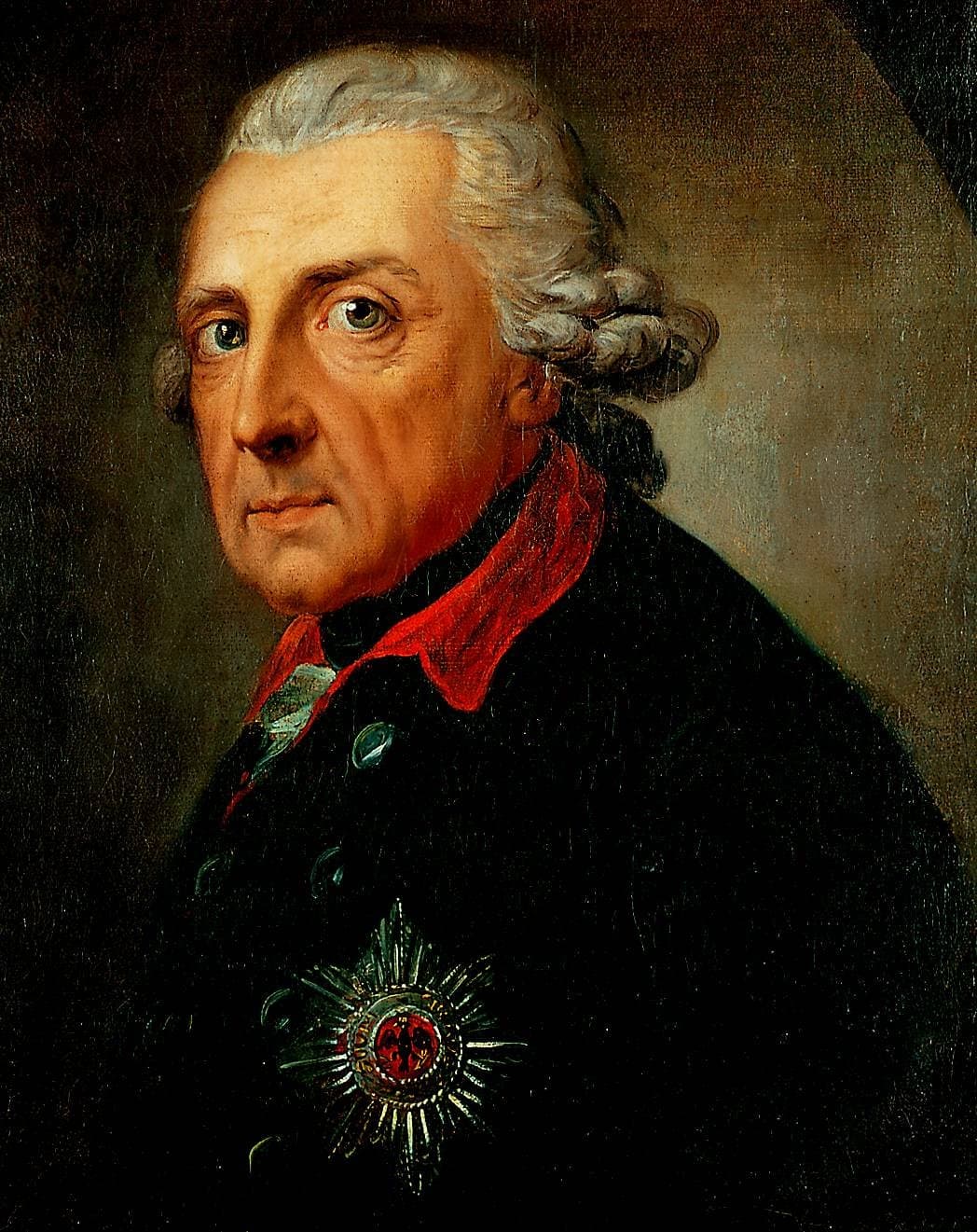
Anton Graff's portrait of Frederick the Great, aged 68 (1781)

Throughout the 18th century, under rulers like Frederick the Great (Frederick II), Prussia expanded by fire and force, earning a fearsome reputation as “an army with a state”.

The Hohenzollern kings cultivated a national mythos of militaristic efficiency and discipline, symbolized by the spiked Prussian helmet and the inexorable march of their grenadiers. Frederick the Great in particular made Prussia a great power through battlefield brilliance – and he wasn’t shy about polishing his own legend.

By his death in 1786, Prussia boasted one of Europe’s finest armies and a first-rate bureaucracy, all loyal to the Hohenzollern crown. A kind of aura began to surround the family: they were seen (at least by their subjects and themselves) as the embodiment of German virtues – duty, order, and iron will.

This almost mystical reverence for Prussia’s royal house would persist well into the 20th century, for better or worse.

In the 19th century, the Hohenzollerns reached even greater heights.

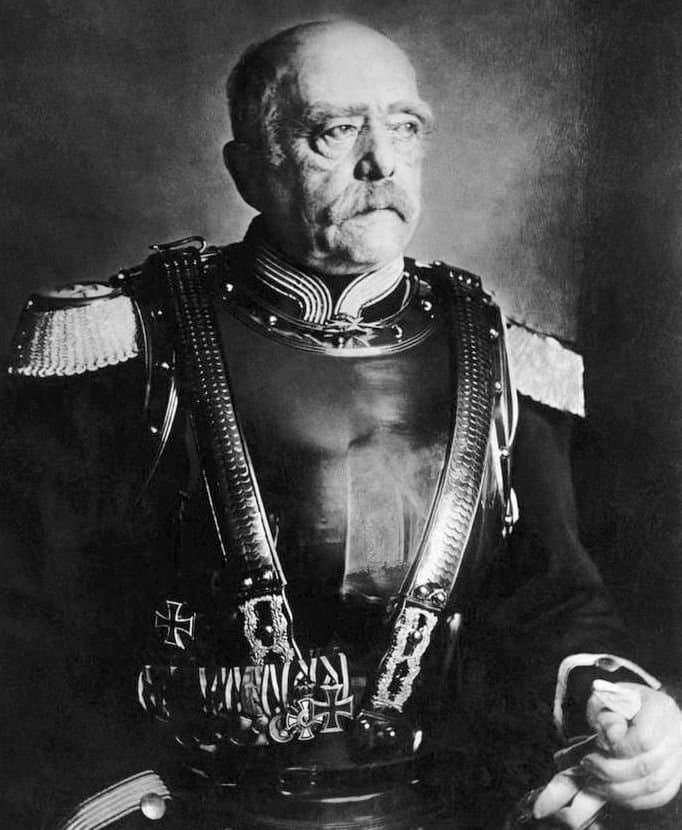
Germany's George Washington figure - Otto von Bismarck (1818-1898), in the uniform of the regiment of Cuirassier named after him

King Wilhelm I of Prussia, advised by his brilliant Iron Chancellor Otto von Bismarck, managed to unify the fractious German states into a single nation-state for the first time.

Through a series of swift victorious wars (against Denmark in 1864, Austria in 1866, and France in 1870-71), Prussia proved its dominance.

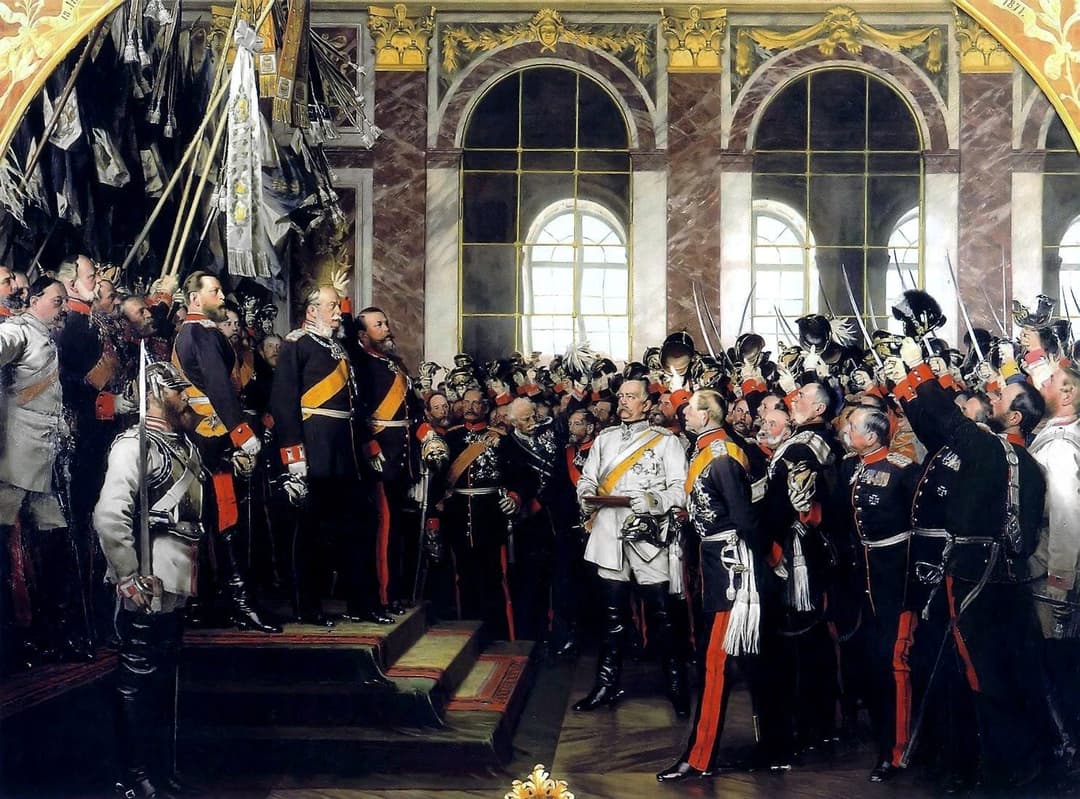
In January 1871, in the glittering Hall of Mirrors at Versailles, King Wilhelm I was proclaimed German Emperor (Kaiser) of a united German Empire. This moment fulfilled a long-held nationalist dream – and placed the Hohenzollern family at the pinnacle of German society.

The newly minted Kaiser Wilhelm I became “the symbol of the indestructible vitality of the German nation,” as admirers put it, and Berlin was established as the capital of the empire. The Hohenzollerns could now claim not only the kingship of Prussia, but the imperial mantle of all Germany.

They had, in effect, ascended from minor nobles to emperors commanding one of the most powerful states in the world.
Little wonder that by the late 19th century, the Hohenzollern dynasty was swathed in a near-religious veneration by loyalists – their portraits hung in public buildings, their birthdays were celebrated as holidays, and their every word was reported in the press.

The Kaiser and his family were the royal rock stars of their age.

–

The crowning of Wilhelm I as German Emperor and the birth of Germany in 1871
The crowning of Wilhelm I as German Emperor and the birth of Germany in 1871 - Public Domain

The Prussian and German Imperial Royal Family

“We Hohenzollerns take our crown from God alone, and to God alone are we responsible.”
Kaiser Wilhelm II

As the imperial family of Germany, the Hohenzollerns projected an image of splendour and supreme authority – an image they worked hard to maintain.

Court ceremonies in Berlin and Potsdam were elaborate displays of pomp, meant to awe both the German public and foreign dignitaries.

The Kaiserreich’s capital was dotted with grand monuments to Prussian kings and German emperors, from the equestrian statue of Frederick the Great on Berlin’s Unter den Linden to the Siegessäule (Victory Column) commemorating Prussian military triumphs.

Kaiser Wilhelm I, and later his grandson Wilhelm II, made sure the dynasty’s presence was felt in every corner of public life.

Wilhelm II - The German Emperor - Abdication 1918
German Emperor Wilhelm II, who ruled from 1888 until 1918 -Public Domain

Wilhelm II in particular – who assumed the throne in 1888 – had a flair for the dramatic.

With his waxed moustache, military uniforms, and bombastic speeches, he cultivated the persona of an energetic modern monarch. Underneath the theatrics lay a genuine conviction: the Hohenzollerns believed themselves destined to rule, standing as the divinely appointed stewards of the German nation.

Yet ruling a freshly unified empire was no small task.

The Hohenzollern family had to balance Prussia’s militaristic traditions with the complexities of governing diverse German states.

Kaiser Wilhelm II, for one, never lacked confidence in his royal prerogatives – sometimes to his detriment. He often sidelined seasoned advisors and quarreled with Bismarck (eventually firing the Iron Chancellor) because he believed in personal rule. The Kaiser’s impulsive nature led him to make grandiose claims and diplomatic blunders that isolated Germany internationally.

Still, at home, the royal family remained central to German society.

The Kaiserin (Empress) Augusta Victoria and later the popular Crown Princess Cecilie (a minor royal from Mecklenburg who married Wilhelm II’s son) set trends in fashion and philanthropy.
Ordinary Germans named their children after the Kaiser’s offspring.

The press followed the doings of princes and princesses with avid interest. In effect, the Hohenzollerns were the living emblem of the Reich – so long as they appeared strong and unassailable, perhaps Germany itself would feel the same.

This is not to say the imperial family lived in unbroken glamour. The early 20th century brought immense strain.

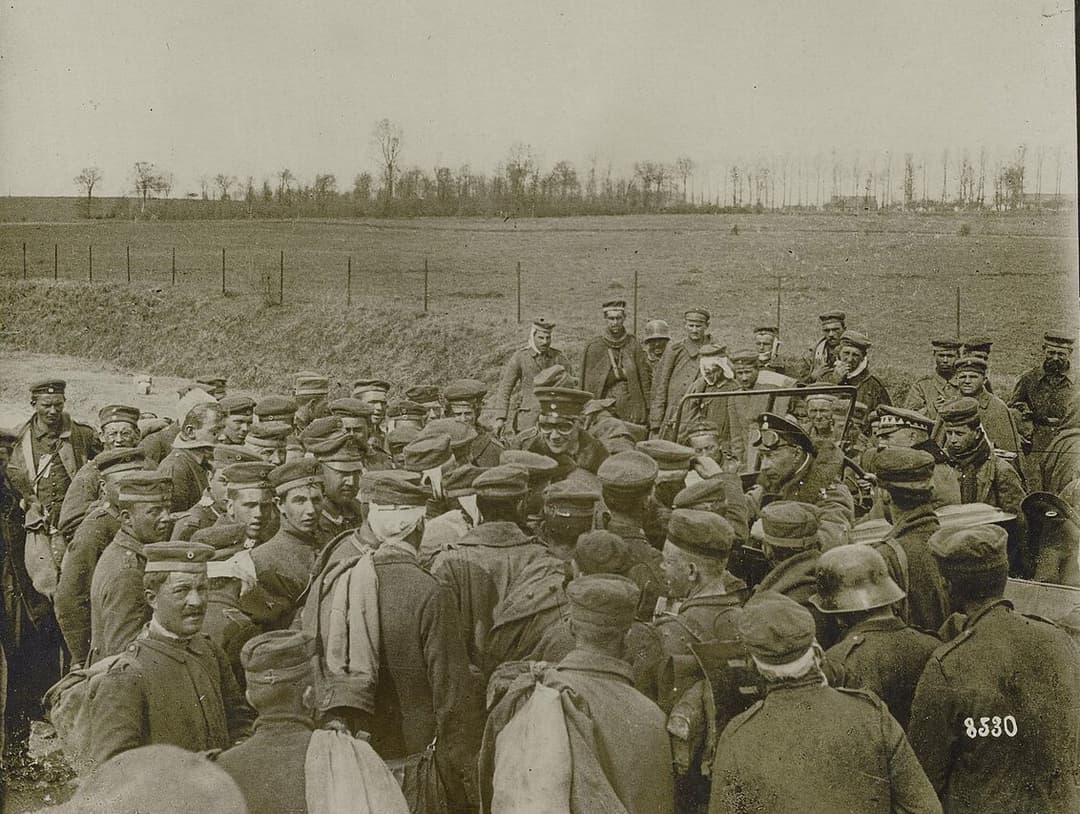
Crown Prince Wilhelm travels to visit wounded German soldiers on his birthday during the First World War - Public Domain

Kaiser Wilhelm II’s aggressive foreign policy and naval arms race contributed to the tensions that ignited World War I in 1914.

When the war broke out, the Hohenzollerns initially rode a wave of patriotism.

Crown Prince Wilhelm (the Kaiser’s eldest son and heir) eagerly took a field command, cutting a dashing if ultimately undistinguished figure on the Western Front. The Kaiser donned military grey and spoke of “rolling up his sleeves” for victory.

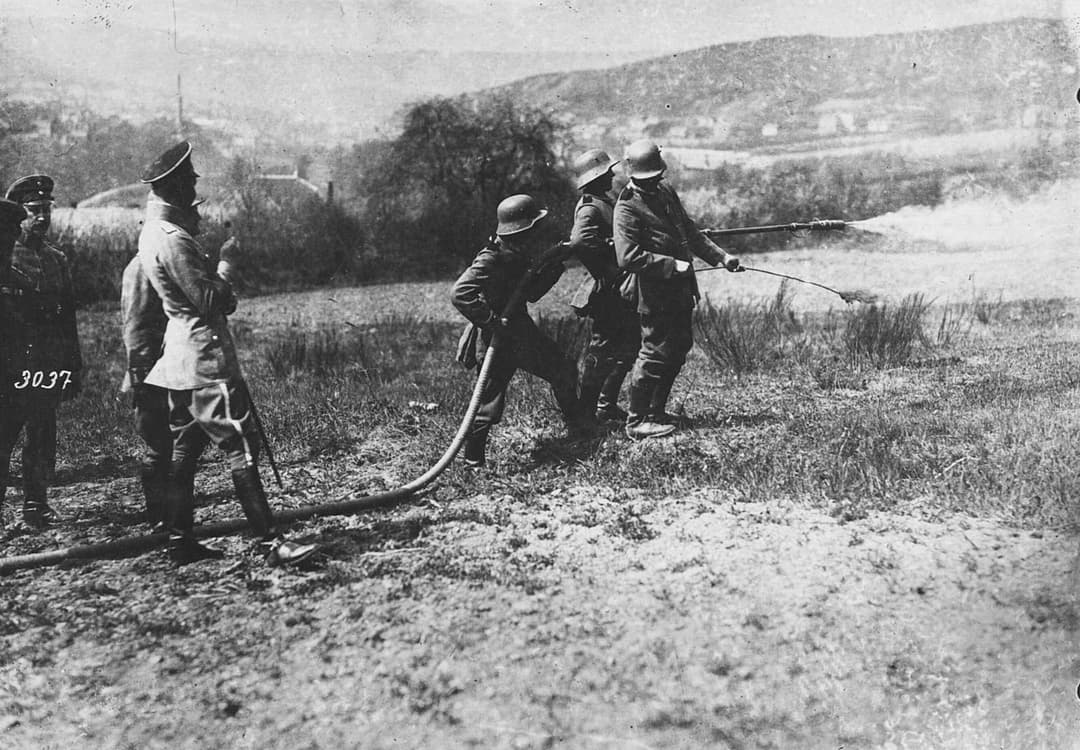
Crown Prince Wilhelm overseeing German soldiers use a flamethrower in Sedan (May 1917) - Public Domain

But as the war ground on and casualties mounted, the royal aura began to dim.

By 1916-17, food shortages and military failures had ordinary Germans increasingly questioning their leaders – even the once-sacrosanct Kaiser.

Still, outwardly, the Hohenzollerns clung to business as usual.

In the very midst of these hardships, they pressed on with constructing Cecilienhof Palace for the Crown Prince’s family, determined to show that the monarchy’s grand lifestyle would continue unabated. It was a decision as tone-deaf as it was opulent.

One could say the Hohenzollerns were rearranging the deck chairs on their own sinking ship – except in this case they were carving new ones out of solid oak, complete with gilding.

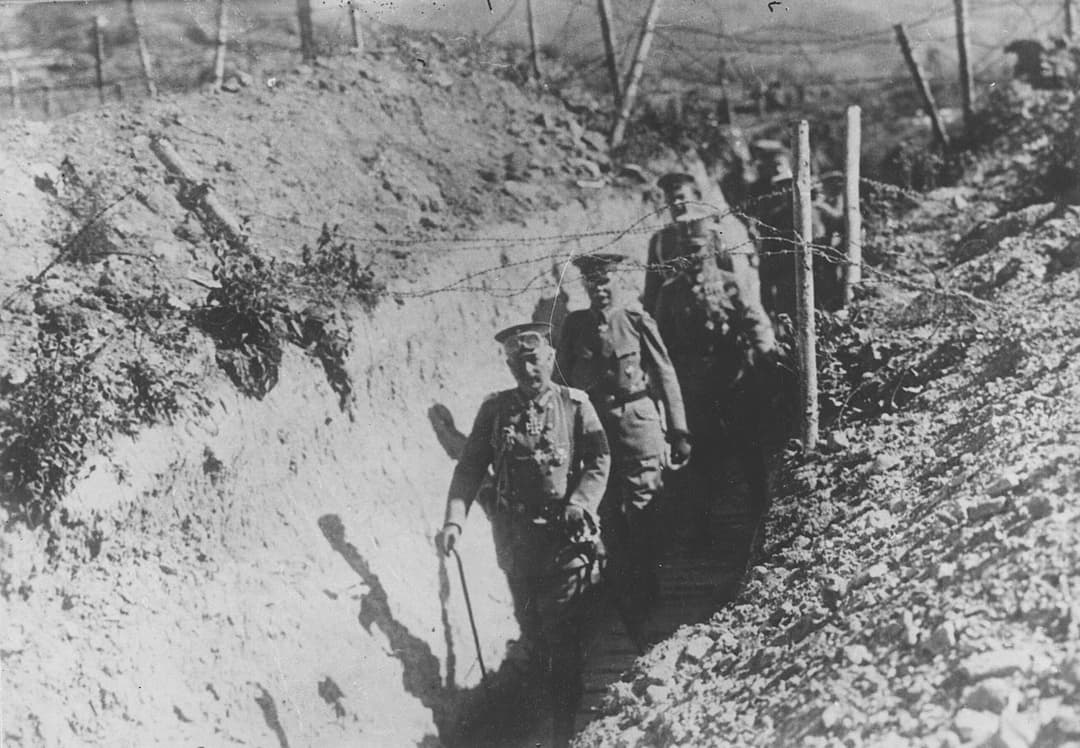
Kaiser Wilhelm II crosses a communication trench during a visit to the front on April 4th 1918, during the Spring Offensive - Public Domain

By late 1918, reality finally caught up with Imperial Germany’s ruling house.

Defeat in World War I appeared imminent.

The economy was in ruins, the military exhausted, and the German people – long obedient to the throne – were in a state of open revolt.

In Berlin, mutinous soldiers and workers took to the streets waving red flags.

On November 9th 1918, the Imperial Chancellor announced the Kaiser’s abdication before Wilhelm II had even agreed to it, in a desperate attempt to calm the upheaval.

The announcement worked – the crowds cheered the end of the monarchy.

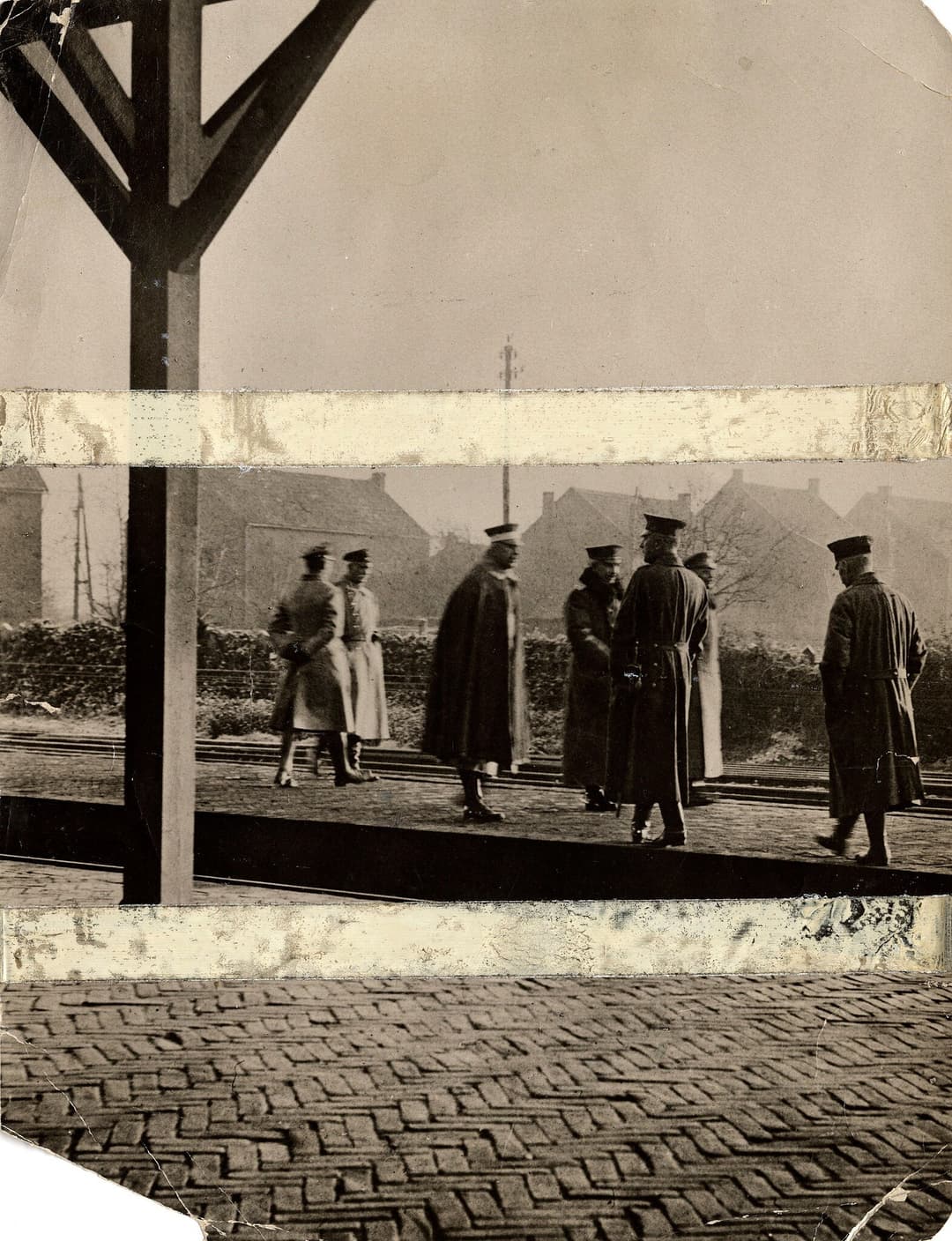
Stunned and bitter, Kaiser Wilhelm II reluctantly accepted that his reign was over and crossed the border by train into neutral Holland, where he would live in exile.

The German Empire was declared no more, replaced by a republic.

After Wilhelm II, no Hohenzollern would ever sit on a German throne again.

As one historian succinctly put it: “It was under [Wilhelm I] that the country was first formed in 1871… and it was under his grandson Wilhelm II that this empire fell in 1918.” The dynasty that had once seemed destined to rule indefinitely had been toppled in a matter of days.

Early the morning after his abdication, former Emperor Wilhelm II of Germany stands with his entourage on the platform of Eijsden (Eysden) station in the Netherlands (1918) - Public Domain

With the Kaiser’s flight, the Hohenzollern family’s world cracked apart.

Members of the royal household scrambled to secure what belongings and properties they could.

Empress Augusta Victoria (Wilhelm II’s wife) also went into exile, joining her husband in the Netherlands. Their sons and daughters were suddenly commoners in a republic that held little love for former princes.

Crown Prince Wilhelm, the man for whom Cecilienhof had been built, initially refused to accept defeat. He fled to neutral territory as well – the Dutch island of Wieringen – but nursed hopes of one day regaining his position.

At one point during the chaos of 1918, he even thought of marching on Berlin with loyal troops to restore order, only to abandon the plan. It was a futile fantasy. The new Weimar Republic was determined not to allow the monarchy’s return.

Nevertheless, the question of what to do with the ex-royal family – and their many castles, lands, and treasures – was a contentious issue in the republic’s early years.

–

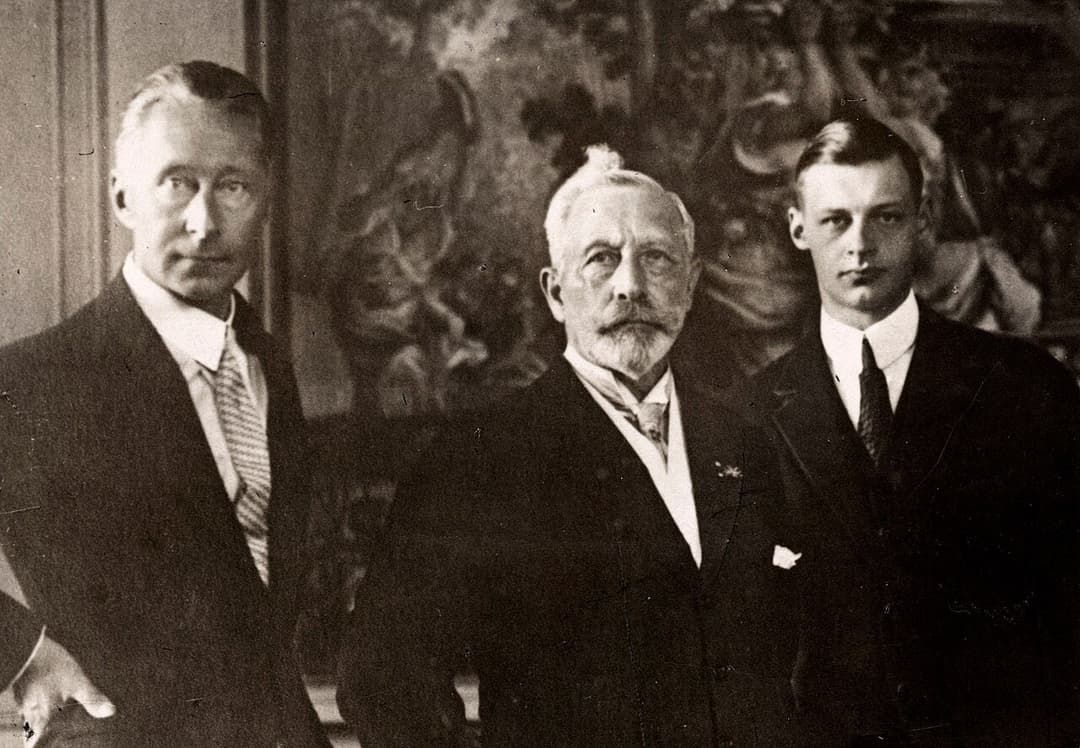
Christmas portrait of the former German Emperor, Wilhelm II, his son, and eldest grandson, Prince Wilhelm of Prussia (1927) - Public Domain

The Present-Day Hohenzollerns

“The Hohenzollerns built Germany as a fortress, but forgot to put windows in it.”
Emil Ludwig, biographer 1920s

After the First World War, the Hohenzollerns’ fortunes were drastically reduced but not entirely erased.

In the 1920s, a legal compromise was reached between the Weimar Republic and the House of Hohenzollern regarding the family’s vast property.

The government confiscated most of the former royal palaces and estates (some 75 properties, including grand residences like Berlin’s City Palace and Sanssouci in Potsdam, became public property).

However, the Hohenzollerns were allowed to keep or reclaim dozens of other assets – around 39 properties, according to contemporary accounts.

Crucially, Cecilienhof – being a personal residence built for the Crown Prince – was one of the places the family was permitted to use.

By 1926, an agreement confirmed that Cecilienhof belonged to the state but the ex-Crown Prince Wilhelm and his wife Cecilie had a hereditary right to live there.

In effect, the palace was theirs to inhabit for as long as they wished, up to three generations, unless they ever left it for good. It was a somewhat surreal arrangement: the former Kaiser himself was barred from returning to Germany, but his son and daughter-in-law were quietly tenanting a corner of their old kingdom, living in a palace as private citizens under a republic.

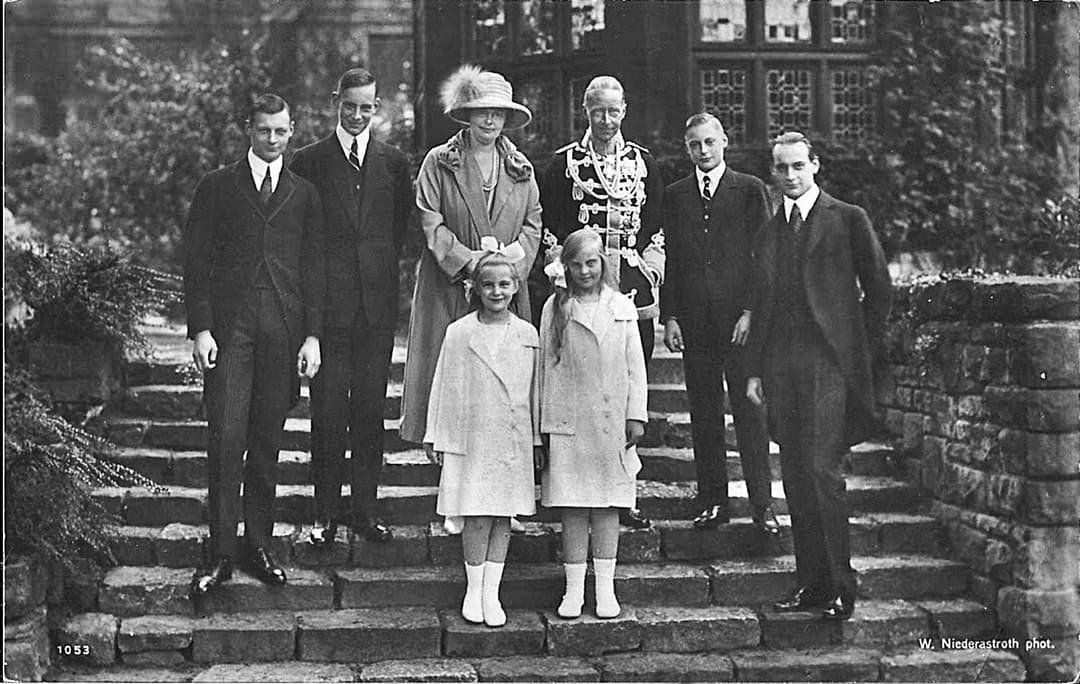
The Crown Prince and his children, with prince Cecilie, at Cecilienhof in 1925 - Public Domain

Throughout the 1920s and 1930s, Crown Prince Wilhelm and Cecilie did indeed reside at Cecilienhof, keeping up a semblance of aristocratic life.

Photographs from those years show the Crown Princess hosting tea parties in the palace gardens and the Crown Prince posing in a hunting outfit – scenes that could almost make one forget that the monarchy was no more.

But if the exterior looked tranquil, there was turbulence beneath.

The couple’s marriage had grown cold (the 176-room layout of Cecilienhof “Thank God,” as one wit quipped, allowed them to avoid each other within its vast halls). More ominously, the ex-Crown Prince grew entangled in politics, flirting with far-right movements that promised a restoration of the monarchy.

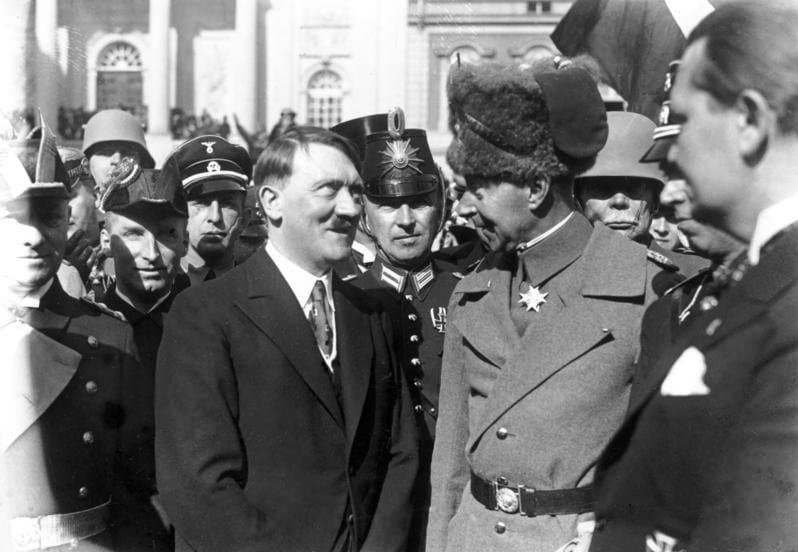
Reichskanzler Adolf Hitler und der Deutsche Kronprinz Wilhelm von Preußen im Gespräch während der Feier vor der Garnisonkirche in Potsdam - Bundesarchiv, Bild 102-14437 / Georg Pahl / CC-BY-SA 3.0

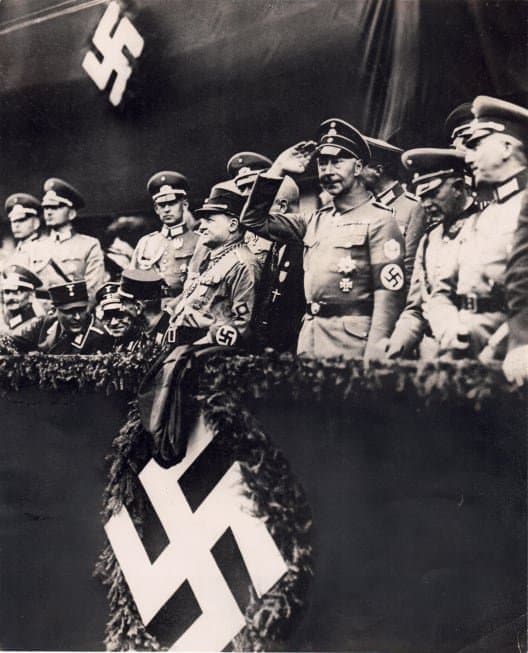
When the Nazi Party rose to prominence, Wilhelm – desperate for a comeback – saw Adolf Hitler as a possible vehicle to regain the throne.

In the early 1930s he publicly supported Hitler, even posing for press photos in a Nazi brownshirt and swastika armband at Cecilienhof. “Please be assured that I stand in line with all German comrades… prepared to do everything to bring your promises to success,” he wrote sycophantically to Hitler in 1936.

He even fantasized in 1932, “If I was to be made president and make Hitler chancellor; then I’d hold all the cards.”

Such moves proved to be both morally dubious and politically naïve.

Hitler had no intention of restoring the Hohenzollerns – once in power, the Führer viewed the ex-Crown Prince as a useful mascot at best, and at worst, a potential rival to sideline.

Indeed, after a Hohenzollern prince (Wilhelm’s own son) was killed fighting for the German army in 1940, public sympathy at the princely funeral alarmed Hitler enough that he forbade any members of former German royal families from serving in the military.

The would-be Kaiser Wilhelm III found himself sidelined, his hopes of regaining a crown fading as the Nazi regime marched toward a war of annihilation.

Crown Prince Wilhelm salutes at a Nazi parade in 1933 - Public Domain

The Second World War brought the final curtain down on the Hohenzollerns’ presence at Cecilienhof.

As Nazi Germany began collapsing in early 1945, Crown Prince Wilhelm took refuge in the relative safety of the West. Crown Princess Cecilie stayed at Cecilienhof until the bitter end – she only fled the palace in late February 1945. In her last days there, she hurriedly packed what she could; family lore holds that closets were left full and cherished furniture was abandoned in place. The royal residents had departed, this time likely knowing there was no coming back.

Indeed, when the Red Army captured Potsdam in April 1945, they seized Cecilienhof and all other Hohenzollern properties in the area. Later that year, the Soviet military administration formally dispossessed the Hohenzollerns of Cecilienhof and everything in it.

The Potsdam Conference - July 23rd 1945 - The main courtyard of Schloss Cecelienhof in 1945 - complete with its Soviet Red Star
The main courtyard of Schloss Cecelienhof in 1945 - complete with its Soviet Red Star/Image: US National Archives and Records

The once-luxurious palace turned into an officers’ club for Soviet troops, and then into a museum memorializing the Potsdam Conference. For the Hohenzollern family, the loss was total.

The Soviet and East German authorities confiscated what remained of their estates without compensation. The dynasty that had ruled Prussia for centuries ended the Second World War not only discredited by association with German militarism, but landless in the very heart of their old domains.

Yet the Hohenzollern story did not entirely end in 1945.

Surviving members of the family mostly relocated to the western zones of Germany (which became West Germany).

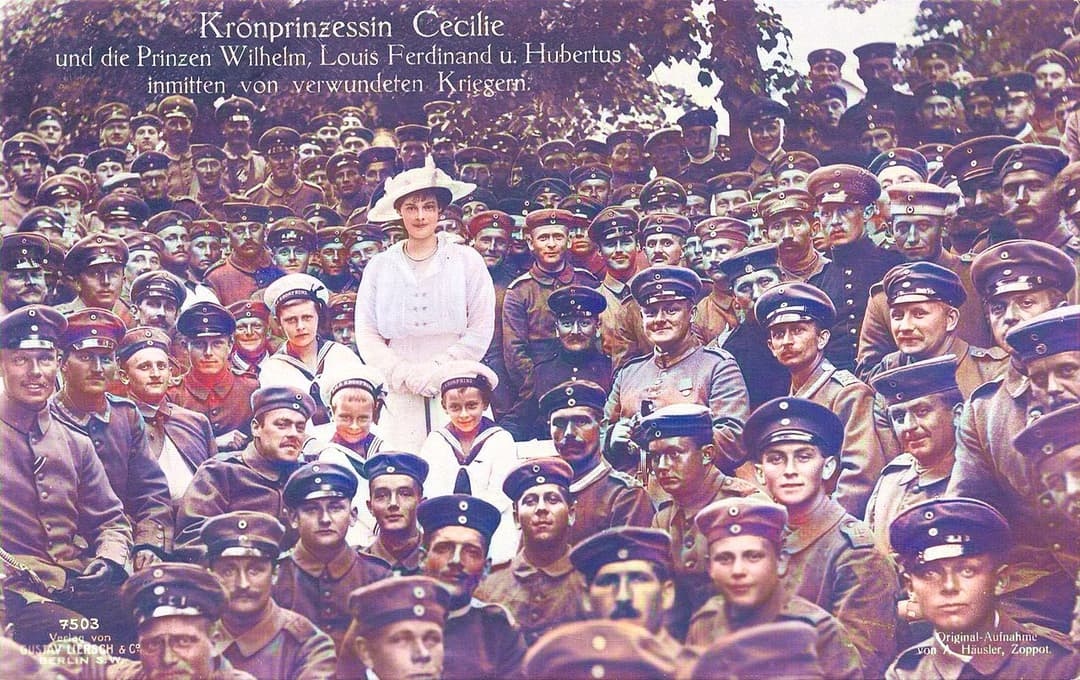
Prince Louis Ferdinand with his mother Crown Princess, Cecilie, and wounded German soldiers during the First World War - Public Domain

Prince Louis Ferdinand, a son of the ex-Crown Prince, emerged as the new head of the House of Hohenzollern after his father’s death in 1951. Louis Ferdinand had actually distanced himself from the Nazis during the war and was even involved in minor resistance circles – a fact that helped rehabilitate the family’s image somewhat in postwar years. Still, the Hohenzollerns remained a sensitive topic.

In West Germany, open monarchist sentiment was extremely scarce; the new republic was founded on democratic principles in pointed contrast to the imperial and Nazi past.

The former Kaiser died in exile in 1941, his wife Augusta Victoria having already passed away in 1921, never returning to Germany.

Crown Princess Cecilie lived until 1954, spending her final years quietly in West Germany (far from her beloved Cecilienhof, which by then lay behind the Iron Curtain in East Germany).

The younger generation of Hohenzollerns took up ordinary professions or managed what was left of the family’s wealth.

Some ran businesses; others, like Louis Ferdinand, devoted themselves to cultural and charitable work.

The family still retained one jewel in their crown: Hohenzollern Castle in Swabia (southwest Germany), their ancestral seat, which remained in Hohenzollern hands.

Burg Hohenzollern, the Hohenzollern ancestral home - Public Domain

In the postwar decades, Hohenzollern Castle was turned into a successful private museum and tourist attraction – a sort of German ‘Disneyland’ of Prussian monarchy, as its operators half-jokingly call it. There, behind medieval battlements, the public could gawk at Prussian royal artifacts and portraits of the Kaisers, while the Hohenzollern family quietly collected ticket fees to fund their upkeep.

It was an ironic inversion: once the public had paid taxes to support the Hohenzollern palaces; now the Hohenzollerns maintained a castle to entertain a paying public.

Fast forward to the present day, and the Hohenzollerns are still very much around – if no longer ruling anything except perhaps their family Facebook page.

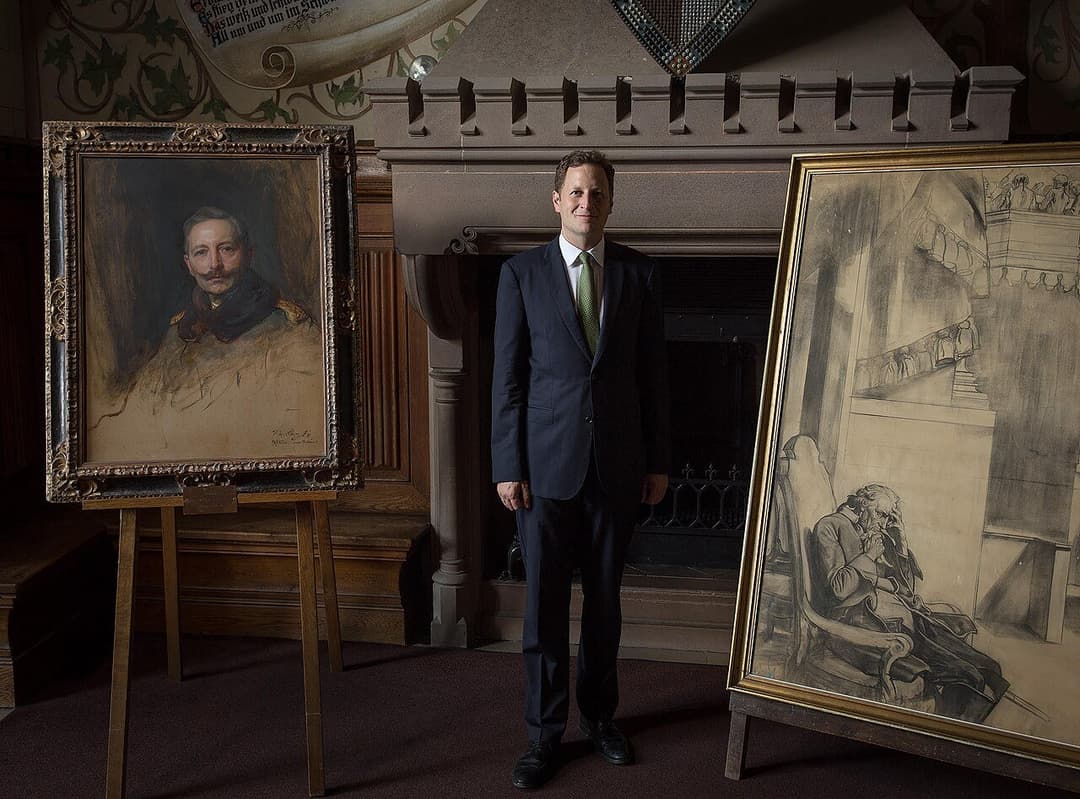
Georg Friedrich Prinz von Preussen (Georg Friedrich, Prince of Prussia), Burg Hohenzollern (2018) - Oliver Mark

The current head of the House of Hohenzollern is Georg Friedrich, Prince of Prussia, born in 1976, great-great-grandson of Kaiser Wilhelm II.

Far from living in imperial splendour, Georg Friedrich grew up in a modest home in rural Fischerhude, near Bremen. He earned a university degree in business and worked for a time like any normal citizen.

By all accounts, he is a down-to-earth family man with four young children – and yes, if Germany still had an emperor, he would be the Kaiser.

But Georg Friedrich harbors no delusions of lost thrones.

“Do you ever dream of being emperor, honestly?” a journalist once asked him. “No, I definitely do not,” he replied emphatically. “My family has no political responsibility in the country and I do not want to take on any. We have remained a cultural responsibility.”

In other words, the modern Hohenzollerns see themselves as custodians of heritage, not contenders for power. Prince Georg co-manages the family’s remaining properties (like Hohenzollern Castle) and lends support to historical preservation initiatives. He even occasionally changes diapers and goes grocery shopping like any other dad – a rather far cry from the bombastic Kaiser who was his great-grandfather.

Despite this unpretentious stance, the Hohenzollerns have not entirely stayed out of the public eye.

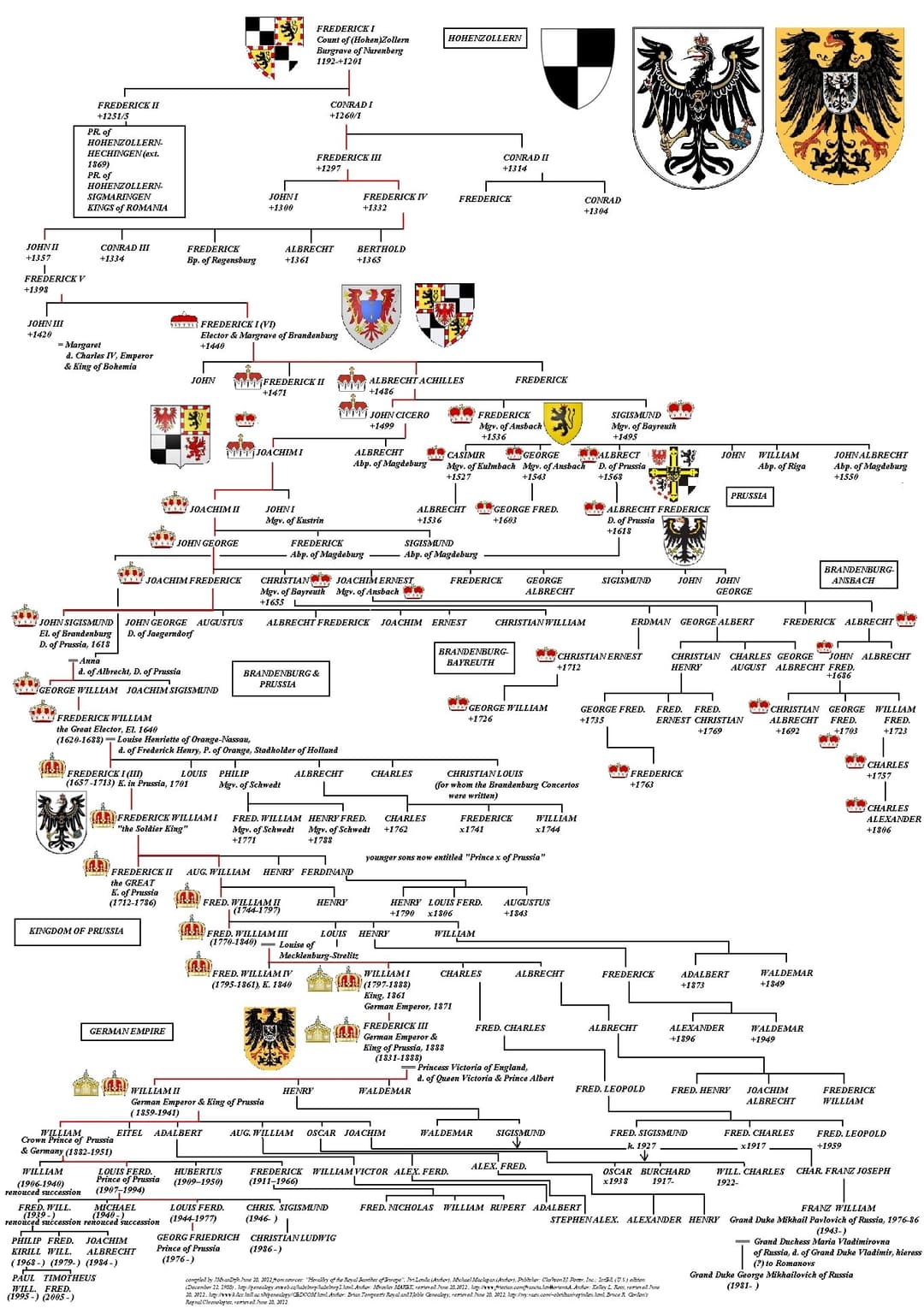
The Hohenzollern family tree - Public Domain

In recent years, Georg Friedrich pursued legal claims for compensation or return of certain family properties expropriated after World War II – including Cecilienhof Palace itself. German law allows restitution for properties seized by the Soviet occupying forces, but only if the former owners did not substantially support the Nazi regime.

This caveat dragged the Hohenzollerns into a heated historical debate over Crown Prince Wilhelm’s actions in the 1930s.

Critics produced letters and photos of the Crown Prince cozying up to Hitler, arguing that the Hohenzollerns “abetted the Nazi regime” and thus forfeited any right to compensation.

Georg Friedrich, defending his family legacy, pointed to other historians (such as the Cambridge professor Christopher Clark) who viewed the Crown Prince as politically inept and having little actual influence on Hitler’s rise. The dispute became headline news in Germany, underscoring how even a century after the Kaiser’s fall, feelings about the Hohenzollerns remain complicated.

Sensing that the controversy was harming the family’s reputation, Georg Friedrich eventually withdrew many of his claims in 2023 – essentially relinquishing the bid to regain residence at Cecilienhof and the art treasures in question. He stated that his great-grandfather’s flirtation with the Nazis was indefensible and “cannot be a source of tradition for our House.” This gesture of conciliation was met with relief in German political circles, if not a touch of cynicism from some commentators who found the timing convenient.

In any case, it appears Cecilienhof will remain a public museum, not a Hohenzollern home, for the foreseeable future.

–

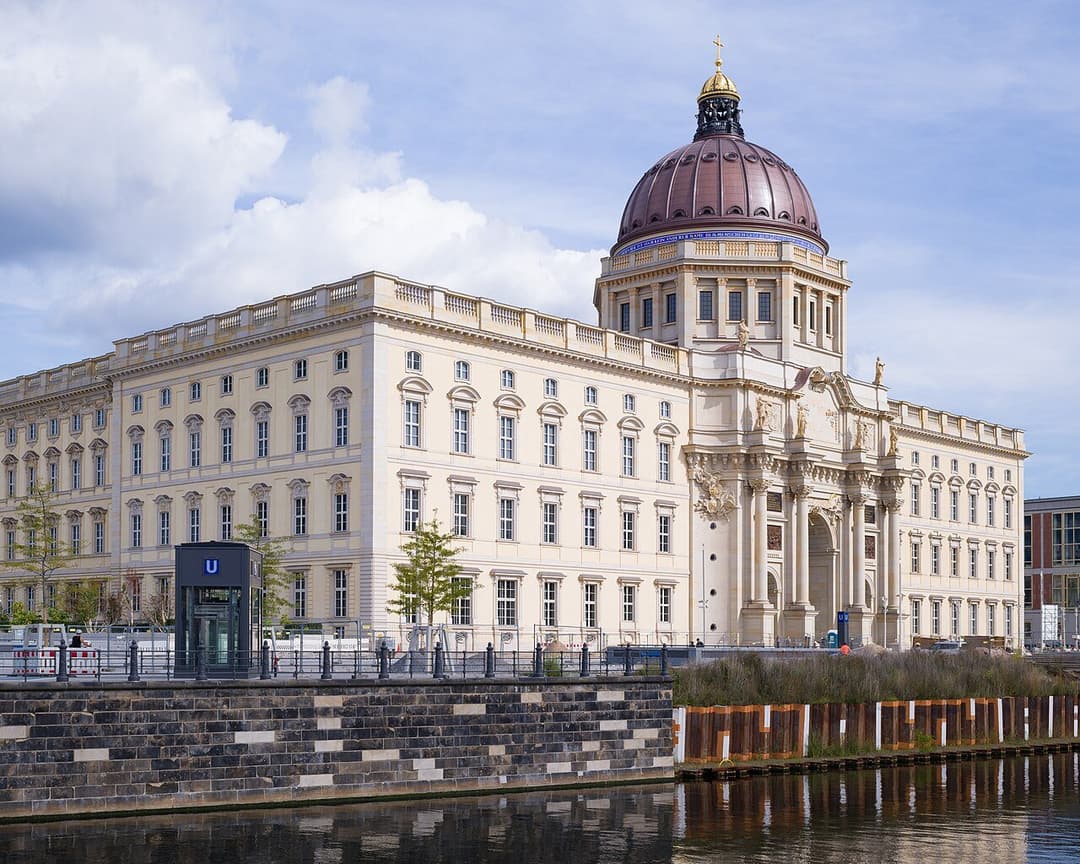
The Berlin Palace - the 'Buckingham Palace of Germany' - following its reonstruction in 2020 - Frank Schulenburg

Conclusion

“Prussia was not a country of charm, but a country of character. And the character was stamped by the Hohenzollerns.”
Theodor Fontane, German novelist

The saga of the Hohenzollern family – from their medieval origins, through the glory days of Prussian kings and German Kaisers, to their abrupt fall and twilight existence – reads almost like a Wagnerian opera.

It is a tale of meteoric rise and tragic hubris, complete with towering castles and crushing defeats. Along the way, a few persistent myths have grown up around the Hohenzollerns.

One common misconception is that the dynasty simply vanished after 1918.

In truth, while the institution of the monarchy was abolished, the Hohenzollern family lived on – adapting, surviving, and still occasionally making headlines (or television dramas). Members of the clan continued to walk the corridors of Cecilienhof into the 1940s, and today their descendants walk among us, perhaps unrecognised in the supermarket or on the school run.

Another myth, conversely, is the romantic notion held by a smattering of monarchists that the Hohenzollerns could someday return to the throne if Germany would only invite them. This idea, too, belongs firmly in the realm of fantasy.

Modern Germany is deeply allergic to any hint of restored royalty – a legacy not just of Nazi and communist propaganda against “Prussian militarism,” but of a broad postwar consensus that democracy and equality should leave no room for crowns and titles.

While polls occasionally show a small minority of Germans open to a ceremonial monarchy, no serious political force advocates for it. As one German commentator wryly observed, “One in five Germans might like the idea of a king – but five in five politicians know it’s never going to happen.”


Bibliography

Beevor, Antony (2002). Berlin: The Downfall 1945. Viking. ISBN 978‑0‑67‑003041‑5
Clark, Christopher (2006). Iron Kingdom: The Rise and Downfall of Prussia, 1600–1947. Allen Lane. ISBN 978‑0‑14‑029334‑0
Hoyer, Katja (2021). Blood and Iron: The Rise and Fall of the German Empire 1871–1918. The History Press. ISBN 978‑0‑7509‑9622‑8
MacDonogh, Giles (2001). The Last Kaiser: William the Impetuous. St. Martin’s Press.
Malinowski, Stephan (2020). Nazis and Nobles: The History of a Misalliance. Oxford University Press.
Mee, Charles L. (1975). Meeting at Potsdam. M. Evans & Co. ISBN 978‑0‑87131‑167‑2
Müller, Heike (2019). Die Hohenzollern und die Nazis. Ch. Links Verlag. ISBN 978‑3‑549‑10029‑5
Palmer, Alan (1978). The Kaiser: Warlord of the Second Reich. Weidenfeld & Nicolson.
Röhl, John C. G. (2014). Wilhelm II: Into the Abyss of War and Exile, 1900–1941. Cambridge University Press.

Liked this piece? Have a look at the Berlin Experiences tours that cover this history.

See the Prussian Berlin TourMore articles →

Share this piece

Know someone who still believes it?

Explore in person

Tours that address this myth.

The Prussian Berlin Tour
One Hour1 Hour

The Prussian Berlin Tour

Private 1-hour walking tour of Berlin's Prussian royal centre for up to 10 people. Starts at the Rotes Rathaus near Alexanderplatz.

€200up to 10
View Tour
The Glory Of Prussia Tour - Berlin Experiences
Full Day6 Hours

The Royal Potsdam Tour

Private 6-hour day trip from Berlin to the palaces and parks of Potsdam for up to 6 people. Starts at your hotel in Berlin.

€1,000up to 6
View Tour

More reading

The other myths, busted.

49 more — drag, scroll or use the arrow keys.

Soviet troops pose next to the Reichsadler as it once appeared on top of Tempelhof Airport (1934) - Public Domain
Are There Any Nazi Statues Left In Berlin?
US Army soldiers crossing the Rhine (1945) - Public Domain
Could The Western Allies Have Captured Berlin?
Women at Ravensbrück - where Elizabeth Rothschild was imprisoned and died
Did Any Of The Rothschild Dynasty Die In The Holocaust?
Frederick the Great - Der Konig Uberall
Did Frederick The Great Introduce The Potato To Germany?
Adolf Hitler Eastern Front
Did Hitler Escape To Argentina In 1945?
March of SA men in uniform giving the Hitler salute - on their way to Kaffelstein (1933) - State Archives of Baden-Württemberg, Wertheim State Archives SN 70 G 4135
Did Hugo Boss Design The Nazi Uniforms?
Rudolf Hess (1933 & 1945) - Public Domain
Did Rudolf Hess Really Commit Suicide?
Dismantling the German experimental nuclear pile at Haigerloch (April 1945) - Public Domain
Did The Nazis Develop Nuclear Weapons?
Did The Nazis Invent Decaf Coffee? – Mythbusting Berlin
Did The Nazis Invent Decaf Coffee?
German infantry on bicycles during the invasion of the Soviet Union
Did The Nazis Invent The Bicycle Reflector?
The site of the Nazi's Operation Bernhard counterfeiting operation: KZ Sachsenhausen
Did The Nazis Run The Largest Counterfeiting Operation In History?
Surrender of Berlin - 1945
Did The Second World War End In Berlin?
Spanish Flu & the rise of Nazi Germany
Did The Spanish Flu Pandemic Help The Nazis Take Power?
One of the final photos of Adolf Hitler, taken on March 20th 1945 -Public Domain
Have Adolf Hitler’s Remains Been DNA Tested?
Prisoners at Sachsenhausen Concentration Camp attend roll call (1937) - Public Domain
How Did The Nazi Concentration Camps Differ From The Soviet GULAG?
The construction of the first actual Berlin Wall in August 1961 - Public Domain
How Long Did It Take To Build The Berlin Wall?
The remains of the Bürgerbrauhalle after an assassination attempt against Adolf Hitler in 1939 - Bundesarchiv, Bild 183-E12329 / Wagner / CC-BY-SA 3.0
How Many Assassination Attempts On Adolf Hitler Were There?
Evidence of Jewish prisoners at Auschwitz-Birkenau being undressed and led to their deaths - Public Domain
How Many Jews Died In The Holocaust?
A sign at the Berlin Wall in East Berlin (November 1961) declares, “Whoever attacks us will be destroyed," - Public Domain
How Many People Died Trying To Escape East Germany?
Berlin's Nikolaiviertel
How Old Is Berlin?
Adolf Hitler practices his speech techniques
Was Adolf Hitler A Drug Addict?
Adolf Hitler practicing his oratory skills - Public Domain
Was Adolf Hitler A Freemason?
Adolf Hitler practicing his oratory skills - Public Domain
Was Adolf Hitler Gay?
Adolf Hitler practicing his oratory skills - Public Domain
Was Adolf Hitler Jewish?
Hertha Heuwer - the inventor of Currywurst - Public Domain
Was Currywurst Invented In Berlin?
Fanta advertising from the 1940s - Public Domain
Was Fanta Invented By The Nazis?
Frederick the Great at the Battle of Zorndorf by Carl Roechling (1911)
Was Frederick The Great Gay?
Henry Ford
Was Henry Ford A Nazi?
Franz Rudolf Frisching portrait in 1785 in Prussian Blue.
Was The Colour Blue Invented In Berlin?
Döner Kebab
Was The Döner Kebab Invented In Berlin?
Menschen am Potsdamer Platz auf der Westseite der Berliner Mauer am 11. November 1989
Was The Fall Of The Berlin Wall An Accident?
The Nazi Party in parliament (1935)
Was The Nazi Party Democratically Elected?
The Allied bombing of Wesel during the Second World War - Public Domain
Were The Allied Bombings Of Germany War Crimes?
Photograph of the Hadamar killing centre with a smoking chimney, (1941) - Hadamar Memorial Museum
Were The Nazi Medical Experiments Useful?
The Oath of the Horatii by Jacques-Louis David - Public Domain
What Are The Origins Of The Nazi Salute?
Members of the Hitler Youth parade in the formation of a swastika to honor the Unknown Soldier. Germany, August 27th 1933 - Public Domain
What Are The Origins Of The Nazi Swastika?
Pink pipes in Berlin - Public Domain
What Are The Pink Pipes In Berlin?
A street battle between revolutionaries and the royal military in the Breite Strasse Street, Berlin during the March 1848 revolution - Public Domain
What Do The Colours Of The German Flag Symbolise?
Adolf Hitler's Alligator - Saturn
What Happened To Adolf Hitler’s Alligator?
Adolf Hitler (right) and Benito Mussolini (left) in Munich, Germany, 1937 - Public Domain
What Is The Difference Between Fascism & Nazism?
Checkpoint Charlie in 1989
What Was Checkpoint Charlie?
The crowning of Wilhelm I as German Emperor and the birth of Germany in 1871
What Was Prussia?
United States Air Force building a runway for Operation Vittles planes (1948) - Public Domain
What Was The Berlin Airlift?
A close-up of the Socialist Kiss painted on the East Side Gallery - LeO Tiresias
What Was The Socialist Kiss?
Construction of the Berlin Wall at the Brandenburg Gate
Who Built The Berlin Wall?
Soviet flag on the Reichstag - 1945
Who Really Raised The Soviet Flag On The Reichstag?
Inside the Reichstag Plenary Chamber/Image: United States Holocaust Memorial Museum
Who Was Really Responsible For The Reichstag Fire?
The defendants at the Nuremberg Trial (1946) - Public Domain
Who Were The Last Nazis On Trial?
The Brandenburg Gate at night
Why Is Berlin The Capital Of Germany?