Skip to content
Henry Ford

Berlin Experiences/Mythbusting Berlin

Was Henry Ford A Nazi?

In belief, yes. Ford never joined the Nazi Party, but he shared and actively promoted the core tenets of Nazi ideology, above all its antisemitism.

By Matt Robinson · Updated · 17 min read

“It is the Jews who govern the stock exchange forces of the American Union. Every year makes them more and more the controlling masters of the producers in a nation of one hundred and twenty million; only a single great man, Ford, to their fury, still maintains full independence.”
Adolf Hitler, Mein Kampf (1935)

History, in its relentless pursuit of clarity, often simplifies the past into a series of easily digestible narratives. 

We crave heroes and villains, clear-cut motives and unambiguous outcomes. Yet, the past is rarely so accommodating. 

It is a messy, complicated, and often contradictory affair. 

Take, for instance, the term “Nazi.” 

Once a derogatory epithet for a member of the National Socialist German Workers’ Party, it has morphed into a generic term for a supporter of a defunct and universally reviled ideology.

The irony, of course, is that the Nazis themselves shied away from the term, preferring the more formal “National Socialist.” It was their enemies who weaponised the folksy, almost comical-sounding “Nazi” – then interpreted as a backwards farmer or peasant, or an awkward, clumsy yokel – as a term of derision.

Could one of the titans of 20th-century industry, a man whose name is synonymous with American ingenuity and the rise of the middle class, be counted among their number?

The question has lingered for decades: Was Henry Ford, the automotive pioneer who put the world on wheels, a Nazi?

The answer, like history itself, is not a simple yes or no.

It is a journey into the dark corners of a brilliant but deeply flawed mind, a story of populism twisted into prejudice, and a cautionary tale about the immense harm that can be wrought by a man of immense influence.

To understand the depths of Ford’s complicity, we must first understand the man himself.

–

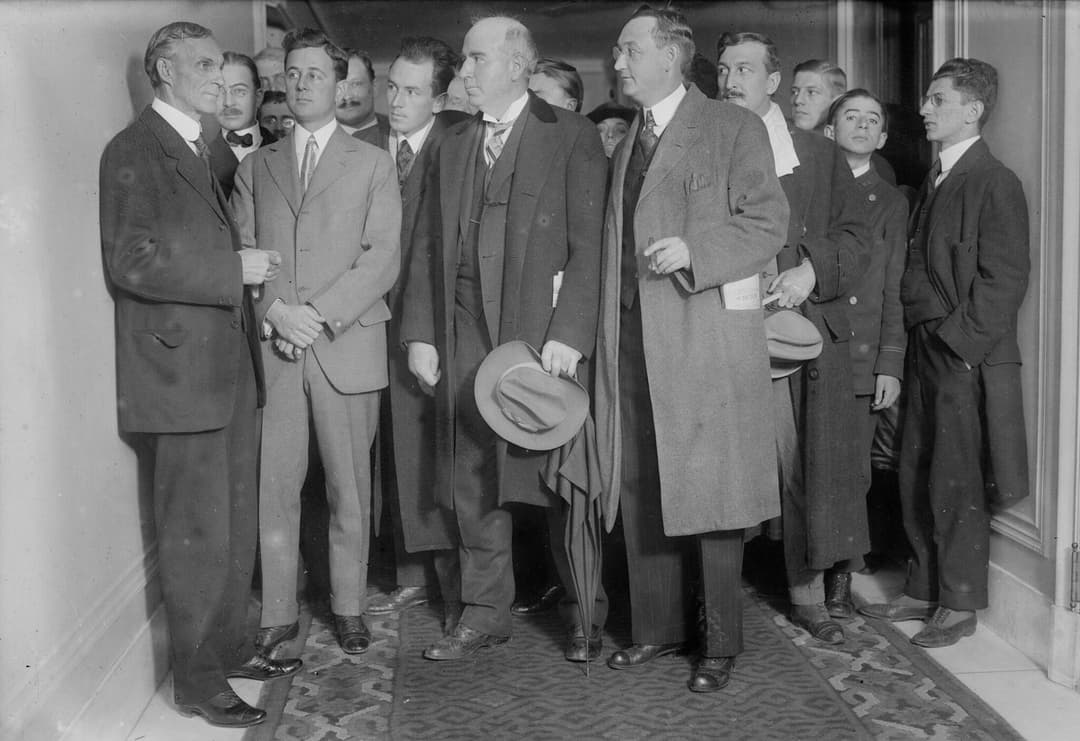
Henry Ford being interview in December 1915 - Public Domain

The Man With The Motor Car

“The great need of the world has always been for leaders. With more leaders we could have more industry. More industry, more employment and comfort for all.”
Henry Ford, quoted in Barron’s (1931)

Born on a farm in Springwells Township, Michigan, in 1863, Henry Ford was a quintessential product of the American heartland.

From a young age, he displayed a remarkable aptitude for mechanics. A pocket watch gifted to him by his father at the age of 13 was promptly disassembled and reassembled, a feat that impressed friends and neighbors who soon brought him their own timepieces for repair. This innate curiosity and talent for tinkering would define his life’s work.

Unsatisfied with the drudgery of farm life, Ford left home at 16 to become a machinist’s apprentice in Detroit. He honed his skills, learning to operate and service steam engines, and even took up bookkeeping. After marrying Clara Ala Bryant in 1888 and the birth of their son, Edsel, in 1893, Ford’s ambition only grew.

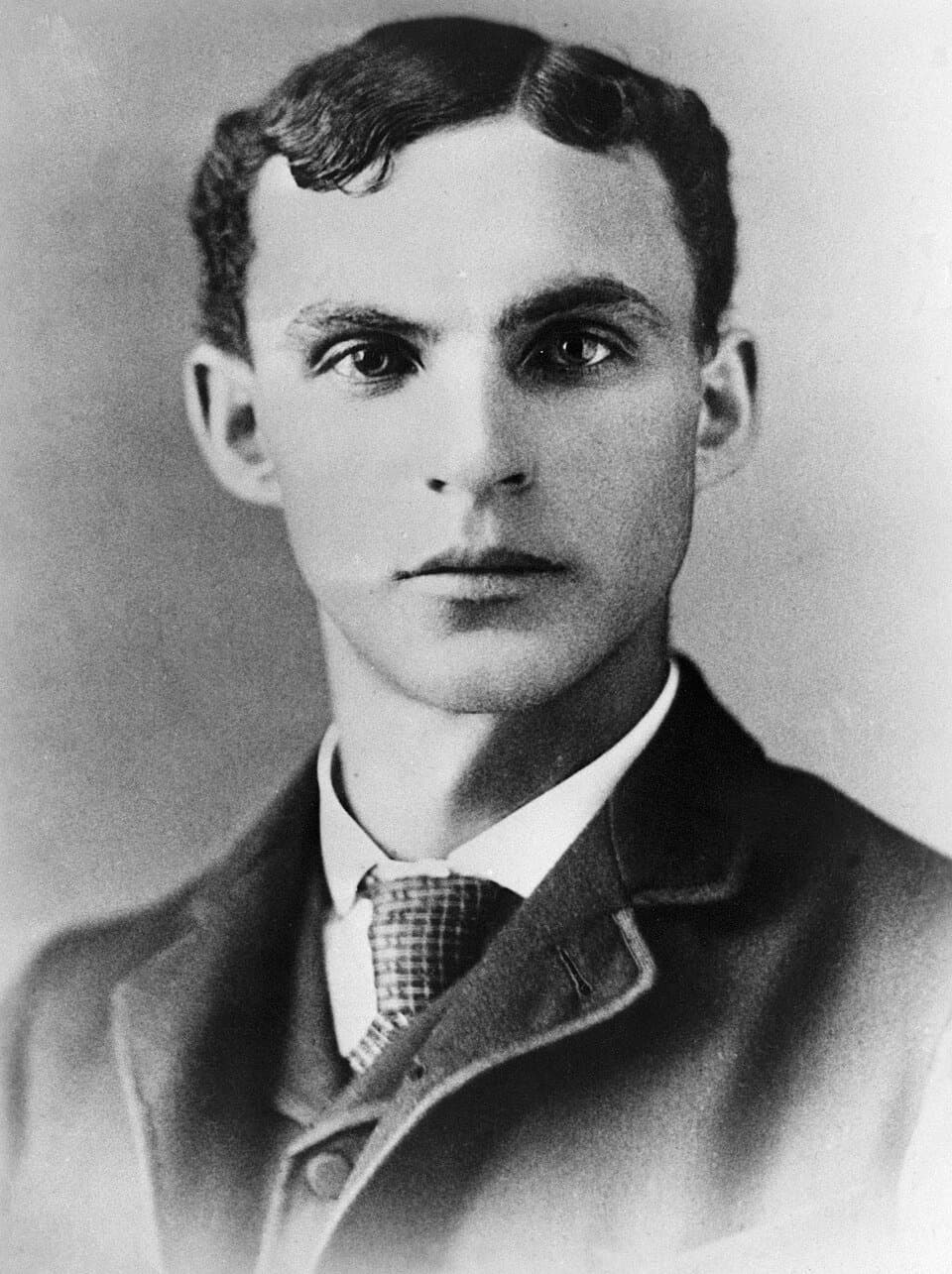
Henry Ford (1888) - Public Domain

While working as an engineer at the Detroit Edison Company, a position he rose to through his natural talents, he secretly worked on his own ‘horseless carriage’.

In a small shed behind his home, he built his first gasoline-powered buggy, the Quadricycle, in 1896. A meeting with Thomas Edison himself, who encouraged the young engineer’s automotive experiments, further fueled Ford’s determination.

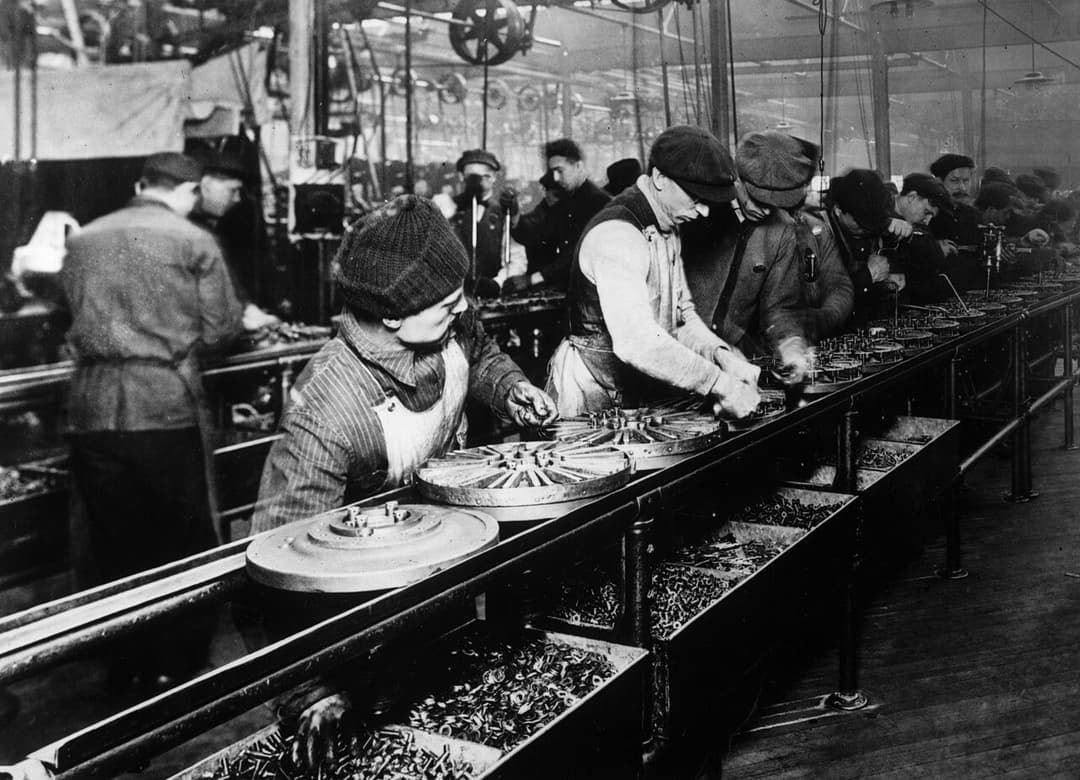
A Ford assembly line in Highland Park, Michigan (1913) - Public Domain

After a few false starts and failed business ventures, Ford, along with a group of investors, founded the Ford Motor Company in 1903.

The rest, as they say, is history.

Ford’s introduction of the moving assembly line revolutionised industrial production, slashing the time it took to build a car from over 12 hours to a mere 2.5.

The result was the Model T, a car so affordable that it transformed the automobile from a luxury for the rich into a practical tool for the masses.

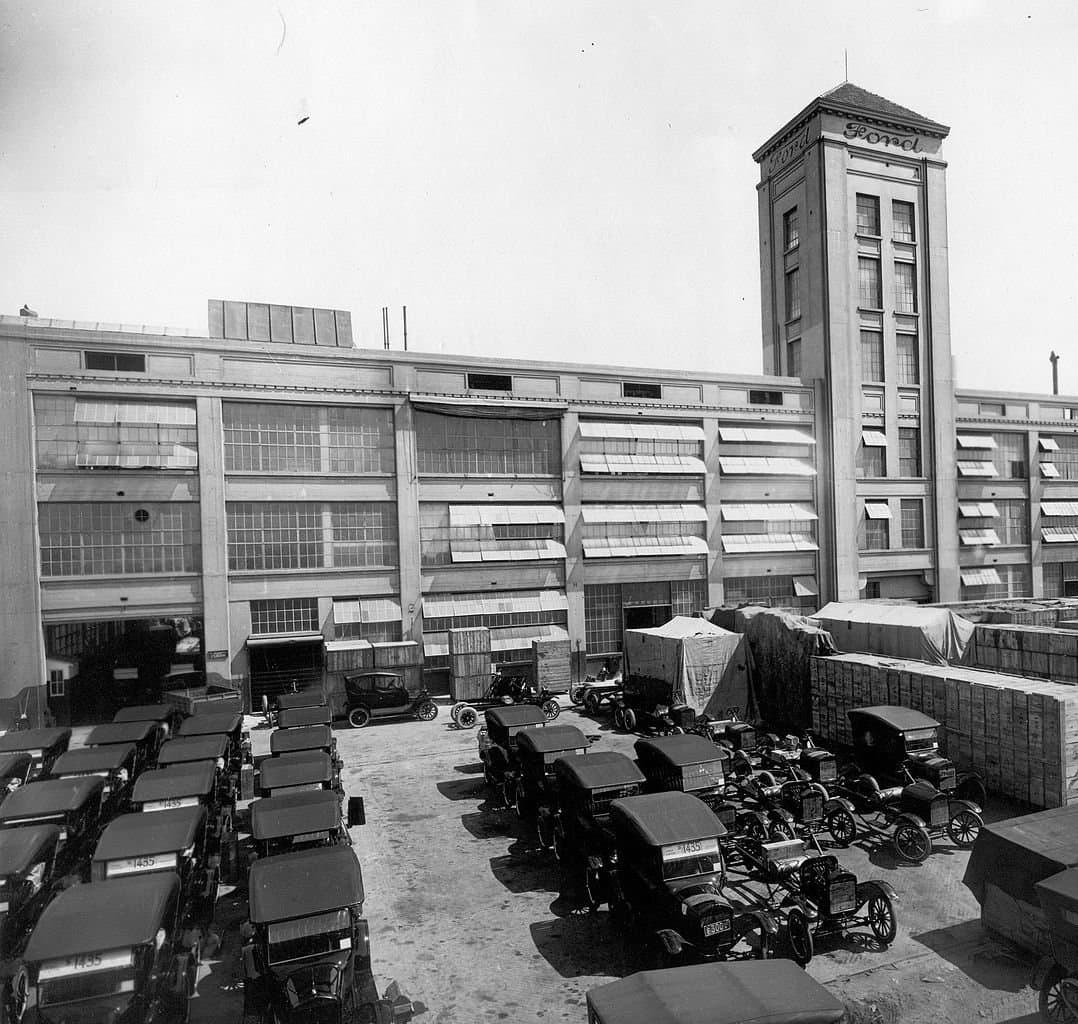
The Ford office in Argentina with Model T series vehicles in the foreground (1913) - Public Domain
Argentina with Model T series vehicles in the foreground (1913) - Public Domain

Ford became a folk hero, a symbol of American innovation and upward mobility. His decision to pay his workers a then-unheard-of five dollars a day was hailed as a stroke of genius, a way to create a loyal workforce and a new class of consumers who could afford the very products they were building.

Yet, beneath this veneer of benevolent capitalism lay a darker, more troubling ideology.

–

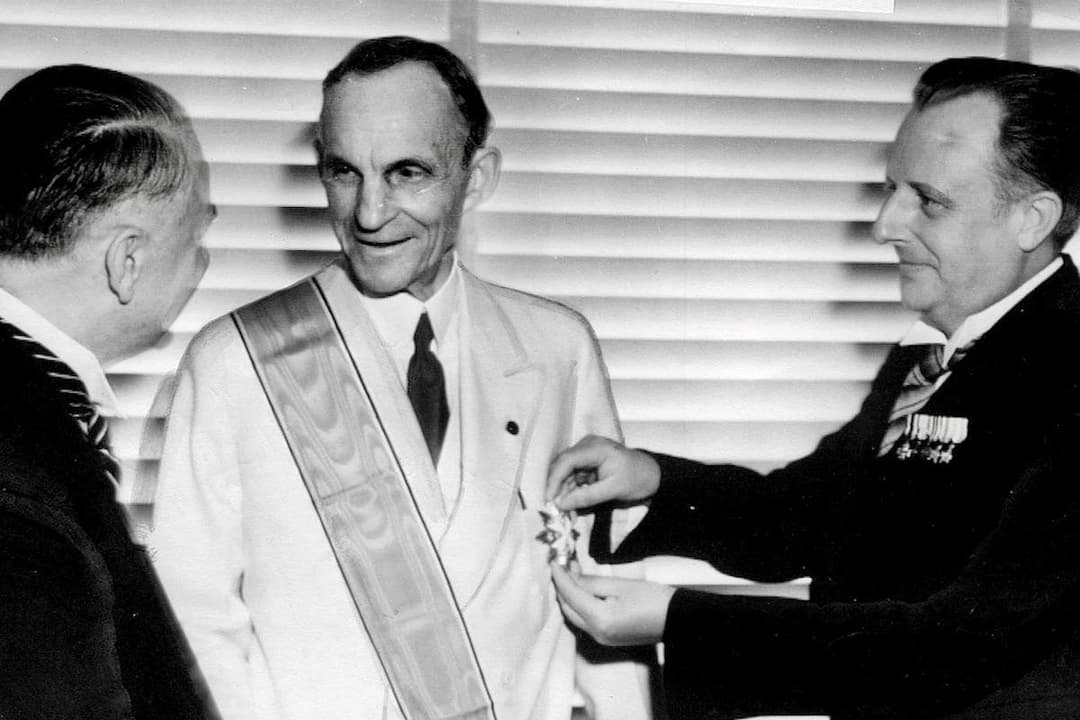
Henry Ford receiving the Grand Cross of the German Eagle from Nazi officials, July 30th 1938, on his 75th birthday - Public Domain

Politics, Race, & The Nazi Party

“If fans wish to know the trouble with American baseball they have it in three words—too much Jew.”
Henry Ford, 1920

Henry Ford was a man of contradictions.

A staunch pacifist who opposed America’s entry into the First World War, he was also a fervent anti-Semite who used his vast fortune and influence to spread a message of hate. This seemingly paradoxical combination of beliefs can be traced to his populist roots.

Ford, the self-made man from the heartland, harbored a lifelong suspicion of East Coast elites, international financiers, and Wall Street bankers. Groups he came to associate, in his increasingly paranoid worldview, with a global Jewish conspiracy.

His chosen mouthpiece for this virulent ideology was a small local newspaper, The Dearborn Independent, which he purchased in 1918. For the next seven years, the paper’s weekly circulation of nearly a million was used to relentlessly attack Jewish people. Every Ford dealership nationwide would carry the paper and distribute it to its customers.

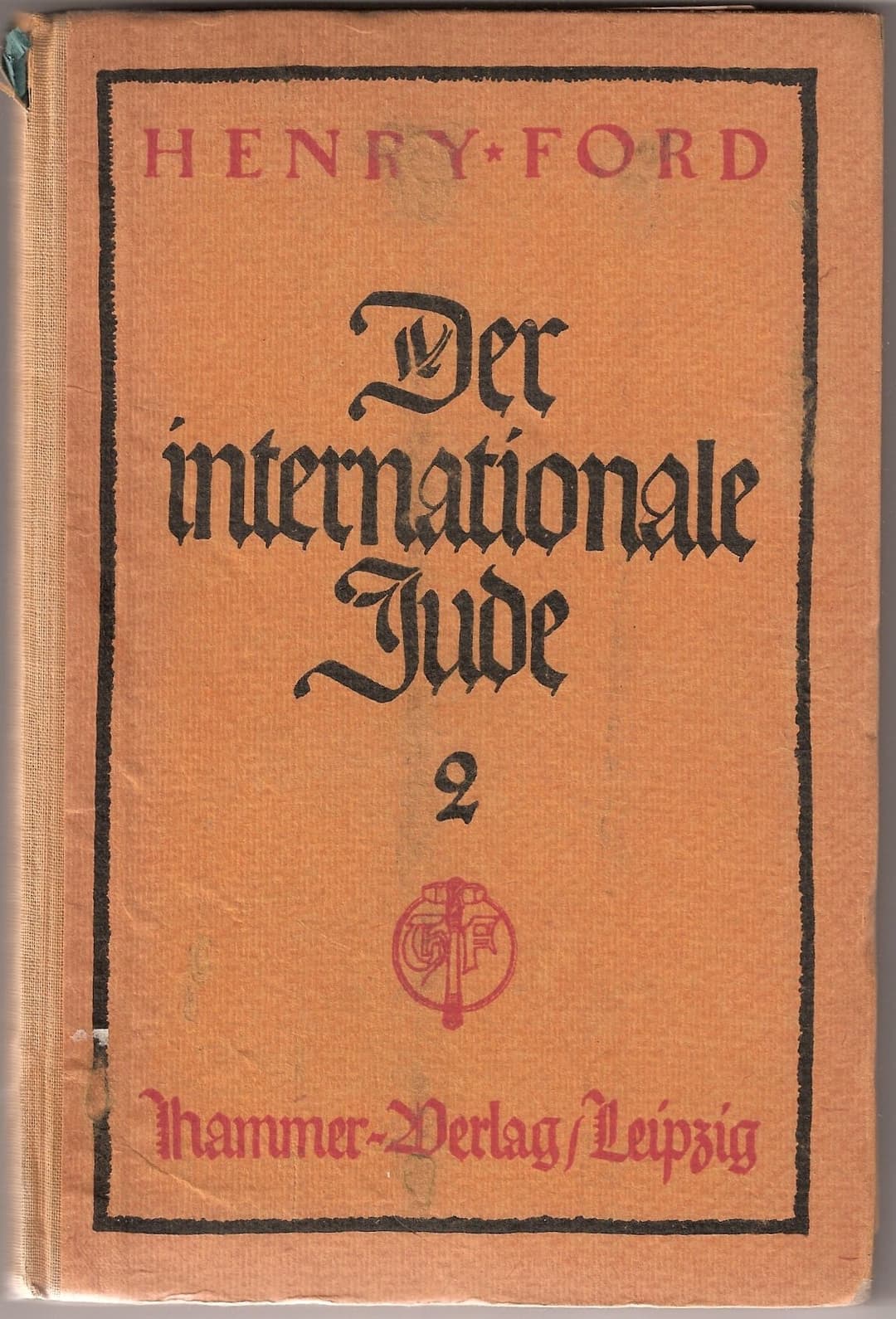
Under Ford’s direction, a series of ninety-one articles were published in 1920 under the banner of ‘The International Jew: The World’s Foremost Problem’.

The German edition of Henry Ford's publication: 'The International Jew' - Public Domain

These articles, soon compiled into a four-volume set of books, were a rambling and incoherent screed, a hodgepodge of anti-Semitic tropes and conspiracy theories. They accused Jews of instigating World War I, controlling the global financial system, conspiring to exploit American farmers, and corrupting American culture through Hollywood, bootleg liquor, and Jazz music.

The books were titled:

  • The International Jew: The World’s Foremost Problems (vol. 1);
  • Jewish Activities in the United States (vol. 2);
  • Jewish Influences in American Life (vol. 3);
  • and Aspects of Jewish Power in the United States (vol. 4)

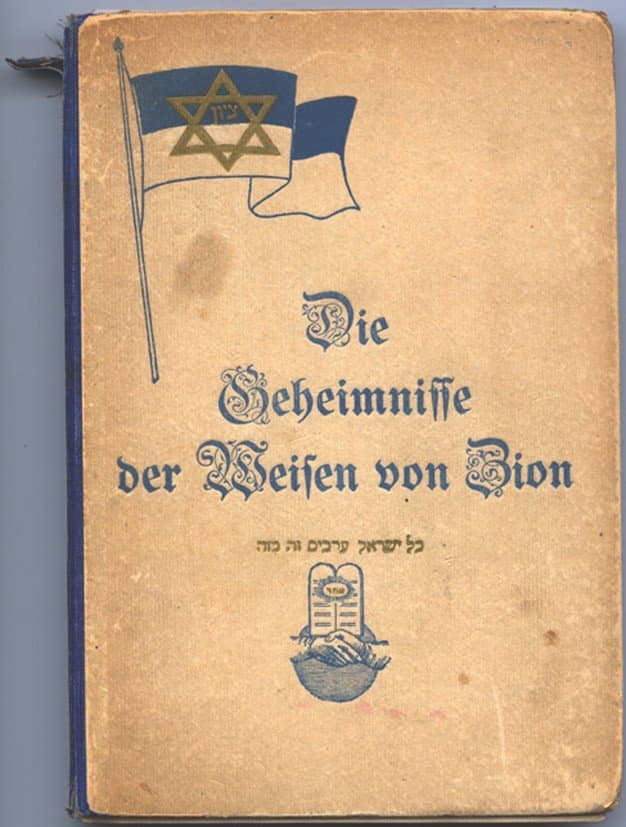
The primary source for much of the ‘evidence’ presented in ‘The International Jew’ was ‘The Protocols of the Elders of Zion’, a notorious and long-discredited forgery that purported to be the minutes of a secret meeting of Jewish leaders plotting to take over the world.

The Secrets of the Wise Men of Zion - published in Charlottenburg, Germany, 1920 - US Holocaust Memorial Museum

Ford’s newspaper gave this repugnant piece of propaganda a new lease on life, introducing it to a wide American audience and lending it a veneer of respectability.

More than a mere personal prejudice, Ford’s anti-Semitism was a core component of his political philosophy.

He believed that an international Jewish cabal was undermining the traditional, agrarian way of life that he so cherished. His attacks on Jews were, in his warped view, a defense of the common man against the corrupting influence of global elites.

This populist-fueled anti-Semitism found a receptive audience in a post-war America grappling with social and economic upheaval – and spread like a bacillus back across the Atlantic. Finding a receptive audience amidst the economic and political turmoil of 1920s Germany.

Translated into German in 1922, ‘The International Jew’ was openly cited as an influence by members of the rising National Socialist movement – becoming a key text in the country’s burgeoning right-wing nationalist scene. The book would be published by Theodor Fritsch, founder of several antisemitic parties and a member of the Reichstag, Fritsch heavily involved in influencing German anti-Semitic discourse.

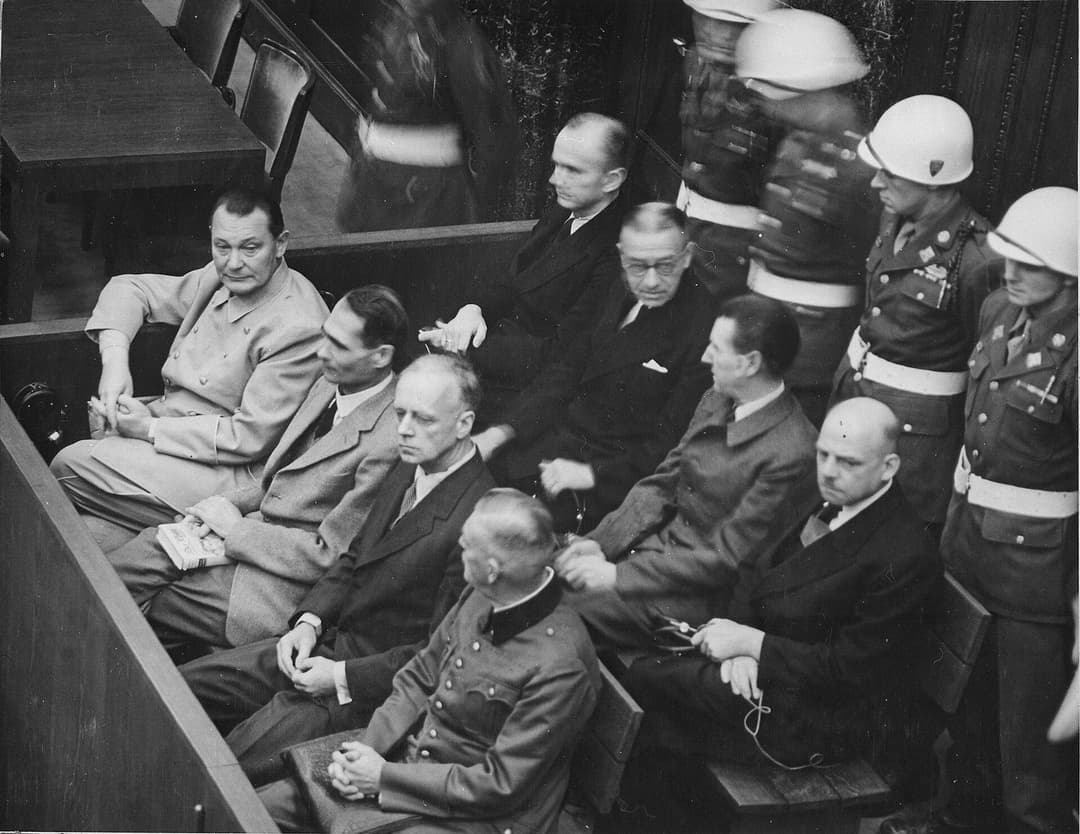
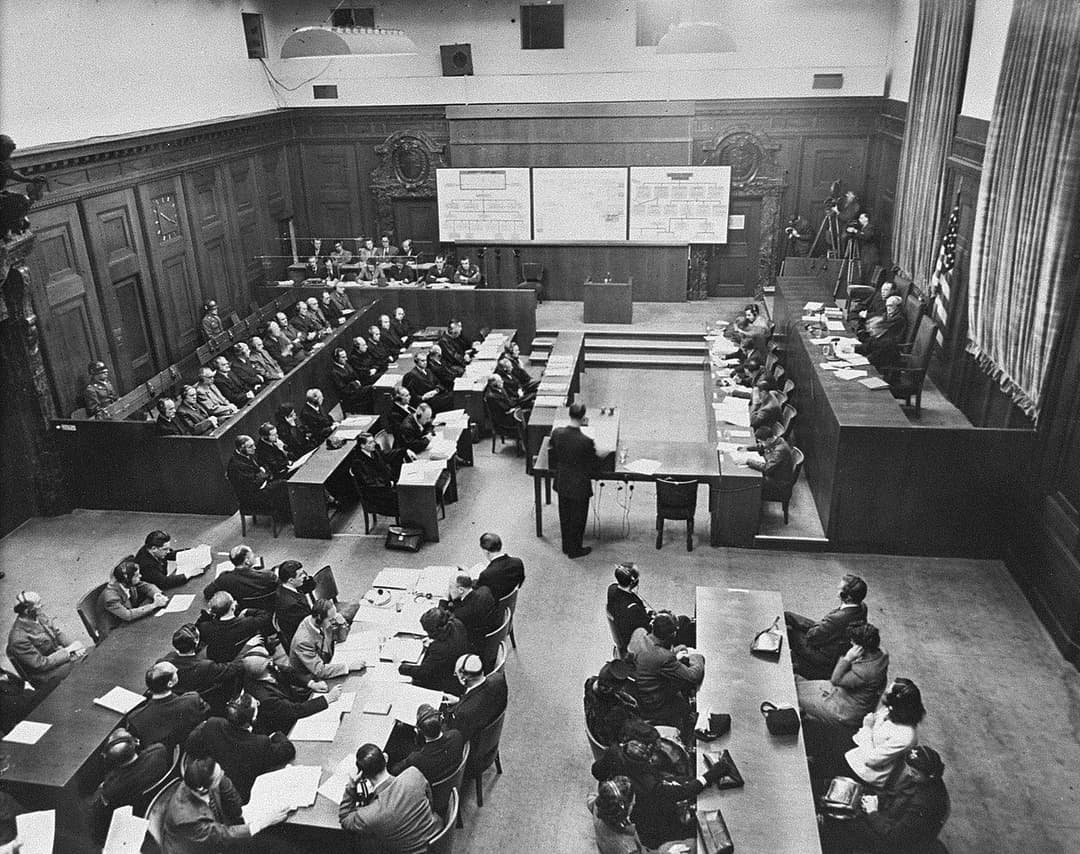
Baldur von Schirach, (second row, second from right) on trial in Nuremburg in 1945 - Public Domain

Baldur von Schirach, Reich Youth Leader of the Nazi Party and Gauleiter of Vienna, when testifying at the Nuremberg Trials in 1945 would state: “I read it and became anti-Semitic. In those days this book made such a deep impression on my friends and myself because we saw in Henry Ford the representative of success, also the exponent of a progressive social policy. In the poverty-stricken and wretched Germany of the time, youth looked toward America, and apart from the great benefactor, Herbert Hoover, it was Henry Ford who to us represented America.”

Despite the closure of the Dearborn Independent in 1927, after a successful libel lawsuit by one of its Jewish targets, copies of the defunct paper would continue to circulate around the world well after the United States entered the war against Germany in 1941.

Adolf Hitler, in his own manifesto, Mein Kampf, praised Ford as “the only great man” in America who had resisted Jewish influence. Hitler saw in Ford a kindred spirit, a fellow populist who understood the supposed threat posed by international Jewry.

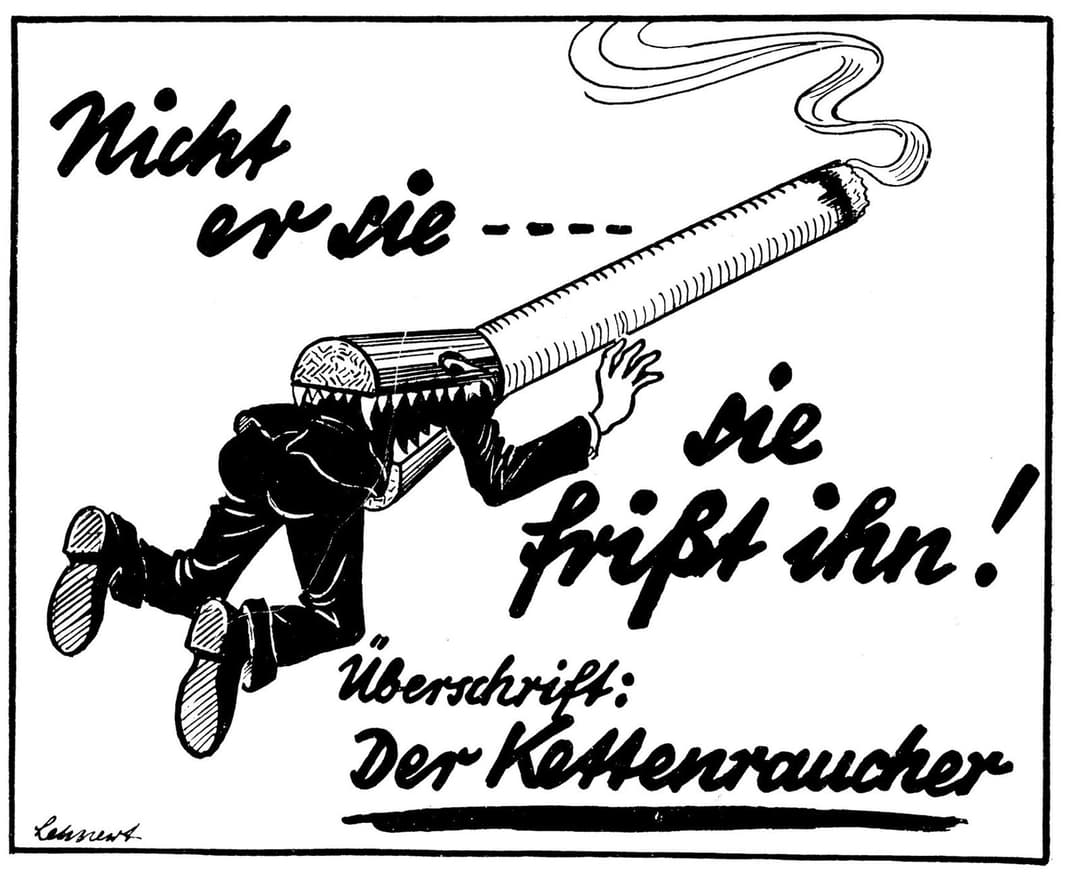
Like Hitler, Ford was also an early opponent of the consumption of tobacco, having published an anti-smoking book, circulated to youth in 1914, called The Case Against the Little White Slaver, which documented many dangers of cigarette smoking attested to by many researchers and luminaries. At the time, smoking was ubiquitous and not yet widely associated with health problems, making Ford and Hitler’s opposition to cigarettes particularly remarkable.

"He does not devour it; it devours him..." - Nazi anti-smoking campaign (1941) - Public Domain

A life-size portrait of Henry Ford hung in Hitler’s Munich office, and he told a Detroit News reporter in 1931 that he regarded the American industrialist as his “inspiration”.

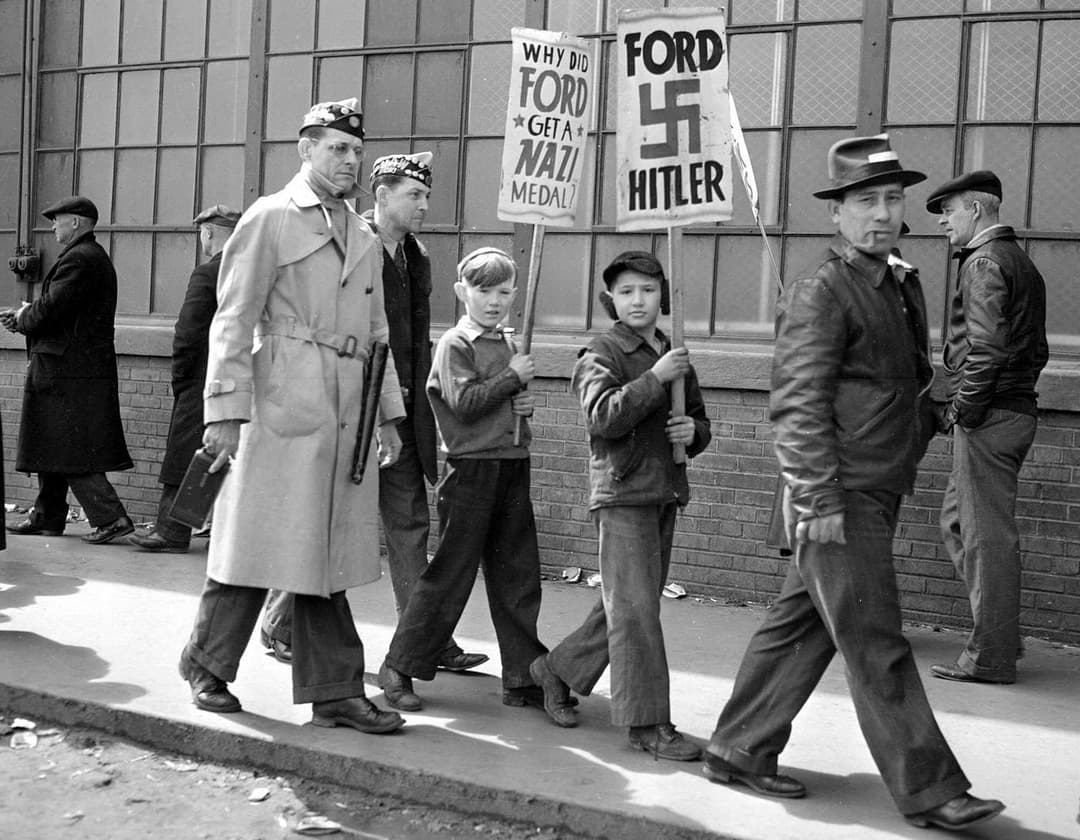
The admiration was mutual. In 1938, on his 75th birthday, Henry Ford was awarded the Grand Cross of the German Eagle, the highest honor the Nazi regime could bestow on a foreigner. Ford proudly accepted the award, a clear symbol of his ideological affinity with the Third Reich.

While Ford never officially joined the Nazi party, his financial and ideological support for the movement is undeniable.

A staunch opponent of the United States entering the Second World War, Ford claimed that the torpedoing of U.S. merchant ships by German submarines was the result of conspiratorial activities undertaken by war-financier makers. When Rolls Royce was searching for a manufacturer in the United States to make Merlin engines (for the Spitfires and Hurricanes that were then defending Great Britain against the Nazi onslaught), Ford at first agreed, then reneged. Although he would eventually join the war effort on the US side, after the declaration of war in 1941, and establish the largest assembly line in the world at the time – at Willow Run near Michigan – to build B-24 Liberators.

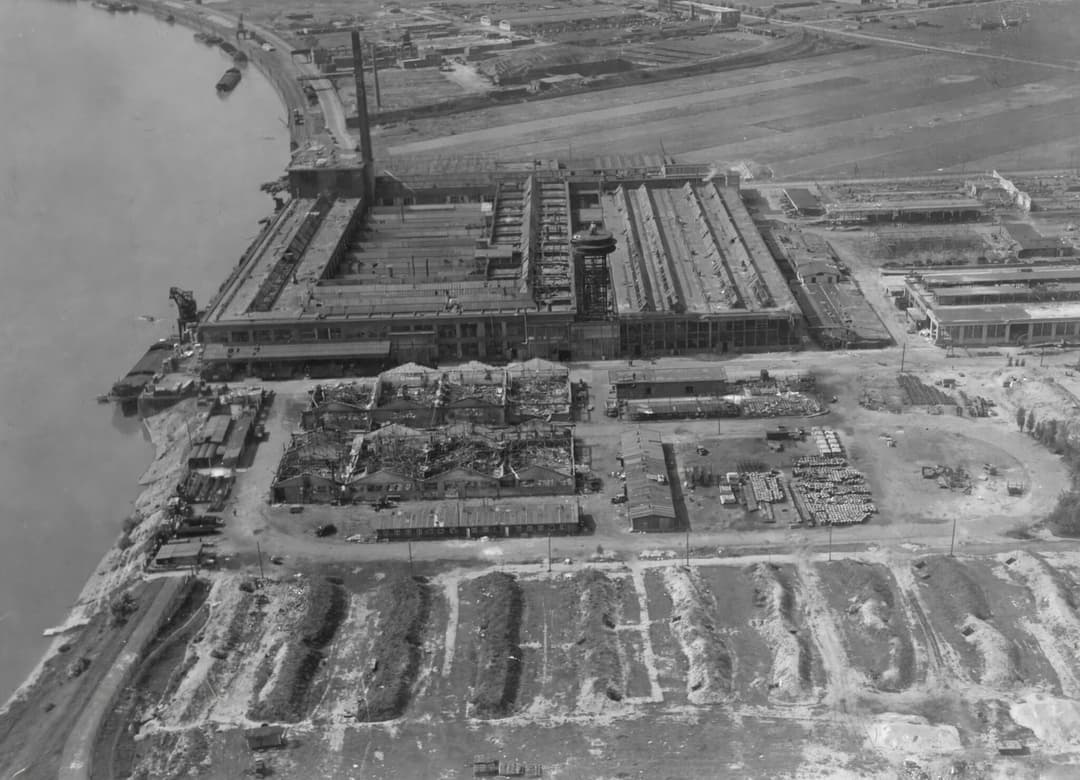
The Ford-Werke in Kölln as soon from the air (1945) - Public Domain

The Ford-Werke AG, established in Germany in 1924, continued to function throughout the Nazi period, however, manufacturing the turbines used in the V-2 rockets – alongside production of Köln, Rheinland, Eifel, and later Taunus automobiles. In-fact, Ford’s River Rouge plant would serve as the model for the production of the ‘People’s Car’ in Nazi Germany – the Volkswagen.

Allied airmen bombing the German city of Cologne, where the Ford-Werke plant was located, were advised to avoid bombing the location. In-fact, cars manufactured in Cologne didn’t bear the famous Ford logo on the hood, but Cologne Cathedral.

Despite the special precautions taken against the Cologne plant, the company was awarded over $1m after the war in compensation for damage caused.

The full extent of Ford’s financial support for the Nazi party remains a matter of historical debate.

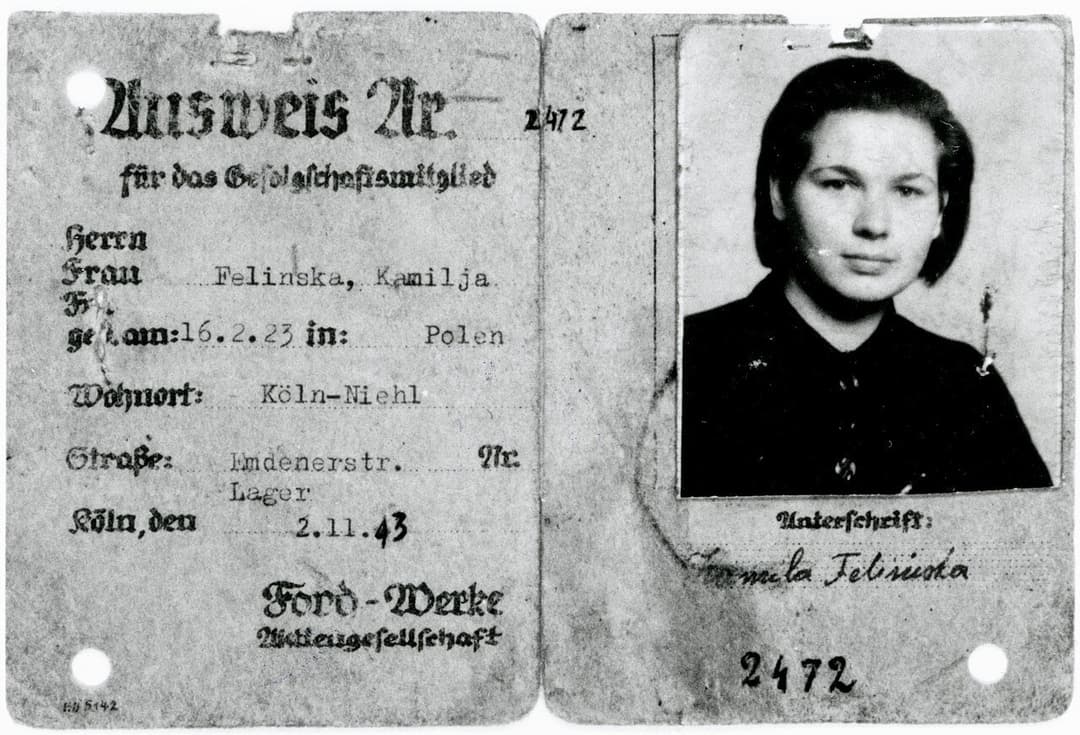
While there is no definitive proof of direct donations, his company’s German subsidiary, Ford-Werke, actively collaborated with the Nazi regime, using forced labor from concentration camps to produce vehicles for the German war effort and undertaking the illegal manufacture of munitions.

Kamilja (or Kamila) Felinska, Polish forced laborer at Ford in Cologne. Camp ID card from 1943 - Public Domain

At the height of the Second World War, Ford-Werke stopped making customer cars and instead used all materials—iron, plate glass, leather, rubber—for war production.

A 1945 U.S. Army report damningly referred to Ford-Werke as “an arsenal of Nazism”.

Some defence can be proposed in that the company fell under the direct control of the Nazi government during the years of its utilisation of slave labour and contribution to the Nazi war effort. At the time, Henry Ford had no influence at Ford Werke.

What is known is that on February 1st, 1924, during the ‘years of exile’ for the Nazi Party after Hitler’s attempted Bavarian coup in 1923, Ford received Kurt Ludecke, a representative of Hitler, at his home. Ludecke was introduced to Ford by Siegfried Wagner (son of the composer Richard Wagner) and his wife Winifred, both Nazi sympathizers and anti-Semites. Ludecke asked Ford for a contribution to the Nazi cause, but was apparently refused.

Despite this. that same year, Heinrich Himmler, boasted Ford as “one of our most valuable, important, and witty fighters”.

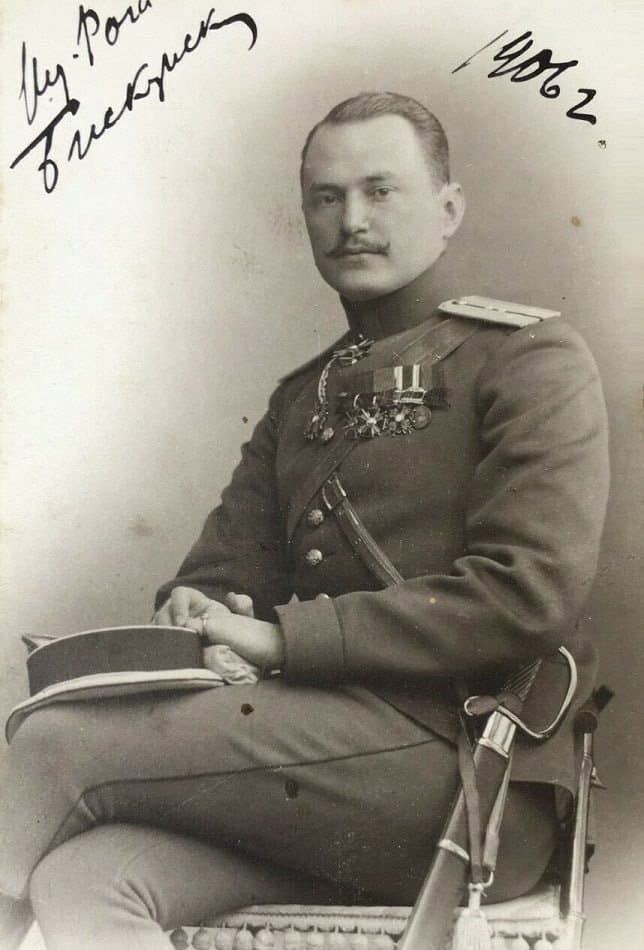
Ford certainly did, however, give considerable sums of money to Boris Brasol, in his capacity as a member of the Aufbau Vereinigung, an organisation linking German Nazis and White Russian emigrants, which financed the recently established Nazi Party.

'Hitler's White Russian' - Vasiliy Biskupsky, founder of the Aufbau Vereinigung - Public Domain

In supporting the Aufbau Vereinigung, this move put Ford in the same league as other prominent members of the organisation, such as: Alfred Ernst Rosenberg, one of the key ideologues behind the National Socialist movement and author of the pseudo-scientific racial work, The Myth of the Twentieth Century (1930); Max Amann, the first Nazi business manager and later editor of the Nazi publishing house, Eher Verlag; and German General, Erich Ludendorff, key figure in Adolf Hitler’s 1923 Beer Hall Putsch.

The final coda to claims that Ford was indeed on the wrong side of history come from reports of his death, which occurred in 1947 as he had reached the age of 83. According to author, Robert Lacey, writing in ‘Ford: The Men and the Machines’ – a close associate of Ford reported that when he was shown newsreel footage of the Nazi concentration camps, he “was confronted with the atrocities which finally and unanswerably laid bare the bestiality of the prejudice to which he contributed.”

Collapsing with a stroke – his last and most serious – he would succumb to a cerebral hemorrhage soon after.

An aerial view of Berlin's Anhalter Bahnhof and Gleisdreieck station in 1945/Image: San Diego Air & Space Museum

The Persil Test

“Leaving aside the probability that he (Hitler) was informed of their content or at least their import, through conversations with his friends… the vehicle seems to have been a series of newspaper articles ghost-written for the American motor manufacturer Henry Ford and published in 1920 in a collected, bound edition, under the title ‘The International Jew: The World’s Foremost Problem’. A copy was included in Hitler’s library.”
Richard J. Evans discussing Hitler’s exposure to the ‘Protocols of the Elders of Zion’ – The Hitler Conspiracies (2020)

In the immediate aftermath of the Second World War, the Allied powers undertook a massive effort to purge German society of Nazi influence. This process, known as ‘denazification’, involved everything from prosecuting war criminals to removing former Nazi party members from positions of power.

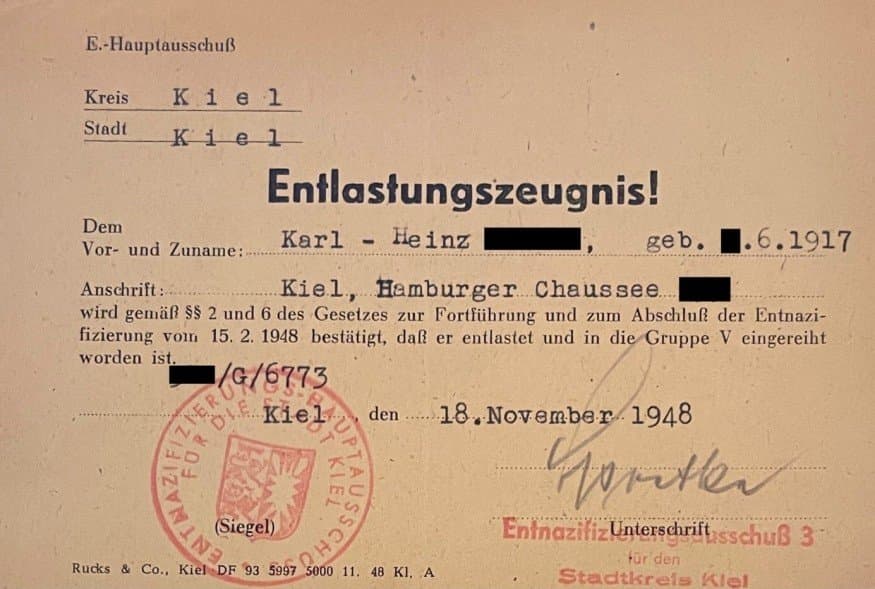
For those seeking to clear their names in the western part of the country, a key document was the so-called Persilschein, or ‘Persil certificate’.

A 'Persilschein' issued in Kölln (1948) - Public Domain

Named after a popular brand of laundry detergent, the Persilschein was a testament to an individual’s ‘whitewashed’ past, a certificate that absolved them of any Nazi taint. This often involved procuring affidavits from friends, neighbors, or even former enemies, attesting to the individual’s good character and anti-Nazi credentials.

The Persilschein quickly became a symbol of the moral compromises and ethical ambiguities of the post-war era.

It was a recognition that, for many Germans, the lines between guilt and innocence, complicity and resistance, were often blurred.

The specifics of this certificate of exoneration were that on September 26th 1945, Law No. 8 of the American military government stipulated that in the American zone, members of the Nazi Party could, from that point on, only be permitted to work in ‘ordinary jobs’ in the economy, i.e., jobs without managerial responsibilities.

This law, however, provided for an appeal procedure in which those affected could attempt to credibly demonstrate, using ‘facts’, that they had been National Socialists “only in name” and had not been “actively” involved in its aims.

For ordinary Germans, denazification often meant appearing before a tribunal and being classified into one of five categories, from ‘major offender’ to ‘exonerated’.

“Major Offender: Hauptschuldige
Offender (Activist, Militarist, or Profiteer): Belastete
Lesser Offender: Minderbelastete
Follower: Mitläufer
Exonerated Person: Entlastete”

Those deemed part of the first two categories faced up to five years of hard labor, had to surrender some or all of their assets as restitution, were barred from holding public office, and lost their entitlement to a state pension or retirement benefits. 

Those deemed less incriminated also faced professional restrictions and salary reductions. So-called ‘Mitläufer’ (followers) could be expected to pay a small fine, while those fully exonerated went unpunished.

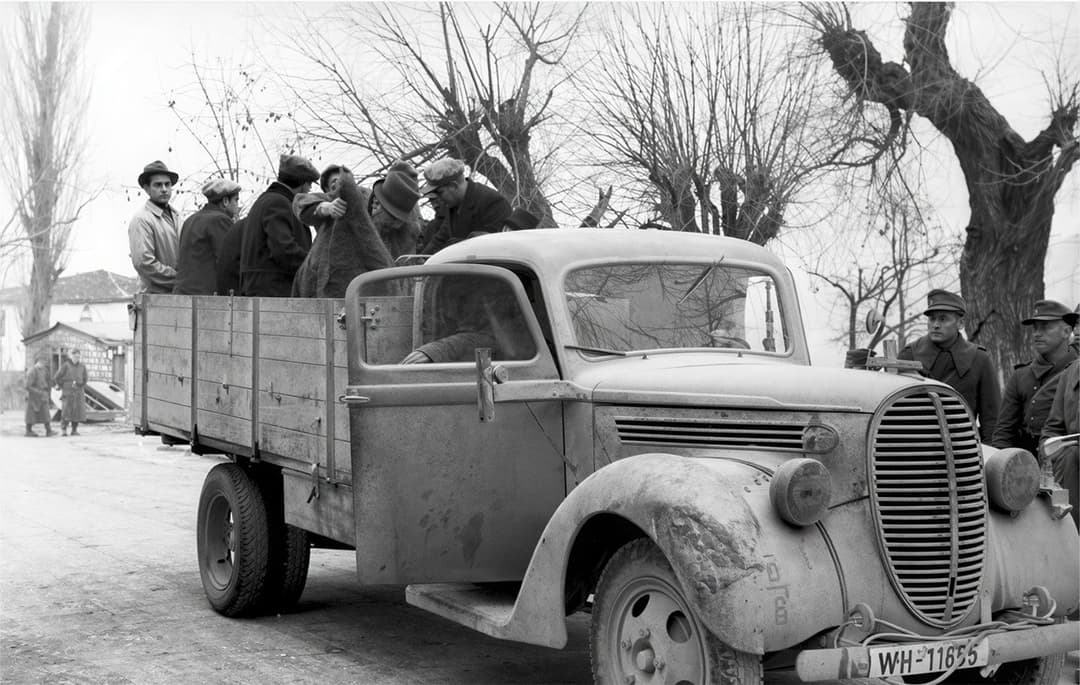
Deportation of members of the Jewish community in Ioannina, Greece using Ford trucks (1944) - German Federal Archives, Image 101I-179-1575-17 / Wetzel / CC-BY-SA 3.0

What if we – as a kind of devil’s advocate – were to apply this ‘Persil Test’ to Henry Ford? If we were to posthumously evaluate his life and actions, what would the verdict be?

On the one hand, Ford’s defenders could point to his pacifism, his opposition to America’s entry into World War I, and his pioneering labor practices. They might argue that his anti-Semitism, while regrettable, was a product of his time, a reflection of the widespread prejudice that existed in early 20th-century America. They might even claim that his acceptance of the Grand Cross of the German Eagle was a naive misstep, a failure to fully grasp the true nature of the Nazi regime.

But the evidence against Ford is overwhelming.

His anti-Semitism was not a passive prejudice; it was an active and all-consuming obsession. He used his immense wealth and power to disseminate a message of hate that poisoned the well of public discourse and gave aid and comfort to the most murderous regime in human history.

His newspaper, ‘The Dearborn Independent’, and his book, ‘The International Jew’, were not simply expressions of personal opinion; they were weapons in a campaign of vilification and dehumanisation that would have devastating consequences.

The influence of Ford’s writings on the Nazi movement is undeniable.

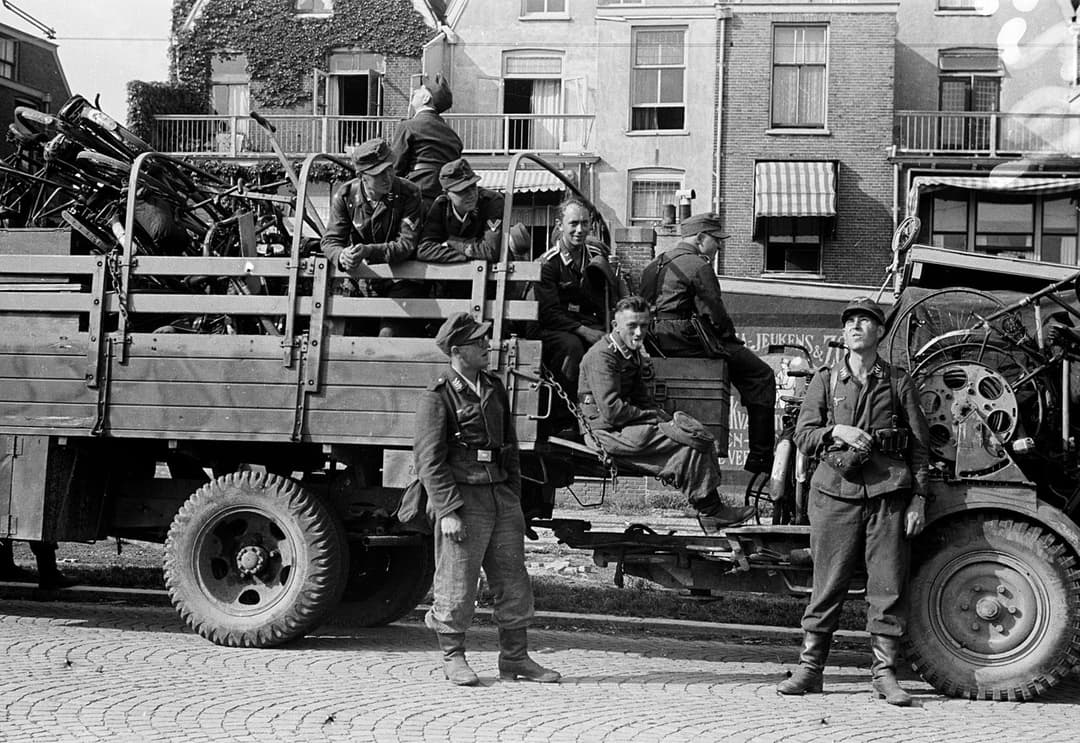
German soldiers retreating in Holland fill Ford trucks with stolen bicycles - Public Domain

Hitler and other leading Nazis saw in Ford a powerful ally, a confirmation that their own twisted ideology had supporters in the heart of America. The Grand Cross of the German Eagle was not a mere trinket; it was a symbol of a shared worldview, a recognition of Ford’s contribution to the cause of international anti-Semitism.

Even his much-vaunted apology, issued in 1927 after a lawsuit forced his hand, rings hollow.

While he publicly retracted his anti-Semitic statements and closed ‘The Dearborn Independent’, he continued to harbor his prejudices in private. And his company’s collaboration with the Nazi regime during the war years speaks volumes about the depth of his complicity.

At the end of the Second World War, those in Germany who – like Ford – had provided the intellectual and moral poison for the Third Reich were called to account.

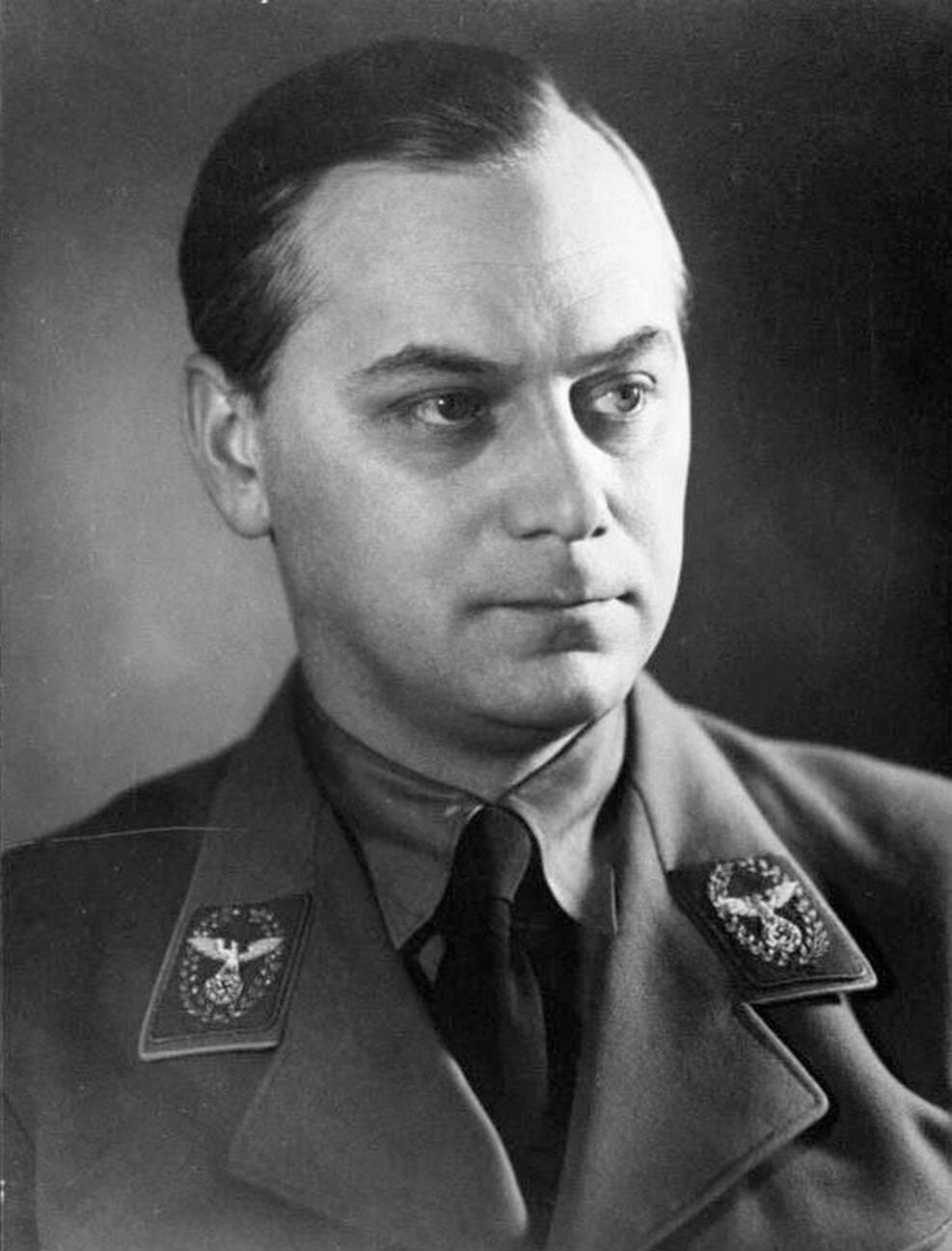
Leading ideologue of the NSDAP, Alfred Rosenberg - Public Domain

Alfred Rosenberg, the shoddy philosopher and racial theorist who served as the movement’s intellectual architect, found his abstract hatreds translated into a concrete sentence. He was hanged at Nuremberg.

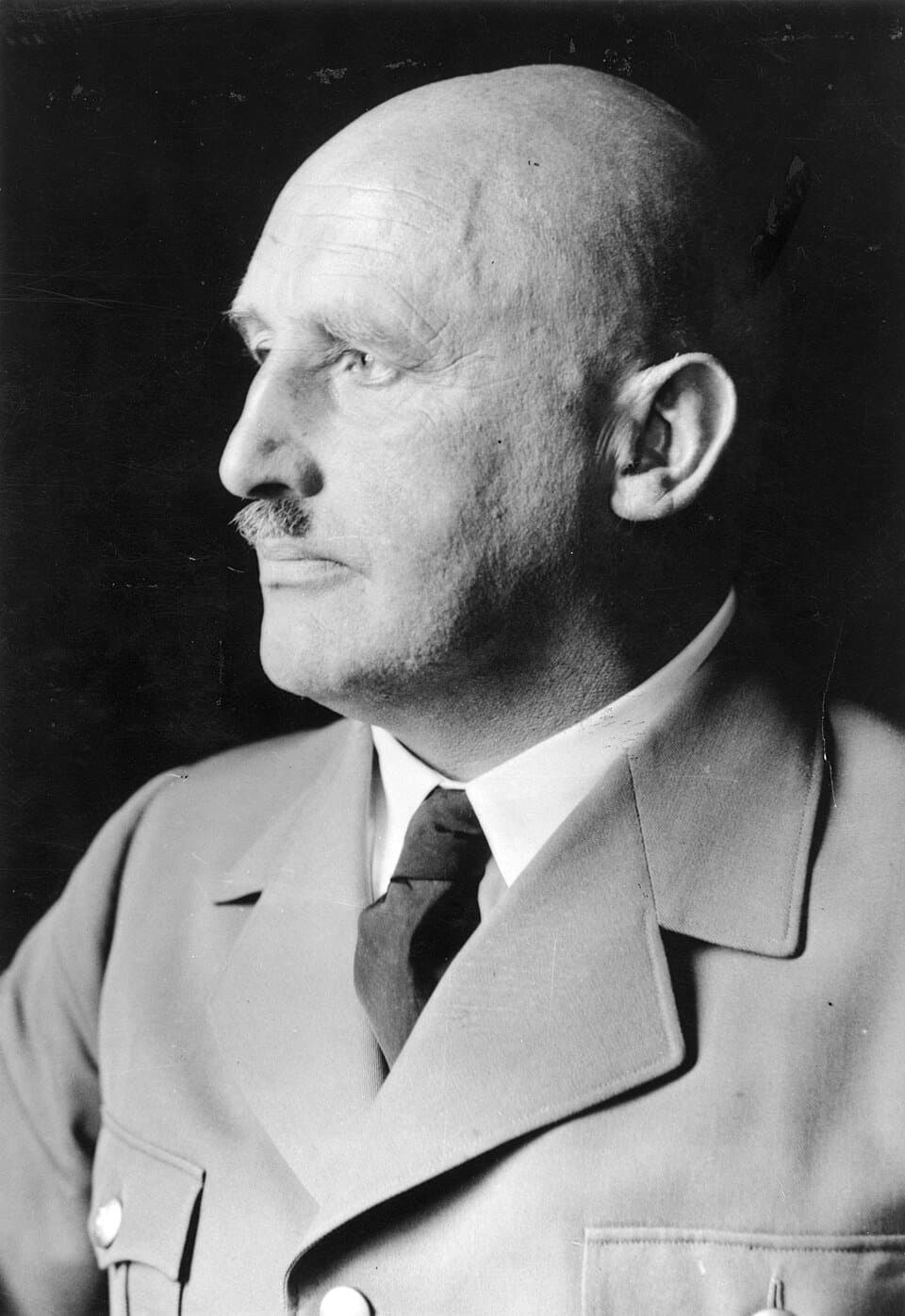
Nazi Propagandist & Gauleiter of Frankonia, Julius Streicher - Public Domain

More telling, however, was the fate of a man whose role perfectly mirrored Ford’s own publishing venture. Julius Streicher, the proprietor of the vile propaganda sheet Der Stürmer—a publication that rivalled The Dearborn Independent in its crude, pornographic obsession with anti-Semitism—was also sent to the gallows. The Nuremberg tribunal made a momentous decision in his case: that the relentless incitement to persecution and murder through mass media was itself a crime against humanity. Streicher did not command armies or gas chambers, but his words had helped create the environment where such atrocity flourished.

Opening of the 'Krupp Trial' against twelve former directors of the Krupp Group (1947) - Public Domain

The engineers and financiers of the Reich, meanwhile, faced their own reckoning, though often with more ambiguous results.

Alfried Krupp, head of the industrial behemoth that armed Hitler’s legions, was convicted for the systematic use of slave labour—a charge for which Ford’s own German operations were unequivocally guilty—and sentenced to twelve years, though he was pardoned after only three.

The Bechstein family, who had used their piano fortune to become some of Hitler’s earliest and most intimate patrons, had their company seized.

Ferdinand Porsche, Hitler’s favourite automotive engineer, was imprisoned by the French for his complicity.

One is forced to wonder: had Henry Ford been a German citizen on the losing side of the conflict, what dock would he have found himself in?

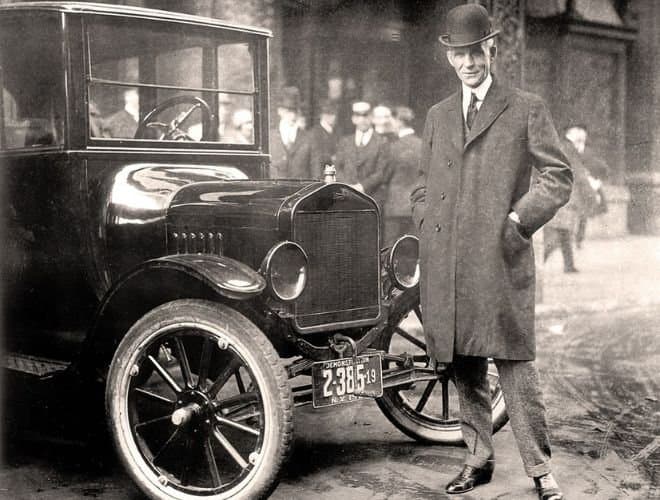
Henry Ford stood next to a Ford T-model - Public Domain

He was an ideologue like Rosenberg, a propagandist like Streicher, and an industrialist like Krupp. It seems only an accident of geography and his winning-team passport saved him from facing the very justice his German counterparts received.

In the final analysis, there should be no Persilschein for Henry Ford.

No amount of historical whitewashing can cleanse the stain of his anti-Semitism. He was a man of great genius and great hatred, a pioneer who pushed humanity forward with one hand and dragged it back into the dark ages with the other.

–

Protests against Henry Ford receiving the Grand Cross of the German Eagle in 1938 - Public Domain

Conclusion

So, was Henry Ford a Nazi?

If we define a Nazi as a card-carrying member of the National Socialist German Workers’ Party, then the answer is no. But if we define it as someone who subscribed to and actively promoted the core tenets of Nazi ideology – racial hatred, conspiracy theories, and a belief in the superiority of one group over another – then the answer is an unequivocal yes.

To ignore the dark side of Henry Ford’s legacy is to do a disservice to history and to the victims of the ideology he so enthusiastically embraced.

He may have put the world on wheels, but he also helped pave the road to Auschwitz.

And for that, he must be judged accordingly.

Liked this piece? Have a look at the Berlin Experiences tours that cover this history.

See the Capital Of TyrannyMore articles →

Share this piece

Know someone who still believes it?

Explore in person

Tours that address this myth.

The Capital Of Tyranny Tour - Berlin Experiences
Full Day6 Hours

The Capital Of Tyranny

Private 6-hour van tour of Hitler's Berlin and the Third Reich for up to 6 people. Starts at your hotel or anywhere in the city.

€1,000up to 6
View Tour

More reading

The other myths, busted.

49 more — drag, scroll or use the arrow keys.

Soviet troops pose next to the Reichsadler as it once appeared on top of Tempelhof Airport (1934) - Public Domain
Are There Any Nazi Statues Left In Berlin?
US Army soldiers crossing the Rhine (1945) - Public Domain
Could The Western Allies Have Captured Berlin?
Women at Ravensbrück - where Elizabeth Rothschild was imprisoned and died
Did Any Of The Rothschild Dynasty Die In The Holocaust?
Frederick the Great - Der Konig Uberall
Did Frederick The Great Introduce The Potato To Germany?
Adolf Hitler Eastern Front
Did Hitler Escape To Argentina In 1945?
March of SA men in uniform giving the Hitler salute - on their way to Kaffelstein (1933) - State Archives of Baden-Württemberg, Wertheim State Archives SN 70 G 4135
Did Hugo Boss Design The Nazi Uniforms?
Rudolf Hess (1933 & 1945) - Public Domain
Did Rudolf Hess Really Commit Suicide?
Dismantling the German experimental nuclear pile at Haigerloch (April 1945) - Public Domain
Did The Nazis Develop Nuclear Weapons?
Did The Nazis Invent Decaf Coffee? – Mythbusting Berlin
Did The Nazis Invent Decaf Coffee?
German infantry on bicycles during the invasion of the Soviet Union
Did The Nazis Invent The Bicycle Reflector?
The site of the Nazi's Operation Bernhard counterfeiting operation: KZ Sachsenhausen
Did The Nazis Run The Largest Counterfeiting Operation In History?
Surrender of Berlin - 1945
Did The Second World War End In Berlin?
Spanish Flu & the rise of Nazi Germany
Did The Spanish Flu Pandemic Help The Nazis Take Power?
One of the final photos of Adolf Hitler, taken on March 20th 1945 -Public Domain
Have Adolf Hitler’s Remains Been DNA Tested?
Prisoners at Sachsenhausen Concentration Camp attend roll call (1937) - Public Domain
How Did The Nazi Concentration Camps Differ From The Soviet GULAG?
The construction of the first actual Berlin Wall in August 1961 - Public Domain
How Long Did It Take To Build The Berlin Wall?
The remains of the Bürgerbrauhalle after an assassination attempt against Adolf Hitler in 1939 - Bundesarchiv, Bild 183-E12329 / Wagner / CC-BY-SA 3.0
How Many Assassination Attempts On Adolf Hitler Were There?
Evidence of Jewish prisoners at Auschwitz-Birkenau being undressed and led to their deaths - Public Domain
How Many Jews Died In The Holocaust?
A sign at the Berlin Wall in East Berlin (November 1961) declares, “Whoever attacks us will be destroyed," - Public Domain
How Many People Died Trying To Escape East Germany?
Berlin's Nikolaiviertel
How Old Is Berlin?
Adolf Hitler practices his speech techniques
Was Adolf Hitler A Drug Addict?
Adolf Hitler practicing his oratory skills - Public Domain
Was Adolf Hitler A Freemason?
Adolf Hitler practicing his oratory skills - Public Domain
Was Adolf Hitler Gay?
Adolf Hitler practicing his oratory skills - Public Domain
Was Adolf Hitler Jewish?
Hertha Heuwer - the inventor of Currywurst - Public Domain
Was Currywurst Invented In Berlin?
Fanta advertising from the 1940s - Public Domain
Was Fanta Invented By The Nazis?
Frederick the Great at the Battle of Zorndorf by Carl Roechling (1911)
Was Frederick The Great Gay?
Franz Rudolf Frisching portrait in 1785 in Prussian Blue.
Was The Colour Blue Invented In Berlin?
Döner Kebab
Was The Döner Kebab Invented In Berlin?
Menschen am Potsdamer Platz auf der Westseite der Berliner Mauer am 11. November 1989
Was The Fall Of The Berlin Wall An Accident?
The Nazi Party in parliament (1935)
Was The Nazi Party Democratically Elected?
The Allied bombing of Wesel during the Second World War - Public Domain
Were The Allied Bombings Of Germany War Crimes?
Photograph of the Hadamar killing centre with a smoking chimney, (1941) - Hadamar Memorial Museum
Were The Nazi Medical Experiments Useful?
The Oath of the Horatii by Jacques-Louis David - Public Domain
What Are The Origins Of The Nazi Salute?
Members of the Hitler Youth parade in the formation of a swastika to honor the Unknown Soldier. Germany, August 27th 1933 - Public Domain
What Are The Origins Of The Nazi Swastika?
Pink pipes in Berlin - Public Domain
What Are The Pink Pipes In Berlin?
A street battle between revolutionaries and the royal military in the Breite Strasse Street, Berlin during the March 1848 revolution - Public Domain
What Do The Colours Of The German Flag Symbolise?
Adolf Hitler's Alligator - Saturn
What Happened To Adolf Hitler’s Alligator?
German Kaiser Wilhelm II in Bruges, Belgium during the First World War - Public Domain
What Happened To The German Royal Family?
Adolf Hitler (right) and Benito Mussolini (left) in Munich, Germany, 1937 - Public Domain
What Is The Difference Between Fascism & Nazism?
Checkpoint Charlie in 1989
What Was Checkpoint Charlie?
The crowning of Wilhelm I as German Emperor and the birth of Germany in 1871
What Was Prussia?
United States Air Force building a runway for Operation Vittles planes (1948) - Public Domain
What Was The Berlin Airlift?
A close-up of the Socialist Kiss painted on the East Side Gallery - LeO Tiresias
What Was The Socialist Kiss?
Construction of the Berlin Wall at the Brandenburg Gate
Who Built The Berlin Wall?
Soviet flag on the Reichstag - 1945
Who Really Raised The Soviet Flag On The Reichstag?
Inside the Reichstag Plenary Chamber/Image: United States Holocaust Memorial Museum
Who Was Really Responsible For The Reichstag Fire?
The defendants at the Nuremberg Trial (1946) - Public Domain
Who Were The Last Nazis On Trial?
The Brandenburg Gate at night
Why Is Berlin The Capital Of Germany?