“It is not a very nice solution, but a wall is a hell of a lot better than a war.”
US President, John F. Kennedy, commenting privately on the lack of US intervention in August 1961
The night was humid, the air thick with the smell of coal dust and late-summer anxiety.
It was Saturday, August 12th 1961.
At a government guest house in Döllnsee, north of Berlin, the mood was peculiar—a mixture of feigned relaxation and coiled tension.
Walter Ulbricht, the Saxon autocrat of the German Democratic Republic (GDR), was hosting a garden party. The wine flowed, but the guests, high-ranking party apparatchiks, were jittery. They knew something the world did not.
Just a few months earlier, Ulbricht had lied straight into living rooms around the world, stating at a televised press conference: “No one has the intention of building a wall.”
Now, as he awaited the implementation of ‘Aktion Rose’, he was about to prove that intention had nothing to do with it; this was about survival.
–
The Berlin Hemorrhage
“The presence of the three Western powers in Berlin is a bone in my throat.”
Soviet leader, Nikita Khrushchev
To understand why the first brick was laid, one must consult the balance sheets, not just the maps.
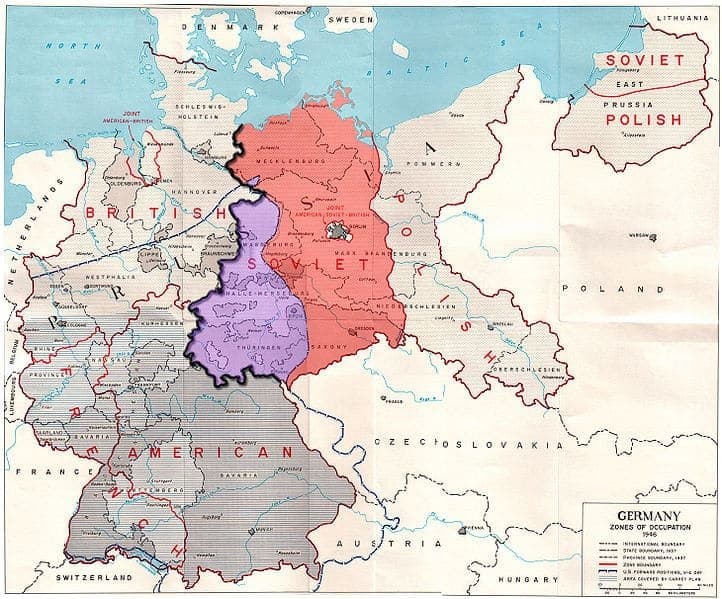
Following the unconditional surrender of Nazi Germany in May 1945, the division of the country into occupation zones was intended to be provisional.
However, the Soviet Zone (which would morph into East Germany four years later) began bleeding to death almost immediately.
The tragedy of the East German state was not just political; it was demographically catastrophic.
Between 1949 and 1961, approximately 2.7 million people fled the GDR for the West.
This wasn’t just a random sampling of the population; this was a ‘brain drain’ of the highest order. Engineers, doctors, lawyers, and skilled laborers were packing their bags, taking the S-Bahn to West Berlin, and flying out to freedom.
By 1961, the GDR was facing a societal collapse simply because its workforce was literally walking out the door. The border between East and West Germany had already been ruthlessly closed in 1952, in what was known as Aktion Ungeziefer (Operation Vermin), a horrific title for a horrific displacement of people living near the line.
Yet, Berlin remained a loophole—a yawning gap in the Iron Curtain where the border was as porous as a sieve.
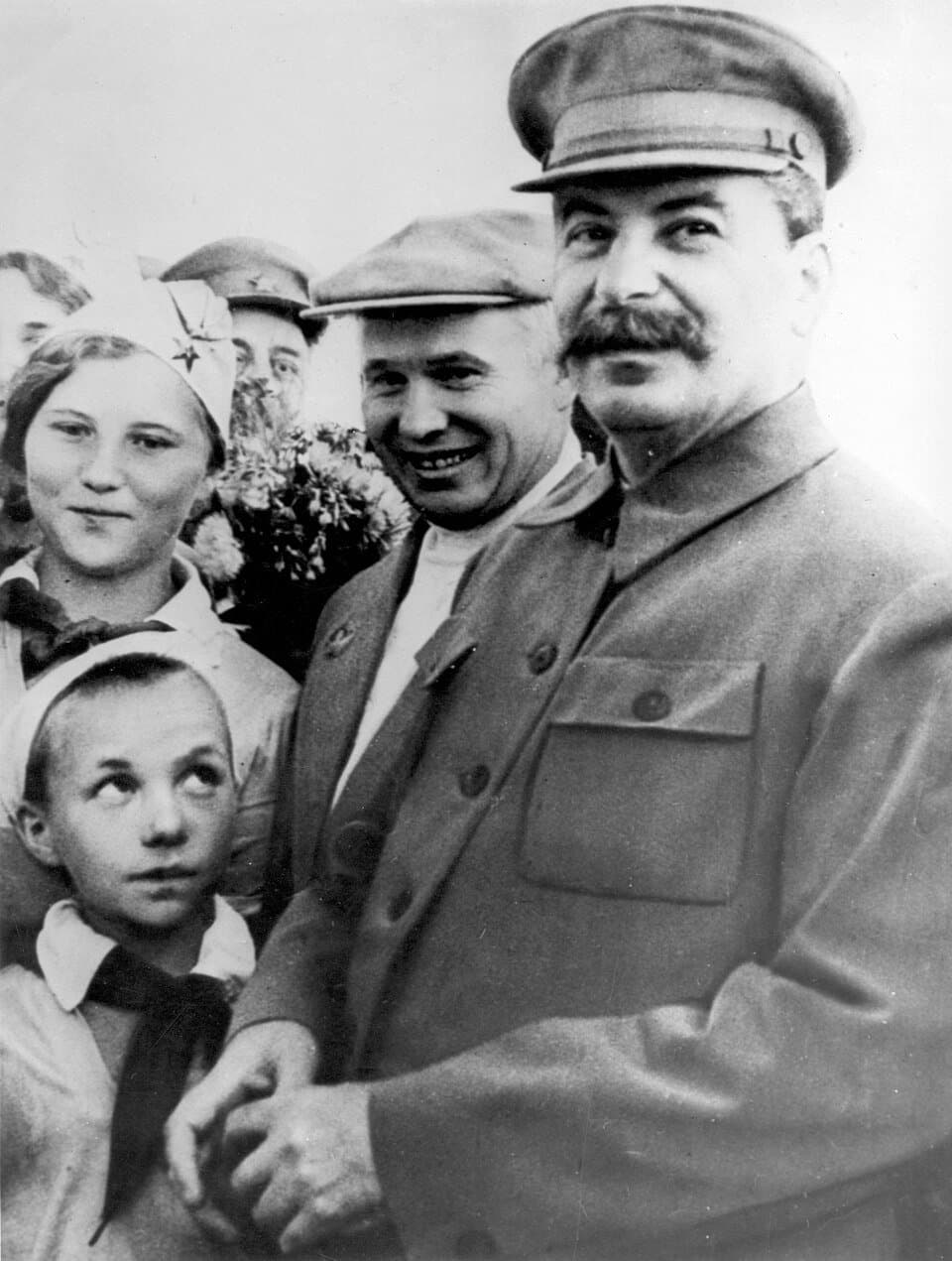
Nikita Khrushchev, the Soviet premier, had famously called Berlin “the testicles of the West,” a tender spot he could squeeze when he wanted to scream.
But by 1961, the pain was all in the East.
The economy was crumbling.
There was a shortage of butter, meat, and, crucially, optimism.
The decision to close the border was not an offensive move, as the propaganda claimed, but a defensive panic.
They weren’t building a fortress; they were building a cage because the birds were flying away.
–
The Berlin Wall: 'Operation Rose'
“Suddenly, the city was split in two. It was like a stroke with a hatchet.”
East German writer, Stefan Heym
If we are in search of the moment the ‘first version’ of the Berlin Wall appeared, we must first turn towards Erich Honecker.
Long before he became the stagnation-era leader of the GDR in the 1970s and 80s, Honecker was the secretary for security matters, the man Walter Ulbricht entrusted with the logistics of the crackdown.
Honecker’s operation, code-named ‘Rose’, was frankly a masterpiece of clandestine mobilisation.
As detailed in Frederick Kempe’s Berlin 1961, the logistical hurdles were immense. Somehow the East German authorities needed to surround West Berlin—a circumference of 155 kilometers (96 miles)—without triggering a world war.
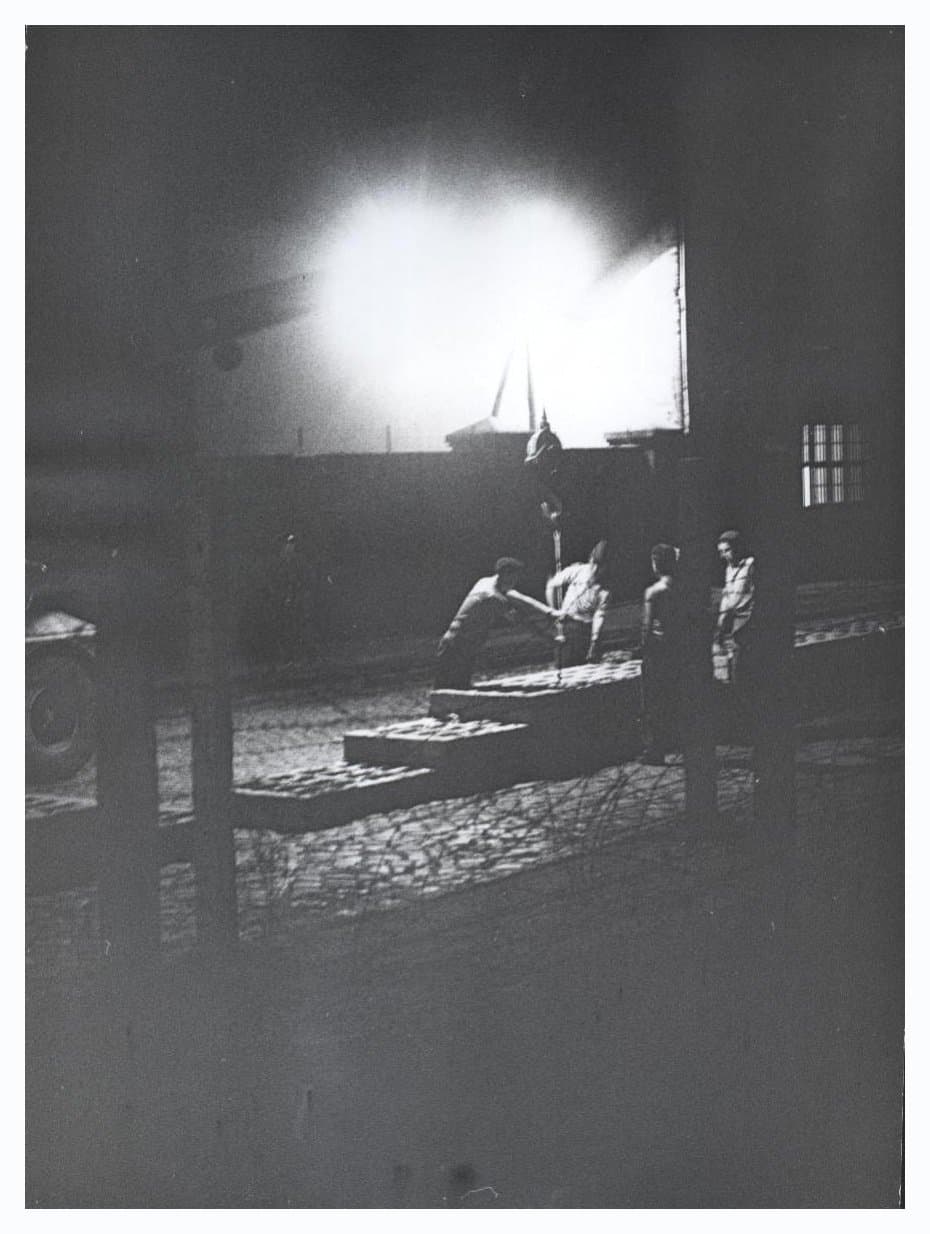
The construction that began at the stroke of midnight on August 13th 1961, was not of a wall, but of a siege ring.
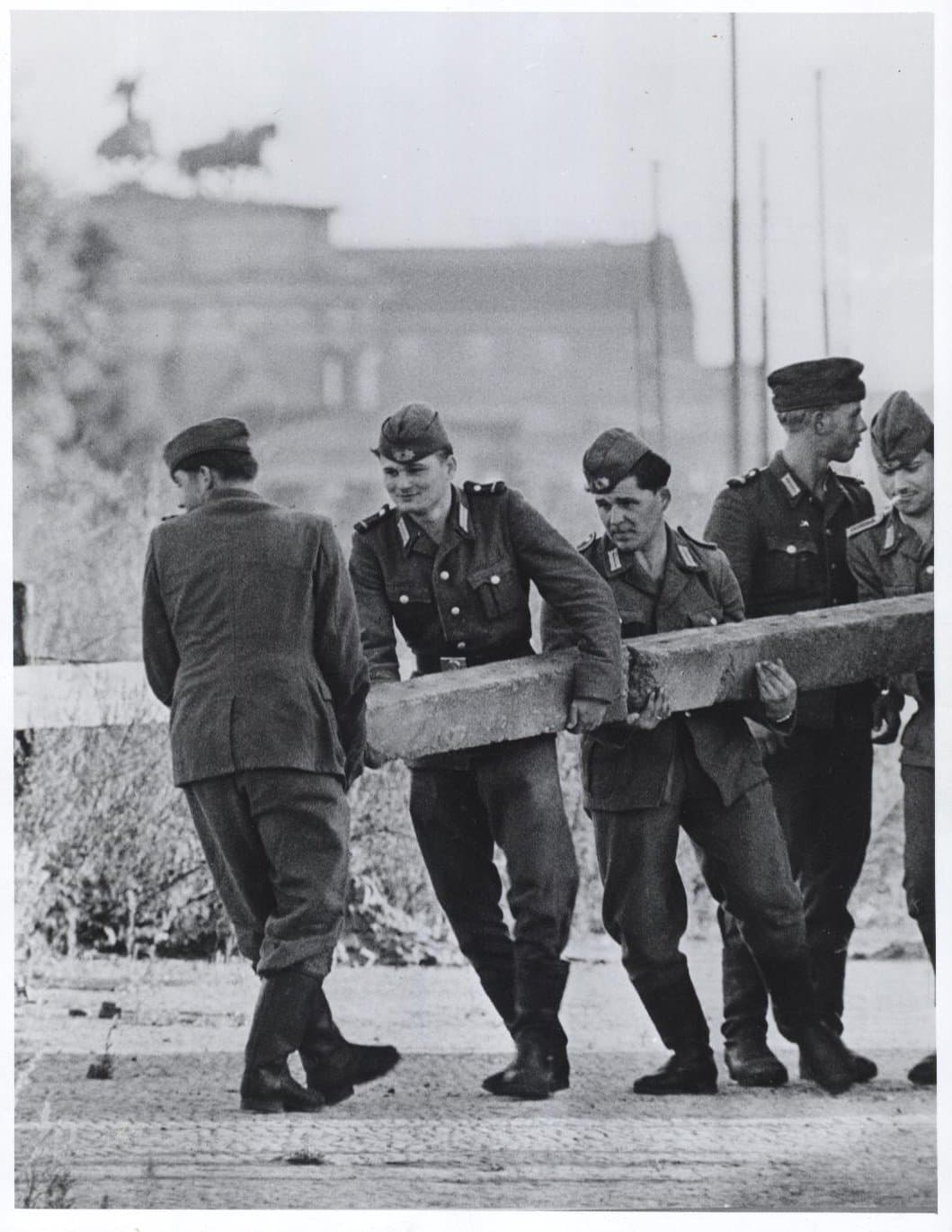
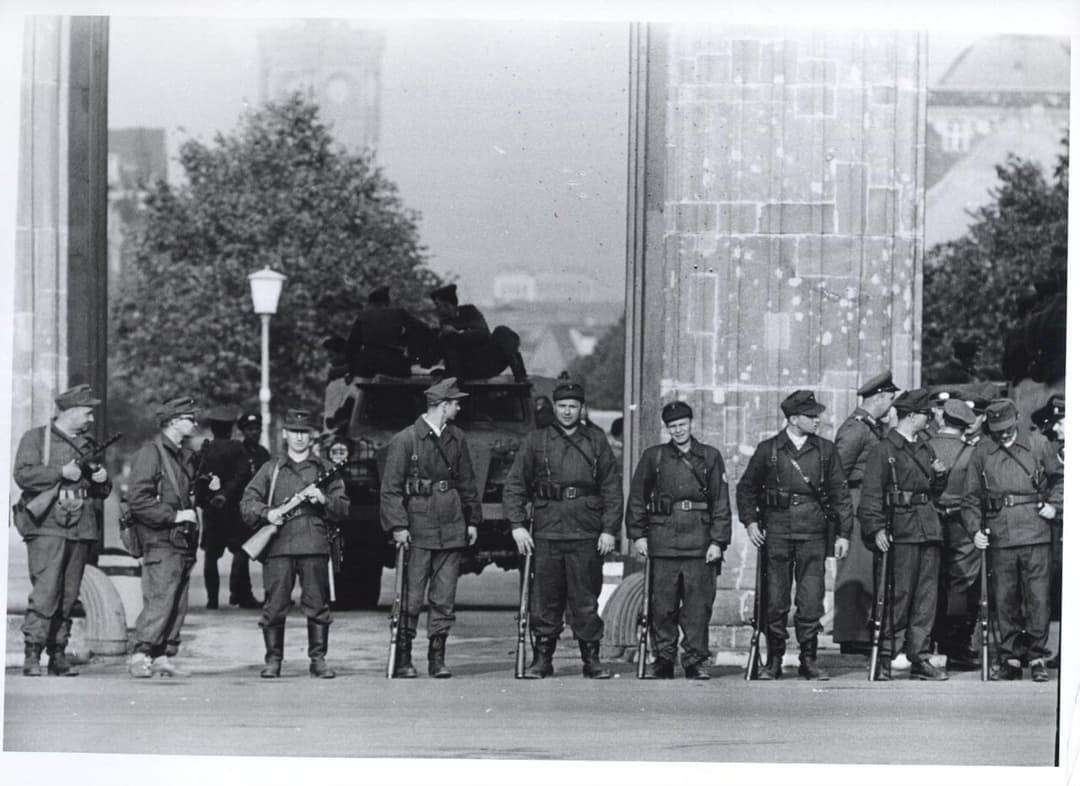
Honecker had stockpiled the materials in army barracks for weeks, labelled deceptively as general construction supplies. On that fateful night, over 10,000 Vopos (Volkspolizei) and NVA (National People’s Army) soldiers were mobilised.
Here is the crucial distinction to challenge the popular understanding of the situation: what appeared that Sunday morning was not a wall.
It was wire.
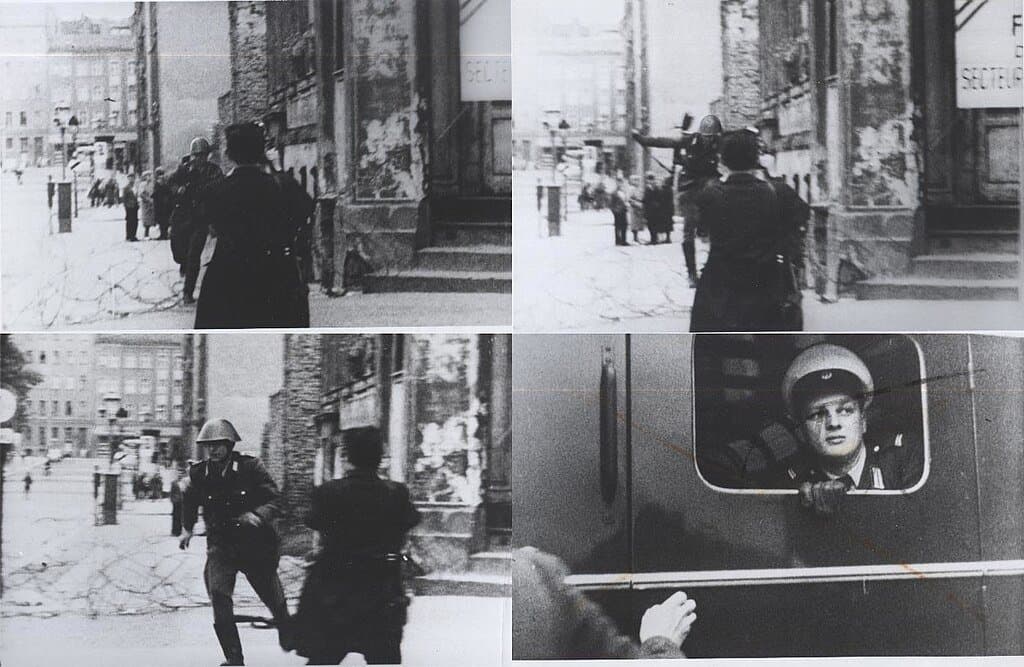
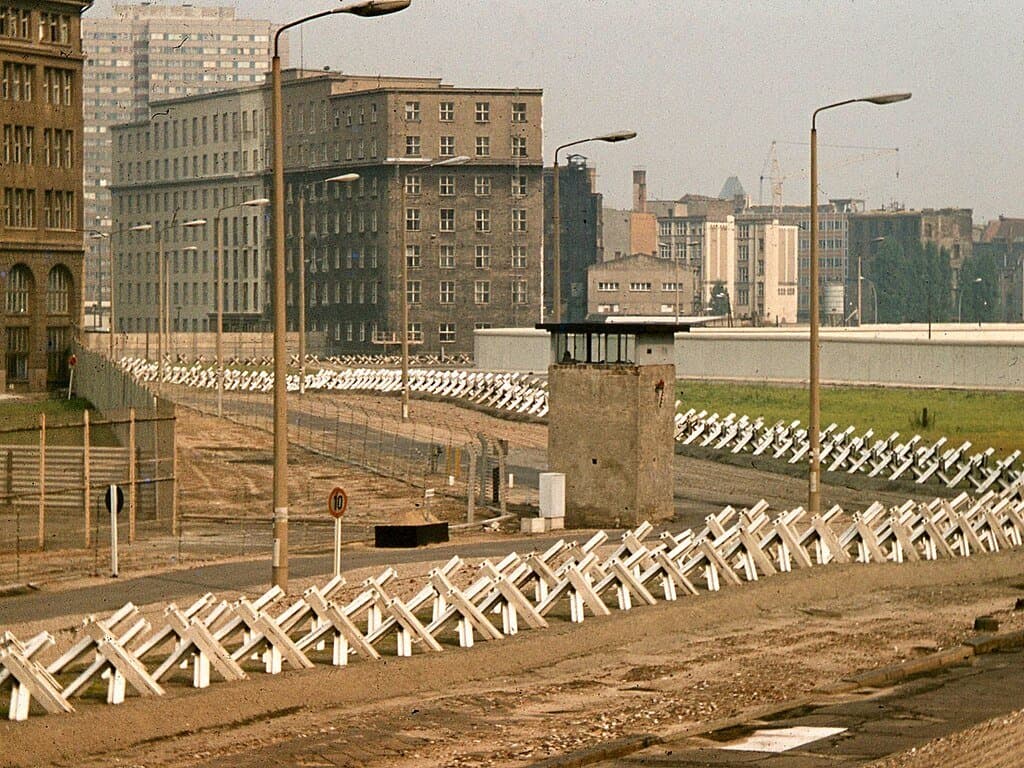
Specifically, ‘Spanish Riders’—hasty coils of concertina wire rolled across asphalt streets and tore up cobblestones. Concrete posts were then sledgehammered into the boulevards of a major European metropolis.
In Patrick Major’s ‘Behind the Berlin Wall’, we learn that the initial barrier was surprisingly porous.
The famous photo of the East German soldier Conrad Schumann leaping over the barbed wire on August 15th captures this interim reality. He didn’t scale a concrete monolith; he jumped a fence that was barely waist-high.
The physical construction on that first day was chaotic.
Workers stood with pneumatic drills, ripping up pavements, severing tram lines, and blocking off houses.
They weren’t building a high structure yet; they were focused on sealing.
It took roughly two weeks for this first phase—the wire and the initial cinder blocks—to fully encircle West Berlin.
But the ‘Wall’?
It wasn’t even close to finished.
This was just the rough draft.
–
The Concrete and The Crisis: The Wall's ‘Second Generation’
“Bernauer Straße was the wound that refused to close. It bled refugees for years until they bricked it entirely.”
Frederick Kempe, Historian
The transition from a fence to a ‘Wall’ was driven by the desperation of the Berliners.
The wire was simply not enough.
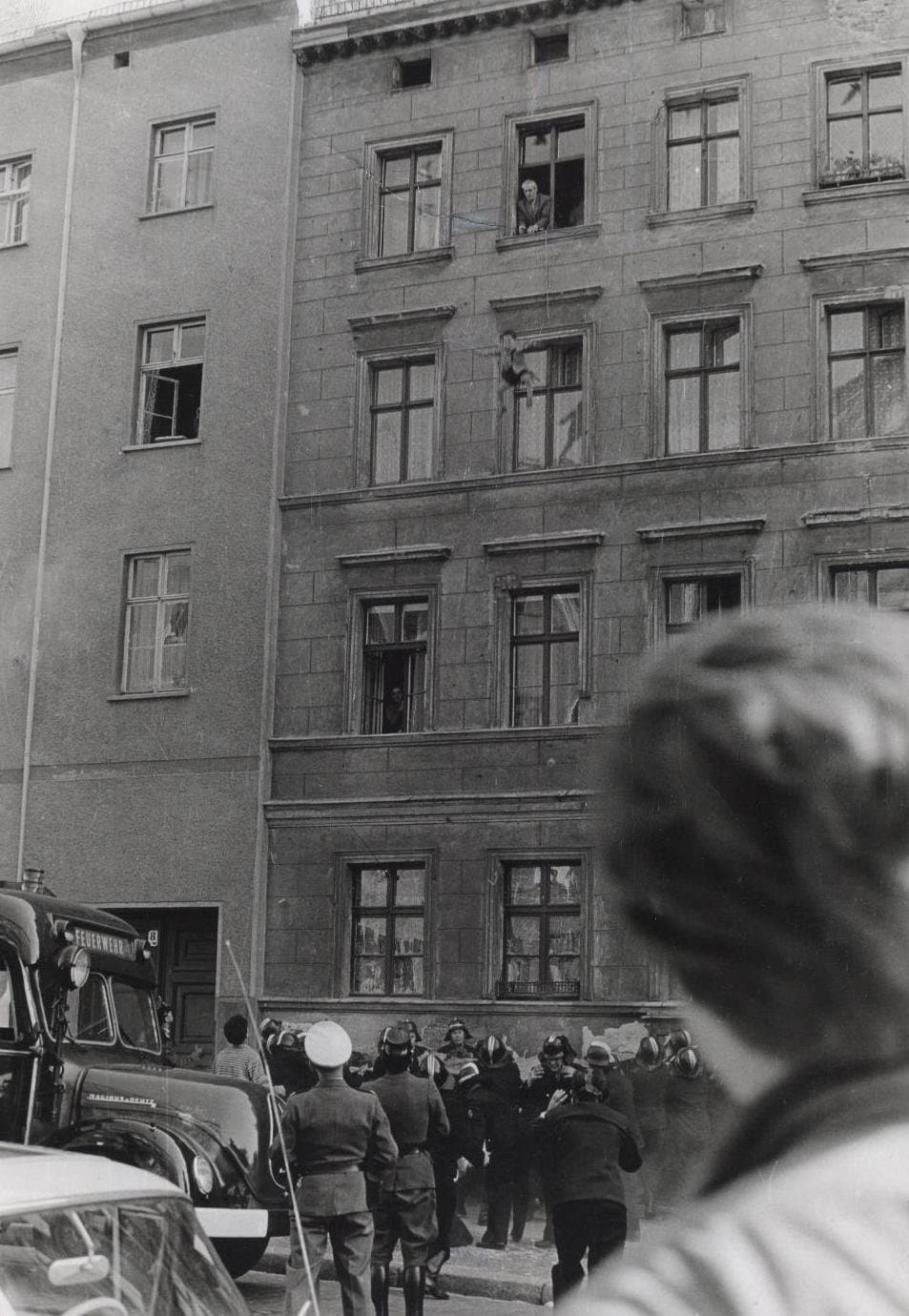
In the days following August 13th, the scenes across the city, particularly on Bernauer Straße, were heart-wrenching. This street ran directly along the sector border: the sidewalk was in the West, but the apartment buildings were in the East.
Residents, realising their front doors had been blocked by a police state and yet the sidewalk in-front offered freedom, began to jump. They jumped into firefighter’s nets; they jumped onto mattresses; in some tragic cases, they jumped to their deaths.
As recounted in ‘Burned Bridge’ by Edith Sheffer, the regime’s response was brutally pragmatic. They didn’t just patrol the border; they cannibalised the city to build it. The windows of these apartment blocks were bricked up, the residents forcibly evicted. The buildings themselves eventually became the wall.
This frenzy of activity – opportunistic escapes and the first deaths at the Wall – marked the beginning of the ‘Second Generation’, constructed roughly between 1962 and 1965.
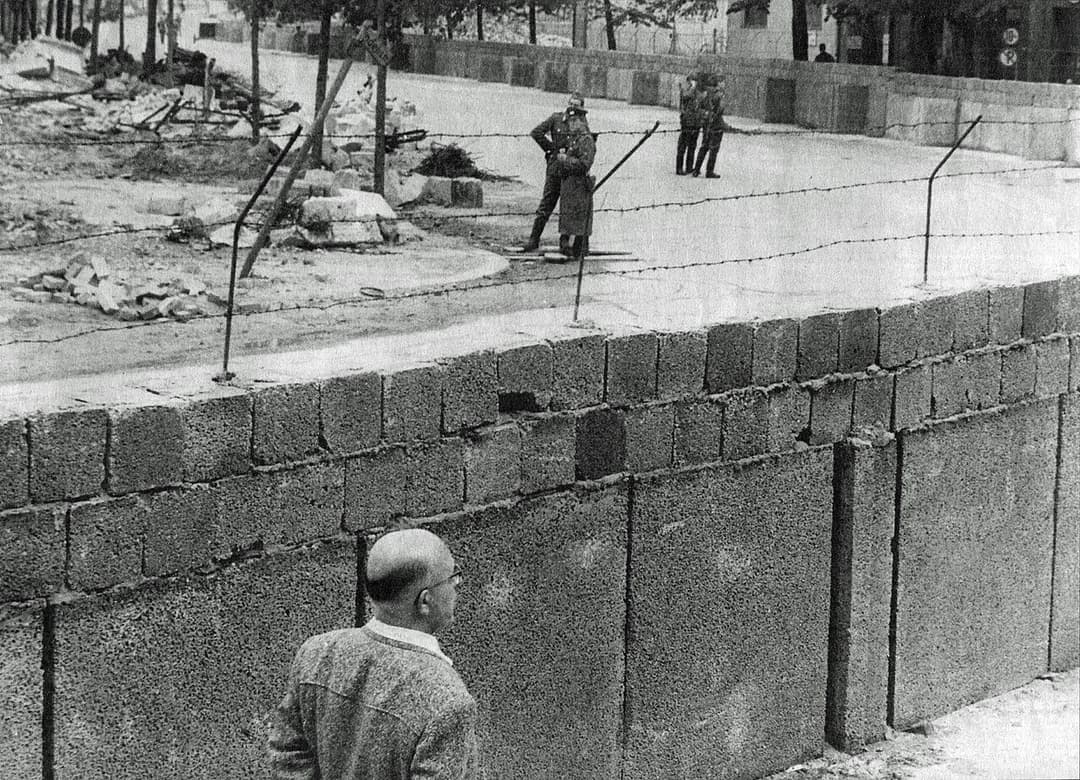
The wire was replaced by hollow concrete blocks and repurposed paving stones.
It was an ugly, patchwork monstrosity.
If you look at archival footage from 1963, the wall looks ragged, topped with shards of glass and rough Y-shaped stanchions holding barbed wire.
This phase answers the question of “how long” with a sense of tragedy. It took months to brick up the windows. It took years to demolish the buildings entirely—the famous Church of Reconciliation on the death strip survived isolated in no-man’s-land until 1985 when it was blown up to “clear the field of fire.”
It was during this phase that the construction was most visible.
East German masonry workers, guarded by soldiers with machine guns (guarding them not from the West, but from running to the West), laid mile after mile of blocks.
It was slow, labour-intensive work.
By the mid-1960s, the barrier was physically solid, but it was essentially a very long, poorly made garden wall topped with wire.
It was climbable.
It was breakable.
And so, the regime went back to the drawing board.
–
The 1975 Version: The Perfection of Terror
“To build a wall around your people is to admit the failure of your system.”
Richard von Weizsäcker, President of West Germany & Reunified Germany (1984-1994)
To truly understand how long it took to build the Berlin Wall, we must fast forward to the mid-1970s.
This is where the concept of the ‘Grenzmauer 75’ enters the history books.
The East German government was no longer satisfied with a barrier that looked like a frantic improvisation. They wanted something permanent, efficient, and capable of stopping any further escapes.
As described in Anna Funder’s atmospheric ‘Stasiland’, the ‘Third Generation’ (late 60s) and finally the ‘Fourth Generation’ (1975–1980) walls were feats of industrial engineering.
This is the Wall you see in museums today – and across Berlin still in a few locations.
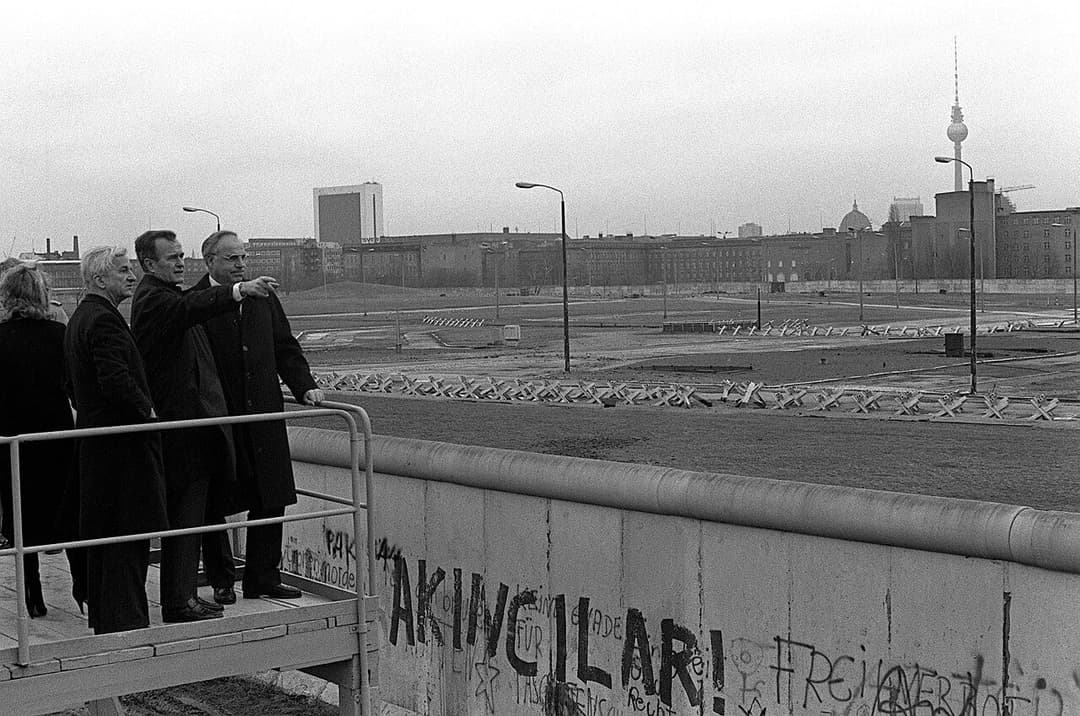
The Grenzmauer 75 (Border Wall 75) consisted of 45,000 separate sections of reinforced concrete.
Each segment, known as a Stützwandelement UL 12.41, was 3.6 meters (11.8 feet) high and weighed 2.75 tons.
Why this design?
It was obsessively researched.
The Surface: The concrete was cast to be incredibly smooth. There were no handholds, no footholds.
The Top: Instead of barbed wire, which could be cut, they placed an asbestos-concrete pipe on top. If you managed to jump and grab it, the pipe would offer no grip, causing you to slide back down.
The L-Shape: The base of the wall was L-shaped, with the foot often pointing toward East Berlin. This prevented the wall from being driven over by a heavy vehicle (or a desperate bus driver).
But the ‘Wall’ was just the facade.
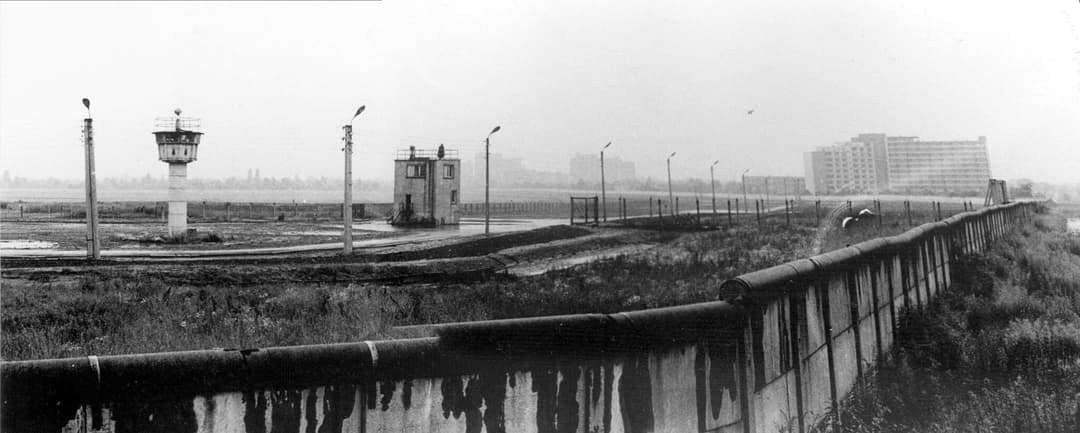
The construction of the Todesstreifen (Death Strip) behind it was the true time-consumer.
This zone, varying in width from 15 to 150 meters, required constant construction.
East German workers dug anti-vehicle trenches. They installed ‘Stalin’s Lawn’—mats of steel spikes hidden under the grass, designed to pierce feet and tires. They introduced thinly-raked dirt – to check for footprints the morning after any escape. Alarmed fence stretched across the ‘Death Strip’ waiting to be triggered and alert the patrolling guards of the presence of anyone bold enough to try to flee.
So, when did they finish building the Wall?
In a way, they never did.
Up until 1989, the East German authorities were still upgrading the technology. They replaced guard dogs with signal wires. They replaced old towers with new, hexagonal panoramic towers.
The Wall, understandably, became a black hole for the GDR budget.
While the Western world saw a static concrete barrier, the East German border troops saw a never-ending construction site.
Every escape attempt (tunneling, hot air balloon, hidden compartments) necessitated a new wave of construction and engineering countermeasures.
The Wall was a reactionary beast, growing new scales every time a prisoner found a chink in the armor.
–
Conclusion
“It took 28 years to build and one night to fall. That is the nature of tyranny.”
Patrick Major, author of ‘Behind the Berlin Wall: East Germany and the Frontiers of Power’
So, how long did it take to build the Berlin Wall?
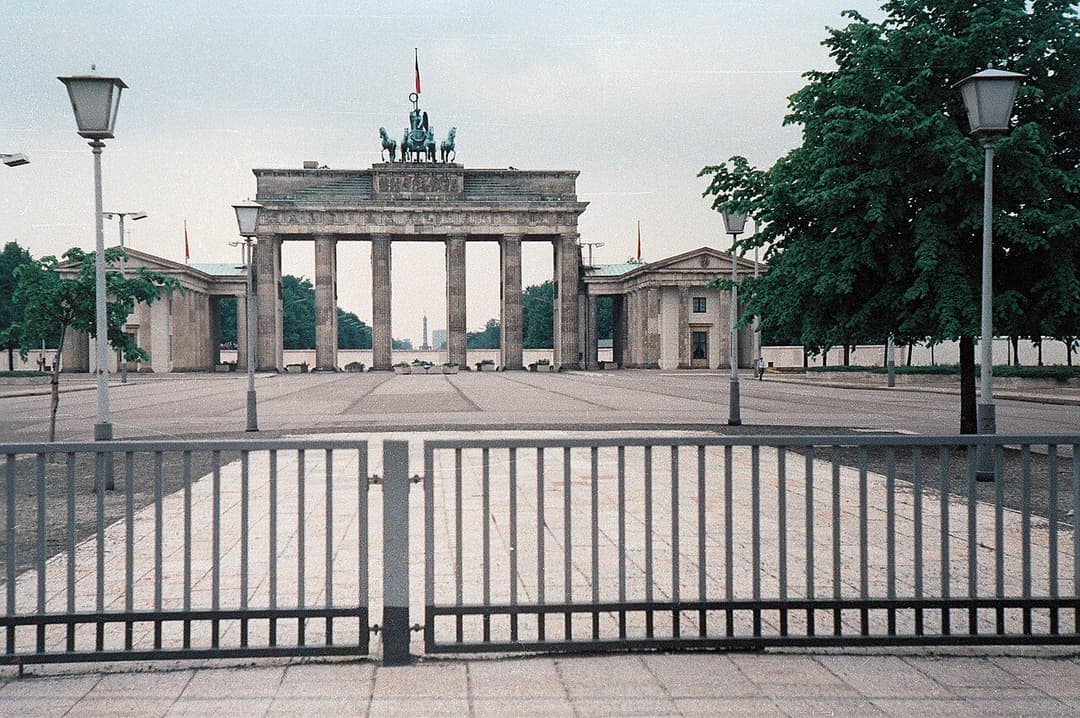
If we are speaking of the physical act of closing the sector border, it took roughly 24 hours.
Between Saturday night and Sunday morning of August 12th/13th 1961, the freedom of movement in a modern European metropolis was strangled out of existence.
That remains a feat of terrifying logistical competence.
However, if we are speaking of the Berlin Wall—that bright white, impenetrable scar of the Grenzmauer 75 with its death strip, floodlights, and dog runs—it took nearly two decades to perfect.
It is a dark irony that the Wall was only truly ‘finished’ in terms of its engineering capability in the early 1980s, just a few years before history swept it away.
The construction of the Wall was the primary occupation of the GDR’s pioneer corps for twenty-eight years. They poured enough concrete to build a city, but instead, they built a prison.
When we think of the construction of the Wall, we shouldn’t think of a single date.
We should think of the continuous pounding of pile drivers that echoed through Berlin for decades, the constant bricking up of windows, and the ceaseless refinement of death.
It didn’t go up in a night.
It crept up, inch by inch, robbing the city of its breath over a generation.
Bibliography
Applebaum, Anne (2012). Iron Curtain: The Crushing of Eastern Europe, 1944‑1956. Doubleday. ISBN 978‑0‑385‑51683‑0
Funder, Anna (2003). Stasiland: Stories from Behind the Berlin Wall. Granta Books. ISBN 978‑1‑86207‑554‑0
Harrison, Hope M. (2003). Driving the Soviets Up the Wall: Soviet‑East German Relations, 1953–1961. Princeton University Press. ISBN 978‑0‑691‑11204‑6
Harrison, Hope M. (2011). Ulbrichts Mauer: Die Berlin‑Krise von 1961 und der Weg in den Kalten Krieg (2nd ed.). Propyläen. ISBN 978‑3‑549‑07379‑2
Judt, Tony (2005). Postwar: A History of Europe Since 1945. Penguin Press. ISBN 978‑1‑59420‑065‑6
Kempe, Frederick (2011). Berlin 1961: Kennedy, Khrushchev, and the Most Dangerous Place on Earth. G.P. Putnam’s Sons. ISBN 978‑0‑399‑15729‑5
Ladd, Brian (1997). Ghosts of Berlin: Confronting German History in the Urban Landscape. University of Chicago Press. ISBN 978‑0‑226‑49364‑3
Major, Patrick (2010). Behind the Berlin Wall: East Germany and the Frontiers of Power. Oxford University Press. ISBN 978‑0‑19‑959365‑5
Sarotte, Mary Elise (2014). The Collapse: The Accidental Opening of the Berlin Wall. Basic Books. ISBN 978‑0‑465‑02817‑6
Sheffer, Edith (2011). Burned Bridge: How East and West Germans Made the Iron Curtain. Oxford University Press. ISBN 978‑0‑19‑975481‑7
Taylor, Frederick (2006). The Berlin Wall: A World Divided, 1961‑1989. HarperCollins. ISBN 978‑0‑06‑078613‑7
Wettig, Gerhard, ed. (2011). Die Berliner Mauer: Dokumente der Spaltung 1961–1989. Oldenbourg. ISBN 978‑3‑486‑70474‑2
Wilke, Manfred (2011). Der Weg zur Mauer: Stationen deutscher Teilung 1945–1961. Ch. Links. ISBN 978‑3‑86153‑540‑0
Liked this piece? Have a look at the Berlin Experiences tours that cover this history.
See the Berlin Wall TourMore articles →Share this piece
Know someone who still believes it?
Explore in person
Tours that address this myth.

The Berlin Wall Tour
Private 1-hour walking tour of the Berlin Wall on Bernauer Strasse for up to 10 people. Starts at the Berlin Wall Documentation Centre.

The Cold War Berlin Tour
Private 1-hour walking tour of Cold War Berlin's border sites for up to 10 people. Starts by the Berlin Wall segments on Potsdamer Platz.
More reading
The other myths, busted.
49 more — drag, scroll or use the arrow keys.


UNIQUE EXPERIENCES FOR MODERN EXPLORERS

