Skip to content
‘Tragende’, Will Lammert’s bronze of a woman carrying a dying prisoner, on its column at the Ravensbrück Memorial in Fürstenberg/Havel

Berlin Experiences/Featured Experiences

Ravensbrück Concentration Camp: Visit the Ravensbrück Memorial

Nazi Germany’s main ‘protective custody camp’ for female prisoners

The short answer

Ravensbrück was the largest Nazi concentration camp for women, on the Schwedtsee lake at Fürstenberg/Havel, about 80 km north of Berlin. Today it is the Ravensbrück Memorial (Mahn- und Gedenkstätte Ravensbrück): you can walk the former camp grounds, the lakeside memorial and the crematorium, and see exhibitions in the former SS headquarters, the workshops and the guards’ houses. Admission is free and the grounds open daily from 09:00. Plan on 3–4 hours there; from Berlin it is about an hour on the RE5 regional train to Fürstenberg (Havel), then a 30-minute walk.

Where
Straße der Nationen, 16798 Fürstenberg/Havel, about 80 km north of Berlin
Open
Daily: grounds from 09:00, exhibitions 10:00–18:00
Admission
Free (audio guide €3)
Time needed
3–4 hours, plus about 1 h 30 min each way from Berlin
Nearest station
RE5 Fürstenberg (Havel), 30 minutes on foot
Step-free
Partly: lift in the main exhibition; some areas need assistance
With a guide
Private guided day trip from Berlin, with transport there and back. See the Ravensbrück Camp Tour →

The story · by Matt Robinson

The Nazi concentration camps in Germany – officially referred to by Hitler’s regime as ‘protective custody camps’ – were populated almost exclusively by male prisoners, with only a few notable exceptions. The most significant, and largest, being the Ravensbrück women’s camp, constructed in 1939 on the banks of the lake Schwedt, near the town of Fürstenberg an der Havel.

Despite the obvious difference in the gender of prisoners detained here, Ravensbrück would still exhibit the same signifiers of National Socialist persecution as the brother camps, such as Sachsenhausen and Dachau, elsewhere. Rudimentary housing in the form of penal barracks, a slave labour system that would excel both in spite of and because of the expendable nature of the camp population – and from early 1945, a gas chamber – designed to expedite the murder of prisoners.

As with other Nazi camps, prisoners would come from certain persecuted groups – mainly political prisoners, but also Jehovah’s Witnesses, Roma and Sinti, Jews, and so-called race traitors (Rassenschande) accused of relations with impure non-Aryans. Although the camp was located only 90km north of the Nazi capital of Berlin, the largest national group of prisoners would eventually not be German – but Polish. Including many members of the Polish Home Army.

Fürstenberg and the camp

As a well-known health resort in the 1920s, the peaceful town of Fürstenberg – now in the northern German state of Brandenburg – was advertised for its three lakes and manor house transformed into a sanatorium that proved particularly popular with Berliners.

In the 1930s, the Nazi Party would find popular support in the town and by 1939 open the Ravensbrück ‘protective custody camp’ opposite the town centre, on the banks of lake Schwedt. The first prisoners, from Germany and Austria, arrived on May 18th 1939 – followed by a large group of so-called Gypsy women from the Burgenland in Austria, in the summer of 1939.

Stone marking the site of the gas chamber in front of the Wall of Nations at the Ravensbrück Memorial, with the rose beds over the mass grave
The stone marking the site of the gas chamber, by the Wall of Nations.

Over the next six years, around 130,000 women would be incarcerated at Ravensbrück – with an estimated 28,000 perishing.

No secret was made of the camp’s existence to the local population, and not only would businesses profit from the concentration camp’s presence but prisoners would also be marched through the town to provide slave labour in Fürstenberg. Similarly to other Nazi camps, Ravensbrück would serve as the centre for other subcamps – in this instance around 70 of them – housing forced labourers for different purposes – including around 20,000 male prisoners.

The female guards

Ravensbrück was particularly unique within the Nazi system of concentration camps as not only were the vast majority of camp prisoners female, but so were many of the guards – or overseers (Aufseherinnen), as they were officially classified. At peak, some 150 female overseers would work at the camp policing the prisoners, but in total around 4,000 would receive training at Ravensbrück – to be posted to other camps elsewhere. Among them women such as Elfriede Müller – the ‘Beast of Ravensbrück’ – and Irma Grese, future Rapportführerin at Auschwitz-Birkenau, who would participate in prisoner selections for the gas chambers.

Cremation ovens in the crematorium at the Ravensbrück concentration camp memorial, hung with red flowers
The ovens of the crematorium, built in 1943.

Unlike their male colleagues, these female guards – although benefitting from being state employees – were not official members of the SS (Schutzstaffel) – the organisation headed by Heinrich Himmler and tasked with maintaining the concentration camp system. But civil employees within a paramilitary organisation. And while male guards would be allowed access to the camp to patrol – the female Aufseherinnen would often be restricted to supervising the prisoners’ work details – escorting prisoners to their labour from the main gate.

Despite the reduced role and position of these overseers, Ravensbrück would remain the only Nazi camp where the female guards were in the majority. The former accommodation for these women is the central set of apartment blocks visible when arriving at the current concentration camp memorial – now used as a youth hostel for visiting school classes.

Forced labour and medical experiments

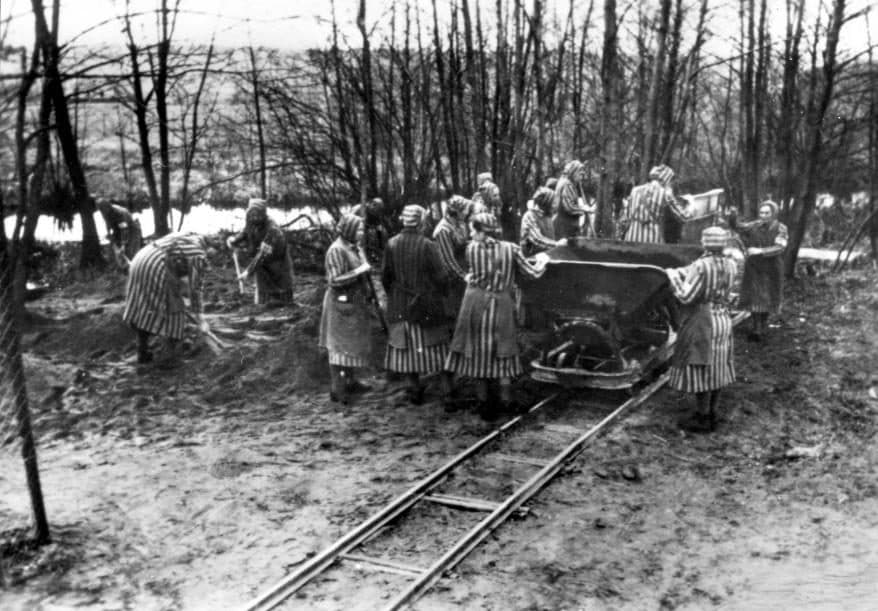
Life at Ravensbrück for the thousands of women imprisoned here would not differ greatly from the circumstances and casual savagery inflicted upon male prisoners elsewhere – the SS policy of “annihilation through labour” would apply here too. Companies such as Siemens and Halske would utilise camp labour to produce telephones, prisoners would be forced to make components for V2 rockets, but most significantly in the Texled textile factories female prisoners would be forced to produce the prisoner uniforms for all the other SS camps.

Former camp workshop buildings along the camp wall at Ravensbrück, where women prisoners did forced labour
Former workshops along the camp wall.

Like with other camps, prisoners here would be subject to medical experiments – at Ravensbrück some 86 prisoners, including 74 Poles, would serve as human test subjects for various sulphonamide drugs. Infected with gangrene, with wounds later opened and reinfected, these women would come to be known as the ‘Ravensbrück Rabbits’.

No such reassuring moniker is given to those women, around 200 of them, who sought an escape from the camp by being transferred elsewhere to work in any of the ten brothels established by the SS – for use by male prisoners – to improve prisoner morale. Another horrifying detail in the catalogue of tragedies and traumas justified by National Socialist policy and inflicted on the women imprisoned in what was the largest Nazi concentration camp for female prisoners.

To visit the Ravensbrück Concentration Camp Memorial today is to be confronted with the opportunity to learn, and to understand – but importantly to ensure that such wickedness and human catastrophe as a result of the twisted fantasies of fascist ideological fervour is never forgotten.
Ravensbrück in detail

Women prisoners in striped camp dress pushing a tipper wagon on narrow-gauge rails at Ravensbrück concentration camp, 1939
Women prisoners at forced labour, 1939. Photo: Bundesarchiv, Bild 183-1985-0417-15 / CC-BY-SA 3.0

Who was held at Ravensbrück?

Ravensbrück was the largest concentration camp for women in the German Reich and the centre of a complex: a men’s camp from 1941, the Siemens & Halske factory halls, the SS textile workshops and, from 1942, the Uckermark camp for girls and young women. Current estimates are that about 120,000 women and children, 20,000 men and 1,200 girls and young women from more than 30 countries were held here. Most of the women were classed as political prisoners, and from 1942 Polish women were the largest national group.

Jewish women were a minority, because the SS kept sending them away to be killed. In spring 1942 some 1,600 prisoners, about half of them Jewish, were selected and gassed at the Bernburg killing centre; in October 1942 more than 600, among them 522 Jewish women, were deported to Auschwitz. In 1944, as camps further east were cleared, Ravensbrück filled far beyond capacity: that August the SS put up a tent in which more than 4,000 women were at times crammed together.

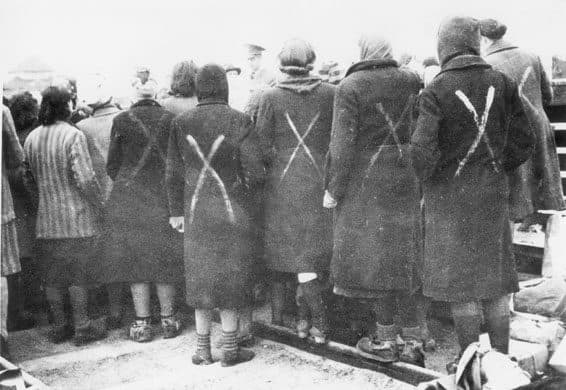
Women prisoners at Ravensbrück seen from behind, wearing civilian coats painted with white crosses, photographed by the Swedish Red Cross in 1945
Women prisoners in 1945. The crosses marked civilian clothes issued as prison dress. Photo: Swedish Red Cross / Public domain, via Wikimedia Commons

The last months: gas chamber, rescue and death march

Early in 1945 the SS turned a hut beside the crematorium into a provisional gas chamber, and several thousand prisoners were murdered there in the following weeks. Many were first held in the Uckermark camp, which the SS had cleared of its young inmates and used as a place to collect women it judged too weak to work. Rudolf Höss, the former commandant of Auschwitz, had been at Ravensbrück since November 1944.

In April, after Folke Bernadotte of the Swedish Red Cross had negotiated with Heinrich Himmler, Swedish and Danish Red Cross convoys, the ‘White Buses’, and a goods train took around 7,000 women out of the camp to Denmark and on to Sweden. From 27 April the SS drove most of the remaining prisoners north on foot towards Mecklenburg. When Soviet troops reached the camp on 30 April they found around 3,000 sick women and men and those caring for them; the columns on the roads were overtaken and freed over the next few days.

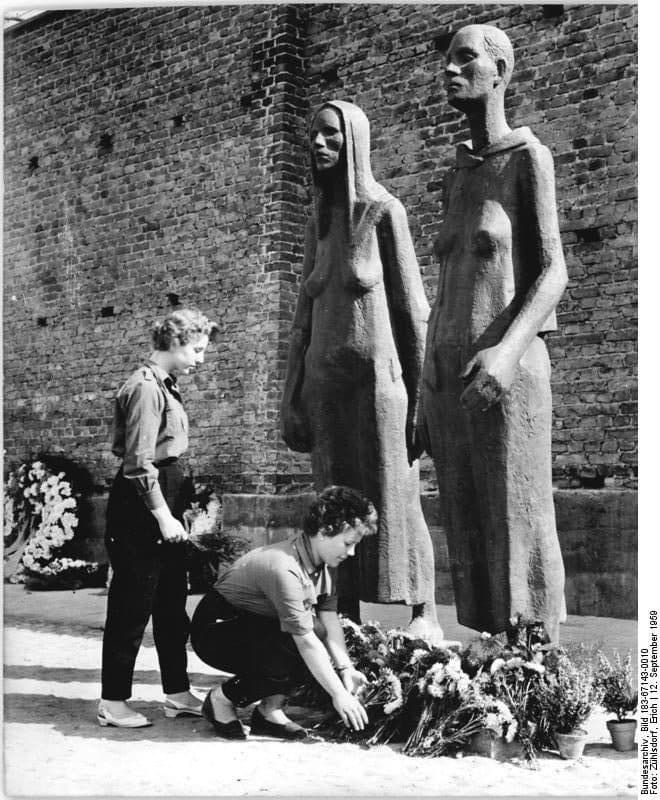
Two young women laying flowers before a bronze figure group by the brick wall of the Ravensbrück Memorial on its opening day, 12 September 1959
Laying flowers on the day the memorial opened, 12 September 1959. Photo: Bundesarchiv, Bild 183-67143-0010 / Zühlsdorf, Erich / CC-BY-SA 3.0

After 1945: barracks, a memorial and a supermarket

The Red Army turned most of the camp into barracks, and Soviet and then Russian troops stayed until the mid-1990s. Former prisoners pressed for a memorial from 1948, and on 12 September 1959 East Germany opened the Ravensbrück National Memorial on a strip of land at the camp wall: the crematorium, the cell building, the wall and the lakeside, with Will Lammert’s ‘Tragende’. The year before, women from Lidice had planted 150 roses around the mass grave, which began the tradition of roses still seen there. In GDR times the memorial honoured above all the resistance and the political prisoners.

In 1991 a supermarket built at the entrance made headlines around the world; it never traded as one and stood largely empty until it was demolished in 2011. The memorial joined the Brandenburg Memorials Foundation in 1993, large parts of the camp became accessible once the troops had gone, and since autumn 2019 the extended women’s camp and the men’s camp have been open to visitors.

Plan your visit

Visiting the Ravensbrück Memorial

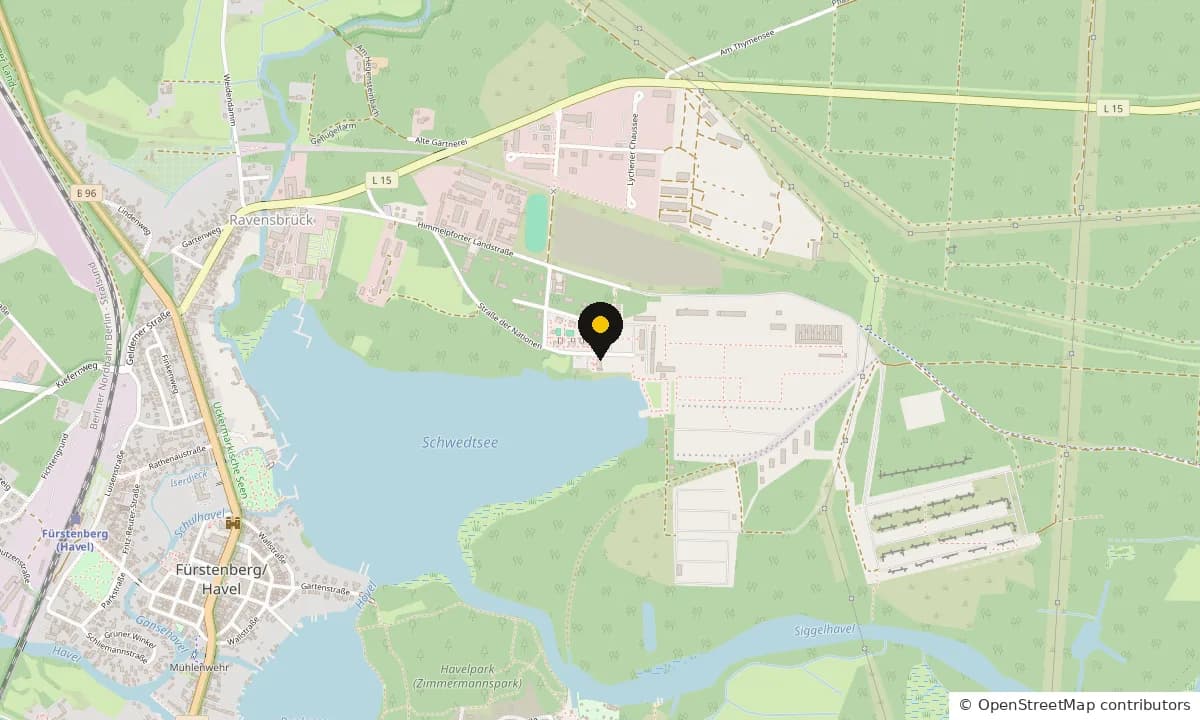
Map of the streets around the Ravensbrück Memorial, with a pin on the siteOpen in Google Maps

Straße der Nationen, 16798 Fürstenberg/Havel · Grounds daily 09:00–20:00 (April–September), 09:00–18:00 (October–March). Exhibitions daily 10:00–18:00, last entry 17:30. Visitor centre Tuesday–Sunday 09:00–17:30 in summer, 09:00–16:00 in winter (closed 12:30–13:00 and on Mondays).

Getting there

  • RE5Fürstenberg (Havel)About 1 h from Hauptbahnhof, then 30 min on foot

    Hourly from Berlin Hauptbahnhof, Potsdamer Platz and Gesundbrunnen towards Stralsund or Rostock. A Berlin ABC ticket does not reach Fürstenberg: buy a ticket to Fürstenberg (Havel), or use the Deutschlandticket. From the station it is about 2.3 km on foot through the town and along the Schwedtsee.

  • MOHVERFürstenberg (Havel) station to the memorial car parkBook 90 min ahead

    Run by Oberhavel Verkehrsgesellschaft (OVG). Book at least 90 minutes ahead in the OVG app or on +49 3306 2307; standard VBB fares.

  • B96Free car park by the visitor centreAbout 1 h 30 min from central Berlin

    Take the B96 (Berlin–Stralsund) to Fürstenberg/Havel, then follow the signs to the memorial.

What you’ll see

  • The 1959 memorial on the shore of the Schwedtsee: Will Lammert’s statue ‘Tragende’, the Wall of Nations with the rose beds over the mass grave, the crematorium and the site of the gas chamber.
  • The former camp itself: the main exhibition in the old SS headquarters, the workshops where prisoners did forced labour, the outlines of the barracks and the gate and guardhouse, where a 30-minute film of survivors’ memories runs every hour. The cell building is closed for renovation until 2028.
  • The SS housing estate beside the camp, with exhibitions on the female guards and on the SS officers who lived in the ‘Führerhaus’, and a short walk away the site of the Uckermark camp for girls and young women.

Tips from a guide

  • Make a day of it: trains run hourly, and the RE5 is often affected by engineering works, so check bahn.de or VBB the day before.
  • There is no café on the grounds: bring food and water. The visitor centre (audio guides, lockers for medium-sized bags, bookshop) is closed on Mondays, though the grounds and exhibitions open daily.
  • The memorial says its exhibitions and grounds are not suitable for children under 12. Much of the visit is outdoors, so wear sturdy shoes and dress for the weather.

Accessibility

The memorial says a fully accessible visit cannot be guaranteed: it is a historic site and not every part of the grounds and buildings can be reached without help. The main exhibition has a lift to all floors, wheelchairs can be borrowed at the visitor centre, and there are accessible toilets in the visitor centre, the main exhibition and the former garages. For details call +49 33093 608-0.

Timeline

From women’s camp to memorial

  1. Winter 1938–39Prisoners from Sachsenhausen build the camp beside the Schwedtsee.
  2. 18 May 1939The first 867 women arrive from Lichtenburg concentration camp.
  3. 29 Jun 1939440 Sinti and Roma women and children arrive from Burgenland in Austria.
  4. Apr 1941A men’s camp opens beside the women’s camp; some 20,000 men pass through it.
  5. Jun 1942The women of Lidice arrive; Siemens & Halske builds factory halls by the camp.
  6. Jul 1942SS doctors begin medical experiments on 86 women, 74 of them Polish.
  7. Oct 1942More than 600 prisoners, 522 of them Jewish women, are deported to Auschwitz.
  8. Early 1945A provisional gas chamber is set up; several thousand prisoners are murdered.
  9. Apr 1945Swedish and Danish Red Cross convoys take around 7,000 women to safety.
  10. 27 Apr 1945The SS drives most remaining prisoners north on a death march.
  11. 30 Apr 1945Soviet troops liberate the camp and about 3,000 sick prisoners left behind.
  12. 12 Sep 1959East Germany opens the Ravensbrück National Memorial.

See it with a historian

Tours that stop at the Ravensbrück Memorial

The memorial is large and much of the camp is gone; a guide takes you straight there from Berlin and shows you where the barracks, workshops and SS houses stood, and what happened in each.

Ravensbrück Concentration Camp Memorial
Full Day7 Hours

The Ravensbrück Camp Tour

Private 7-hour van tour from Berlin to Ravensbrück, the largest Nazi camp for women, for up to 6 people. Starts at your hotel.

€1,150up to 6
View Tour

Why this tour

A full day by private van from your door to the memorial, the camp grounds and the SS housing estate.

See the Ravensbrück Camp Tour

Questions visitors ask

Frequently asked questions

Can you visit Ravensbrück concentration camp?

Yes. The site is the Ravensbrück Memorial, open every day: the grounds from 09:00 and the exhibitions 10:00–18:00. Admission is free.

How do I get to Ravensbrück from Berlin?

Take the hourly RE5 regional train from Berlin Hauptbahnhof to Fürstenberg (Havel), about an hour, then walk 2.3 km (about 30 minutes) or book the MOHVER on-demand bus at least 90 minutes ahead. By car it is about an hour and a half on the B96.

Is Ravensbrück free to visit?

Yes, the grounds and all exhibitions are free. Audio guides cost €3 (with a deposit) and guided group tours are paid and must be booked in advance.

How long do you need at Ravensbrück?

Allow 3–4 hours on site; each of the two audio tours lasts 90 minutes and the survivors’ film 30 minutes. With the journey from Berlin, it is a full day.

What was Ravensbrück?

The largest concentration camp for women in Nazi Germany, opened in May 1939 near Fürstenberg. It also trained thousands of female guards for other camps and ran a network of subcamps.

How many people died at Ravensbrück?

Historians estimate around 28,000 people died or were murdered there, although figures vary by source. Thousands more died on the death march or after liberation.

Who liberated Ravensbrück?

The Soviet Red Army, on 30 April 1945, finding about 3,000 sick prisoners left behind. In the days before, Swedish and Danish Red Cross convoys had taken around 7,000 women to safety, and the SS had marched most of the others away.

Is Ravensbrück suitable for children?

The memorial says its exhibitions and grounds are not suitable for children under 12, and its educational programmes are for students aged 14 and over.

Keep exploring

More Featured Experiences.

Every site we write about — 56 landmarks, museums, memorials and lesser-known corners of Berlin. See the full index →

01Walk Through The Brandenburg Gate02Explore The State Museums On Museum Island03Visit The Berlin TV Tower – The Fernsehturm04Cross The Cold War Border At Checkpoint Charlie05Visit The Site Of Adolf Hitler’s Führerbunker06Explore The Reconstructed Berlin Palace07Visit The Reichstag Cupola At Night08Explore The Forum Fridericianum09Shop At The Humboldt University Book Sale10Journey Into The Memorial To The Murdered Jews Of Europe11Step Inside The Neue Wache12Explore The Former Jewish Quarter – Spandauer Vorstadt13Visit The Remains Of The Berlin Wall14Walk Across The Bridge Of Spies15Explore The Topography Of Terror16Climb The Prussian Victory Column – The Siegessäule17Enter The Palace Of Tears – The Tränenpalast18Step Inside The Berlin Olympic Stadium19Explore Erich Mielke’s Office At The Stasi Museum20Walk Along Karl Marx Allee21Visit The Oldest Church In Berlin – The Nikolaikirche22Explore The Berliner Dom23Visit The Grave Of Frederick The Great24Walk Through The Ruins Of Anhalter Bahnhof25Stand On The Platz Des Volksaufstandes26Visit The German Resistance Museum27Visit The Soviet War Memorial In The Tiergarten28See The Georg Elser Memorial On Wilhelmstrasse29Step Inside The Kaiser Wilhelm Gedächtnis Kirche30Visit The Gleis 17 Memorial31Visit The Schloss Charlottenburg Mausoleum32Climb The Französischer Dom at Gendarmenmarkt33Explore The Interbau – IBA 5734Explore The Otto Weidt Workshop35Visit Cecilienhof – Site Of The Potsdam Conference36Visit The Stasi Prison In Hohenschönhausen37Spend The Day At Tempelhof Airport38Ride The Fastest Elevator In Europe39Visit The Soviet War Memorial In Treptower Park40Visit The Sachsenhausen Concentration Camp Memorial42Visit Karlshorst – The Site Of The German Surrender43Visit The Socialists Cemetery – Zentralfriedhof Friedrichsfelde44Visit The Soviet War Memorial In Pankow45Visit the Seelow Heights Memorial46Visit The Commonwealth War Cemetery47Cross The Bösebrücke At Night48Explore The Allied Museum In Dahlem49Explore The Spandau Citadel50Visit The Brandenburg T4 Euthanasia Memorial51Visit The Wannsee Conference House52Visit The Jewish Museum53Visit The Jewish Cemetery In Weissensee54Walk Along The East Side Gallery55Explore The Volkspark Friedrichshain Flak Tower56Head Up The Teufelsberg