Skip to content
The Bode-Museum on Museum Island in Berlin seen from above the River Spree, with a tour boat below and the TV Tower in the distance

Berlin Experiences/Featured Experiences

Museum Island Berlin: Visit the Five Museums on the Museumsinsel

The UNESCO World Heritage-listed ensemble in the historic centre of Berlin.

The short answer

Museum Island (Museumsinsel) is the northern end of the Spree island in Berlin-Mitte, where five state museums built between 1830 and 1930 stand together as a UNESCO World Heritage site. Four of them are open: the Altes Museum, the Neues Museum with the bust of Nefertiti, the Alte Nationalgalerie and the Bode-Museum. The Pergamonmuseum is closed for renovation until 4 June 2027. Walking around the island is free; one €24 Museumsinsel Ticket covers every museum for a day, under-18s go free, and all the museums are closed on Mondays. Allow half a day for two museums, a full day for more.

Where
Bodestraße, 10178 Berlin-Mitte, between the Spree and the Kupfergraben
Open
Tue–Sun from 10:00; closed Mondays
Admission
€24 Museumsinsel Ticket (all museums, one day); under-18s free
Time needed
Half a day for two museums, a full day for more
Nearest station
U5 Museumsinsel, 5 minutes on foot
Step-free
Mostly: Alte Nationalgalerie and Bode-Museum only in part

The story · by Matt Robinson

Removed from Berlin by the dark waters of the River Spree, Museum Island is both central and separate from the city. Berlin’s pièce de résistance – its Smithsonian or British Museum – complete with five world class museums covering over 6,000 years of history – testament to this region’s time as capital of the Kingdom of Prussia and Imperial Germany. And the value placed on the study and presentation of civilisation.

More than just a collection of trophy rooms stacked with foreign glories, donated paintings, and liberated items – Museum Island is the product of the enthusiastic investment in the academic study of great empires, their rulers, and subjects.

Better to emulate them, certainly, as the 19th century Prussian ‘Iron Kingdom’ sought prestige and recognition of its own glory – while nursing the social phenomenon of the museum (that owes so much in this sense to the Age of Enlightenment). Now this important part of the city of Berlin is classified as a UNESCO World Heritage site – maintained as an urban public forum with outstanding universal value.

The Altes Museum

The first of the museums on Museum Island to have been completed occupies the southern section of the ensemble – facing the recently reconstructed Stadtschloss (City Palace) across the open ground of the Lustgarten.

Finished in 1830, the Königliches Museum – as it was then known – was designed by legendary master architect, Karl Friedrich Schinkel, in a Neoclassical style, to house the art and sculpture collection of the Prussian ruling family. Approaching the collection of museums here for the first time, it is as good a starting point as any – as a chronological digestion of the area does allow for a certain lineage of appreciation of the variety of artefacts currently laid out across these museums.

Bronze Lion Fighter statue between the columns of the Altes Museum on Museum Island, Berlin, with the red-painted portico wall behind
The Lion Fighter at the Altes Museum’s steps.

In its present day form, the Altes Museum – as it is now known, focuses on Greek and Roman antiquities, held in the Antikensammlung (Collection of Classical Antiquities) of the Berlin State Museums.

Shortly after the completion of this museum, the ruling Prussian King Frederick William IV – dubbed the ‘Romanticist on the throne’ for his love of the sublime and beauty of nature – ordered the expansion of the island as “a sanctuary for art and science”. His father, Frederick William III, had tasked Wilhelm von Humboldt, brother to the more illustrious Alexander, with overseeing the arrangement of the collection.

The Neues Museum and Nefertiti

The addition of a second museum further north on the island would see the first renamed – and the new museum simply titled the New Museum (Neues Museum). Now focused chiefly on exhibiting the city’s Egyptian collection (and much more), this is home to the famous bust of the Egyptian queen Nefertiti.

The ‘Mona Lisa of Berlin’, as she is known, is presented behind bulletproof glass in a dedicated room – sequestered from the other exhibits in the museum. She is also the only artefact on Museum Island that guests are prohibited from taking photos of – despite being the star attraction of the Berlin State Museums collection.

The ‘Mona Lisa of Berlin’, as she is known, is presented behind bulletproof glass in a dedicated room…

Having survived the Second World War, the bust was found by American troops in the German state of Thuringia, where it had been stored for safekeeping. For most of the Cold War period it remained in West Berlin, exhibited from 1967 in the district of Charlottenburg.

Nefertiti would finally return to the Neues Museum as the centrepiece of the permanent collection in 2009.

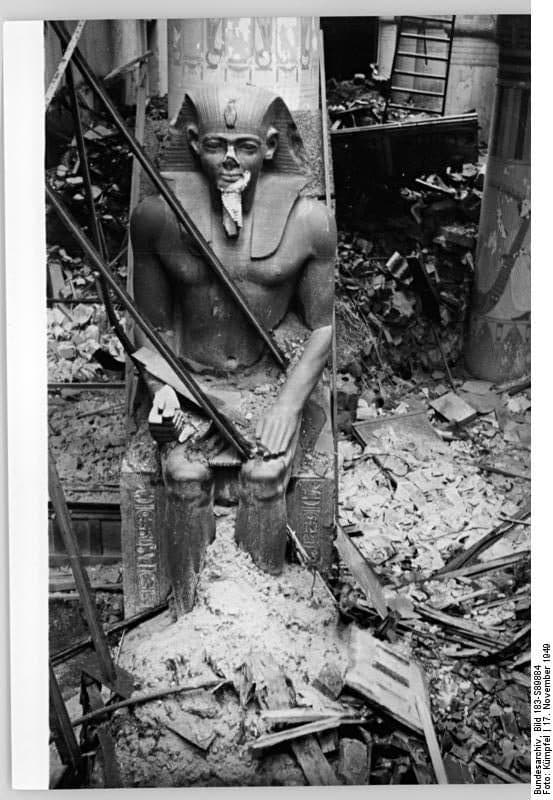
As with all of the buildings on Museum Island, the Neues Museum sustained substantial damage during the Second World War – mainly from Anglo-American air raids but also the final fighting of the Battle of Berlin. The reconstruction of the museum, by starchitect David Chipperfield, as part of the Museum Island Master Plan meant that elements of the war damage were left preserved inside the structure. Discernible to visitors on close inspection of the interior. The scars of battle are in fact visible on the facades of all of the museums on the island, in particular the columns of the Altes Museum, facing the Lustgarten.

From the Nationalgalerie to the Pergamon

The Old National Gallery (Alte Nationalgalerie) – with its collection of 19th century French Impressionist and German Romantic era paintings – along with the Bode Museum, nestled on the most northern tip of Museum Island and known for its Byzantine art and sculptures – both demanded substantial attention during the Cold War period in order to be reopened. A result of both Second World War damage and the schizophrenic policies of the East German state during the Cold War period when it came to the question of Prussian history.

Portico of the Alte Nationalgalerie on Museum Island, Berlin, with the equestrian statue of Frederick William IV and the inscription ‘Der deutschen Kunst’
The Alte Nationalgalerie: ‘to German art’.

Cutting through Museum Island and separating the Bode Museum from the rest of the collection is the train line of Berlin’s central Stadtbahn – the inner city section of the Paris-Moscow line. The Bode Museum is on the northern side of the track, while directly south is what has long been considered to be the most popular museum in Germany – the Pergamon Museum.

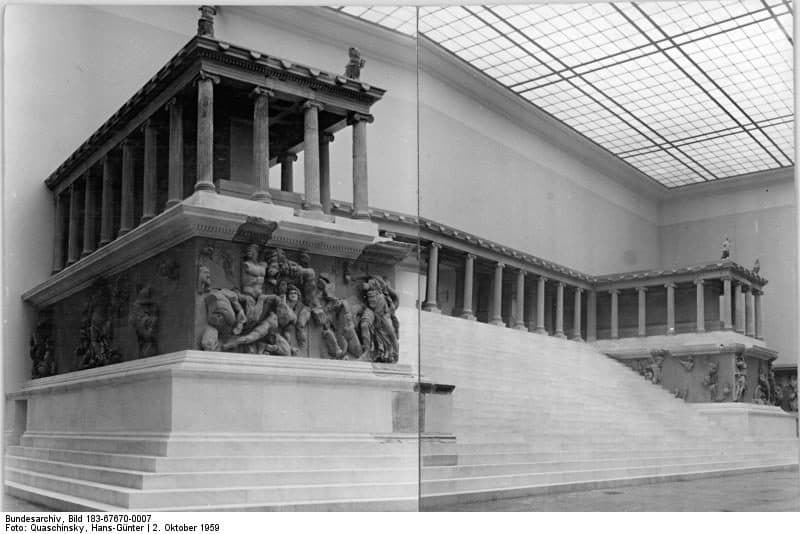
Famous for its huge Greek altar that has been entirely reconstructed inside the confines of the museum – once one of the terraces of the acropolis of the ancient Greek city of Pergamon – located in present-day Turkey. As much a prized part of the Berlin State Museums collection as the Parthenon Marbles are to the British Museum. Discovered in 1878 by a German expedition to the region, this Hellenistic structure features a gigantic frieze retelling the battle between the Giants and the Olympian gods, known as the Gigantomachy.

Stone façade of the Pergamonmuseum on Museum Island, Berlin, with a construction crane behind during the renovation
The Pergamonmuseum, closed for renovation.

Due to the unfortunate need to reconstruct the interior of the museum, the altar is now off limits – with the expectation that it will open to the public again in 2027, once a new glass ceiling and climate control system are installed.

While the other museums on Museum Island may be famous for their smaller artefacts and antiquities, the Pergamon Museum is notable for its monumental displays. Not only the Pergamon Altar, but also the Market Gate of Miletus, the Mshatta Facade – and perhaps most impressively, the Ishtar Gate of Babylon. Offering visitors the opportunity to not only walk into an ancient Roman market – but also enter Babylon. Without leaving Berlin.

A museum for the whole planet

Naturally the Museum Island collection has drawn criticism from the lands of origin of its artefacts along with historical societies frequently calling for restitution. But as a UNESCO World Heritage site, it is worth noting that these museums are maintained now not as German – or Prussian – venues. But for the sake of the entire planet.

…these museums are maintained now not as German – or Prussian – venues. But for the sake of the entire planet.

Stepping into these museums is to enter various different eras of human history – to chart the rise and fall of ancient civilisations. Embrace the analysis of ancient mythologies. Study the gods of polytheistic societies. Inspect the colourful remnants of our shared past – the wondrous relics that have been left behind as measures of the substantial – but temporary – nature of human greatness.
Museum Island in detail

The reconstructed west front of the Pergamon Altar, with its great staircase and frieze, in the Pergamonmuseum on Museum Island, Berlin, 1959
The Pergamon Altar in 1959, the year it went back on show after its return from the Soviet Union. Photo: Bundesarchiv, Bild 183-67670-0007 / Quaschinsky, Hans-Günter / CC-BY-SA 3.0

The Pergamonmuseum’s long closure

The Pergamonmuseum was the last of the five to be built, from 1910 to 1930, to plans by Alfred Messel that Ludwig Hoffmann carried on after Messel’s death. It was made for things too big for any other museum: whole façades and gateways rebuilt from excavated fragments. Renovation began in 2013, the hall of the Pergamon Altar closed in 2014, and since 23 October 2023 the whole building has been shut.

It reopens in two stages. On 4 June 2027 the north wing and central building are due back, with the altar, the hall of Hellenistic architecture and a new display of the Museum für Islamische Kunst, including the Mshatta Façade and the Aleppo Room. The south wing, with the Ishtar Gate, the Processional Way of Babylon and the Market Gate of Miletus, stays closed until about 2037. A new fourth wing and an underground Archaeological Promenade will eventually link the Pergamon to its neighbours.

An ancient Egyptian statue standing among the rubble and broken beams of the bombed Neues Museum on Museum Island, Berlin, in 1949
An Egyptian statue in the ruins of the Neues Museum, November 1949. Photo: Bundesarchiv, Bild 183-S89884 / Kümpfel, Kurt / CC-BY-SA 3.0

Bombs, division and the Master Plan

Air raids from 1943 and the fighting of April and May 1945 left every building on the island damaged, and the Neues Museum a roofless ruin. The collections had been moved to flak towers and mines, and after the war they were divided as well. What the Red Army took to the Soviet Union, the Pergamon Altar among it, came back to East Berlin in 1958. What the Americans found in the mines of Thuringia, Nefertiti included, ended up in West Berlin.

East Germany repaired and reopened the Pergamonmuseum, the Nationalgalerie and the Bode-Museum but left the Neues Museum a shell. After reunification the collections were brought together again, and in 1999, the year UNESCO listed the island, the Prussian Cultural Heritage Foundation adopted a Master Plan to restore all five buildings. The Alte Nationalgalerie reopened in 2001, the Bode-Museum in 2006 and David Chipperfield’s Neues Museum in 2009, its scars left in view.

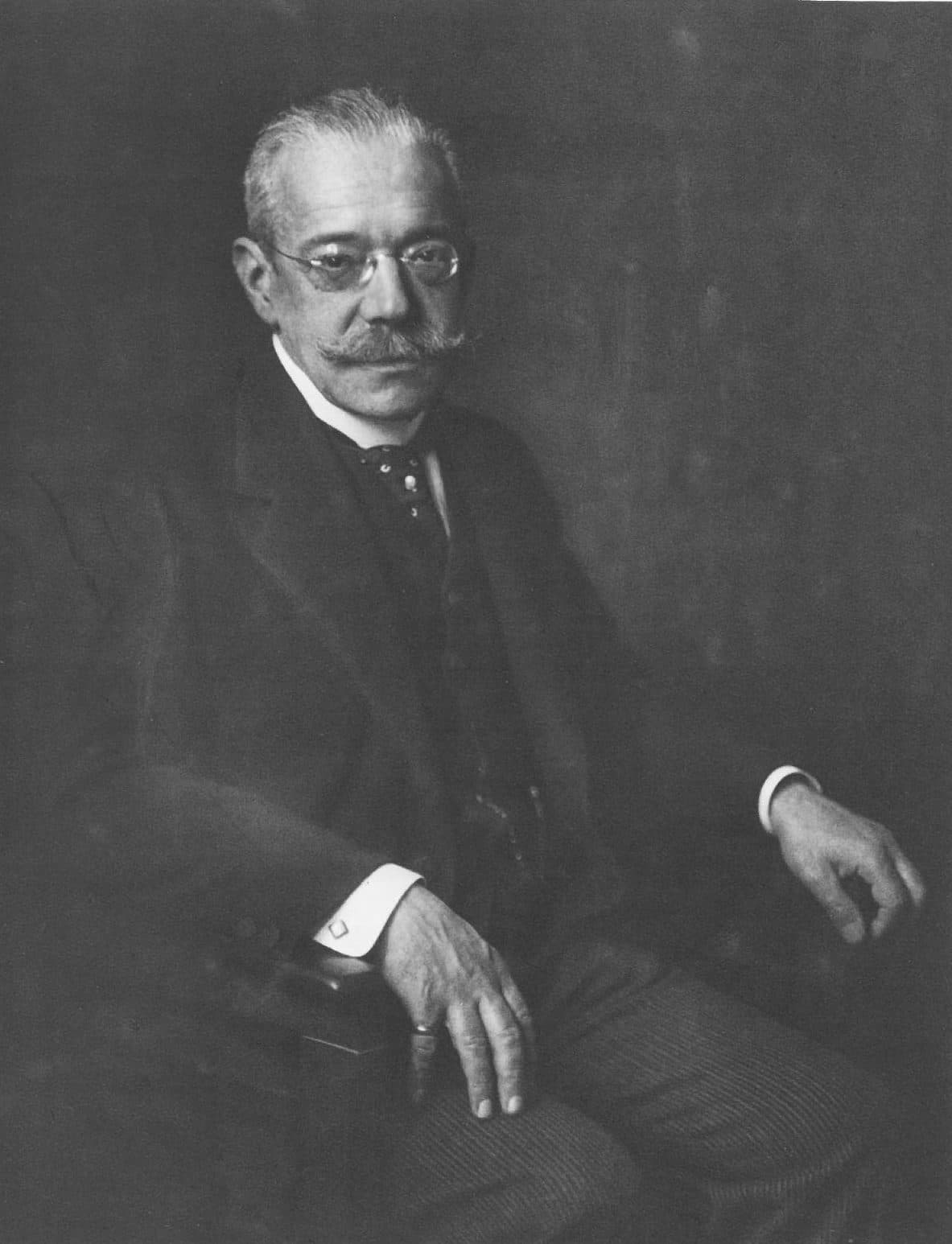
Portrait photograph of James Simon, the Berlin patron who gave the bust of Nefertiti to the museums on Museum Island, about 1910
James Simon, about 1910. Photo: Unknown photographer / Public domain, via Wikimedia Commons

James Simon and Nefertiti

The island’s visitor centre is named after James Simon (1851–1932), a Jewish cotton merchant and one of the most generous patrons the Berlin museums ever had. He paid for the German Oriental Society’s excavations at Amarna in Egypt, where Ludwig Borchardt’s team found the painted bust of Nefertiti on 6 December 1912. Under the division of finds it came to Simon, who lent it to the museum in 1913 and gave it outright in 1920. It went on public show in 1924.

Egypt has asked for it back almost ever since: in 1925 it threatened to stop German excavations, and in 2005 its antiquities chief, Zahi Hawass, asked UNESCO to step in. The museums maintain that the bust left Egypt legally. When Simon died in 1932, the exiled Kaiser Wilhelm II sent a wreath from the Netherlands. The James-Simon-Galerie, opened in July 2019 as the entrance to the island, returns his name to it.

Plan your visit

Visiting Museum Island

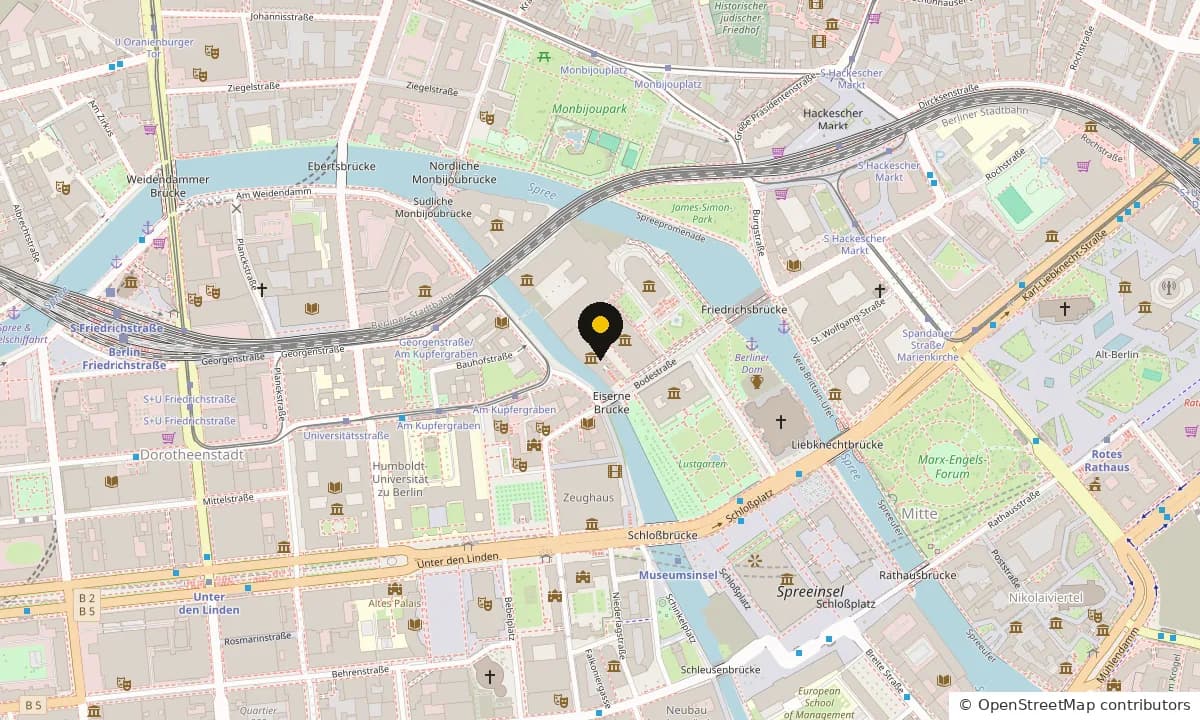
Map of the streets around Museum Island, with a pin on the siteOpen in Google Maps

Bodestraße 1–3 (James-Simon-Galerie), 10178 Berlin · Tue–Sun 10:00–18:00; the Altes Museum and Bode-Museum close at 17:00 Tue–Fri, and the Bode-Museum stays open to 20:00 on Thursdays. Closed Mondays. The Pergamonmuseum is closed until 4 June 2027.

Getting there

  • U5Museumsinsel350 m · 5 min

    Opened in 2021. Walk north past the Altes Museum and into Bodestraße.

  • Tram M1Tram 12Am Kupfergraben300 m · 4 min

    The end of the line, on the far bank of the Kupfergraben canal: walk south along the water and cross the Eiserne Brücke.

  • S3S5S7S9Hackescher Markt600 m · 8 min

    Walk south down Burgstraße beside the Spree, cross the Friedrichsbrücke and pass the Alte Nationalgalerie.

What you’ll see

  • The Neues Museum: the Egyptian collection, with the bust of Nefertiti in a room of her own, and the Museum of Prehistory and Early History, in a building that still shows its war damage.
  • Greek and Roman antiquities under Schinkel’s rotunda in the Altes Museum, and 19th-century painting and sculpture in the Alte Nationalgalerie, from Caspar David Friedrich to Manet and Monet.
  • Sculpture, Byzantine art and the coin collection in the Bode-Museum, and originals from Pergamon beside Yadegar Asisi’s 360° panorama in Pergamonmuseum. Das Panorama, across the canal.

Tips from a guide

  • Buy the €24 Museumsinsel Ticket online, up to four weeks ahead: it pays for itself with two museums, and it also covers the Panorama and the special exhibitions.
  • See the Neues Museum first, when it opens at 10:00, and keep the Bode-Museum for later: on Thursdays it stays open until 20:00.
  • Bags bigger than 30 × 20 × 10 cm have to go in the cloakroom or a locker, and suitcases are not accepted at all, so leave luggage at your hotel or the station.

Accessibility

The Neues Museum, the Altes Museum, the James-Simon-Galerie and the Panorama building are listed as wheelchair accessible; at the Altes Museum the step-free way in is the service entrance on the Lustgarten (ask the porter). The Alte Nationalgalerie and the Bode-Museum are accessible only in part. Visitors with a severe disability (50% or more) pay the reduced rate, half the normal price. Check the BVG website for lift status at the stations.

Timeline

From royal museum to world heritage

  1. 3 Aug 1830Schinkel’s Königliches Museum, today’s Altes Museum, opens on the Lustgarten.
  2. 1841Frederick William IV dedicates the north of the island to art and science.
  3. 1859Friedrich August Stüler’s Neues Museum is completed.
  4. 1876The Nationalgalerie, today’s Alte Nationalgalerie, opens.
  5. 1904The Kaiser-Friedrich-Museum, renamed the Bode-Museum in 1956, opens.
  6. 1930The Pergamonmuseum opens after twenty years of building.
  7. 1943–45Air raids and street fighting damage all five museums; the Neues Museum is left a ruin.
  8. 1999UNESCO lists the island; the Master Plan to restore it is adopted.
  9. Oct 2009The Neues Museum reopens, rebuilt by David Chipperfield; Nefertiti returns.
  10. Jul 2019The James-Simon-Galerie opens as the island’s visitor centre.
  11. 23 Oct 2023The Pergamonmuseum closes completely for renovation.
  12. 4 Jun 2027The Pergamon’s north wing and altar are due to reopen; the south wing in about 2037.

See it with a historian

Tours that stop at Museum Island

The labels explain the objects; a guide explains the island: why a Prussian king built a temple to art beside his palace, how the collections survived the war, and what Berlin should give back.

One hour through the Hohenzollerns’ Berlin, from the Lustgarten to the museums they built.

The Prussian Berlin Tour
One Hour1 Hour

The Prussian Berlin Tour

Private 1-hour walking tour of Berlin's Prussian royal centre for up to 10 people. Starts at the Rotes Rathaus near Alexanderplatz.

€200up to 10
View Tour

Four hours on foot through historic Mitte, with time on the island at your own pace.

The Berlin Explorer Tour
Half Day4 Hours

The Berlin Explorer Tour

Private half-day walking tour of historic Mitte for up to 10 people. Starts at your hotel or anywhere in the centre.

€500up to 10
View Tour

A full day through Berlin’s whole story, with Museum Island and the Lustgarten on the way.

The Berlin History Tour
Full Day6 Hours

The Berlin History Tour

Private 6-hour van tour of Berlin's whole history in one day for up to 6 people. Starts at your hotel or anywhere in the city.

€1,000up to 6
View Tour

Questions visitors ask

Frequently asked questions

Is the Pergamonmuseum open?

No. It has been completely closed for renovation since 23 October 2023. The north wing and central building, with the Pergamon Altar and the Museum für Islamische Kunst, are due to reopen on 4 June 2027; until then Pergamonmuseum. Das Panorama, across the canal, shows sculptures from Pergamon beside a 360° panorama of the ancient city.

Can I see the Ishtar Gate?

Not for some years. The Ishtar Gate, the Processional Way of Babylon and the Market Gate of Miletus are in the Pergamonmuseum’s south wing, which stays closed after the 2027 reopening and is expected to reopen in about 2037.

How much is a Museum Island ticket?

The Museumsinsel Ticket costs €24 and gets you into every state museum on the island for one day, including the Panorama and special exhibitions. The reduced rate is half price, and visitors under 18 go free.

Which museums are on Museum Island?

The Altes Museum, the Neues Museum, the Alte Nationalgalerie, the Bode-Museum and the Pergamonmuseum, with the James-Simon-Galerie as the visitor centre and entrance. The Berliner Dom stands on the island too, but it is a church with its own ticket, not one of the museums.

Where is the bust of Nefertiti?

In the Neues Museum, behind glass in a room of her own. She has been there since the museum reopened in October 2009.

How long do you need for Museum Island?

Two hours or so for each of the big museums. Half a day covers two of them, the Neues Museum and the Altes Museum, say; seeing all five properly takes more than one day.

Is Museum Island closed on Mondays?

Yes. All the museums are closed on Mondays and open Tuesday to Sunday from 10:00. The island itself, its gardens and colonnades are open all the time, and hours can change on public holidays, so check smb.museum.

Keep exploring

More Featured Experiences.

Every site we write about — 56 landmarks, museums, memorials and lesser-known corners of Berlin. See the full index →

01Walk Through The Brandenburg Gate03Visit The Berlin TV Tower – The Fernsehturm04Cross The Cold War Border At Checkpoint Charlie05Visit The Site Of Adolf Hitler’s Führerbunker06Explore The Reconstructed Berlin Palace07Visit The Reichstag Cupola At Night08Explore The Forum Fridericianum09Shop At The Humboldt University Book Sale10Journey Into The Memorial To The Murdered Jews Of Europe11Step Inside The Neue Wache12Explore The Former Jewish Quarter – Spandauer Vorstadt13Visit The Remains Of The Berlin Wall14Walk Across The Bridge Of Spies15Explore The Topography Of Terror16Climb The Prussian Victory Column – The Siegessäule17Enter The Palace Of Tears – The Tränenpalast18Step Inside The Berlin Olympic Stadium19Explore Erich Mielke’s Office At The Stasi Museum20Walk Along Karl Marx Allee21Visit The Oldest Church In Berlin – The Nikolaikirche22Explore The Berliner Dom23Visit The Grave Of Frederick The Great24Walk Through The Ruins Of Anhalter Bahnhof25Stand On The Platz Des Volksaufstandes26Visit The German Resistance Museum27Visit The Soviet War Memorial In The Tiergarten28See The Georg Elser Memorial On Wilhelmstrasse29Step Inside The Kaiser Wilhelm Gedächtnis Kirche30Visit The Gleis 17 Memorial31Visit The Schloss Charlottenburg Mausoleum32Climb The Französischer Dom at Gendarmenmarkt33Explore The Interbau – IBA 5734Explore The Otto Weidt Workshop35Visit Cecilienhof – Site Of The Potsdam Conference36Visit The Stasi Prison In Hohenschönhausen37Spend The Day At Tempelhof Airport38Ride The Fastest Elevator In Europe39Visit The Soviet War Memorial In Treptower Park40Visit The Sachsenhausen Concentration Camp Memorial41Visit The Ravensbrück Concentration Camp Memorial42Visit Karlshorst – The Site Of The German Surrender43Visit The Socialists Cemetery – Zentralfriedhof Friedrichsfelde44Visit The Soviet War Memorial In Pankow45Visit the Seelow Heights Memorial46Visit The Commonwealth War Cemetery47Cross The Bösebrücke At Night48Explore The Allied Museum In Dahlem49Explore The Spandau Citadel50Visit The Brandenburg T4 Euthanasia Memorial51Visit The Wannsee Conference House52Visit The Jewish Museum53Visit The Jewish Cemetery In Weissensee54Walk Along The East Side Gallery55Explore The Volkspark Friedrichshain Flak Tower56Head Up The Teufelsberg