Skip to content
A Stasi interrogation room in the former remand prison at Hohenschönhausen, Berlin: a desk with a telephone, a small table and chair for the prisoner, and barred windows

Berlin Experiences/Featured Experiences

Hohenschönhausen Stasi Prison: Visit the Berlin-Hohenschönhausen Memorial

East German secret police prison transformed into a fascinating museum.

The short answer

The Berlin-Hohenschönhausen Memorial (Gedenkstätte Berlin-Hohenschönhausen) is the former central remand prison of East Germany’s Stasi, at Genslerstraße 66 in the north-east of Berlin, about 35 minutes from Alexanderplatz by the M5 tram. You can only see the prison on a guided tour, led by former political prisoners and historians; tours in English run every day at 10:40, 12:40 and 14:40. A tour costs €9 (reduced €5) and is best booked online; the exhibitions are free. Allow about two hours.

Where
Genslerstraße 66, 13055 Berlin-Alt-Hohenschönhausen
Open
Daily 10:00–18:00; the prison by guided tour only
Admission
Tour €9, reduced €5; exhibitions free
Time needed
About 2 hours
Nearest station
Tram M5 Freienwalder Straße, 8 minutes on foot
Step-free
Partly: lifts to both cell blocks, some areas not accessible

The story · by Matt Robinson

The Ministerium für Staatssicherheit (Ministry for State Security), universally known as the Stasi, was the shield and sword of East Germany’s ruling Socialist Unity Party (SED).

Its mandate was simple yet terrifying: to maintain the party’s absolute power by identifying and neutralising any perceived threat, internal or external. In a state born from Soviet occupation and perpetually wary of Western influence and internal dissent, the Stasi grew into one of history’s most pervasive and effective secret police forces. Its web of surveillance extended into every corner of East German life, employing hundreds of thousands of official officers and unofficial informants (Inoffizielle Mitarbeiter or IMs) to monitor the thoughts, words, and actions of millions.

Central to the Stasi’s apparatus of repression was its own network of prisons and detention centres, distinct from the regular penal system used for common criminals. These were places reserved for political opponents, would-be escapees, critical intellectuals, or anyone deemed a ‘hostile-negative element’ by the regime. They were designed not just for incarceration, but for breaking the spirit. Hidden away, often unmarked on maps and unknown even to nearby residents, these facilities were integral to the Stasi’s strategy of control through fear and psychological manipulation.

Among the most significant and feared of these institutions was the Hohenschönhausen detention centre in East Berlin. It wasn’t just a Stasi prison; it was the Stasi’s central remand prison – the main pre-trial investigation facility. Here, individuals suspected of political crimes were brought for interrogation, isolation, and the slow, grinding process designed to extract confessions and information. It was a place shrouded in secrecy, a black hole in the city where lives were systematically dismantled.

Today, preserved as a memorial, Hohenschönhausen offers an unparalleled, chilling glimpse into the heart of the Stasi’s power and the human cost of dictatorship. Stepping inside its gates is not just a visit to a historic site; it’s an encounter with the mechanisms of oppression and the resilience of the human spirit.

Special Camp No. 3 and the ‘U-Boot’

The history of the Hohenschönhausen site predates the Stasi’s infamous tenure. Its grim legacy began shortly after the Second World War, in the summer of 1945.

The occupying Soviet forces established Special Camp No. 3 within the buildings of what was once a large industrial canteen. This was part of a network of camps across the Soviet zone used to intern alleged Nazis, members of opposing political groups, and others deemed dangerous by the new authorities. Conditions were catastrophic; around a thousand perished from malnutrition, disease, and brutal treatment before the camp was closed in 1946. The Soviets then converted part of the site into a central detention prison, constructing subterranean cells known chillingly as the ‘U-Boot’ (submarine). Here, prisoners were held in windowless, damp, underground bunkers, often in total darkness or under constant glaring light, subjected to extreme cold, sleep deprivation, and relentless psychological pressure – a horrific blueprint for what was to come.

The basement corridor of the ‘U-Boot’, the Soviet-era cellar prison at the Berlin-Hohenschönhausen Memorial, with its steel cell doors
The basement prison, the ‘U-Boot’. Photo: Anagoria / CC BY 3.0, via Wikimedia Commons

In 1951, the nascent East German Ministry for State Security took control of the prison. While the ‘U-Boot’ remained in use for particularly harsh treatment well into the 1950s, the Stasi’s focus shifted towards more refined, insidious methods. Their primary goal wasn’t necessarily physical destruction but psychological decomposition – breaking a prisoner’s will to resist. In the late 1950s, construction began on a large, new prison building adjacent to the old one, completed around 1960. This modern facility housed over 100 cells and numerous interrogation rooms, becoming the Stasi’s main investigative prison. Externally, it looked nondescript, but inside, it was a meticulously designed machine for isolation and interrogation.

…inside, it was a meticulously designed machine for isolation and interrogation.

Prisoners brought here were accused of a wide range of crimes against the state. The most common was Republikflucht – attempting to leave the GDR without permission. Others included espionage (often fabricated), distributing Western propaganda (like magazines or music), political agitation (even mild criticism of the regime voiced privately could be grounds), or contact with Western organisations. Intellectuals, artists, critical students, and anyone who dared question the party line could find themselves ensnared. They arrived often bewildered, bundled into windowless delivery vans disguised as grocery trucks or refrigerated transports – the infamous Barkas B1000 vans fitted with tiny, hidden cells – ensuring they had no idea where they were being taken.

Upon arrival, a system of total disorientation began. Prisoners were stripped of their identities, given numbers, subjected to invasive searches, and placed in cells where isolation was paramount. Contact with other inmates was strictly forbidden; even guards were trained to minimise interaction, using coloured lights and specific protocols to move prisoners through the corridors without them ever seeing each other. The psychological torment of uncertainty, the endless interrogations using sophisticated manipulation techniques, and the complete loss of control over one’s life were the Stasi’s primary weapons here.

The Stasi: shield and sword

To understand Hohenschönhausen, one must understand its master: the Stasi.

Founded in 1950 and modelled on the Soviet MGB, forerunner of the KGB, the Ministry for State Security’s (MfS) stated mission was proactive defence of the SED’s socialist state against all perceived enemies, both foreign and domestic. Under the iron-fisted leadership of Erich Mielke, who headed the organisation from 1957 until the GDR’s collapse in 1989, the Stasi evolved into a behemoth of internal control.

The room where new prisoners were photographed and measured at the Stasi prison in Hohenschönhausen: a chair, a number board reading A 12038 and height gauges
Where new prisoners were photographed and measured. Photo: Z thomas / CC BY 3.0, via Wikimedia Commons

At its peak, it employed over 91,000 official staff and commanded an estimated 189,000 unofficial informants (IMs) – ordinary citizens spying on their neighbours, colleagues, friends, and even family members. This vast network created a pervasive atmosphere of mistrust and fear that permeated every aspect of East German society.

The Stasi’s methods were multifaceted. Surveillance was exhaustive, encompassing phone tapping, mail interception, hidden microphones, and physical observation. But its most insidious technique, particularly against dissenters who weren’t immediately imprisoned, was Zersetzung (literally ‘decomposition’ or ‘corrosion’). This was a sophisticated form of psychological warfare aimed at subtly undermining a target’s life, confidence, and reputation. Stasi officers would orchestrate disruptions in the target’s career, spread damaging rumours, manipulate personal relationships, organise mysterious break-ins where items were moved but nothing stolen, cause deliberate bureaucratic obstructions, and induce psychological distress through anonymous calls or veiled threats. The goal was to destabilise individuals, make them doubt their own sanity, isolate them socially, and ultimately silence their opposition without resorting to overt violence or imprisonment, which could attract negative international attention.

…make them doubt their own sanity, isolate them socially, and ultimately silence their opposition…

Why was the prison system, and specifically a place like Hohenschönhausen, so critical? It served multiple purposes. Firstly, it was the endpoint for those whose opposition was deemed too direct or dangerous to be managed solely through Zersetzung. Secondly, it was the engine room for extracting information and confessions, often used in show trials or to justify further surveillance and arrests. Interrogations could last for hours, days, or weeks, employing tactics ranging from feigned empathy and manipulation (“good cop/bad cop”) to sleep deprivation, threats against family members, and relentless repetition under duress. Thirdly, and perhaps most importantly, the existence of places like Hohenschönhausen, even if shrouded in secrecy, served as a potent deterrent. The rumour, the fear of vanishing into the Stasi’s invisible archipelago of prisons, was enough to keep many potential critics silent.

From revolution to memorial

Erich Mielke, a staunch communist ideologue, saw any deviation from the party line as inherently hostile. He famously declared his love for all humanity (“Ich liebe doch alle Menschen!”) in a confusing public statement shortly before his downfall, but his actions bespoke a deep paranoia and ruthlessness towards anyone labelled a ‘hostile-negative element’. The Stasi, under his command, was the ultimate guarantor of the SED’s power, a state within a state built on surveillance and fear. Yet, when the people of East Germany finally rose up peacefully in the autumn of 1989, this seemingly invincible apparatus proved powerless to stop the tide, crumbling alongside the Berlin Wall it was meant to protect.

The fall of the Berlin Wall in November 1989 and the subsequent dissolution of the GDR marked the end of the Stasi and its reign of terror. Hohenschönhausen ceased operations as a prison. Remarkably, instead of being demolished or repurposed beyond recognition, the site was preserved largely in its original state, thanks in large part to the efforts of former political prisoners who campaigned for its protection as a place of remembrance and education. In 1994, the Berlin Hohenschönhausen Memorial (Gedenkstätte Berlin-Hohenschönhausen) was officially established.

Watchtower and perimeter wall of the former Stasi prison on Genslerstraße in Berlin-Hohenschönhausen, topped with barbed wire
The watchtower and outer wall on Genslerstraße. Photo: Anagoria / CC BY 3.0, via Wikimedia Commons

This is not a reconstruction or a museum filled with display cases; it is the place. Visitors walk the same corridors, stand in the same cramped cells, and sit in the same chilling interrogation rooms where thousands suffered. You can descend into the dank, claustrophobic ‘U-Boot’ cells from the Soviet era, witness the stark functionality of the 1960s cell block with its pervasive surveillance features, see the exercise yards resembling cages, and view the original disguised transport vans. The layers of history, from the post-war Soviet camp to the high-tech Stasi prison, are palpable.

Perhaps the most powerful aspect of the Hohenschönhausen experience is the guided tours, many of which are led by former inmates themselves. Hearing firsthand accounts from individuals who were incarcerated and interrogated within these very walls provides an emotional depth and personal perspective that no history book or documentary can replicate. These guides share their personal stories – why they were arrested, the methods used against them, the psychological toll of isolation and manipulation, and their experiences of life under the Stasi regime.

Their testimonies transform the cold concrete and steel into a living testament to human rights abuses and the struggle for freedom. While tours are also conducted by knowledgeable historians, the presence of former prisoners offers an unparalleled connection to the past. Visitors should be prepared for an emotionally challenging but profoundly important experience. It’s a stark reminder of the value of democracy, freedom of speech, and the rule of law, and the horrific consequences when these are suppressed.
The prison in detail

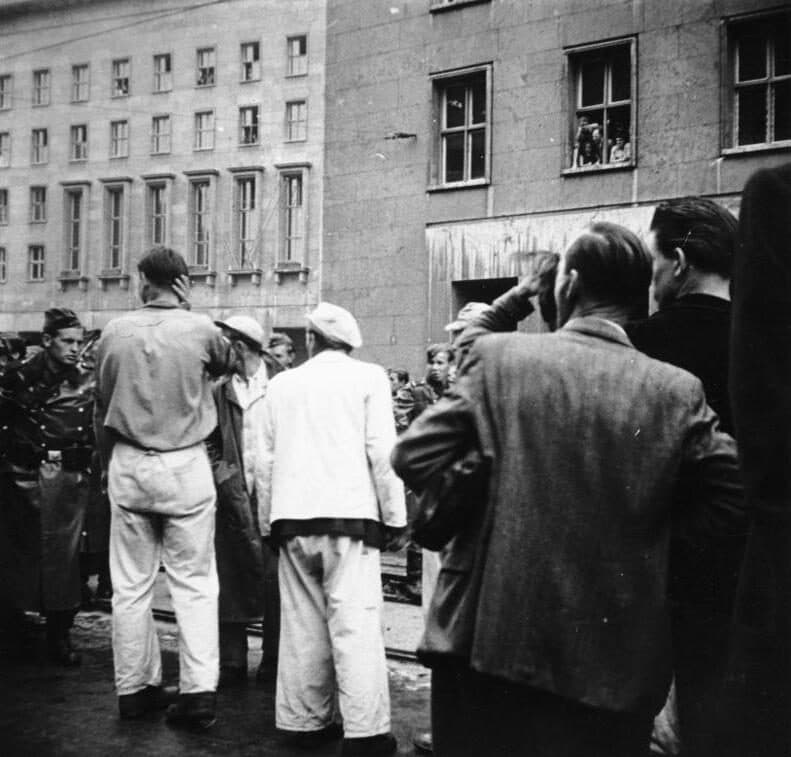
Building workers demonstrating at the corner of Leipziger Straße and Wilhelmstraße in East Berlin during the uprising of 17 June 1953
Building workers march on the House of Ministries, 17 June 1953. Photo: Bundesarchiv, Bild 146-2003-0031 / CC-BY-SA 3.0

The 1950s: strikers, ministers and kidnap victims

When the Stasi took over in 1951 it kept using the Soviet cellar prison, the ‘U-Boot’, for another decade. Its prisoners in the 1950s included people arrested after the uprising of 17 June 1953, reform communists and politicians who had fallen out of favour. Georg Dertinger, East Germany’s first foreign minister, was arrested in January 1953 and held for more than 16 months, part of it in an underground cell, before a secret trial; the former SED Politburo member Paul Merker was another.

The Stasi also reached into the West. In 1955 the journalist Karl Wilhelm Fricke was abducted from West Berlin and interrogated here for fifteen months before the Supreme Court sentenced him to four years in a secret trial. In these years interrogators still used open physical violence; only from the 1960s did the Stasi switch to the psychological methods the tours describe.

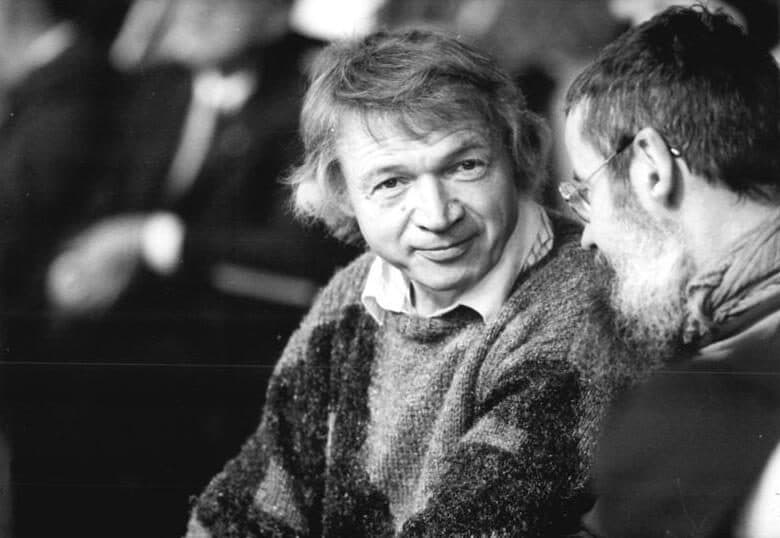
The philosopher Rudolf Bahro, a former prisoner at Hohenschönhausen, as a guest at the SED special party congress in East Berlin, December 1989
Rudolf Bahro, back in East Berlin as a guest at the SED’s special congress, December 1989. Photo: Bundesarchiv, Bild 183-1989-1216-014 / Senft, Gabriele / CC-BY-SA 3.0

After 1961: escapees and dissidents

The new prison building was put up by prisoners from ‘Lager X’, a secret Stasi labour camp next door that existed until 1974, and finished in 1960. After the Berlin Wall went up on 13 August 1961, more and more of its inmates were people who had tried to flee or had applied to leave. The whole district around the prison was a Stasi restricted area and from the early 1970s it was left blank on East Berlin’s maps.

Critics of the regime were held here too. The writer Jürgen Fuchs spent 281 days in the prison after his arrest in November 1976 and was then forced to leave for West Berlin. The philosopher Rudolf Bahro was brought here in August 1977, after his critique of East German socialism, The Alternative, appeared in the West, and the painter Bärbel Bohley was held here with Ulrike Poppe in 1983. Next door, the Stasi’s only prison hospital treated prisoners after hunger strikes and suicide attempts, and escapees shot at the border.

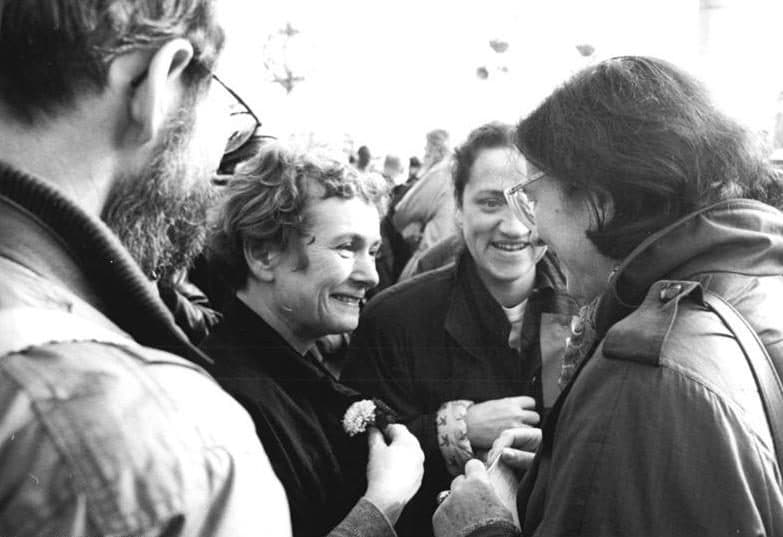
The civil rights activist Bärbel Bohley, once held at Hohenschönhausen, with the writer Christa Wolf at the Alexanderplatz demonstration in East Berlin, 4 November 1989
Bärbel Bohley (centre) and Christa Wolf (right) at the Alexanderplatz demonstration, 4 November 1989. Photo: Bundesarchiv, Bild 183-1989-1104-045 / Link, Hubert / CC-BY-SA 3.0

From prison to memorial

The revolution of autumn 1989 broke the Stasi, and its prisons were dissolved with it; Hohenschönhausen passed to the Interior Ministry. For a few months it held members of the old regime: when Berlin’s justice department took over the prison in October 1990, its remand prisoners, among them Erich Mielke and the former trade union chief Harry Tisch, were moved to jails in the West. The prison closed in 1990 and was listed as a historic monument in 1992. On the initiative of former political prisoners it first opened to visitors on 17 June 1993; the memorial began work in 1994 and became a foundation in 2000.

Former inmates have guided visitors ever since. The memorial has had its own controversy: in autumn 2018 its board dismissed Hubertus Knabe, director since 2000, after several women on the staff accused his deputy of sexual harassment; the board said it had lost confidence that Knabe would change the culture there, and a parliamentary inquiry followed. Helge Heidemeyer has been director since September 2019.

Plan your visit

Visiting the Hohenschönhausen memorial

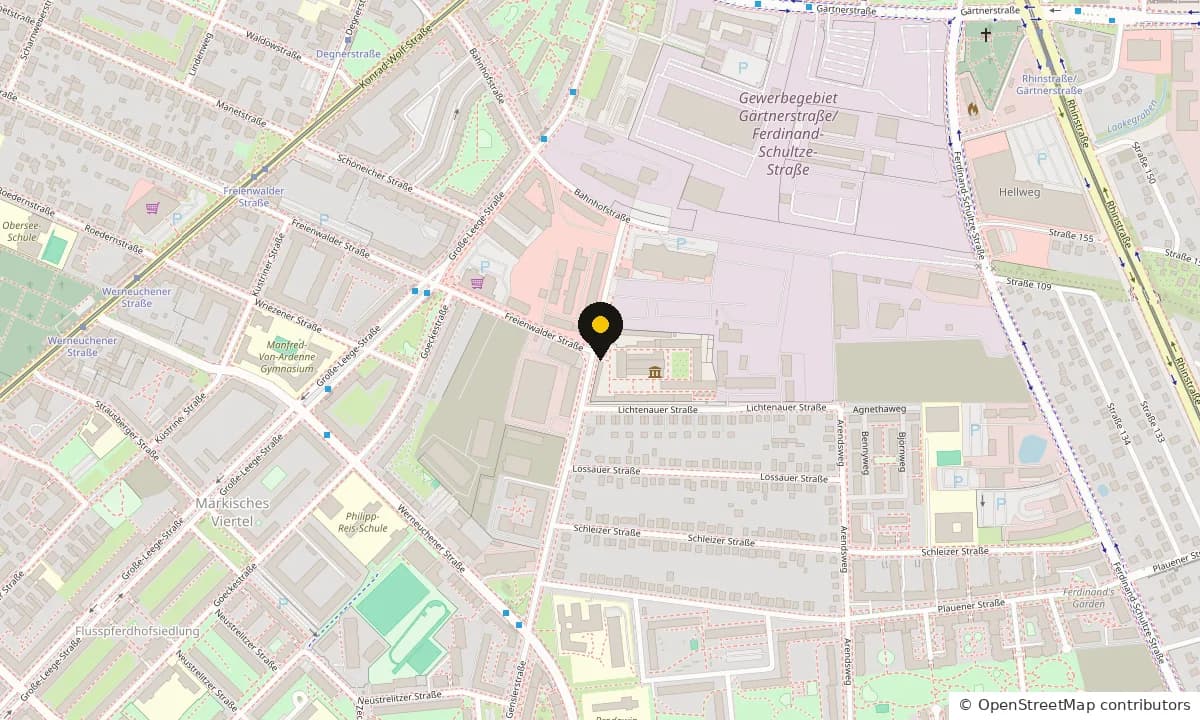
Map of the streets around the Hohenschönhausen memorial, with a pin on the siteOpen in Google Maps

Genslerstraße 66, 13055 Berlin · Daily 10:00–18:00. Closed 24–26 and 31 December and 1 January. The prison itself can only be seen on a guided tour: in English every day at 10:40, 12:40 and 14:40; in German hourly 10:00–16:00 (November–February on weekdays only at 11:00, 13:00 and 15:00).

Getting there

  • Tram M5Freienwalder Straße650 m · 8 min

    Direct from Alexanderplatz (towards Hohenschönhausen, Zingster Straße) in about 20 minutes. Walk east along Freienwalder Straße to the corner of Genslerstraße; the entrance is just to the right.

  • Bus 256Große-Leege-Straße/Freienwalder Straße300 m · 4 min

    The closest stop. Bus 256 runs from S+U Lichtenberg, which is on the U5 and the S-Bahn.

  • Tram M6Tram 16Genslerstraße900 m · 12 min

    On Landsberger Allee: the M6 comes from Alexanderplatz, the 16 from S+U Frankfurter Allee. Walk north up Genslerstraße.

What you’ll see

  • The ‘U-Boot’, the windowless cellar prison that inmates of the Soviet special camp had to build in 1946–47, with its damp cells, plank beds and buckets.
  • The prison building finished in 1960: over 100 cells on three floors, the interrogation wing with its offices, the exercise cages and the garage where windowless vans delivered prisoners who often did not know they were in Berlin.
  • The free permanent exhibition ‘Imprisoned at Hohenschönhausen. Testimonies of Political Persecution 1945–1989’, 700 square metres of objects, documents and photographs, open 10:00–18:00 (free audio guides in English and six other languages), plus ‘Involuntary Community’ on the women’s prisoner work detail (10:00–16:00).

Tips from a guide

  • Book the English tour in the memorial’s online ticket shop: each tour takes at most 25 people and they fill up, especially at weekends. Groups of seven or more must book a group tour.
  • Come at least 15 minutes early. The tour lasts about 1½ hours and starts with an introductory film; the exhibition is free and best seen before or after.
  • Do not take the S-Bahn to ‘Hohenschönhausen’ station: it is a long way from the memorial, which warns against it. Use the M5 tram or bus 256.

Accessibility

The visitor centre, cafeteria and bookshop are fully accessible, and a lightweight wheelchair can be borrowed at the ticket office. On the tour, the cellar prison and the 1960 building are reached by lifts, which take extra time and are too narrow for wide electric wheelchairs: register in advance on +49 30 98 60 82 30 or besucherdienst@stiftung-hsh.de. The exhibition ‘Imprisoned at Hohenschönhausen’ is accessible; ‘Involuntary Community’ is not. There are no toilets in the buildings on the tour; accessible toilets are in the visitor area. Disabled parking is directly in front of the entrance. Guide dogs are allowed; pets are not. The memorial recommends the tour for ages 14 and up.

Timeline

From canteen kitchen to memorial

  1. 1939The Nazi welfare organisation (NSV) opens a large canteen kitchen on the site.
  2. May 1945The Soviet NKVD turns it into Special Camp No. 3.
  3. Autumn 1946The camp is dissolved; prisoners build the ‘U-Boot’ cells in the cellar.
  4. 1947The ‘U-Boot’ becomes the Soviet secret police’s central remand prison.
  5. 1951The Stasi takes over the prison as its central remand centre.
  6. 1953People arrested after the 17 June uprising are among its prisoners.
  7. 1960Prisoners from the secret ‘Lager X’ finish the new prison building.
  8. 1989The Peaceful Revolution brings down the Stasi and dissolves its prisons.
  9. 1990The prison closes in the year of German reunification.
  10. 17 Jun 1993On ex-prisoners’ initiative, the site opens to visitors for the first time.
  11. 1994The Berlin-Hohenschönhausen Memorial begins work.
  12. 2000The memorial becomes an independent foundation under public law.

See it with a historian

Tours that stop at the Hohenschönhausen memorial

The memorial’s own tour shows you the prison; a guide can put it in context, from the Stasi headquarters to the Wall that most of its prisoners tried to cross.

The Berlin Wall Tour - Berlin Experiences
Full Day6 Hours

The Republic Of Fear

Private 6-hour van tour of East Berlin, the Stasi and life behind the Wall for up to 6 people. Starts at your hotel.

€1,000up to 6
View Tour

Why this tour

A full day on life behind the Iron Curtain: the Stasi, the Wall and the people who tried to escape.

See the Republic Of Fear

Questions visitors ask

Frequently asked questions

Can you visit the Stasi prison in Berlin?

Yes. The former Stasi remand prison at Hohenschönhausen is now a memorial, open daily 10:00–18:00, but the prison buildings can only be seen on a guided tour. Tours in English run every day at 10:40, 12:40 and 14:40.

How much does the Hohenschönhausen tour cost?

€9 per person, €5 reduced (students, trainees, disabled visitors, the unemployed and others) and €2.50 for school pupils. The exhibitions are free. You can pay by card or in cash.

Do I need to book the tour in advance?

It is advisable: each public tour takes at most 25 people, and you can book in the memorial’s online ticket shop. Groups of seven or more must book a group tour in advance.

How long does the tour take?

About 1½ hours, plus an introductory film. Allow about two hours in all, and more if you want to see the free exhibition.

Are the tours really led by former prisoners?

Many are. The memorial’s tours are led by former political prisoners and by historians, so not every tour has a former inmate as its guide.

How do I get to the Hohenschönhausen memorial?

Take the M5 tram from Alexanderplatz to Freienwalder Straße (about 20 minutes), then walk 8 minutes to Genslerstraße 66. Bus 256 from S+U Lichtenberg stops 4 minutes away. Do not take the S-Bahn to Hohenschönhausen station, which is far from the memorial.

Is it suitable for children?

The memorial recommends its tours for visitors aged 14 and over, as the content can be too much, emotionally, for younger children.

Is the Stasi prison the same as the Stasi Museum?

No. The Stasi Museum is in the former Stasi headquarters on Ruschestraße in Lichtenberg, about 30 minutes away by bus. Hohenschönhausen was the Stasi’s main prison for people under investigation.

Sources

Facts checked 3 November 2026. Spotted something out of date? Tell us.

Keep exploring

More Featured Experiences.

Every site we write about — 56 landmarks, museums, memorials and lesser-known corners of Berlin. See the full index →

01Walk Through The Brandenburg Gate02Explore The State Museums On Museum Island03Visit The Berlin TV Tower – The Fernsehturm04Cross The Cold War Border At Checkpoint Charlie05Visit The Site Of Adolf Hitler’s Führerbunker06Explore The Reconstructed Berlin Palace07Visit The Reichstag Cupola At Night08Explore The Forum Fridericianum09Shop At The Humboldt University Book Sale10Journey Into The Memorial To The Murdered Jews Of Europe11Step Inside The Neue Wache12Explore The Former Jewish Quarter – Spandauer Vorstadt13Visit The Remains Of The Berlin Wall14Walk Across The Bridge Of Spies15Explore The Topography Of Terror16Climb The Prussian Victory Column – The Siegessäule17Enter The Palace Of Tears – The Tränenpalast18Step Inside The Berlin Olympic Stadium19Explore Erich Mielke’s Office At The Stasi Museum20Walk Along Karl Marx Allee21Visit The Oldest Church In Berlin – The Nikolaikirche22Explore The Berliner Dom23Visit The Grave Of Frederick The Great24Walk Through The Ruins Of Anhalter Bahnhof25Stand On The Platz Des Volksaufstandes26Visit The German Resistance Museum27Visit The Soviet War Memorial In The Tiergarten28See The Georg Elser Memorial On Wilhelmstrasse29Step Inside The Kaiser Wilhelm Gedächtnis Kirche30Visit The Gleis 17 Memorial31Visit The Schloss Charlottenburg Mausoleum32Climb The Französischer Dom at Gendarmenmarkt33Explore The Interbau – IBA 5734Explore The Otto Weidt Workshop35Visit Cecilienhof – Site Of The Potsdam Conference37Spend The Day At Tempelhof Airport38Ride The Fastest Elevator In Europe39Visit The Soviet War Memorial In Treptower Park40Visit The Sachsenhausen Concentration Camp Memorial41Visit The Ravensbrück Concentration Camp Memorial42Visit Karlshorst – The Site Of The German Surrender43Visit The Socialists Cemetery – Zentralfriedhof Friedrichsfelde44Visit The Soviet War Memorial In Pankow45Visit the Seelow Heights Memorial46Visit The Commonwealth War Cemetery47Cross The Bösebrücke At Night48Explore The Allied Museum In Dahlem49Explore The Spandau Citadel50Visit The Brandenburg T4 Euthanasia Memorial51Visit The Wannsee Conference House52Visit The Jewish Museum53Visit The Jewish Cemetery In Weissensee54Walk Along The East Side Gallery55Explore The Volkspark Friedrichshain Flak Tower56Head Up The Teufelsberg