Skip to content
Entrance sign of the Memorial Site for the Victims of the Euthanasia Murders in Brandenburg an der Havel, beside the exhibition building

Berlin Experiences/Featured Experiences

T4 Memorial: Visit the Brandenburg Euthanasia Memorial

The Memorial for the Victims of Nazi Euthanasia Murder

The short answer

The Memorial for the Victims of the Euthanasia Murders, at Nicolaiplatz 28/30 in Brandenburg an der Havel, stands where the Nazis gassed more than 9,000 sick and disabled people in 1940, at one of the six killing centres of the Aktion T4 programme. The town is about an hour west of Berlin on the RE1 train. The exhibition is open Thursday to Sunday, the outdoor memorial at all times, and admission is free. Allow one to two hours. Berlin’s own T4 memorial, at Tiergartenstraße 4 by the Philharmonie, is a separate site.

Where
Nicolaiplatz 28/30, 14770 Brandenburg an der Havel, about 60 km west of Berlin
Open
Exhibition Thu–Fri 13:00–17:00, Sat, Sun and holidays 10:00–17:00; outdoor memorial always
Admission
Free
Time needed
1–2 hours, plus about 1 hour each way from Berlin
Nearest station
Tram stop Nicolaiplatz, 4 minutes on foot
Step-free
Yes: ramps or lift, and accessible toilets

The story · by Matt Robinson

Of the numerous memorials for the victims of National Socialism that can be found a short distance from the current German government quarter, it is that next to the Berlin Philharmonic building which serves to commemorate the first group to have suffered at the hands of the Nazis on a genocidal level. A translucent sky-blue wall and corresponding curved metal sheet, the fourth memorial introduced to the city for the victims of Adolf Hitler’s murderous regime, stands for the disabled, the mentally handicapped – the so-called life unworthy of life (Lebensunwertes Leben). The main Berlin commemoration for the victims remembered at the Brandenburg T4 Euthanasia Memorial.

Here on the Tiergartenstrasse (number 4) once sat the administrative headquarters of the organisation responsible for the Aktion T4 plan to exterminate anyone considered physically or mentally incompatible with the National Socialist Weltanschauung.

While the paperwork and preparation would be carried out in Berlin – the implementation of this strategy of industrial murder would take place elsewhere – in hospitals, psychiatric clinics and six secret killing facilities – such as the T4 euthanasia clinic in Brandenburg an der Havel. For the Nazis, the knowledge gathered as a result of this murderous policy would prove fundamental in preparing the way for the further industrial killings in the East – of perceived racial enemies of the so-called Third Reich.

A paper trail of murder

Meticulous bureaucracy would define the mass killings carried out by the National Socialist regime, leaving a paper trail of documents to be analysed and surveyed by generations to come. As such it is possible to chart the trajectory followed over the course of the development of the Nazi extermination programmes.

Copies of Nazi documents on the exhibition tables at the Brandenburg T4 memorial, including a 1940 order to transfer patients from state hospitals
Documents of the killing programme in the exhibition.

By examining the medical killings carried out under the auspices of the Aktion T4 plan, it is also possible to gain valuable insight into the duplicitous mindset of the Nazi doctrine – where the institutionalised mass murder of a segment of society deemed a burden on the whole would be perversely justified: as a merciful death to relieve the suffering of individuals tormented by their own imperfections. A process of state sanctioned euthanasia in a country where outright murder still remained clearly illegal – as premeditated killing continued to carry with it a death sentence for the perpetrator according to German criminal law.

During the initial phase of the programme’s operation, from 1939 until 1941 (when Aktion T4 was interrupted due to public outcry), some 70,000 people are known to have been murdered – although it is estimated that up to 200,000 in total would fall victim to this policy, as work continued discreetly and out of the public eye until the end of the Second World War.

Graduating from the killing facilities of Bernburg, Brandenburg, Hadamar, Hartheim, Grafeneck, and Pirna-Sonnenstein, the programme would finally reach into the concentration and extermination camps with the help of the team of physicians originally tasked with these centrally-planned euthanasia murders.

The killing centre at Nicolaiplatz

Originally constructed in part of a penitentiary complex, the facility at Brandenburg an der Havel was established in 1939 on the site of an earlier concentration camp, closed five years earlier.

Its location in the centre of this small town, at the Nicolaiplatz, meant that its existence was well known to the local inhabitants. In fact, opposition to the facility, and the T4 programme, would grow as the smoke from the mobile furnaces used to burn the bodies of murdered patients would spread across the town – choking the historic centre of Brandenburg with one of the real and undeniable consequences of this callous policy. A lesson the Nazis learned that would influence the construction of later extermination camps, whereby they would be located far from urban areas and away from any population that might find fault with their purpose or practice.

The Brandenburg T4 Euthanasia Memorial here now contains a museum documenting the historical foundations of Nazi euthanasia and racial hygiene policy utilising the testimonies of people who were involved. The biographies of some 30 victims have also been recreated on the basis of photographs and documents donated by their families.

Rusted steel stelae with photographs of victims outside the Euthanasia Memorial at Nicolaiplatz in Brandenburg an der Havel
Stelae with the faces of victims murdered here in 1940.

Putting names, faces, and stories to some of the 8,237 victims murdered at this location, between January and October 1940, and identified in the memorial book now hosted on the site.

The first gas chamber

Beyond serving as one of the first killing facilities of the Aktion T4 programme – this location also bears the unfortunate distinction as the site of the first Nazi gas chamber on German soil.

Many of the men, women, and children, targeted as ‘life unworthy of life’ would be poisoned by morphine-scopolamine injection or slowly starved to death, but as the need to speed up the killing process increased, further methods were tested to establish greater efficiency. Asphyxiation by carbon monoxide eventually proved to be the most viable alternative, whereby following a short medical examination patients would be led to a gas chamber to be murdered en masse.

The foundation of the former prison barn where the gas chamber had been installed is still visible at the present day site.

Brick foundations of the prison barn that held the gas chamber, at the Brandenburg T4 memorial in Brandenburg an der Havel
The foundations of the barn where the gas chamber stood.

As this refined killing process would be introduced to other killing facilities, the newly acquired expertise of the physicians and nursing staff – trusted members of society, expected to uphold an ethical code of decency and humanity to care for the sick and needy – would further fuel the pursuit of National Socialist racial goals. As medical professionals became professional killers and killing professionals – and the T4 Euthanasia site in Brandenburg an der Havel was reduced to just one of many locations where the National Socialist Weltanschauung reached its atrocious zenith.
The Brandenburg killing centre in detail

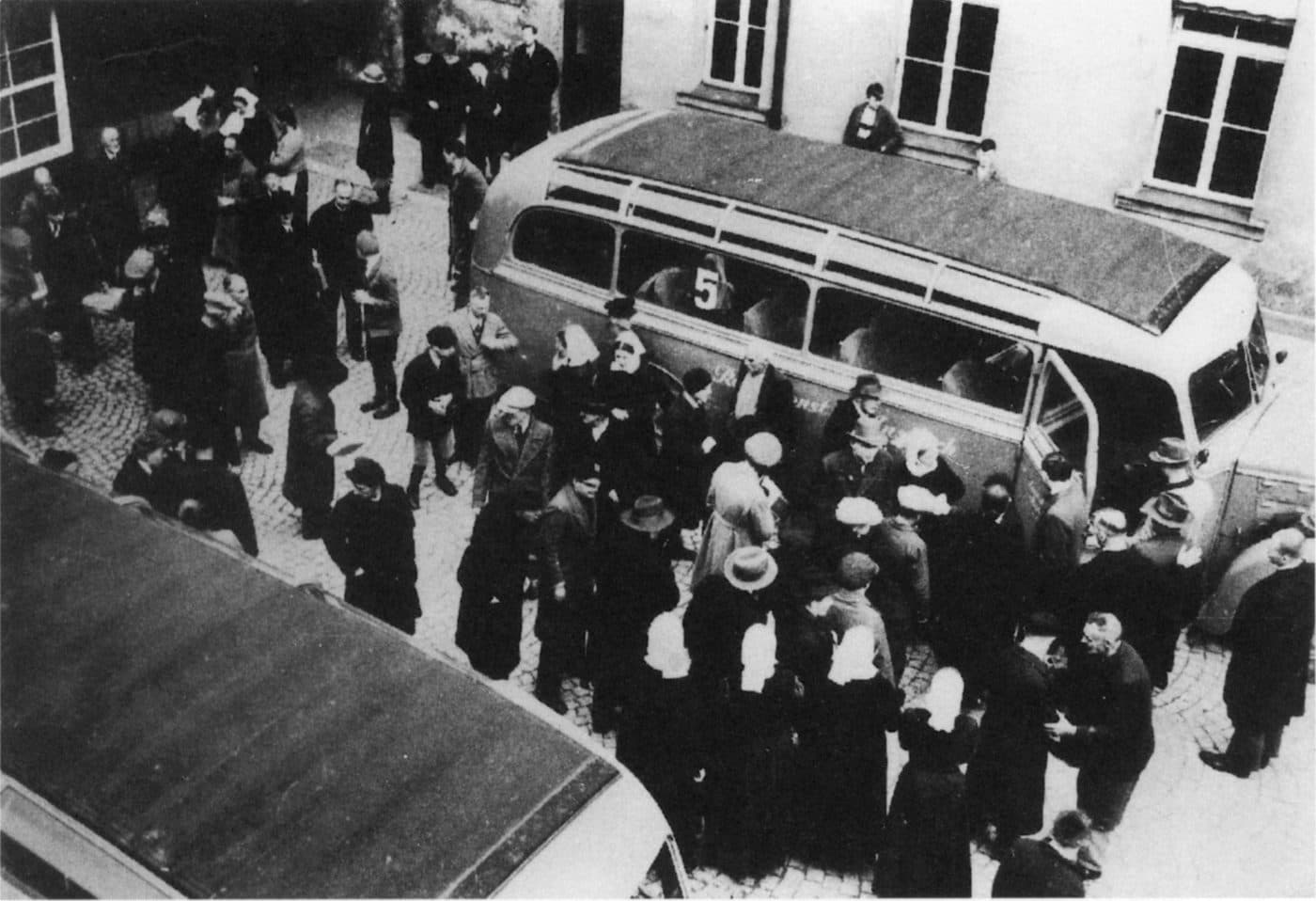
Patients being loaded onto a bus at Schloss Bruckberg in 1941, for transfer under the Nazi Aktion T4 euthanasia programme
Patients of the Neuendettelsau deaconess institution at Schloss Bruckberg, Bavaria, taken away under Aktion T4, 1941. Photo: Diakonie Neuendettelsau, unknown photographer / Public domain, via Wikimedia Commons

How the killing centre worked

From October 1939, asylums across Germany had to fill in a registration form for each patient: diagnosis, length of stay, and above all whether they could work. Assessors working for the T4 office at Tiergartenstraße 4 in Berlin decided on life or death from these forms alone, without ever seeing the patient. Those marked for death were collected in buses run by a front company, the ‘Charitable Patient Transport Company’, often via transit asylums so that their families lost track of them.

Brandenburg was disguised as a ‘state nursing home’ (Landes-Pflegeanstalt). New arrivals were undressed, briefly examined and photographed, then led into a gas chamber built to look like a shower room in the old prison barn, where carbon monoxide from steel cylinders killed them. The bodies were burned. Families received a letter of condolence, an urn and a death certificate with an invented cause and date of death.

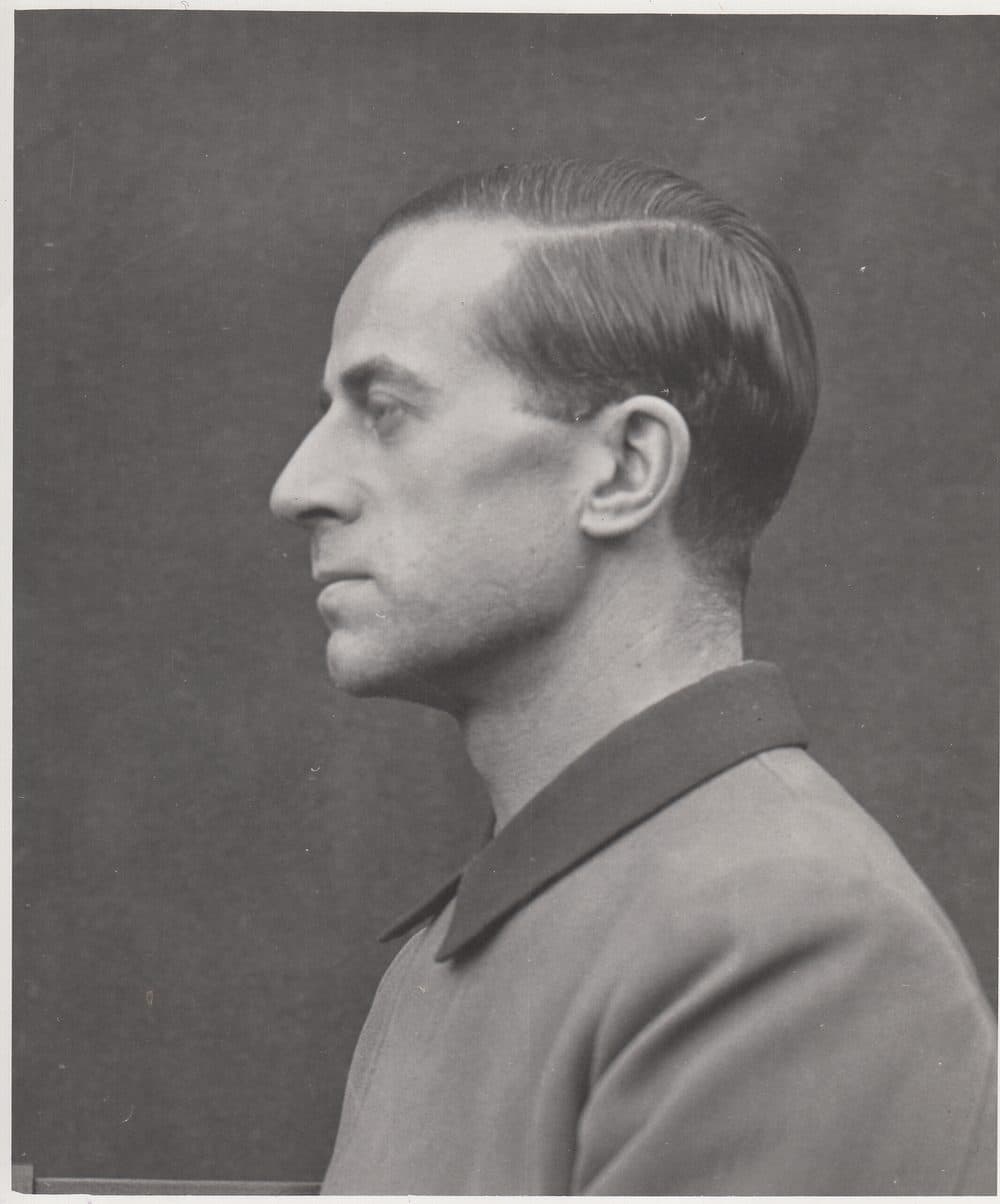
Karl Brandt, Hitler’s physician and co-organiser of the T4 euthanasia programme, photographed as a defendant at the Nuremberg Doctors’ Trial
Karl Brandt as a defendant in the Doctors’ Trial at Nuremberg, 1946–47. Photo: OMGUS Military Tribunal / Public domain, via Wikimedia Commons

The doctors who ran it

In January 1940 the killing method was tried out here in a ‘test gassing’ watched by about fifteen men, among them Philipp Bouhler, head of Hitler’s private Chancellery, Hitler’s escort physician Karl Brandt, the Reich health leader Leonardo Conti and the young Austrian doctor Irmfried Eberl. From 1 February 1940 Eberl ran the centre under the false name ‘Dr Schneider’. The exhibition names 70 of its staff: doctors, nurses, policemen, SA and SS men, clerks and kitchen staff.

In October 1940 the centre closed and its staff moved on to Bernburg. Several later served in the extermination camps of Operation Reinhard; Eberl became the first commandant of Treblinka in 1942. Bouhler killed himself in May 1945. Brandt was sentenced to death at the Nuremberg Doctors’ Trial and hanged on 2 June 1948, and Eberl hanged himself in custody the same year.

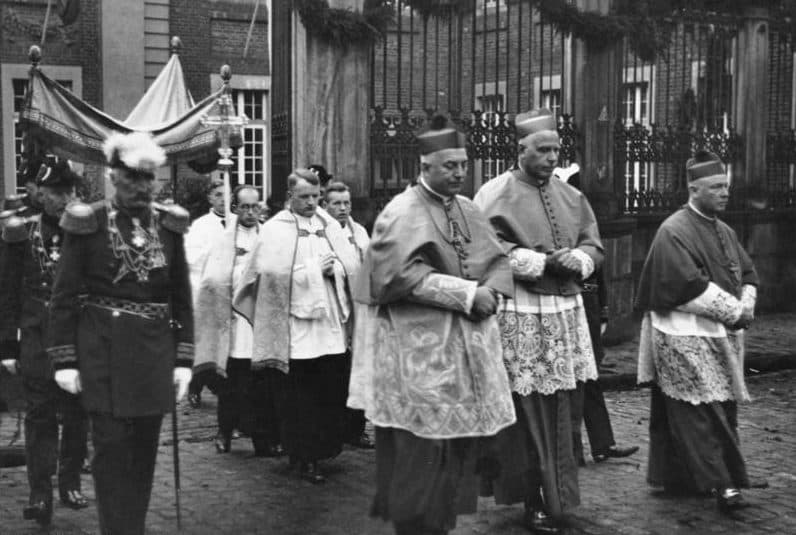
Procession at the consecration of Clemens August von Galen as Bishop of Münster in October 1933
The consecration of Clemens August von Galen as Bishop of Münster, 28 October 1933. Photo: Bundesarchiv, Bild 183-1986-0407-511 / Maier, H. / CC-BY-SA 3.0

The few who objected

Open protest was rare, and one of the bravest came from this town. Lothar Kreyssig, a guardianship judge at the Brandenburg district court, noticed that the disabled people in his care were dying in suspicious numbers. On 8 July 1940 he wrote to the Reich Minister of Justice, Franz Gürtner, and he filed a criminal complaint for murder against Bouhler. Gürtner told him that a judge who could not accept the will of the Führer as law could not remain a judge. Kreyssig was suspended in December 1940 and forced to retire in 1942. He survived the war, founded Action Reconciliation Service for Peace in 1958 and was named Righteous Among the Nations in 2016.

What finally stopped the gassings was public unease, voiced most loudly by the Catholic Bishop of Münster, Clemens August von Galen, in his sermons of summer 1941. On 24 August 1941 Hitler ordered the programme halted. The killing went on by starvation, drugs and neglect until 1945.

Plan your visit

Visiting the Brandenburg T4 memorial

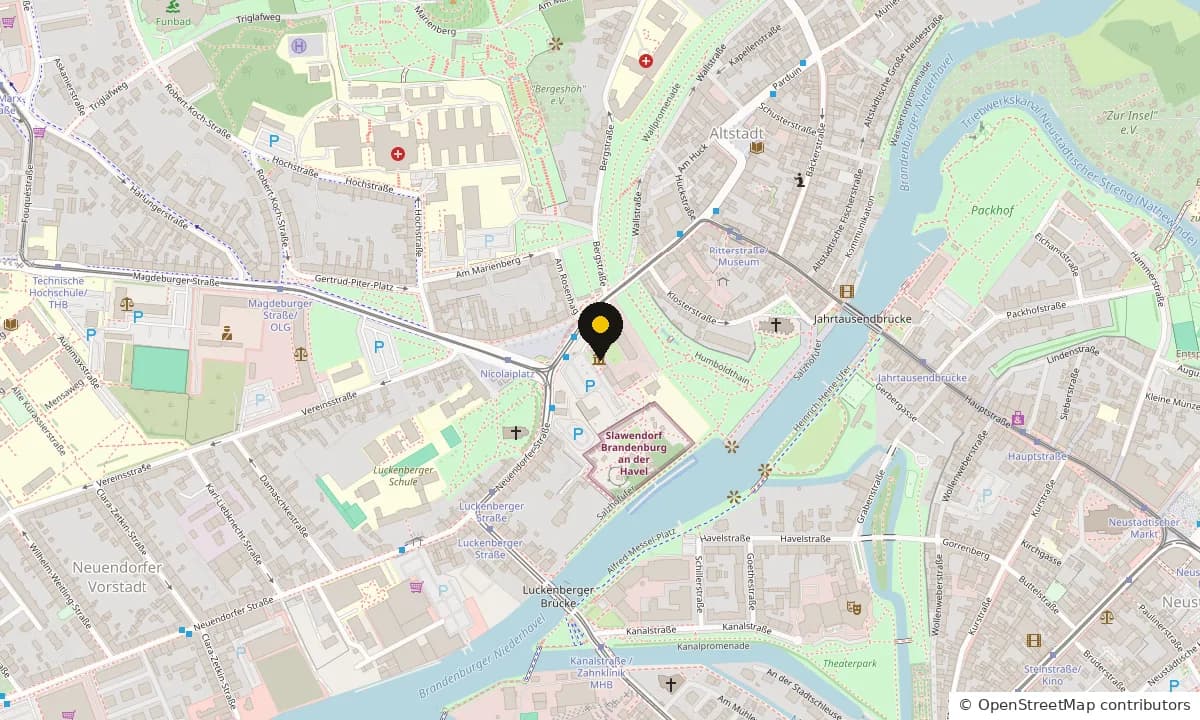
Map of the streets around the Brandenburg T4 memorial, with a pin on the siteOpen in Google Maps

Nicolaiplatz 28/30, 14770 Brandenburg an der Havel · Exhibition Thursday and Friday 13:00–17:00; Saturday, Sunday and public holidays 10:00–17:00. Closed Monday to Wednesday, except for booked tours. The outdoor memorial is open at all times.

Getting there

  • RE1Brandenburg HauptbahnhofAbout 50 min from Charlottenburg

    About two trains an hour from Berlin’s Stadtbahn stations (Ostbahnhof, Alexanderplatz, Friedrichstraße, Hauptbahnhof, Zoologischer Garten, Charlottenburg) and from Potsdam. In November 2026 the trains start at Charlottenburg because of engineering work, so check the VBB planner. A Berlin ABC ticket does not reach Brandenburg an der Havel: buy a ticket to Brandenburg an der Havel or use the Deutschlandticket.

  • Tram 1Tram 2Tram 6Nicolaiplatz270 m · 4 min

    Every tram line runs from Brandenburg Hauptbahnhof to Nicolaiplatz in about 8 minutes. On foot from the station it is about 25 minutes through the town.

  • A10A2Car parks around NicolaiplatzAbout 1 h 15 min from central Berlin

    Take the A10 and A2 west and leave at Brandenburg an der Havel, or follow the B1 through Potsdam. The memorial’s website gives no parking information; there are public car parks by Nicolaiplatz.

What you’ll see

  • The permanent exhibition, opened in August 2012 in a former outbuilding of the old prison: the roots of Nazi ‘racial hygiene’, how the killings were organised, the victims, about 30 of their life stories, the 70 named staff and what happened to them after 1945.
  • The memorial book, with the names of more than 8,200 identified victims, and the outdoor stelae with photographs of men, women and children murdered here.
  • The place of remembrance on the site of the prison barn, where the gas chamber was disguised as a shower room: its brick foundations are laid out in gravel, and only the rear wall survives.

Tips from a guide

  • Check the day before you travel: the exhibition opens only Thursday to Sunday, though the outdoor memorial can be seen at any time.
  • The RE1 stops in Potsdam on the way back, so the trip combines well with an afternoon at Sanssouci or Cecilienhof.
  • Groups can book a 90-minute guided tour in English or German (€30 for up to 30 people; minimum age 15) on +49 3381 7935-113, also outside opening hours.

Accessibility

Both the exhibition building and the seminar building have step-free entrances by ramp or lift, and both have accessible toilets. The exhibition has a tactile guidance system, and a tactile plan with texts in Braille and large print can be borrowed free at the front desk. An exhibition catalogue and tours are available in easy language (Leichte Sprache). Check lift and step-free access at the stations with the operators before you go.

Timeline

From prison to killing centre to memorial

  1. Aug 1933A concentration camp opens in Brandenburg’s old prison; it closes in early 1934.
  2. Oct 1939Hitler signs the ‘euthanasia’ order, backdated to 1 September 1939.
  3. Jan 1940A ‘test gassing’ is held in the prison barn in front of T4’s leaders.
  4. Feb 1940Systematic killing begins under Irmfried Eberl.
  5. 8 Jul 1940Judge Lothar Kreyssig protests to the Reich Minister of Justice.
  6. Oct 1940The centre closes after more than 9,000 murders; its staff move to Bernburg.
  7. 24 Aug 1941Hitler halts Aktion T4 after public protest; the killing goes on in secret.
  8. 2 Jun 1948Karl Brandt is hanged after the Nuremberg Doctors’ Trial.
  9. 1997A first memorial with information stelae is dedicated near Nicolaiplatz.
  10. Aug 2012The memorial and its permanent exhibition open in the former prison buildings.
  11. 2 Sep 2014Berlin’s national T4 memorial is unveiled at Tiergartenstraße 4.

See it with a historian

Tours that stop at the Brandenburg T4 memorial

None of our tours goes to Brandenburg an der Havel, but a guide can show you where the programme was planned and run in Berlin, and how it led on to the extermination camps.

A full day through Hitler’s Berlin, including the T4 memorial on Tiergartenstraße.

The Capital Of Tyranny Tour - Berlin Experiences
Full Day6 Hours

The Capital Of Tyranny

Private 6-hour van tour of Hitler's Berlin and the Third Reich for up to 6 people. Starts at your hotel or anywhere in the city.

€1,000up to 6
View Tour

One hour in the Nazi government district, where Hitler’s Chancellery set the programme in motion.

The Third Reich Tour
One Hour1 Hour

The Third Reich Tour

Private 1-hour walking tour of the Nazi government district for up to 10 people. Starts at Pariser Platz by the Brandenburg Gate.

€200up to 10
View Tour

Questions visitors ask

Frequently asked questions

What was Aktion T4?

The Nazis’ secret programme to murder sick and disabled people in asylums, run from Berlin from 1939. More than 70,000 people were gassed in six killing centres, Brandenburg among them, before it was halted in August 1941; the killing then continued by other means until 1945.

Why is it called T4?

After its head office at Tiergartenstraße 4 in Berlin, a villa beside today’s Philharmonie. The name was given after the war; the Nazis used cover names.

Where is the T4 memorial?

There are two. Berlin’s national memorial is at Tiergartenstraße 4, by the Philharmonie. This memorial, with a museum, is at the former killing centre at Nicolaiplatz 28/30 in Brandenburg an der Havel, about an hour west of Berlin.

Is the Brandenburg euthanasia memorial free?

Yes, admission is free. The exhibition is open Thursday and Friday 13:00–17:00 and at weekends and on public holidays 10:00–17:00; the outdoor memorial is open at all times.

How do I get to Brandenburg an der Havel from Berlin?

Take the RE1 regional train to Brandenburg Hauptbahnhof, about 50 minutes, then any tram to Nicolaiplatz. A Berlin ABC ticket is not enough: buy a ticket to Brandenburg an der Havel or use the Deutschlandticket.

How many people were killed at Brandenburg?

More than 9,000 between January and October 1940, from psychiatric hospitals in northern and central Germany, including Berlin. The memorial book names more than 8,200 identified victims.

Is the gas chamber still there?

No. The gas chamber was in a barn of the old prison; its foundations are marked on the memorial site, and only the rear wall survives.

Are there guided tours of the memorial?

Yes, for groups: 90 minutes in German or English, €30 for up to 30 people, minimum age 15, booked on +49 3381 7935-113. Tours can also be arranged outside opening hours.

Keep exploring

More Featured Experiences.

Every site we write about — 56 landmarks, museums, memorials and lesser-known corners of Berlin. See the full index →

01Walk Through The Brandenburg Gate02Explore The State Museums On Museum Island03Visit The Berlin TV Tower – The Fernsehturm04Cross The Cold War Border At Checkpoint Charlie05Visit The Site Of Adolf Hitler’s Führerbunker06Explore The Reconstructed Berlin Palace07Visit The Reichstag Cupola At Night08Explore The Forum Fridericianum09Shop At The Humboldt University Book Sale10Journey Into The Memorial To The Murdered Jews Of Europe11Step Inside The Neue Wache12Explore The Former Jewish Quarter – Spandauer Vorstadt13Visit The Remains Of The Berlin Wall14Walk Across The Bridge Of Spies15Explore The Topography Of Terror16Climb The Prussian Victory Column – The Siegessäule17Enter The Palace Of Tears – The Tränenpalast18Step Inside The Berlin Olympic Stadium19Explore Erich Mielke’s Office At The Stasi Museum20Walk Along Karl Marx Allee21Visit The Oldest Church In Berlin – The Nikolaikirche22Explore The Berliner Dom23Visit The Grave Of Frederick The Great24Walk Through The Ruins Of Anhalter Bahnhof25Stand On The Platz Des Volksaufstandes26Visit The German Resistance Museum27Visit The Soviet War Memorial In The Tiergarten28See The Georg Elser Memorial On Wilhelmstrasse29Step Inside The Kaiser Wilhelm Gedächtnis Kirche30Visit The Gleis 17 Memorial31Visit The Schloss Charlottenburg Mausoleum32Climb The Französischer Dom at Gendarmenmarkt33Explore The Interbau – IBA 5734Explore The Otto Weidt Workshop35Visit Cecilienhof – Site Of The Potsdam Conference36Visit The Stasi Prison In Hohenschönhausen37Spend The Day At Tempelhof Airport38Ride The Fastest Elevator In Europe39Visit The Soviet War Memorial In Treptower Park40Visit The Sachsenhausen Concentration Camp Memorial41Visit The Ravensbrück Concentration Camp Memorial42Visit Karlshorst – The Site Of The German Surrender43Visit The Socialists Cemetery – Zentralfriedhof Friedrichsfelde44Visit The Soviet War Memorial In Pankow45Visit the Seelow Heights Memorial46Visit The Commonwealth War Cemetery47Cross The Bösebrücke At Night48Explore The Allied Museum In Dahlem49Explore The Spandau Citadel51Visit The Wannsee Conference House52Visit The Jewish Museum53Visit The Jewish Cemetery In Weissensee54Walk Along The East Side Gallery55Explore The Volkspark Friedrichshain Flak Tower56Head Up The Teufelsberg