
Skip to content
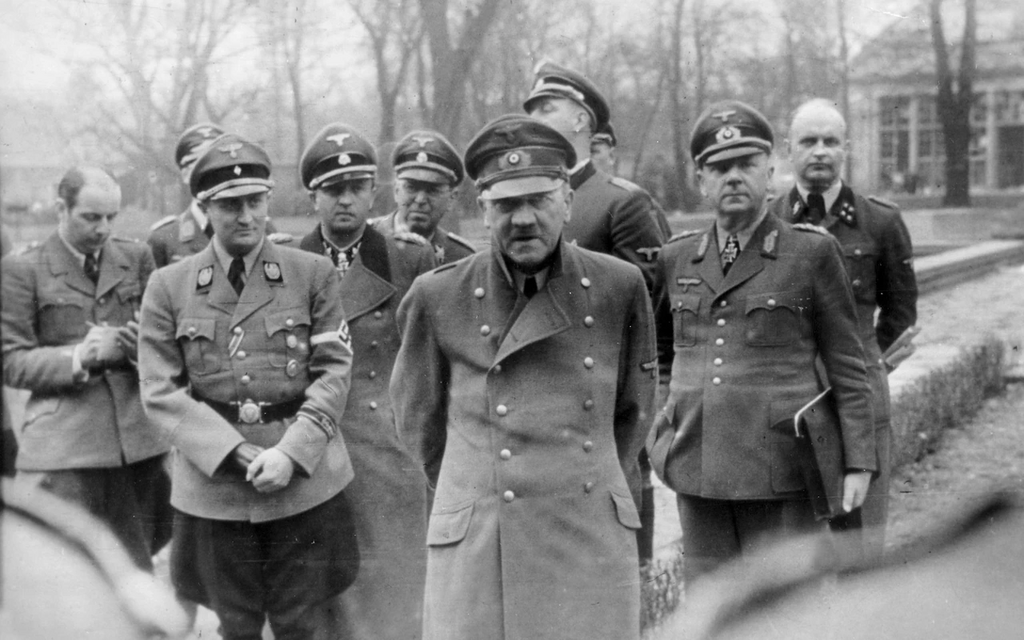
One of the final photos of Adolf Hitler, taken on March 20th 1945 -Public Domain

Berlin Experiences/Mythbusting Berlin

Have Adolf Hitler’s Remains Been DNA Tested?

Russia has never allowed independent DNA testing of the jaw and skull fragment in Moscow. But a 2025 test tied Hitler to blood on his bunker sofa.

By Matt Robinson · Updated · 14 min read

“Extraordinary claims require extraordinary evidence.”
Carl Sagan, scientist

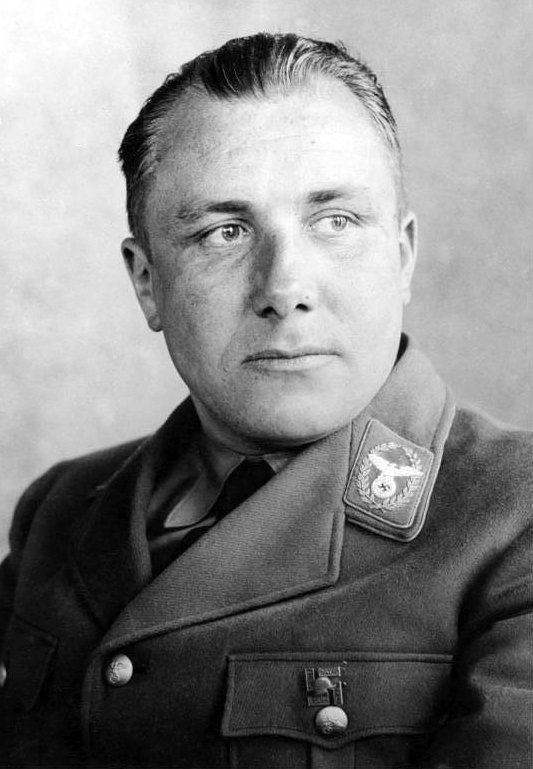
The ghost of Martin Bormann, the Führer’s private secretary and head of the Party Chancellery, haunted post-war Europe for decades.

Condemned to death in absentia at Nuremberg, he was the highest-ranking Nazi official – beyond Adolf Hitler himself – whose fate remained a tantalising mystery. Sightings were reported across the globe, from South American jungles to anonymous European monasteries.

He became a symbol of escaped justice, a phantom of the Third Reich.

But the truth, as it so often is in Berlin, was buried right under everyone’s feet.

Reich Leader of the NSDAP Martin Bormann, head of the office of Hitler's deputy (1934) - German Federal Archives, Image 183-R14128A / CC-BY-SA 3.0

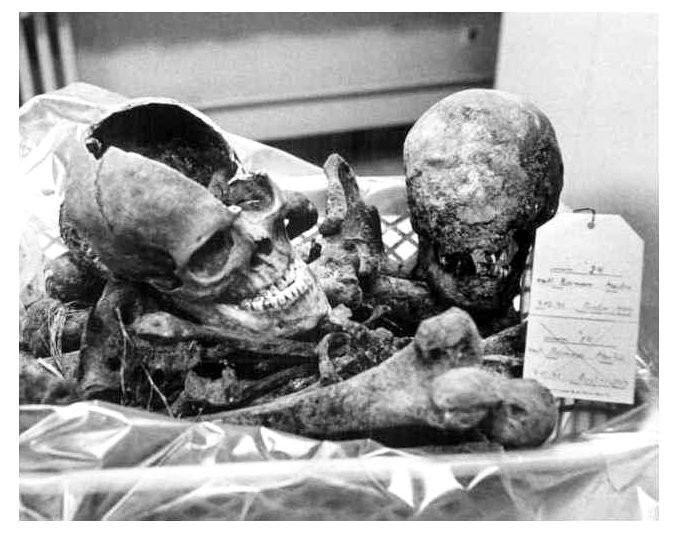
In 1972, construction workers near the site of the old Lehrter Bahnhof—an area now dominated by Berlin’s gleaming Hauptbahnhof—unearthed two skeletons. Dental records strongly suggested one belonged to Bormann.

Yet, the whispers persisted.

It was not until 1998, with the advent of sophisticated genetic testing, that the ghost was finally laid to rest.

DNA was extracted from the skull and compared to that of an elderly maternal relative.

The match was perfect.

Martin Bormann had never escaped; he had died in Berlin in 1945, attempting to flee the city’s encirclement.

The skeletan remains of Martin Bormann (1972) - Stew Ross

This power of DNA to reach back in time and rewrite ghost stories is not unique.

Consider the incredible case of King Richard III of England, the last Plantagenet king, slain in battle in 1485. His body was unceremoniously buried and lost to history for over 500 years, until a team of archaeologists, following a historical hunch, found his skeleton beneath a municipal car park in Leicester in 2012. It was mitochondrial DNA, passed down through his maternal line and matched to a living descendant, that confirmed his identity beyond any doubt.

From the Romanovs, executed by Bolsheviks in 1918 and identified via DNA in the 1990s, to the composer Beethoven – whose DNA was analysed and revealed chronic health issues – genetics has become the ultimate tool of historical verification.

It can confirm an identity where all other records fail.

This brings us to the greatest ghost of the 20th century, the subject of the most persistent escape myth of all.

If science can find Bormann by a Berlin train station and identify a king under a car park, surely it can put to rest the conspiracy theories surrounding Adolf Hitler.

The technology is now available. Science has finally caught up with history.

So, what of his remains?

–

3D modeling of DNA - TimTim

Identifying Bodies & DNA Testing

“Science is the great antidote to the poison of enthusiasm and superstition.”
Adam Smith, philosopher and economist

For most of human history, identifying the dead was a tragically simple affair.

It relied on recognition—by family, friends, or community members.

For the unknown, identification was a matter of physical description, clothing, or personal effects.

The dawn of the scientific age brought new, more rigorous methods.

The late 19th century saw the revolutionary introduction of fingerprinting, a technique based on the unique patterns of each individual’s dermal ridges. This, alongside developing fields like forensic anthropology and odontology (the study of teeth), brought a new level of certainty to identification.

For centuries, one biological fact was held as self-evident: maternity is a matter of fact, while paternity is a matter of opinion.

The mother of a child was known without question; the father’s identity was reliant on testimony, social contracts like marriage, and resemblance. This biological uncertainty was a cornerstone of societal structures, driving laws of inheritance and monogamy to guarantee paternity.

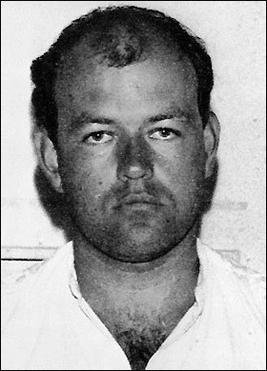
Child-murderer and child-rapist, Colin Pitchfork, the first person convicted using DNA evidence (1987) - Fair Use

The discovery of the DNA double helix in 1953, and the subsequent development of DNA profiling in the 1980s by Sir Alec Jeffreys, completely upended this paradigm.

Suddenly, biological relationships—paternity, maternity, and beyond—could be established with near-absolute certainty.

This was nothing short of groundbreaking.

Science could now read the unique genetic code that exists in almost every cell of a person’s body.

The marriage of this powerful scientific tool with the available physical evidence—be it a bone fragment, a tooth, or a drop of blood—has allowed investigators to solve crimes and identify remains with a precision previously unimaginable.

It is this combination that makes DNA testing the gold standard, the final arbiter of identity.

–

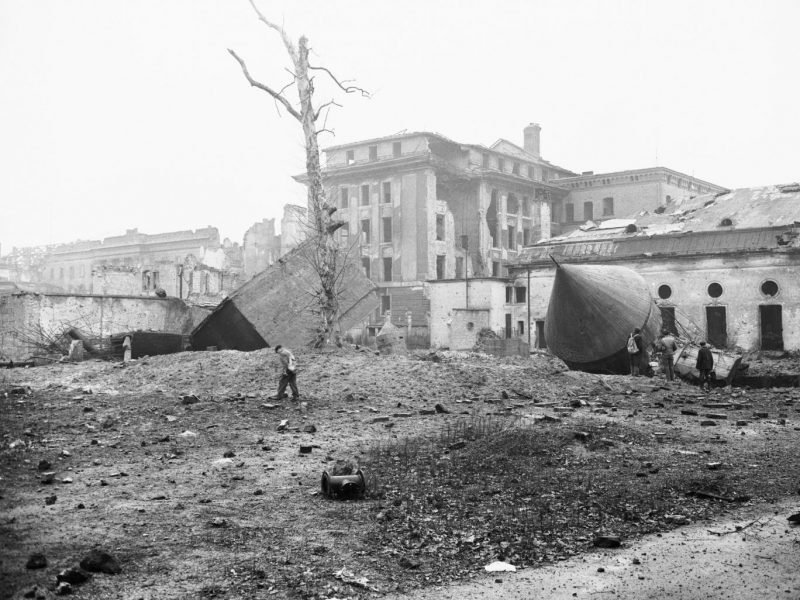
The remains of the Reich Chancellery gardens and Hitler's Führerbunker (1945) - Public Domain

What Actually Remains Of Hitler?

“I myself and my wife – in order to escape the disgrace of deposition or capitulation – choose death.”
Adolf Hitler, Political Testament, April 29th 1945

In the final, desperate days of April 1945, as the Soviet 150th Rifle Division closed in on the Reichstag just a few hundred metres away, the Führerbunker was an apocalyptic theatre of ritual suicide and farewells.

After marrying Eva Braun in a small ceremony, Adolf Hitler dictated his last will and political testament. On April 30th, the pair committed suicide. Per his strict instructions, their bodies were carried up to the Reich Chancellery garden, doused with petrol, and set alight.

When Soviet SMERSH (counter-intelligence) agents reached the garden on May 4th, they found a scene of chaos. Amidst shell craters and debris, they discovered the charred, unrecognisable remains of several individuals, including what they suspected to be Hitler and Braun.

The initial identification was tentative.

The breakthrough came via Hitler’s teeth.

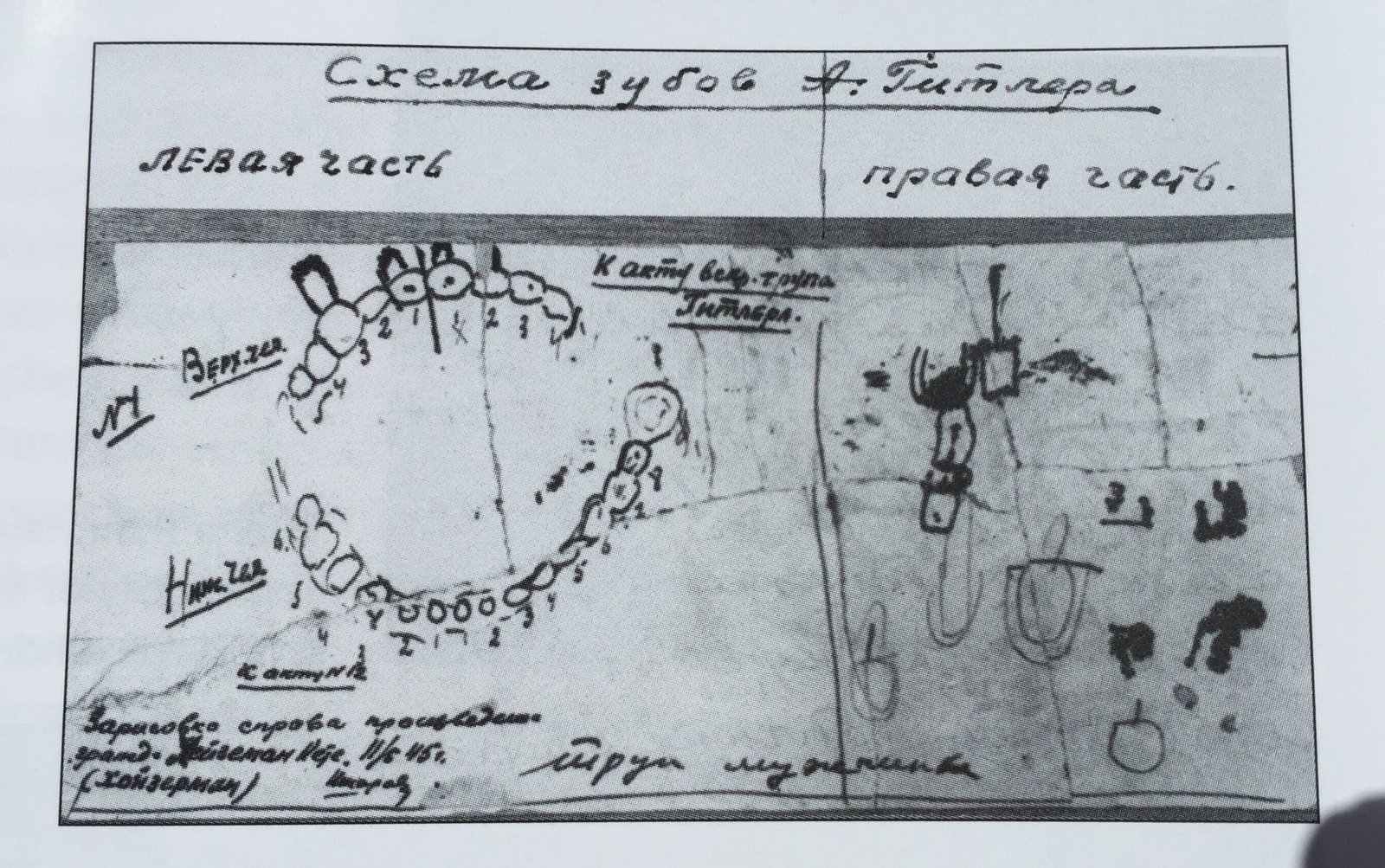
The drawing of Hitler's teeth provided by his dental assistant (1945) - Public Domain

The Soviets located Käthe Heusermann, the dental assistant to Hitler’s personal dentist. From memory, she drew a detailed diagram of the Führer’s notoriously poor teeth, including his distinctive and elaborate dental bridge.

This drawing was then compared to the jawbone fragment recovered from the garden.

The match was uncanny.

The evidence was compelling enough for the Soviets to close their initial investigation, but for Joseph Stalin, this wasn’t enough.

Plagued by paranoia and a desire to control the narrative, he suppressed the findings.

For decades, the physical remains were treated as a state secret of the highest order.

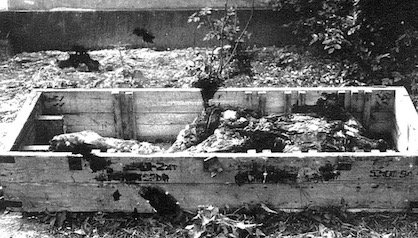
A box reportedly containing Adolf Hitler's remains from The Death of Adolf Hitler by Lev Bezymenski

The Soviets secretly buried them at a SMERSH facility in Magdeburg, East Germany. There they remained until 1970 when, fearing the site could be discovered and become a neo-Nazi shrine, KGB director Yuri Andropov ordered a final, clandestine operation.

The remains were exhumed, completely cremated, and the ashes were unceremoniously scattered into a tributary of the Elbe river.

However, two crucial pieces were not destroyed.

A fragment of a jawbone and a piece of a skull with a bullet hole, originally recovered in 1945 and 1946 respectively, were sent to Moscow and locked away in the state archives, their existence denied for years.

–

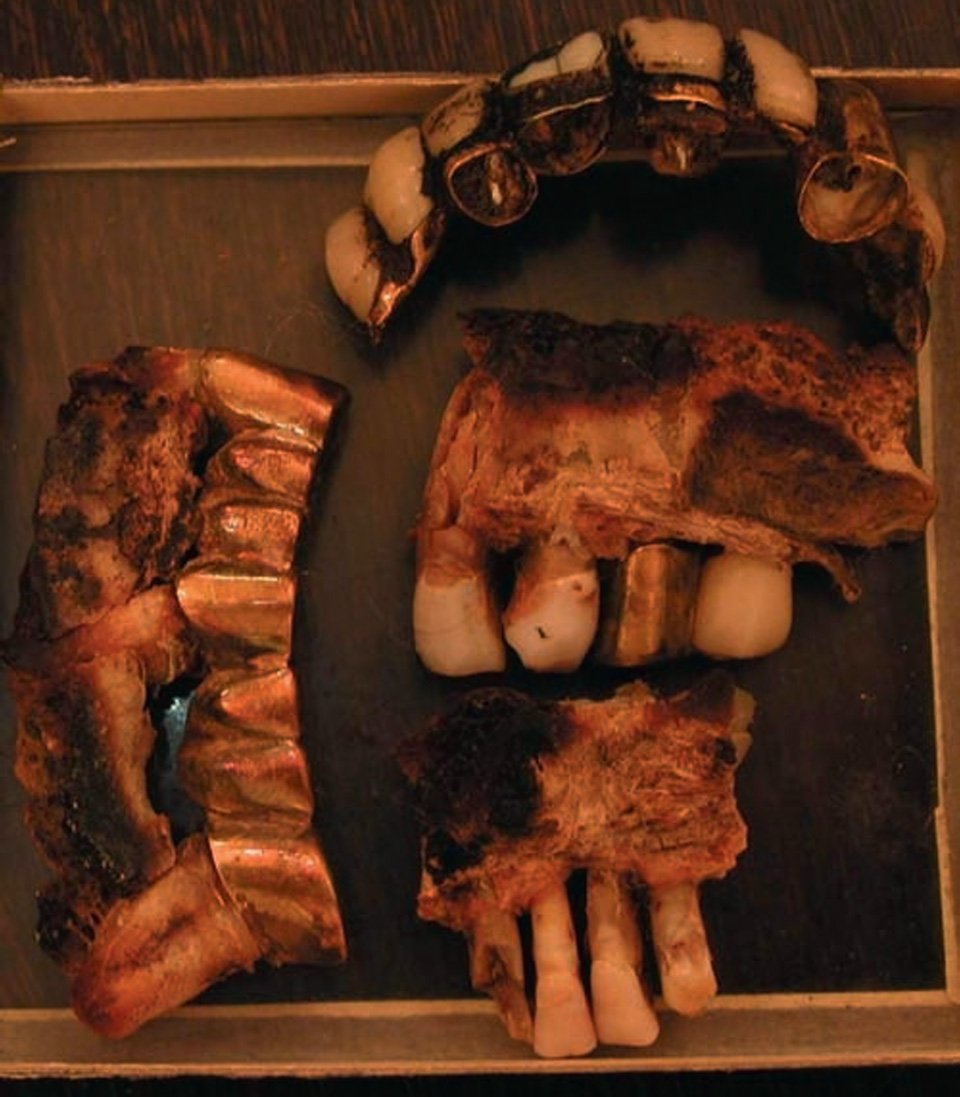
Hitler's teeth, as kept in the Russian Federal Archives in Moscow - Public Domain

What The Russian Archives Reveal

“For Stalin, history was a tool of politics. Admitting Hitler’s death unequivocally did not serve his purpose. He preferred to let the West worry about a resurgent Nazism led by a fugitive Führer.”
Antony Beevor, historian

For decades, the Soviets publicly maintained a position of deliberate ambiguity, hinting that Hitler might have escaped.

It was not until the late 1960s that they first revealed in a book that they possessed fragments of Hitler’s skull, confirming his death.

This revelation did little to quell the conspiracy theories, which had by then taken on a life of their own.

Today, the jawbone is held in the archives of the FSB (the successor to the KGB), while the skull fragment resides in the Russian Federal Archives in Moscow.

These relics have been the subject of intense curiosity and several controversial examinations.

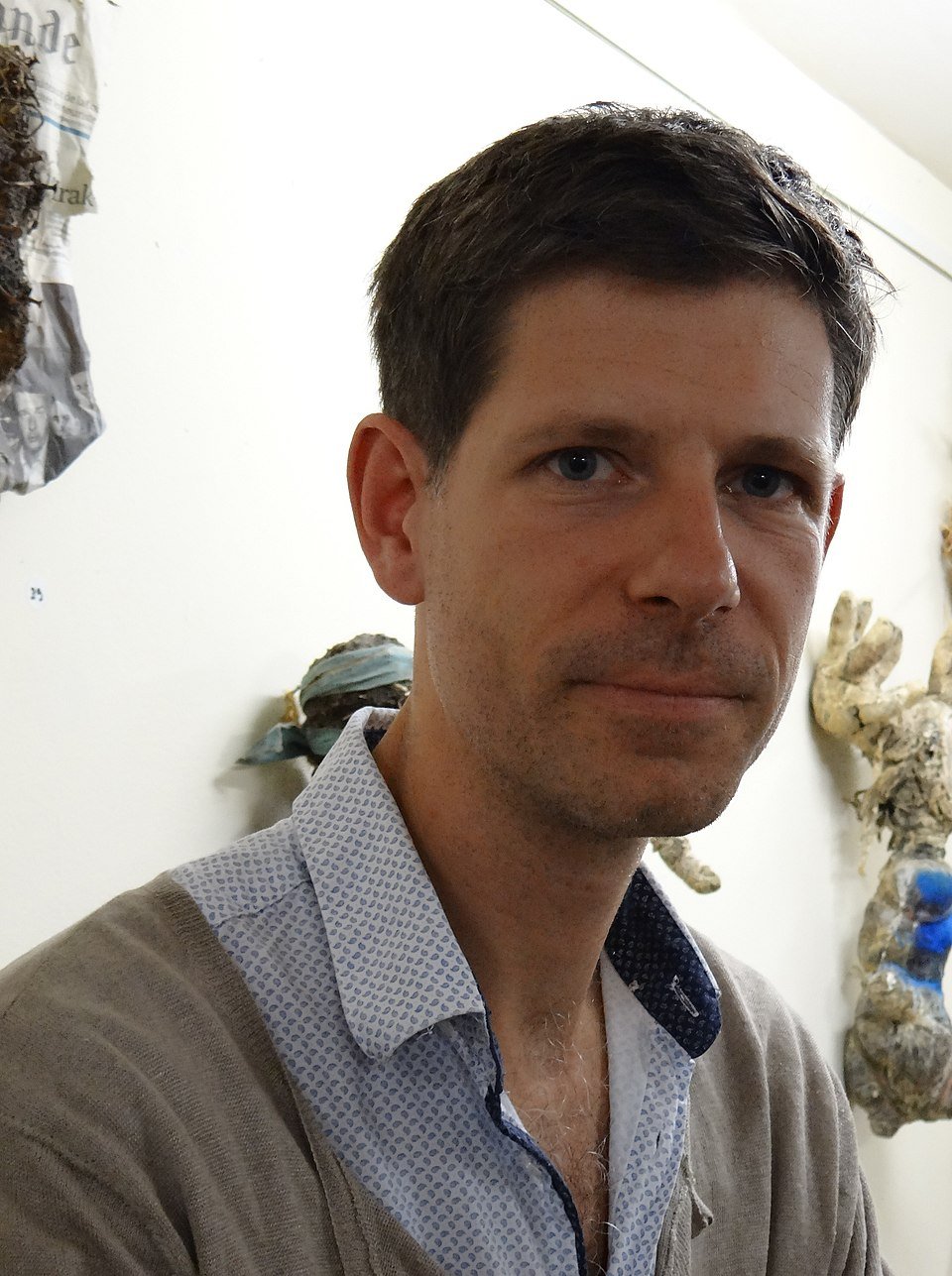
German forensic scientist, Mark Benecke - Jan Zappner

In 2003, German forensic scientist, Mark Benecke, travelled to Moscow to become the first person from outside Russia to examine Hitler’s dental remains alongside the skull fragment. His findings would be broadcast as part of a National Geographic documentary.

Benecke holds a doctorate in forensic medicine from Cologne University and specialises in forensic entomology—using insects to solve crimes. He worked at the Chief Medical Examiner’s Office in Manhattan and investigated the Colombian serial killer Luis Garavito, who murdered over 130 children.

The teeth, he reported, were stored at the time in a cigar box within a batch of large travel suitcases. Eva Braun’s teeth occupied an even smaller, crappier cigar box nearby.

The skull fragment lay in a floppy-disk container, bedded on Kleenex tissues and held together with plasticine. Benecke compared the remains to photographs, X-rays taken after the July 1944 assassination attempt, and records from Hitler’s dentist, Hugo Blaschke. The match was definitive. The massive metal bridgework was identical.

The severe periodontal disease matched contemporary accounts of Hitler’s notorious bad breath.

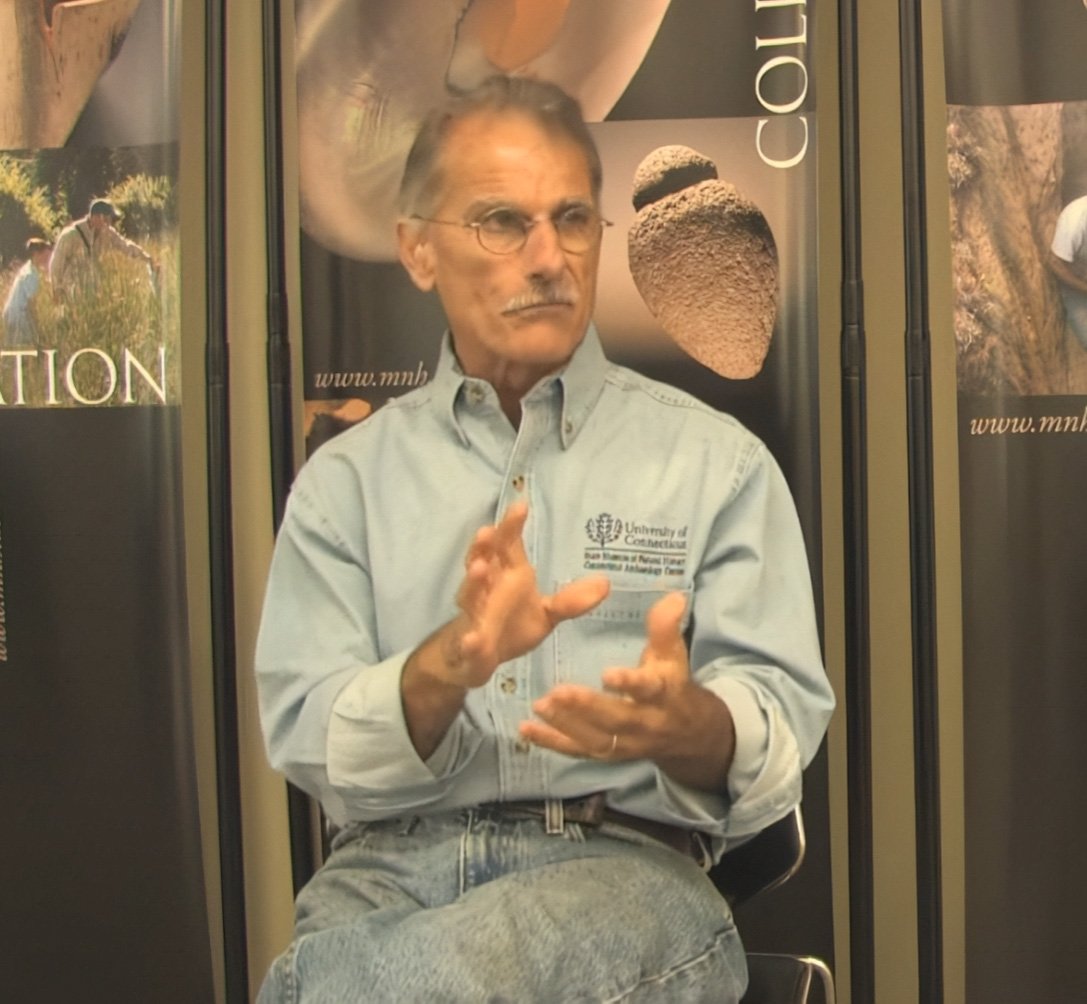
University of Connecticut professor of Anthropology, Nick Bellantoni - Uconn

In 2009, American archaeologist and bone specialist Nick Bellantoni was granted rare access to the skull fragment. He was allowed to examine and take DNA swabs over the course of an hour. The results, revealed in a History Channel documentary entitled ‘Hitler’s Escape’, were explosive: the DNA from the skull belonged to a woman, estimated to be between 20 and 40 years old.

This immediately led to sensational headlines questioning the entire historical record.

Was the skull Eva Braun’s?

Or an unknown victim of the final battle?

The Russian authorities fiercely disputed the claim, suggesting the sample had been contaminated.

Philippe Charlier, French anthropologist and forensic doctor (2017) - Anne Jea

It would be another eight years before French forensic pathologist Professor Philippe Charlier and his team were granted access to both the skull fragment and, more importantly, the jawbone and teeth fragments.

Charlier is France’s foremost forensic pathologist to the dead famous. He authenticated the mummified heart of Richard the Lionheart. Phys.org He confirmed the head of King Henry IV. He analysed the remains of Agnès Sorel, Diane de Poitiers, and Louis IX. He debunked relics allegedly belonging to Joan of Arc, revealing them to be fragments of an Egyptian mummy.

In March 2017, Charlier was granted access to Hitler’s remains. The head of the Russian State Archives had stipulated his requirements: “Find someone scientifically irreproachable and not an American. Especially not an American.”

Charlier examined the teeth in detail, using scanning electron microscopy to analyze dental tartar without destroying the samples. His findings, published in the European Journal of Internal Medicine in May 2018, were definitive on several points and revealing on others.

First, the identification: “The teeth are authentic, there is no possible doubt.”

The morphology matched 1944 X-rays.

The severe wear, the greenish calculus deposits, the massive bridgework—all corresponded to historical records. Hitler had only four natural teeth remaining at death, all lower jaw incisors.

Second, the cause of death: Charlier found bluish deposits on the false teeth, suggesting “a chemical reaction between cyanide and the metal of the dentures.” But he found no gunpowder residue on the jaw. Hitler had not shot himself in the mouth, contrary to some eyewitness accounts. If he shot himself, it was through the forehead or neck.

Third, and most peculiarly, the tartar analysis revealed something intimate about Hitler’s final days: “No muscular segment compatible with meat was identified after careful examination.”

The dictator had died as he lived – a vegetarian.

–

Adolf Hitler's Final Public Appearance: March 20th 1945 - Public Domain

The Case For Hitler’s DNA

“A conspiracy theory is not an argument. It is an accusation which becomes an article of faith.”
Christopher Hitchens, author and journalist

While Russian authorities have yet to permit a full DNA analysis of the actual jaw and skull, a different investigation managed to secure Hitler’s DNA through another route.

A 2025 documentary series entitled ‘Hitler’s DNA: Blueprint of a Dictator’ followed investigators as they tracked down two key pieces of evidence.

The first was samples from a living descendant of Hitler, one of his last known relatives living in the United States. Y-chromosome data from a known male-line Hitler relative was collected by Belgian journalist Jean-Paul Mulders, who had spent weeks trailing Hitler’s great-nephew Alexander Stuart-Houston in Long Island and ultimately obtained his DNA from a discarded napkin.

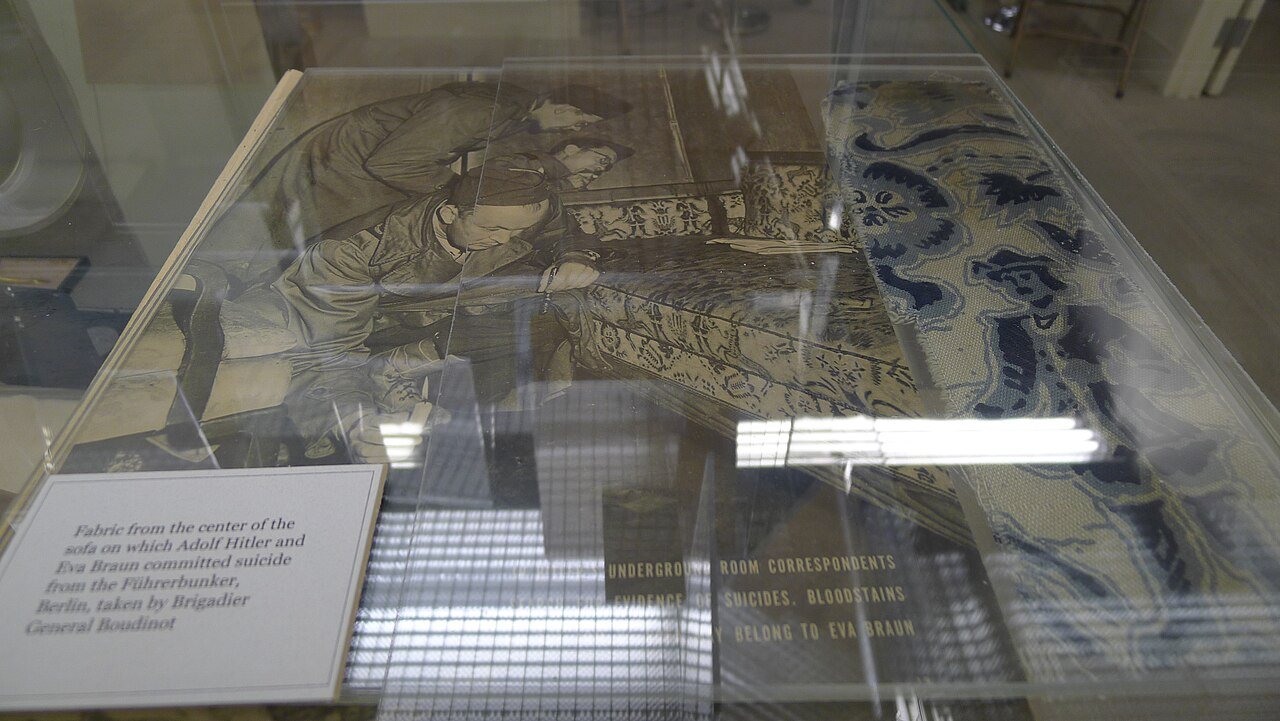
The second piece of crucial evidence was a piece of fabric stained with blood, taken from the couch in Hitler’s bunker room by an American officer in 1945.

U.S. Army Colonel Roswell Rosengren – communications officer for Gen. Dwight Eisenhower – was allowed into Hitler’s bunker by Soviet forces in May 1945 and cut a small swatch from the bloodstained sofa where Hitler had shot himself. The fabric – approximately three by six inches, with a dark stain – remained in his family for decades before being bought at auction by the Gettysburg Museum of History for $16,000. Curator Erik L. Dorr acquired it with a hope: that someday, someone would analyze the DNA.

Comparing the evidence from both the living relative and the bloodstained cloth, the documentary team found a perfect match.

A piece of fabric from the same couch in Hitler's Führerbunker - on display at the the former International Museum of World War II in Natick, Massachusetts - Lee Wright

Tulsi King, the DNA expert featured in the 2025 documentary, would conclude a number of findings from the testing.

  • That Hitler carried a mutation in the PROK2 gene, strongly associated with Kallmann syndrome—a condition that causes low testosterone, delayed puberty, and frequently, one or both testicles failing to descend normally.
  • That Hitler’s DNA showed polygenic risk scores in the top one percentile for schizophrenia, autism, and bipolar disorder.
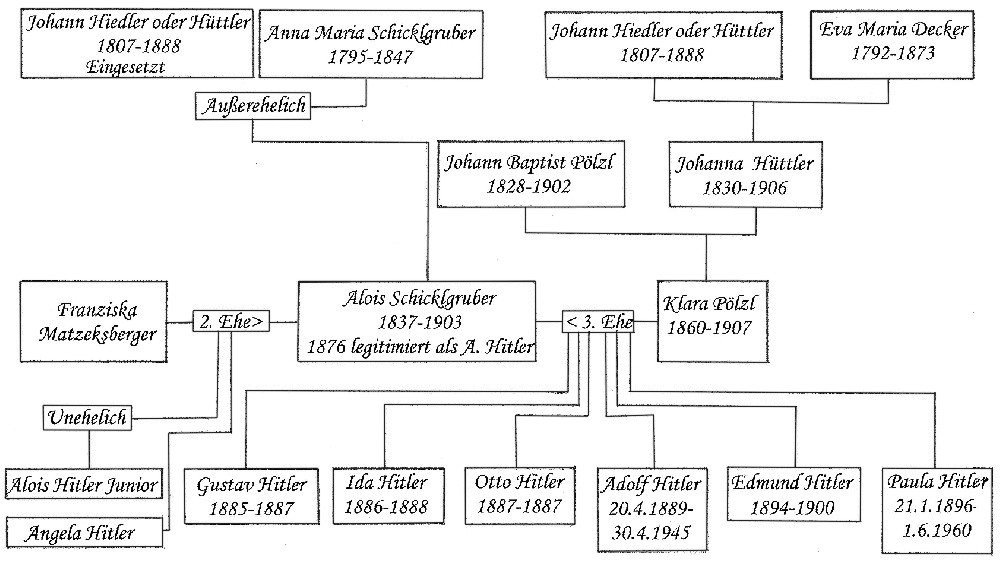
  • That the man long suspected as being Hitler actual father was true. If Hitler’s paternal grandfather had been someone other than the official family line, the Y-chromosome would not have matched his known relatives.
  • Additionally to this point, dispelling the myth that Hitler had Jewish ancestry and that his grandfather on his father’s side was actually a Jewish boy in the Frankenberger household where Hitler’s paternal grandmother had worked as a maid.
Adolf Hitler's family tree - featuring the question over his father's paternity - M.Huwyler

Critics were quick to react to the documentaries findings, suggest that using genetic markers to explain genocide and Hitler’s tyranny is to echo, uncomfortably, the biological determinism that was central to Nazi ideology itself.

There is, however, a story that can be told from this evidence: it establishes a genetic baseline for Adolf Hitler.

Although DNA analysis can fill in the gaps it cannot tell the full truth.

We can read the dictator’s teeth and know what he ate in his final days.

We can read his blood and know his ancestry was unremarkable.

We can read his genes and know that he carried mutations associated with an undescended testicle—though we cannot read from his genes the choices he made or the ideology he embraced.

That remains beyond the reach of science.

The dead can tell us who they were.

They cannot tell us why they did what they did.

–

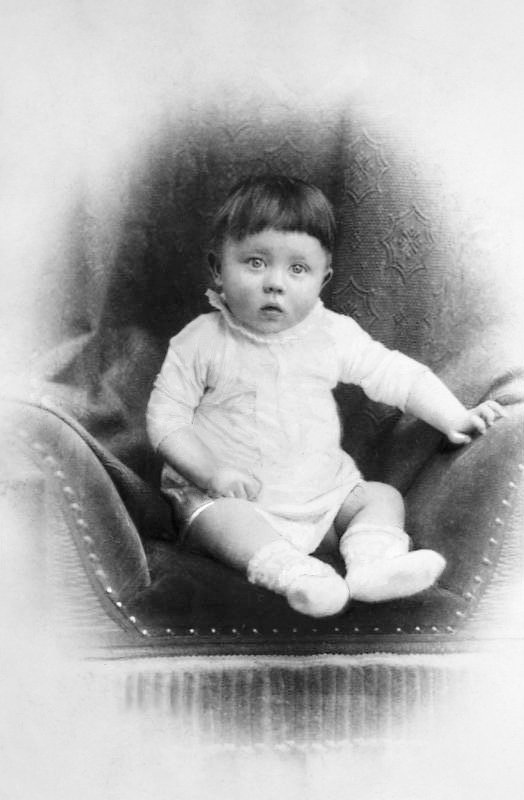
Adolf Hitler as a child in circa 1890 - Public Domain

Conclusion

“In the end, even if a definitive DNA test was published tomorrow, some people would still refuse to believe it. For some, the myth is always more powerful than the proof.”
Richard J. Evans, historian

The most critical finding from the analysis of the blood-stained couch is not about distant ancestry; it is about presence.

The matching DNA proves that Adolf Hitler’s bloodline was indeed present on that couch in the Führerbunker. The bloodstain indicates that at some point during his final days, the Führer was bleeding significantly in that room. This piece of forensic evidence places him squarely in Berlin at the time of his death, directly contradicting the elaborate fantasies of a post-war escape. It is a powerful, scientific anchor for the historical account.

To answer the central question posed by this article: have Adolf Hitler’s remains—the jawbone and skull fragment held in Moscow—been DNA tested? The definitive answer is no.
Russia has not permitted an independent, peer-reviewed DNA sequencing to be performed on these crucial artefacts.

What we have is Professor Charlier’s meticulous physical analysis of the teeth, which overwhelmingly supports the official account of Hitler’s death, and the DNA test from 2025 that conclusively ties Hitler to the bloodstains on the couch in 1945.

The DNA evidence thus tells us as much about his life – the potential cryptorchidism, the possible schizophrenia, autism, and bipolar disorder – as it does conclusively about his death.

That the Führer died in the bunker, deep beneath the rubble of Berlin.

Bibliography

Beevor, Antony. The Fall of Berlin 1945. London: Viking, 2002.
Benecke, Mark. “The Hunt for Hitler’s DNA.” Bioradiations, 2003.
Bellantoni, Nick, and Linda Cohn. “Hitler’s Skull.” Archaeology Magazine, Volume 63 Number 1, January/February 2010.
Charlier, P., et al. “The remains of Adolf Hitler: A biomedical analysis and definitive identification.” European Journal of Internal Medicine, Volume 54, August 2018, pp. E10-e12.
Daly-Groves, Luke. Hitler’s Death: The Case Against Conspiracy. Oxford: Osprey Publishing, 2019.
Evans, Richard J. The Third Reich at War. New York: Penguin Press, 2008.
Fest, Joachim. Inside Hitler’s Bunker: The Last Days of the Third Reich. New York: Farrar, Straus and Giroux, 2004.
Joachimsthaler, Anton. The Last Days of Hitler: The Legends, the Evidence, the Truth. London: Arms and Armour Press, 1999.
Kershaw, Ian. Hitler: A Biography. New York: W. W. Norton & Company, 2008.
Le Tissier, Tony. The Battle of Berlin 1945. Stroud: Tempus, 2007.
Petrova, Ada, and Peter Watson. The Death of Hitler: The Final Word. New York: W. W. Norton & Company, 1995.
Ryan, Cornelius. The Last Battle. New York: Simon & Schuster, 1966.
Snyder, Louis L. Encyclopedia of the Third Reich. New York: McGraw-Hill, 1976.
Toland, John. The Last 104 Days: The Tumultuous Last Days of World War II in Europe. New York: Random House, 1966.
Trevor-Roper, Hugh. The Last Days of Hitler. London: Macmillan, 1947.
Uhl, Matthias, and Henrik Eberle (Eds.). The Hitler Book: The Secret Dossier Prepared for Stalin from the Interrogations of Hitler’s Personal Aides. New York: PublicAffairs, 2005.
Vinogradov, V. K., J. F. Pogonyi, and N. V. Teptzov. Hitler’s Death: Russia’s Last Great Secret from the Files of the KGB. London: Chaucer Press, 2005.

Liked this piece? Have a look at the Berlin Experiences tours that cover this history.

See the Third Reich TourMore articles →

Share this piece

Know someone who still believes it?

Explore in person

Tours that address this myth.

The Third Reich Tour
One Hour1 Hour

The Third Reich Tour

Private 1-hour walking tour of the Nazi government district for up to 10 people. Starts at Pariser Platz by the Brandenburg Gate.

€200up to 10
View Tour
The Battle Of Berlin Tour - Berlin Experiences
Full Day6 Hours

The Battle Of Berlin Tour

Private 6-hour van tour of the 1945 battlefield, from the outskirts to the Reichstag, for up to 6 people. Starts at your hotel.

€1,000up to 6
View Tour

More reading

The other myths, busted.

49 more — drag, scroll or use the arrow keys.

Soviet troops pose next to the Reichsadler as it once appeared on top of Tempelhof Airport (1934) - Public Domain
Are There Any Nazi Statues Left In Berlin?
US Army soldiers crossing the Rhine (1945) - Public Domain
Could The Western Allies Have Captured Berlin?
Women at Ravensbrück - where Elizabeth Rothschild was imprisoned and died
Did Any Of The Rothschild Dynasty Die In The Holocaust?
Frederick the Great - Der Konig Uberall
Did Frederick The Great Introduce The Potato To Germany?
Adolf Hitler Eastern Front
Did Hitler Escape To Argentina In 1945?
March of SA men in uniform giving the Hitler salute - on their way to Kaffelstein (1933) - State Archives of Baden-Württemberg, Wertheim State Archives SN 70 G 4135
Did Hugo Boss Design The Nazi Uniforms?
Rudolf Hess (1933 & 1945) - Public Domain
Did Rudolf Hess Really Commit Suicide?
Dismantling the German experimental nuclear pile at Haigerloch (April 1945) - Public Domain
Did The Nazis Develop Nuclear Weapons?
Did The Nazis Invent Decaf Coffee? – Mythbusting Berlin
Did The Nazis Invent Decaf Coffee?
German infantry on bicycles during the invasion of the Soviet Union
Did The Nazis Invent The Bicycle Reflector?
The site of the Nazi's Operation Bernhard counterfeiting operation: KZ Sachsenhausen
Did The Nazis Run The Largest Counterfeiting Operation In History?
Surrender of Berlin - 1945
Did The Second World War End In Berlin?
Spanish Flu & the rise of Nazi Germany
Did The Spanish Flu Pandemic Help The Nazis Take Power?
Prisoners at Sachsenhausen Concentration Camp attend roll call (1937) - Public Domain
How Did The Nazi Concentration Camps Differ From The Soviet GULAG?
The construction of the first actual Berlin Wall in August 1961 - Public Domain
How Long Did It Take To Build The Berlin Wall?
The remains of the Bürgerbrauhalle after an assassination attempt against Adolf Hitler in 1939 - Bundesarchiv, Bild 183-E12329 / Wagner / CC-BY-SA 3.0
How Many Assassination Attempts On Adolf Hitler Were There?
Evidence of Jewish prisoners at Auschwitz-Birkenau being undressed and led to their deaths - Public Domain
How Many Jews Died In The Holocaust?
A sign at the Berlin Wall in East Berlin (November 1961) declares, “Whoever attacks us will be destroyed," - Public Domain
How Many People Died Trying To Escape East Germany?
Berlin's Nikolaiviertel
How Old Is Berlin?
Adolf Hitler practices his speech techniques
Was Adolf Hitler A Drug Addict?
Adolf Hitler practicing his oratory skills - Public Domain
Was Adolf Hitler A Freemason?
Adolf Hitler practicing his oratory skills - Public Domain
Was Adolf Hitler Gay?
Adolf Hitler practicing his oratory skills - Public Domain
Was Adolf Hitler Jewish?
Hertha Heuwer - the inventor of Currywurst - Public Domain
Was Currywurst Invented In Berlin?
Fanta advertising from the 1940s - Public Domain
Was Fanta Invented By The Nazis?
Frederick the Great at the Battle of Zorndorf by Carl Roechling (1911)
Was Frederick The Great Gay?
Henry Ford
Was Henry Ford A Nazi?
Franz Rudolf Frisching portrait in 1785 in Prussian Blue.
Was The Colour Blue Invented In Berlin?
Döner Kebab
Was The Döner Kebab Invented In Berlin?
Menschen am Potsdamer Platz auf der Westseite der Berliner Mauer am 11. November 1989
Was The Fall Of The Berlin Wall An Accident?
The Nazi Party in parliament (1935)
Was The Nazi Party Democratically Elected?
The Allied bombing of Wesel during the Second World War - Public Domain
Were The Allied Bombings Of Germany War Crimes?
Photograph of the Hadamar killing centre with a smoking chimney, (1941) - Hadamar Memorial Museum
Were The Nazi Medical Experiments Useful?
The Oath of the Horatii by Jacques-Louis David - Public Domain
What Are The Origins Of The Nazi Salute?
Members of the Hitler Youth parade in the formation of a swastika to honor the Unknown Soldier. Germany, August 27th 1933 - Public Domain
What Are The Origins Of The Nazi Swastika?
Pink pipes in Berlin - Public Domain
What Are The Pink Pipes In Berlin?
A street battle between revolutionaries and the royal military in the Breite Strasse Street, Berlin during the March 1848 revolution - Public Domain
What Do The Colours Of The German Flag Symbolise?
Adolf Hitler's Alligator - Saturn
What Happened To Adolf Hitler’s Alligator?
German Kaiser Wilhelm II in Bruges, Belgium during the First World War - Public Domain
What Happened To The German Royal Family?
Adolf Hitler (right) and Benito Mussolini (left) in Munich, Germany, 1937 - Public Domain
What Is The Difference Between Fascism & Nazism?
Checkpoint Charlie in 1989
What Was Checkpoint Charlie?
The crowning of Wilhelm I as German Emperor and the birth of Germany in 1871
What Was Prussia?
United States Air Force building a runway for Operation Vittles planes (1948) - Public Domain
What Was The Berlin Airlift?
A close-up of the Socialist Kiss painted on the East Side Gallery - LeO Tiresias
What Was The Socialist Kiss?
Construction of the Berlin Wall at the Brandenburg Gate
Who Built The Berlin Wall?
Soviet flag on the Reichstag - 1945
Who Really Raised The Soviet Flag On The Reichstag?
Inside the Reichstag Plenary Chamber/Image: United States Holocaust Memorial Museum
Who Was Really Responsible For The Reichstag Fire?
The defendants at the Nuremberg Trial (1946) - Public Domain
Who Were The Last Nazis On Trial?
The Brandenburg Gate at night
Why Is Berlin The Capital Of Germany?